



Why Samsung Ads is selling the TV as the new dinner table
Richard Hayward on daily viewing habits, the Home Screen ad unit nobody could bucket, and turning TV data into outcomes.

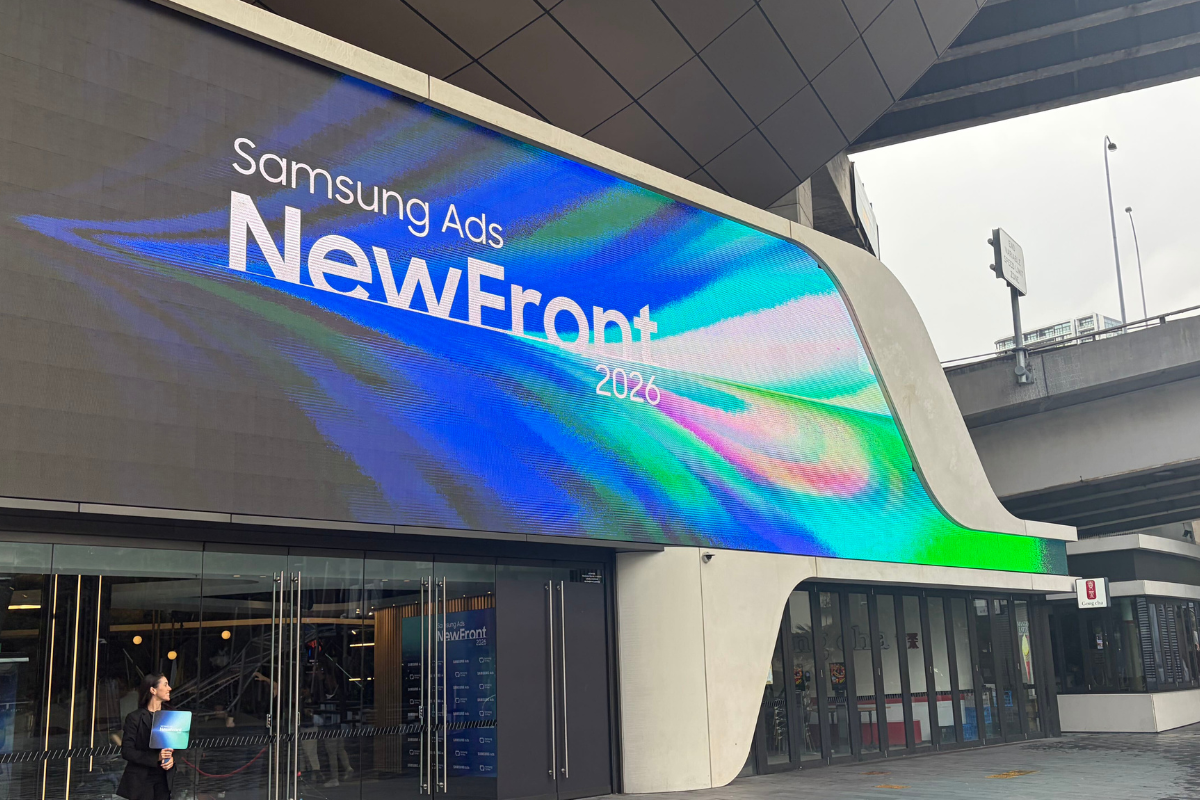
Last week, Samsung Ads took over one of the world’s largest screens to tell Australian advertisers about some of the smallest real estate in the home. The announcements came thick and fast at its NewFront at IMAX Sydney: new Home Screen formats, programmatic access, a cross-platform reach tool, and a bigger slate on Samsung TV Plus.
Samsung didn’t spend much time on why. Richard Wheeler, Samsung Ads sales director, starts his explanation at the dinner table.
“Twenty years ago, you’d get home from work and sit down with your family at the dinner table. More and more, that space where you connect with your family is now in front of the TV,” Wheeler told Mediaweek.
Why the home screen
Every new Home Screen format Samsung unveiled, including Video Masthead and 3D Video, is built for the moment the TV switches on. Wheeler said that's when brands get their opening.
“And so the home screen is really impactful, I think; from an advertising perspective, it’s very powerful because we can start conversations and discussions around whether it’s a product or a service or a change in behaviour.”
The audience matters as much as the screen, he said.


The leading media trade publication in Australia.
Get our top stories straight to your inbox daily by signing up to our Newsletter
By providing your information, you agree to our Terms of Use and our Privacy Policy. We use vendors that may also process your information to help provide our services.
“I think we do see that being at home, being in the living room, is a really core part of our proposition, because it is bringing things together. And it’s a kind of one-to-many proposition, but in a very family setting. So it’s a very deliberate strategy.”
Why habit beats the à la carte menu
Most streaming services sell choice. Wheeler is selling routine.
“The other truth is that we all have daily viewing habits. Someone once told me that, yes, every now and then you want this sort of à la carte menu, but you don’t want that every night,” he said.
“Some of our biggest categories are kids, news, entertainment, and creators, which is a new area and new focus for us. And I think just having a very different strategy to the rest of the market by going out to this daily habitual viewing – that’s what’s really driven the growth.”
That explains the Samsung Television Network (STN), the scheduled flagship channel that brings live news, creator-led shows and themed blocks from across Samsung TV Plus into a single line-up. In other words, it’s appointment TV inside a free streaming app. It also explains the new content, from extra news services to Mamamia’s first 24/7 channel in early 2027.
Wheeler said advertisers ask for scale first, and habit delivers it.
“They’re looking for scale initially, and that’s kind of where we’ve seen a huge amount of growth.”
Why it took buyers so long
So is it TV or streaming?
“A bit of both, I would suggest, because I think they both play off each other,” Wheeler said.
He starts with the viewer. “If you start from the consumer lens first, we’re very protective about the user experience. And I’m very proud of that.
“I think as a viewer being able to personalise content recommendations based on what you watch, both across our service, but also across other streaming services, I think is a really powerful way to kind of use that device.”
Media plans took longer to catch up.
“It’s taken a while for brands to understand the ad unit. About 18 months ago, we opened that up to the broader market,” he said.
According to Wheeler, advertisers told Samsung the format “doesn’t necessarily fit into any bucket”. They weren’t sure whether it was connected TV, out-of-home or streaming. “So it took us a bit of time just to navigate how it was actually bucketed within the media plan.”
The NewFront announcements tackle that from two sides. The first is evidence: Samsung and Kantar research found Home Screen ads were 2.4 times stronger at driving consideration than Kantar’s digital norms. The second is plumbing. By year-end, agencies can buy Home Screen inventory programmatically through Magnite’s SpringServe, the same way they buy everything else.

Why data has to do something
For Wheeler, the real draw isn’t any one format.
“I think the biggest advantage for me is the intelligence in that data and its ability to help us better understand what’s happening on TV,” he said.
He says the industry usually gets only half the equation.
“You either have really good data or measurement, or you have activation. Very seldom do you get the two coming together.
“And that’s where we’ve really been very focused on, okay, how do you have this really clean, single-source data that advertisers and the partners can leverage, but also make it actionable?”
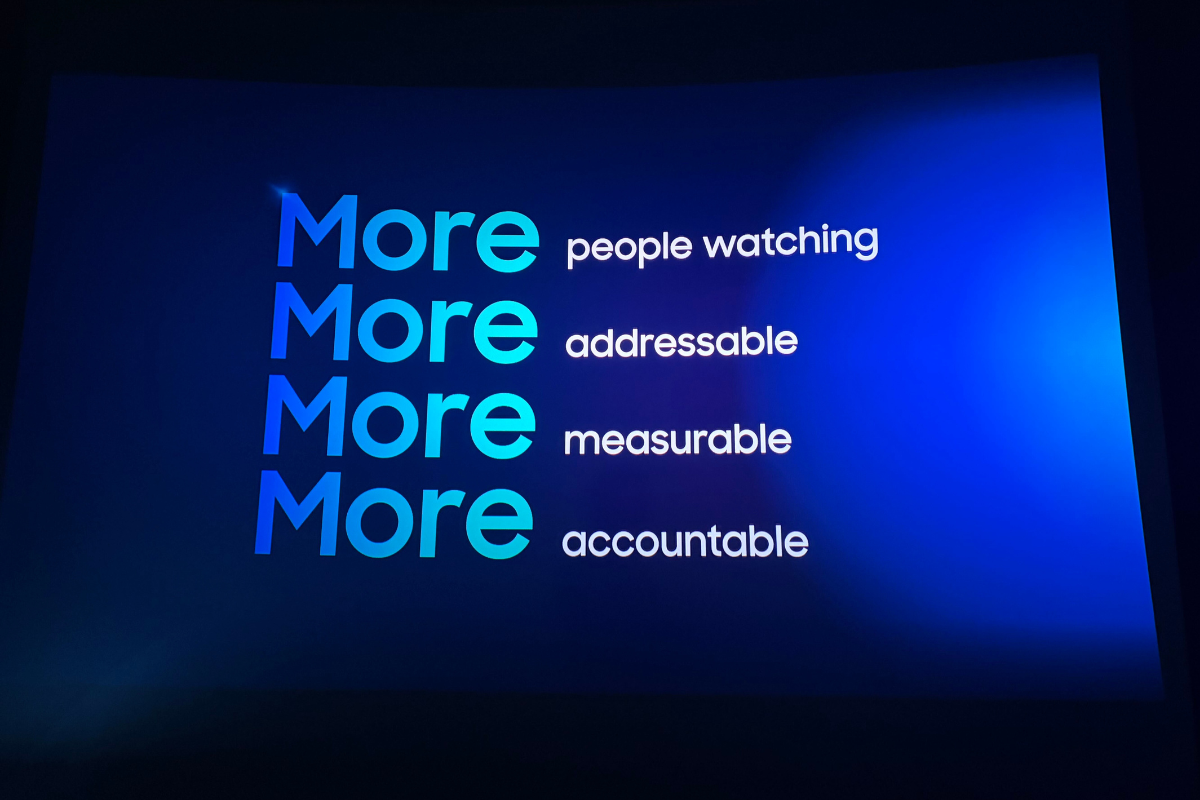
The two new measurement products split along that line. Optimal Reach shows reach across linear and streaming on Samsung TVs, and Smart Outcomes optimises towards site visits, conversions and app installs.
“So, that’s what we’ve really moved towards: going, okay, how do I make that move from insight to action? And then, closely, it would be measurement,” Wheeler said.
The local team is set up to match.
“We have our TV, our concept team, based in Australia, sat next to our data team. And that is very deliberate, because we have all these insights that are collected, and together the teams can see ways of working together with both sides of the data.”
The family still sits down together every night. Samsung bets that the first thing they see when the TV switches on is worth selling.
More from Mediaweek
The leading media trade publication in Australia.
Get our top stories straight to your inbox daily by signing up to our Newsletter
By providing your information, you agree to our Terms of Use and our Privacy Policy. We use vendors that may also process your information to help provide our services.


