



The sports fan has changed. News Australia says marketers haven’t
New research reveals the 7.2 million New Wave Fans reshaping how Australians engage with sport, and where brands need to follow.

Australia’s biggest group of sports fans is no longer the diehard who builds the week around the game.
It is a 7.2 million-strong audience of younger, more culturally diverse fans who are increasingly consuming sport through personalities, social media, fantasy leagues, fashion, entertainment and the stories around the action.
News Australia has put that shift at the centre of its Beyond’27 sport and entertainment pitch, unveiling a new Lives, Not Live strategy designed to move advertiser attention beyond the increasingly crowded live-event window.
The middle of Australian fandom has moved
Research presented by The Growth Distillery general manager Leigh Lavery divided Australian sports audiences into three broad groups: Fanatics, the traditional diehards; New Wave Fans, the everyday middle; and Followers, who engage more lightly for escape, belonging and social connection.
The important change is in the middle.


The leading media trade publication in Australia.
Get our top stories straight to your inbox daily by signing up to our Newsletter
By providing your information, you agree to our Terms of Use and our Privacy Policy. We use vendors that may also process your information to help provide our services.
New Wave Fans now account for 42 per cent of Australian sports fans, or 7.2 million people, up six percentage points year-on-year. Fanatics have fallen five points to 39 per cent, or 6.6 million people, meaning the middle tier has overtaken the traditional diehard for the first time.
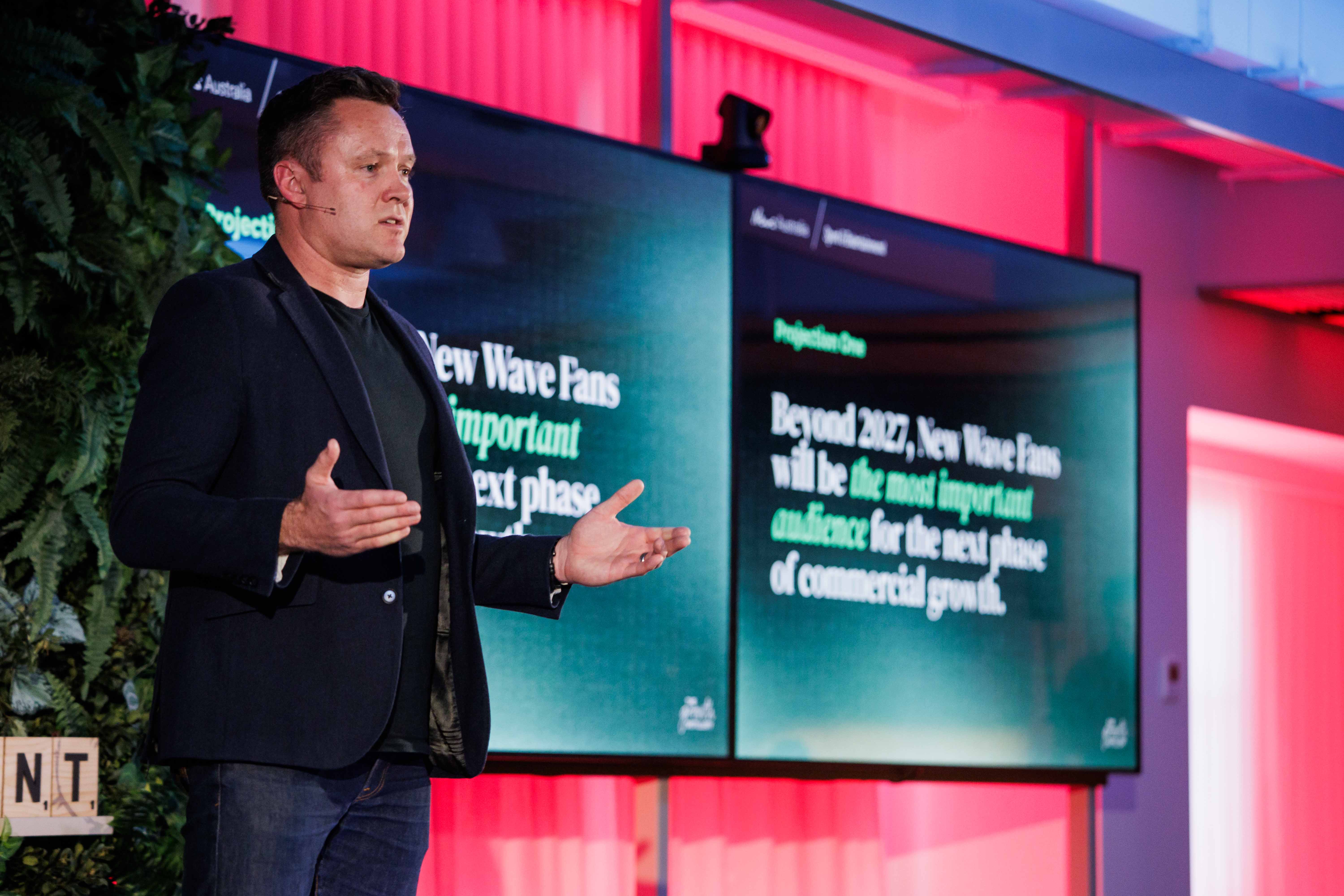
The Growth Distillery said New Wave Fans were also the only sports-fan segment currently growing, with 90 per cent of the past year’s increase in daily sports consumption coming from the group.
Their commercial value is beginning to close the gap with the traditional fan. Fanatics spend about $2,000 each a year across sport and adjacent categories, compared with about $1,700 for a New Wave Fan, according to figures presented at Beyond’27.
But New Wave Fans are more likely to travel for games, pay for hospitality and spend to participate in sport-related experiences. Lavery also presented research showing the group is substantially more willing to pay for sports content.
The Growth Distillery’s Sporting Nation research was based on a survey of 5,000 sports fans conducted in March 2026.
Nearly two-thirds are not watching live sport
The behaviour underneath those numbers is where News Australia sees the larger opportunity for marketers.
Sixty-two per cent of New Wave Fans do not watch any live sport in a typical week. Across sports fans generally, 54 per cent of engagement takes place beyond the live event; among New Wave Fans, that rises to 61 per cent.
The same shift is playing out in entertainment. The Growth Distillery said 56 per cent of audiences consume content beyond the show itself, while around one in three event-goers wants more access to talent, community and behind-the-scenes content.
That comes as Australians juggle an average of 4.5 streaming subscriptions. Entertainment Nation 2026 research found one in three struggles to decide what to watch, play or do, while six in 10 simply open their usual platform and browse.
Lavery said the biggest sporting and entertainment moments will continue to create major peaks of attention, but routine programming between them will face greater pressure.
News Australia’s own audience data points in the same direction: stories about the people and lives around sport averaged about 155,000 page views per article, compared with about 39,000 for live action and results coverage.
The creators living outside the live window
A creator panel at the event gave the research a more human demonstration.
Model and content creator Annalise Dalins, whose social content brings fashion and lifestyle into environments including AFL, tennis and Formula 1, described herself as someone who initially entered football without understanding the game. Rather than being a limitation, that became part of her draw.
“My content doesn't actually feature one minute of the game itself. It's everything around it,” Dalins said.
She said fashion became her route into sport and allowed her to speak to audiences, particularly younger women, who may be attracted to the community and experience without necessarily knowing every rule.
Former NRL player and Bloke in a Bar host Denan Kemp offered another example of the economics of the game around the game.
Kemp said an interview with an experienced NRL player could attract roughly 20,000 to 30,000 downloads, while his Monday program discussing the weekend’s rugby league storylines and drama could reach about 120,000.
His own media habits tell a similar story.
“I reckon, I actually probably listen to more UFC podcasts than actual fights,” Kemp said.
That distinction is central to News Australia’s argument: the live event remains the spark, but increasingly it is the surrounding personalities, debates, rituals and communities that keep the audience engaged.
News Australia builds the commercial response
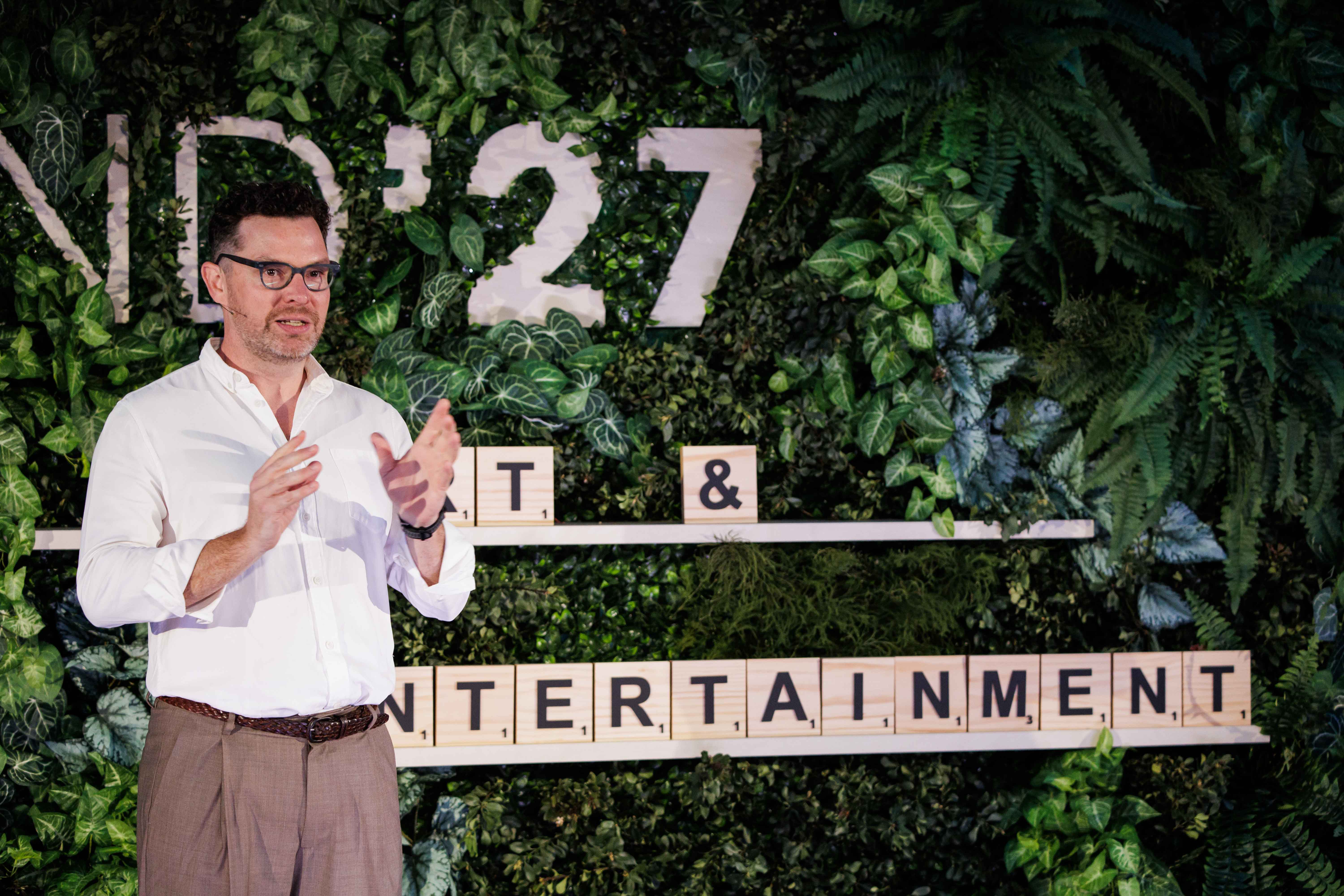
News Australia Sport & Entertainment Industry Director Luke Haynes said marketers had traditionally concentrated sponsorship investment around the moment of competition despite much of the audience’s engagement taking place elsewhere.
“Fandom doesn’t end at the final siren or the closing credits. Fan passion is always-on, yet marketing dollars remain heavily concentrated on the live moment,” Haynes said.
“We are helping brands build lasting relevance by moving into the spaces where the surrounding conversations actually play out, giving them room to contribute rather than interrupt.”
Haynes also pointed to the problem facing brands fighting for attention inside the live window. EssenceMediacom research cited during the presentation found viewers encounter an average of 45 brands during a sports game, while average sponsorship brand recall sits at just 29 per cent.
Put another way, of those 45 brands, only about 13 are likely to be recalled.
That clutter is part of the rationale behind News Australia’s push to give advertisers more space around the event, rather than concentrating their presence inside the same narrow window.
The publisher has developed three headline commercial initiatives around that proposition.
- MVP Major Event Framework: a model built around moments, voices and participation, intended to combine peak event-day media with content, trusted voices and fan experiences around major events including the 2027 Rugby World Cup and 2028 Los Angeles Olympic and Paralympic Games.
- Access All Areas: a social-first branded video franchise taking audiences into the lives of athletes, artists and talent, distributed across CODE Sports, Vogue Australia, GQ Australia, news.com.au and Tubi.
- SuperCoach & CODE Sports Creator Network: an offering combining fantasy-sports participation with creator-led content around leagues including the AFL, NRL, EPL, NBA and NBL.
Haynes told the audience the MVP framework could include high-impact network takeovers and category exclusivity during peak moments before extending a brand into live blogs, podcasts, branded content, social amplification and fan participation.
The proposition is effectively an argument against treating sponsorship as a finite block of visibility around kick-off, tip-off or opening night.
From watching to participating
Participation is another major part of the strategy.
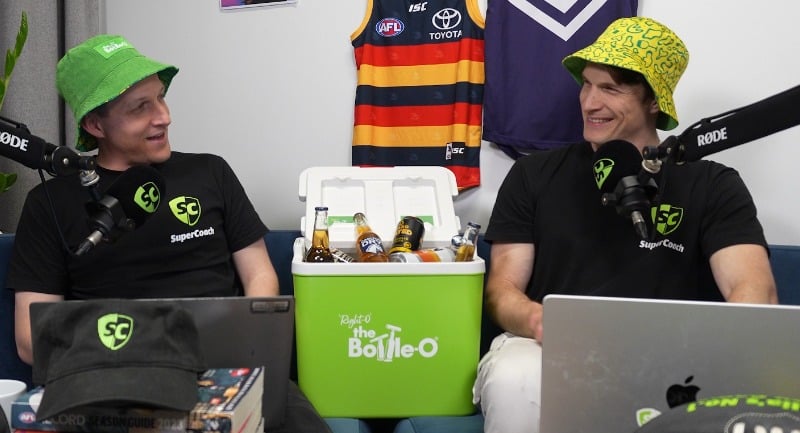
News Australia pointed to SuperCoach as an environment where almost half a million players can spend hours engaging with sport each week, rather than simply arriving for a live broadcast and leaving at the final siren.
The new CODE Sports Creator Network is designed to layer personalities, analysis and social distribution over those existing fan rituals.
It follows News Australia’s recent Match with Mates campaign with The Bottle-O, which already uses SuperCoach, CODE Sports, editorial content and activations to reach younger fans before, during and after major sporting events.
The broader aim is to connect areas of fandom that were once treated as separate categories. A sports fan can enter through fashion, music, food, travel or a personality; an entertainment audience can extend its relationship with a program through creators, social conversation and live experiences.
For a publisher with brands spanning news, sport, prestige, entertainment, streaming and lifestyle, News Australia is pitching that fragmentation as an advantage.
‘A marketing plan anchored solely to the live window is no longer a safe bet’
News Australia Chief Revenue Officer Lou Barrett said the shift is already influencing how younger fans decide which brands belong in their world.
“New Wave Fans are deciding right now which brands feel culturally credible and which ones only showed up for the big game,” Barrett said.
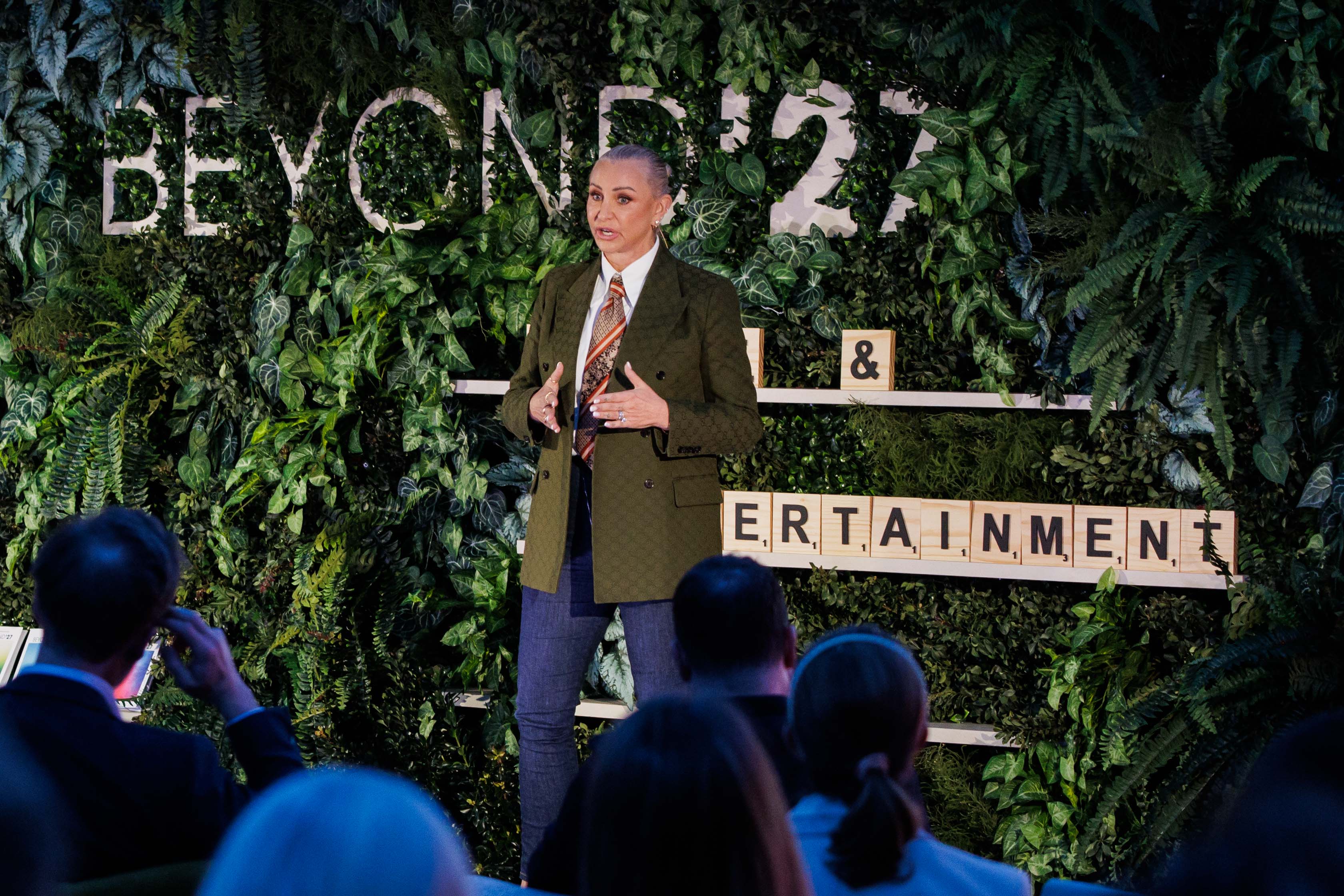
“A marketing plan anchored solely to the live window is no longer a safe bet. These solutions give brands a way to show up consistently across the complete fan journey.”
It is a useful distinction in a sponsorship market still geared heavily towards owning the biggest possible moment.
News Australia is not arguing those moments matter less. In fact, its Beyond’27 thesis is that the biggest peaks could become more valuable as everyday attention fragments.
The bet is that what happens around them will become more valuable too.
More from Mediaweek
The leading media trade publication in Australia.
Get our top stories straight to your inbox daily by signing up to our Newsletter
By providing your information, you agree to our Terms of Use and our Privacy Policy. We use vendors that may also process your information to help provide our services.


