



Surfing Super League CEO: ‘Every sport lives and dies on television’
Surfing Super League founder Chris Mater says locking in Foxtel early was the critical step in building the new competition.

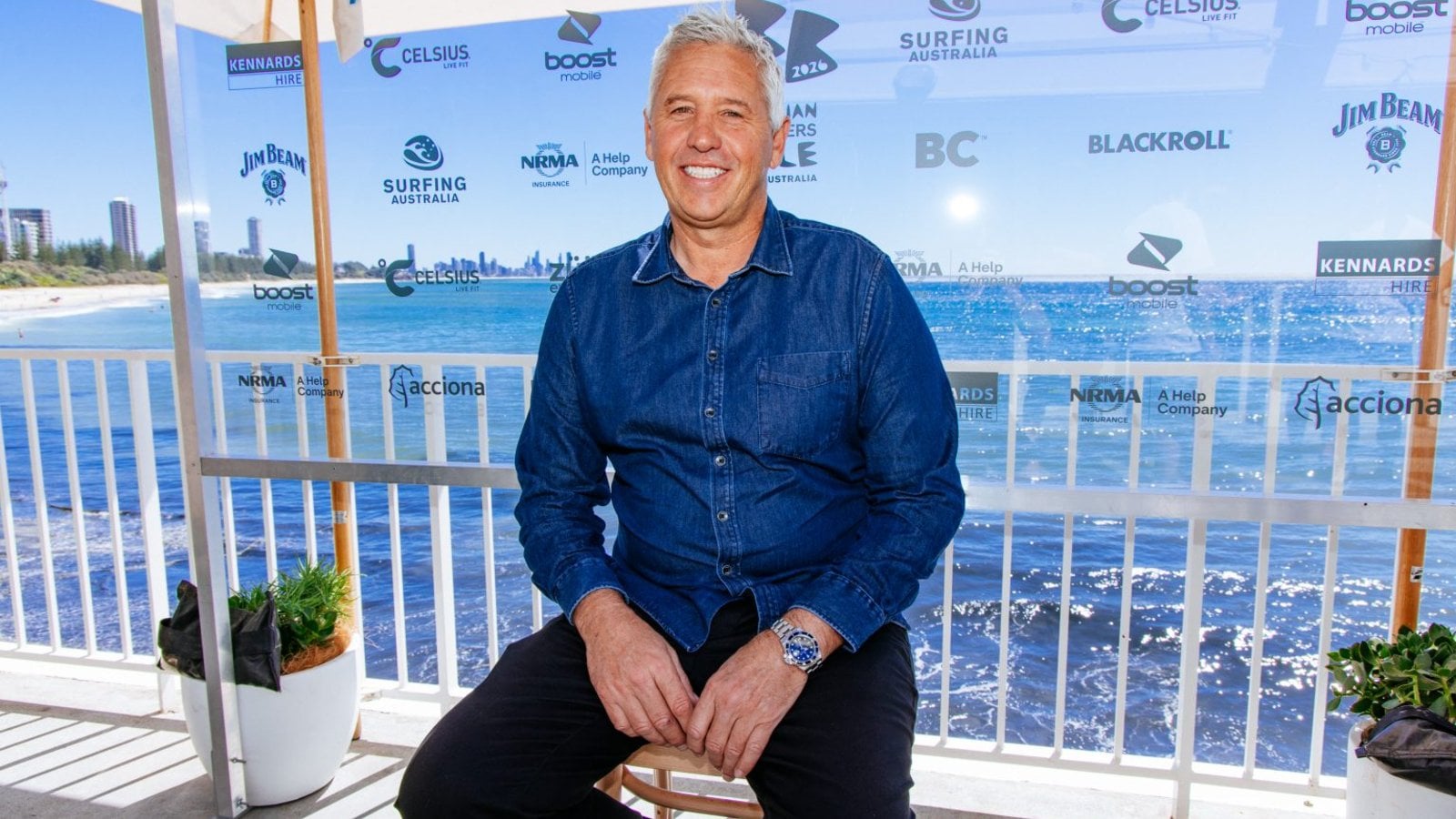
Surfing Super League founder and CEO Chris Mater says securing Foxtel as the competition's broadcast home more than a year before its 2028 debut was the foundation of the business.
“Having a broadcaster on board was the critical thing,” Mater told Mediaweek. His view, after years working in Australian surfing and at Red Bull, is that “every sport lives and dies on television”.
READ MORE: Surfing Australia extends partnership with NRMA Insurance to boost grassroots and women's programs
A surf competition built for television
Mater's starting point was a team format already familiar at amateur club level.
“There's a format that is done at the amateur club level, that's been around for decades. And I was looking at that format going, that is perfect for television. Let's professionalise that format.”
The Surfing Super League is designed around fixed 90-minute games, with four teams competing at once. Each fields four surfers during a game, three men and one woman, across two 40-minute halves separated by a 10-minute break.


The leading media trade publication in Australia.
Get our top stories straight to your inbox daily by signing up to our Newsletter
By providing your information, you agree to our Terms of Use and our Privacy Policy. We use vendors that may also process your information to help provide our services.
The format also uses a Power Surfer and relay structure, with surfers moving in and out of the water rather than spending the entire contest waiting for waves.
That distinction matters when trying to guarantee a broadcast window in a sport traditionally dependent on swell and weather conditions.
“We don't need perfect conditions,” Mater said.
He said the movement between the beach and water creates activity even when the waves themselves are not ideal, with running, paddling, tactics and transitions becoming part of the spectacle.
Foxtel gives the league a fixed weekend window
Under the exclusive broadcast agreement, the inaugural season will be carried across Foxtel, Kayo Sports and Binge.
The eight-week season is slated to deliver 15 live games across 30 hours of live weekend broadcast windows. Foxtel Group platforms have committed to at least 50 hours across the season, with a further 20 hours of shoulder programming.
Live broadcasts are scheduled for locked two-hour windows beginning at 4pm AEDT on Saturdays and Sundays, with each telecast comprising a 10-minute pre-game show, the 90-minute contest and a 20-minute post-game show.
For Mater, having that regular appointment viewing was “mission critical”. The aim is to move surfing closer to the rhythm of established domestic leagues, where audiences know when a game starts and can follow teams across an entire season.
Turning the beach into a game-day experience
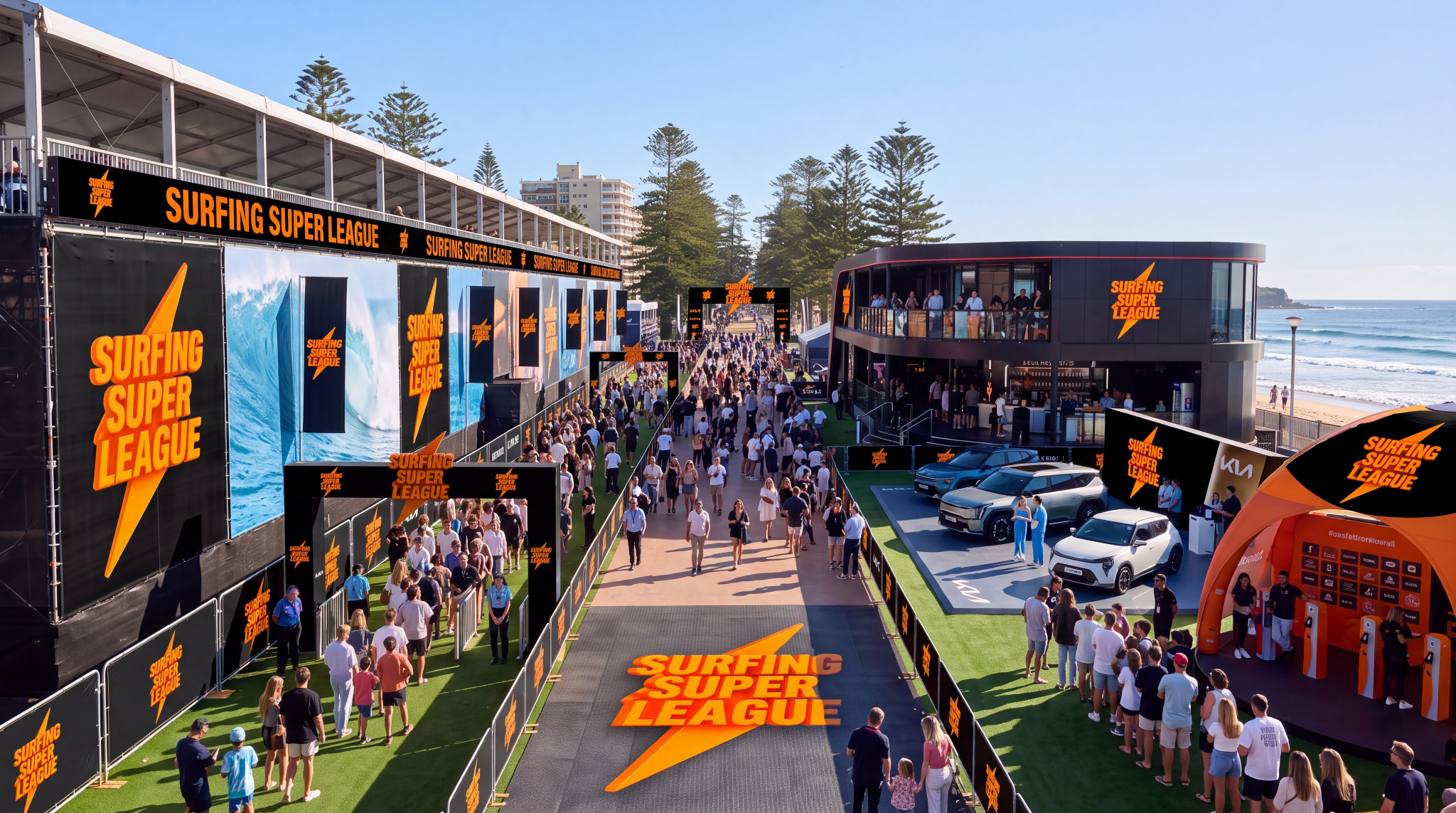
Surfing Super League is also trying to make the live event bigger than the competition itself, borrowing from sports such as the Australian Open where fans can spend hours around the venue before and after play.
“Before you even get to the surfing, there's a festival which is really unique at the beach at summer,” Mater said.
The league plans dedicated sport, surfing, kids, music and culture zones around the beach stadium, with fans moving into the stands for the 90-minute contest before returning to the festival afterwards.
Mater said the sporting portion itself is intended to feel closer to attending a traditional domestic league game: arrive for a fixed start time, watch a defined contest, get a result and leave knowing who won.
The $89,000 athlete contract
Surfing Super League will move away from a prize-money model, with 48 contracted surfers each receiving $89,000 for the eight-week season. The league is also promising equal pay regardless of gender.
For Mater, the salary structure addresses something he saw first-hand while running Surfing Australia.
“I worked with Surfing Australia and the pay and the compensation just isn't there. The surf industry is not what it used to be,” he said.
He said the aim was to make the short season financially meaningful enough for athletes to build the rest of their year around surfing.
“Having $89,000, that can set someone up to have a career.”
Athletes will remain free to retain personal sponsors and compete elsewhere outside the Surfing Super League season, including on international tours.
The commercial bet on Australian surfing
Mater's broader argument is that Australia’s huge surfing participation and cultural footprint have not yet been matched by a major domestic professional league.
There is economic weight behind the participation base. Australian National University research published in 2024, based on an online survey of 569 Australian surfers, estimated average domestic surf-related expenditure at $3,719 per adult surfer each year.
Applying that figure across an estimated 727,328 Australian adult surfers produced a direct annual economic contribution of $2.71 billion.
Surfing Super League is now trying to capture a slice of that activity through broadcast rights, sponsorship, memberships, hospitality and eventually franchise ownership. Commercial tenders have opened ahead of the competition's planned 2028 launch.
Mater said the first season's success would ultimately be judged across several measures, including television ratings, live attendance, registered fans, brand partnerships and third-party media coverage.
“So it's not one thing, there's several things and we're highly confident that we'll get all those things.”
More from Mediaweek
The leading media trade publication in Australia.
Get our top stories straight to your inbox daily by signing up to our Newsletter
By providing your information, you agree to our Terms of Use and our Privacy Policy. We use vendors that may also process your information to help provide our services.


