



Australians are reading more news but paying for less of it: Deloitte
Weekly news time climbs to 2h 30m, yet just 3% of households now pay for news, with ads and paywalls the chief barriers.

Australians are spending more time with news than they did a year ago, but fewer are paying for it. Deloitte’s 2026 Media & Entertainment Consumer Insights report found weekly news and magazine consumption rose to 2h 30m. Over the same period, the share of households holding a news subscription fell to 3%.
Weekly news time is up 25 minutes from 2h 05m in 2025. The share of households paying for news fell to 5%. This is the report's 15th edition. An independent research organisation surveyed more than 2,000 Australians aged 16 to 91 in July and August 2026.
Ads and paywalls block the way
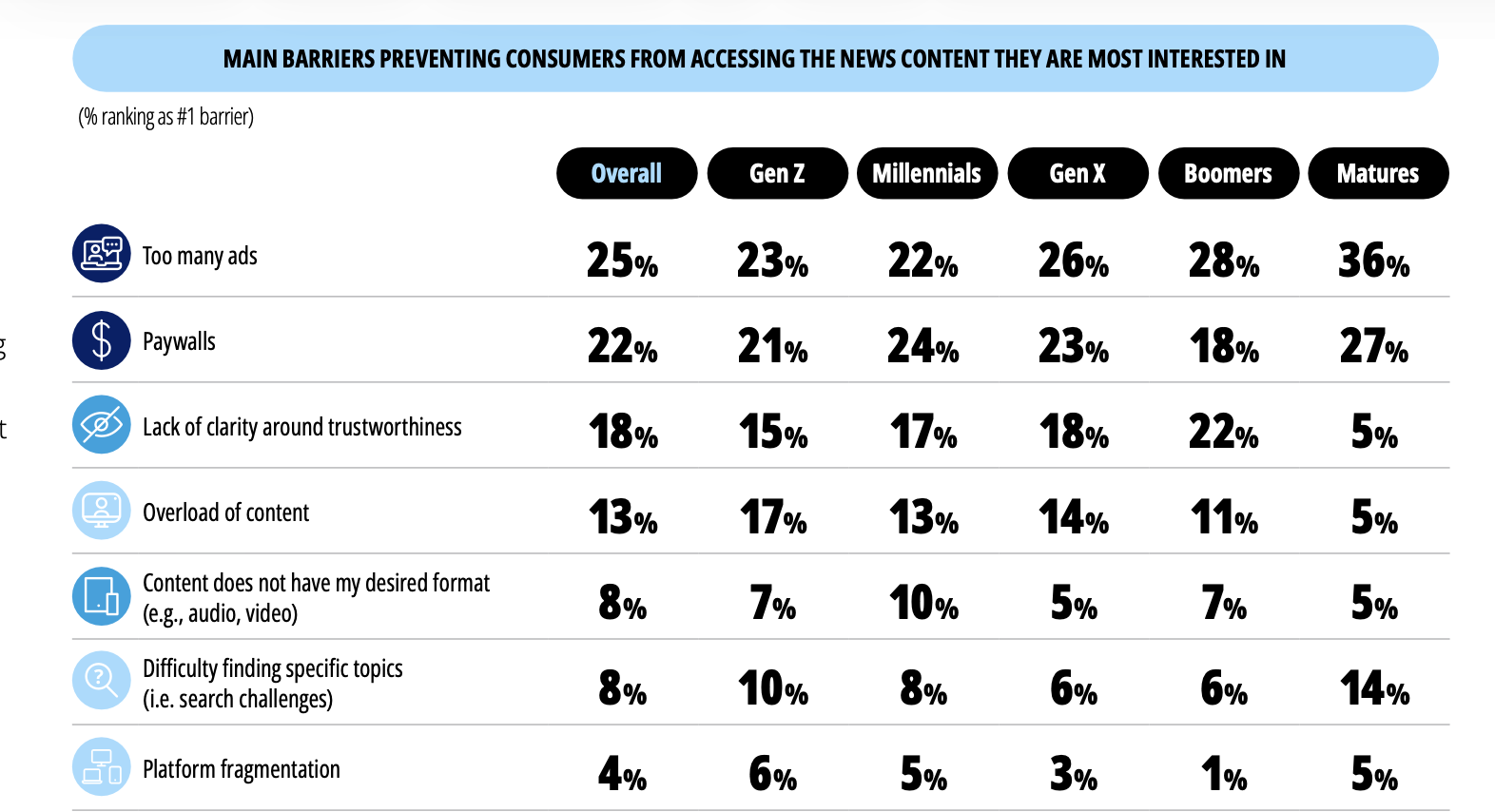
According to the report, 47% of respondents ranked too many ads (25%) or paywalls (22%) as the main barrier to accessing the news content they are most interested in.
The two complaints overlap. Among respondents who named paywalls as their biggest barrier, 53% also ranked too many ads among their top three concerns.
Too many ads was the leading barrier for every generation except Millennials, who ranked paywalls first (24%). Among Boomers, 28% named ads as the main barrier.
Trust was the next most common barrier. Lack of clarity about whether news content is trustworthy was the main barrier for 18% of respondents, rising to 22% among Boomers.
Every generation is consuming more
Every generation reported spending more time with news and magazine content than in 2025.


The leading media trade publication in Australia.
Get our top stories straight to your inbox daily by signing up to our Newsletter
By providing your information, you agree to our Terms of Use and our Privacy Policy. We use vendors that may also process your information to help provide our services.
Boomers recorded 3h 40m a week, up from 3h 05m. Millennials rose to 2h 35m from 1h 55m, and Gen X to 2h 10m from 1h 55m. Gen Z remained the lightest news consumers at 1h 10m, up from 1h 05m.
National affairs and politics (68%), local news (67%), and international affairs and politics (64%) were the genres respondents most actively sought. Interest in lifestyle news varied widely by age: 47% overall, 57% of Millennials, 53% of Gen Z, and 36% of Boomers. Pop culture and entertainment drew 40% overall and 57% of Gen Z.
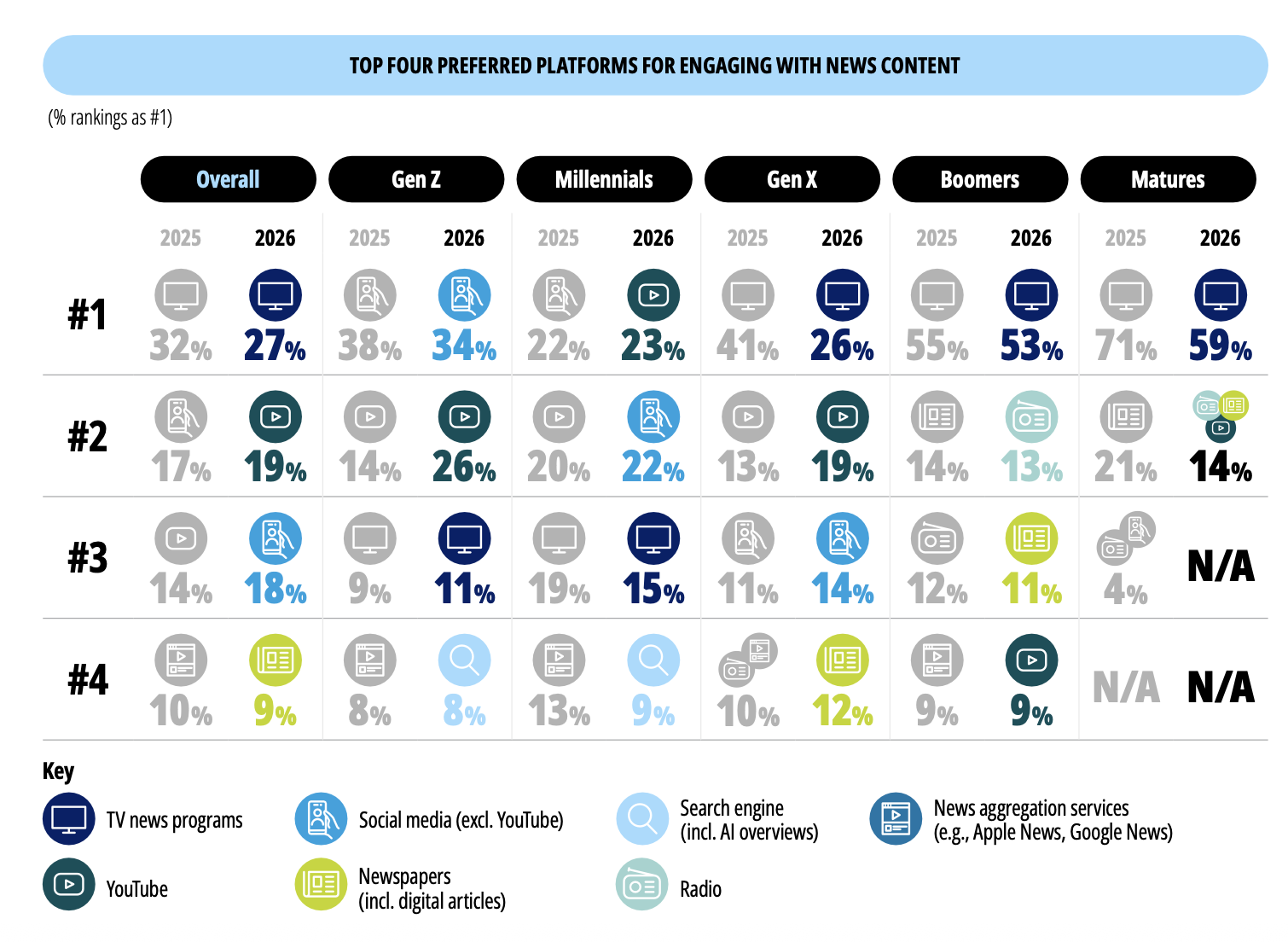
TV news programs remained the most preferred news platform overall at 27%, down from 32% in 2025. YouTube ranked second at 19%. Social media (excluding YouTube) ranked first for Gen Z at 34%, while 53% of Boomers named TV news programs.
What else the report found
YouTube outpaces paid streaming
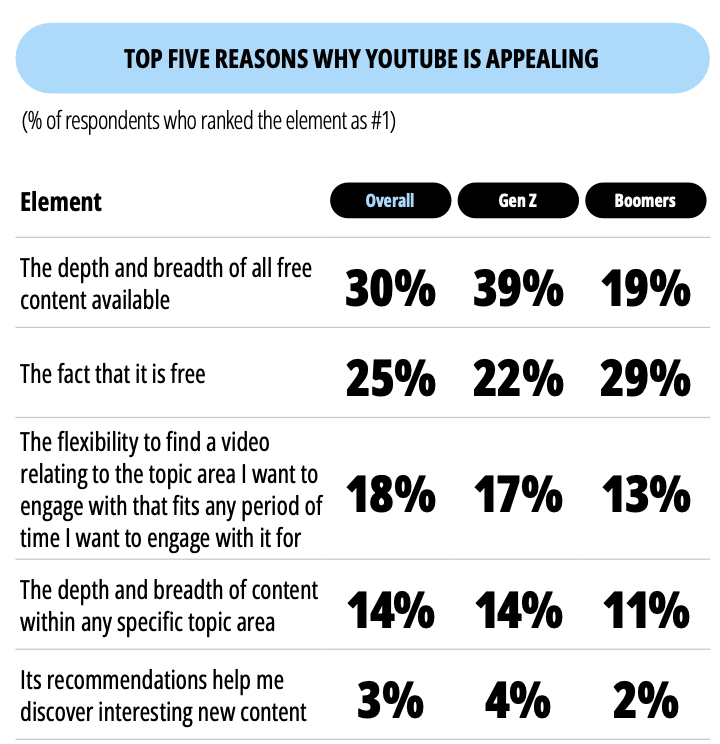
The report found 89% of respondents watch YouTube, compared with 81% who have access to at least one paid video subscription service.
The share who feel they don't need a paid video subscription because YouTube meets their needs rose to 45% from 38% in 2025. That figure reached 54% among Gen Z and 37% among Boomers.
In a section of the report directed at drama commissioners, Deloitte asked: “What is your answer to YouTube for under-35s: compete, commission from it, or concede the segment?”
Households spend below their own budget
Average monthly household spend on media and entertainment subscriptions fell 6% to $73, from $78 in 2025. Respondents put a reasonable monthly budget at $97.
“Households are not constrained by what they think is reasonable to spend. They are actively choosing to spend less,” the report said.
Households held an average of 3.8 subscriptions, up from 3.7. The report found 75% of respondents are worried about the cumulative cost of their subscriptions, and 76% periodically review their subscription stack, up from 71%.
Among those who cancelled a paid video subscription, 65% ranked reducing overall spend among their top three reasons. A further 38% cited a price increase where similar, cheaper alternatives existed, up from 34% in 2025. That figure was 42% among Gen Z.
Gen Z extends trust to creators and AI
Respondents trusted traditional news sources most. National Australian news publishers were at least moderately trusted by 79% of Gen Z and 80% of Boomers.
The generations split on non-traditional sources. News published by content creators was at least moderately trusted by 63% of Gen Z and 15% of Boomers. News generated on AI platforms was trusted by 49% of Gen Z and 21% of Boomers.
“Gen Z is the most trusting, four times as likely as Boomers to trust news published by content creators and two times as likely to trust news generated on AI platforms,” the report said.
Across all respondents, 75% believe AI-generated content has made it harder to know what is real online. The report found 84% believe platforms and publishers should be legally required to label AI-generated content. A further 71% said they would stop using a platform that did not clearly disclose AI-generated content.
Social media time and the under-16 ban
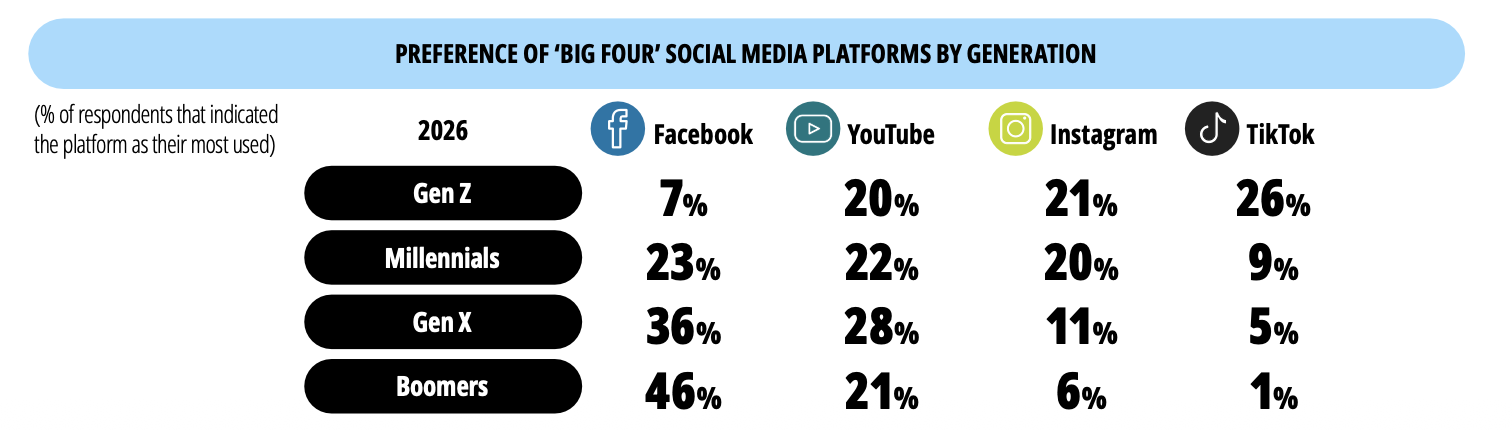
Gen Z’s average weekly social media use fell by about 20 minutes, according to the report.
“This could be due to the social media ban coming into effect,” the report said.
The report’s Gen Z group covers respondents aged 16 to 29. Australia’s social media minimum age restrictions took effect on 10 December 2025 and apply to users under 16.
Overall social media use rose, led by Gen X (up 26%) and Boomers (up 28%). Half of respondents (50%) said they regularly spend more time on social media than intended, up from 47% in 2025.
Loyalty sits with the show
Two in three respondents (66%) said their strongest relationship with a content brand is with the individual TV show they watch. Only 21% named the streaming provider or broadcaster, 8% the studio, and 4% their aggregation service.
“Consumers are loyal to things they have paid for, ascribing a certain value to that service or platform,” the report said. “Typically, they relate more strongly to the show itself than the broadcaster, streaming platform, studio or aggregation service.”
No ads or restrictions was the feature SVOD subscribers most often said would keep them subscribed, at 38%, unchanged from 2025. Access to first-run movies followed at 37%, down from 39%. Among Gen Z, 49% nominated no ads or restrictions.
Deloitte notes that the results reflect self-reported statistics, “what respondents think they do, not necessarily what they actually do”.
More from Mediaweek
The leading media trade publication in Australia.
Get our top stories straight to your inbox daily by signing up to our Newsletter
By providing your information, you agree to our Terms of Use and our Privacy Policy. We use vendors that may also process your information to help provide our services.


