



Retailtainment is back. But did shopping centres learn anything the first time?
Those That Do’s Ben Walker on why experience is back as a footfall strategy, and why the safe, checklist approach will fail.

By Ben Walker, Chief Doer, Those That Do
Commercial property company CBRE now says retailtainment, interactive installations and experiential concepts are increasingly important drivers of footfall. Shopping centres are being recast as destinations for entertainment, social connection and shared moments, not just transactions.
If that sounds familiar, it should. We were saying almost exactly the same thing in 2016. The word was everywhere, but then it quietly disappeared. Now a global property firm has brought it back as a footfall strategy. This isn’t a new idea; it’s an old idea that has finally found its business case.
2016: the first time round
In 2016, retailtainment was the industry’s answer to a looming threat: online was eating share. The “retail apocalypse” headlines were about to arrive.
Every conference deck had a slide saying stores must become experiences. The ideas were genuinely good. Westfield published its Destination 2028 vision of centres as hubs for wellness, learning and play. Pop-up “Instagram museums” proved people would queue and pay to stand inside a brand. Pokémon Go briefly turned car parks and food courts into the country's busiest real estate.
Then most of it stalled. Too often, retailtainment meant a photo wall in the atrium, a weekend kids’ show, or a branded installation with no reason to return. It was decoration, not destination. Marketing budgets owned it, not the business model.
And when budgets tightened, it was the first thing cut.


The leading media trade publication in Australia.
Get our top stories straight to your inbox daily by signing up to our Newsletter
By providing your information, you agree to our Terms of Use and our Privacy Policy. We use vendors that may also process your information to help provide our services.
Why it’s different this time
In 2016, experience was a defensive play against e-commerce. In 2026, it’s how the strongest centres are already winning.
The numbers have caught up with the theory. CBRE’s Australian research calls food the “engine room” of shopping centres, driving visitation, dwell time and cross-spend (CBRE via ReadyMedia). In Europe, its H1 2026 summary reports the broadest gains in footfall, sales and occupancy since before the pandemic, with “experience centres” tracked as a format of their own.
The audience has changed too. A generation raised on screens is hungry for things that only happen in a room with other people. Loneliness is a public health conversation. Gaming, fandom and sport have become real-world social events.
The biggest shift since 2016 is that we no longer live in a monoculture. Back then, people watched the same shows, chased the same Pokémon and queued for the same pop-ups. Today, culture has splintered into thousands of communities, feeds and fandoms. There’s no “general public” left to design for.
People don’t need a reason to buy in person; they need a reason to be somewhere. That’s the full circle.
Retailtainment has stopped being a marketing gimmick and become a property strategy.
The risk: conformity, again
Here’s our worry. When a trend is stated in the mainstream, it’s already at maturity and has the potential to stop being brave and start being safe, the expected. And ‘safe’ is where retailtainment went to die last time.
We can already see the template forming. The same immersive light room. The same oversized inflatable. The same “selfie moment” that looks identical in Chadstone, Dubai Mall and Westfield Stratford. Experience by checklist is still a checklist.
Most centres still try to be a catch-all for everyone. That’s how you end up with the generic claw machine: something everyone ‘gets’, and nobody cares about. Designing for the masses is where insights go to die.
It’s important that brands bring to life their persona - not any brand can do that ‘claw machine’.
And when footfall is suggested as the goal, it isn’t; it’s the by-product. People walk past a thousand installations a year. They go back to the ones that gave them something they couldn’t get anywhere else.
What to do differently this time
If 2016 taught us anything, it’s that experience only works when it’s built into the business, not bolted onto the atrium.
Design for a specific human and a specific need. Niche travels.
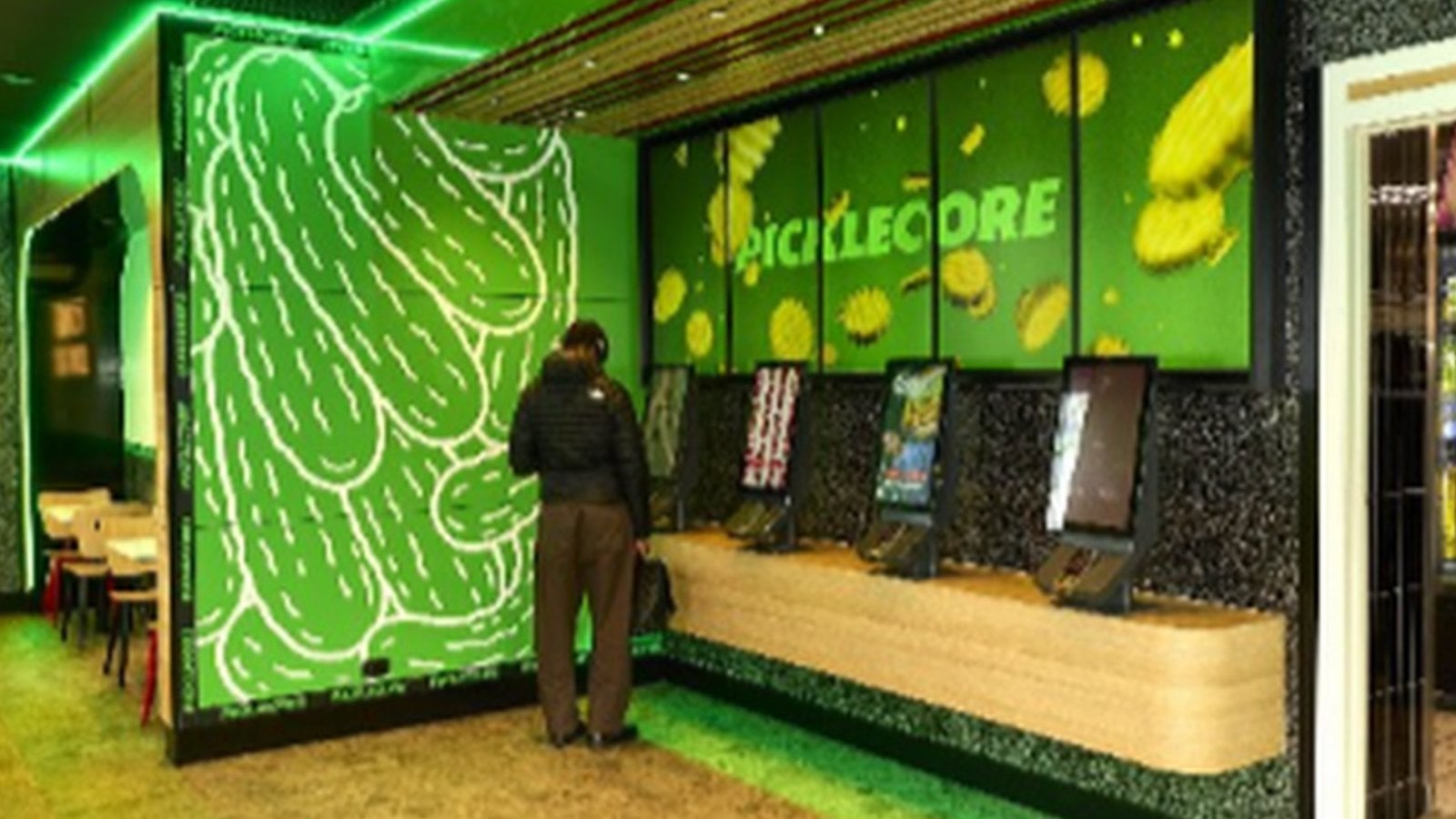
Our recent work with KFC on Picklecore was built for a niche on purpose. The campaign treated pickle obsession like a fashion micro-trend, turning a flagship KFC restaurant into its home: pickle green in place of KFC red, neon lighting, pickle murals, pickle stools, and a three-tier pickle chandelier. Plenty of people don’t like pickles, but it wasn’t designed for them. It was designed for the pickle-obsessed and the pickle-curious, and that specificity is what made it a place worth visiting and worth talking about.
Here is a checklist for doing retailtainment well.
- Build for return, not reach. Design programs, seasons and communities that give people a reason to come back next week and next month, not a one-off post.
- Close the loop to conversion. See it, try it, buy it, love it. An experience that never connects to a purchase is just a nice afternoon.
- Start with culture, not a floorplan. Gaming, sport, food and fandom already gather people. Plug into what they’re doing, rather than inventing a reason for them to show up.
- Make it unrepeatable. If it could run in any centre in the world, it won’t be remembered in yours.
- Measure behaviour. Dwell time, repeat visits and cross-spend tell you more than a headcount at the door.
Retailtainment has come full circle. This time, the brands and centres that win won’t be the ones that follow the playbook; they’ll be the ones brave enough to break it.
More from Mediaweek
The leading media trade publication in Australia.
Get our top stories straight to your inbox daily by signing up to our Newsletter
By providing your information, you agree to our Terms of Use and our Privacy Policy. We use vendors that may also process your information to help provide our services.


