



Tech experts say the privacy 'horse has bolted’ with Kmart’s $89 smart glasses
Trevor Long says the privacy debate must extend beyond Kmart’s sold-out camera glasses to photography in public.
.jpg%3Fv%3D1785801144404&w=3840&q=100)
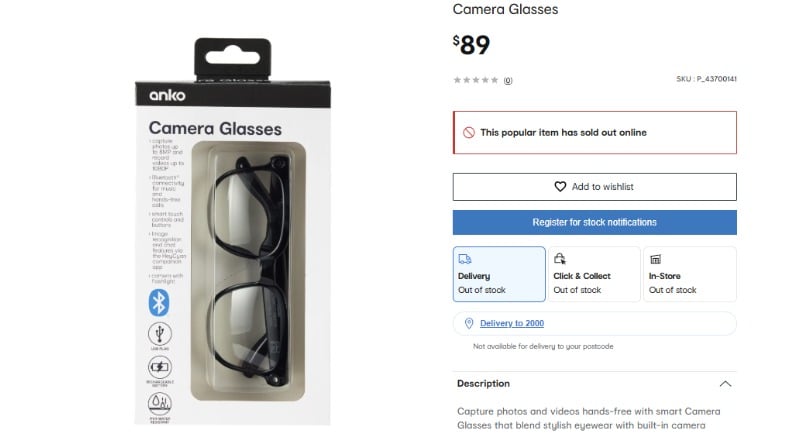
Kmart’s $89 Anko camera glasses have sold out across Australia. The launch puts a low-cost version of Meta’s smart eyewear into a much wider market.
The rush has reignited concerns about people being photographed or filmed without knowing. But Trevor Long, technology commentator and editor of EFTM.com, told Mediaweek the product is only one part of the debate.
He believes banning one model would do little to stop camera-equipped glasses spreading.
READ MORE: Meta launches AI smart glasses in Australia
What can Kmart’s smart glasses do?
- Take 8-megapixel photos
- Record 1080p high-definition video
- Transfer photos and videos to a connected smartphone
- Play music, answer calls and access an AI assistant
The Anko glasses closely follow the format popularised by Ray-Ban Meta. Their $89 price puts camera wearables within reach of far more consumers.


The leading media trade publication in Australia.
Get our top stories straight to your inbox daily by signing up to our Newsletter
By providing your information, you agree to our Terms of Use and our Privacy Policy. We use vendors that may also process your information to help provide our services.
Why are the glasses raising privacy concerns?
Long said the risk was real, but not unique to smart glasses.
“There’s no doubt they’re a privacy concern, but so are any cameras. The reality is we are carrying cameras around with us every single day, and I don’t think that the average person would have any idea who’s filming them at any time when they’re in public.”
He noted that a smartphone can record from a person’s hand or pocket without a visible signal. A photographer can also capture detailed images from a distance with a long lens.
“We need to balance the privacy concerns around one product with the general principle of photography in public places,” Long said.
The difference is that glasses naturally point wherever the wearer looks. Photos and videos can also move to a smartphone almost immediately, making them easy to share.
“The simple concern here is that you can be having a conversation with someone or walking down the street and not focusing intently on the actual glasses people are wearing and looking for this tiny little white flashing light, and you could be recorded,” Long said.
“A photo could be taken of you, a video could be taken of you while you’re walking or sitting or enjoying your own peace and quiet in public. That’s the simple concern.”
Can camera glasses be policed?
Long’s view is blunt: “In simple terms I think the horse has bolted.”
Meta helped establish the category, but manufacturers have already produced cheaper alternatives. Long said removing one product or brand would not remove access.
“If it’s not Kmart it’s another brand. If it’s not a major retailer it’s an online seller.”
That creates a challenge for retailers, regulators and venues considering bans. The technology is small, widely available and increasingly difficult to distinguish from ordinary eyewear.
What separates Meta from cheaper rivals?
Long said Meta’s glasses offer better hardware, image quality and software. He also questioned whether cheaper brands would match its privacy safeguards.
Ray-Ban says a front-facing capture LED signals photos and video recording on its Meta glasses. Long pointed to that protection as one area where low-cost competitors may fall short.
“If you try and cover up the little white light that indicates they’re recording, they won’t record. Will that be the same with different and more affordable brands that come to market? I doubt it.”
How can people spot camera glasses?
Long wears Ray-Ban Meta glasses as his everyday sunglasses, often with the power switched off. He said that makes assumptions about a wearer difficult.
“It is very hard to tell,” he said. “Normally I’m wearing them, and they’re turned off.”
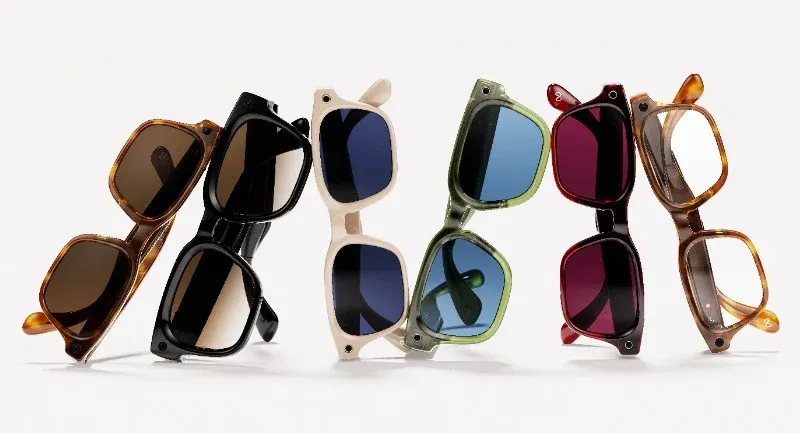
On Ray-Ban Wayfarer models, a small circular camera replaces the usual silver detail on the front corner. Spotting it requires a close look.
“You look close enough, you can certainly see the lenses, but you need to be close, and that’s, I think, the greatest concern here: should there be more knowledge, more alertness, more awareness,” Long said.
Should privacy rules focus on the technology?
Long argued that the debate should move beyond a single device. He said the central question was whether people should be photographed in public without permission.
“If we really want to have a conversation about privacy, we shouldn’t be having a conversation about a particular technology or glasses. We should be talking about whether or not it should be legal to photograph anyone in public without their permission.”
Such a change would reach well beyond smart glasses. It could affect street photography, news gathering and paparazzi images, as well as everyday smartphone use.
Kmart has described camera glasses as part of an established wearable technology category. A spokesperson told The Guardian that customers should use the product “responsibly, respectfully and in accordance with applicable laws and community expectations around privacy”.
Is this really a new privacy fight?
Long pointed to the late-19th-century backlash against portable cameras. Intrusive amateur photographers became known as “Kodak fiends” as smaller cameras changed who could take photographs in public.
He sees a parallel with today’s response to camera glasses. New technology can create legitimate concerns before social rules and public expectations catch up.
Long also said the devices have uses beyond content capture. Their AI features can help wearers identify landmarks and understand their surroundings.
He recalled using smart glasses to identify a building while travelling in Washington and learn its history. “That’s remarkable technology. I wasn’t doing anything to breach anyone’s privacy. I was just trying to educate myself on my surroundings.”
The challenge is whether laws, product safeguards and social norms can keep pace as new smart glasses become cheaper and harder to spot.
More from Mediaweek
The leading media trade publication in Australia.
Get our top stories straight to your inbox daily by signing up to our Newsletter
By providing your information, you agree to our Terms of Use and our Privacy Policy. We use vendors that may also process your information to help provide our services.


