


Alex Horton's $12,000 fake talent agency gets a reality star bump on its way to 128,000 Instagram views
Sked Social bought a storyline, Tahnee Cook brought the reach, and now brands are circling a big, 24-episode season two.

Alex Horton spent $12,000 of his own money pretending to start a talent agency. If things keep going this way, he may have to start one for real.
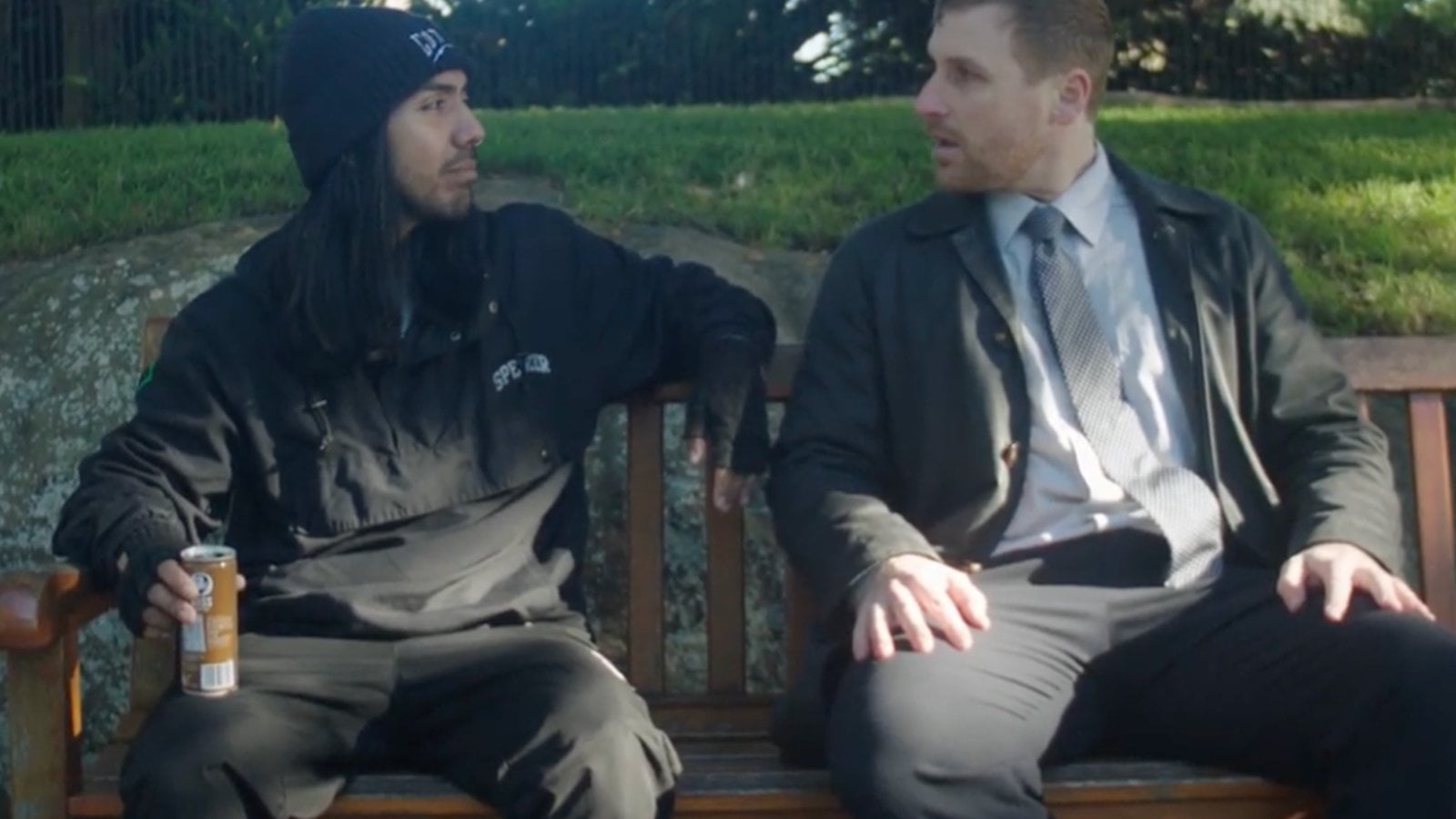
Horton created, wrote, and directed Clique, a 12-episode vertical mockumentary about building a talent agency for creators, and he also plays the lead. The series premiered at an invite-only screening at Palace Central Cinemas Sydney and is now rolling out across Instagram, TikTok, LinkedIn, and YouTube. The production team believes it's the first independently made Australian vertical series to premiere in a cinema.
The whole production cost less than a decent second-hand hatchback.
"Making and launching the 12 episodes cost $17,000, and I put in $12,000 of my own money," Horton told Mediaweek. "That was a deliberate risk to kickstart this show, concept and world that we're building."
The other $5,000 came from social media management platform Sked Social, in a single brand deal.
"I'm passionate about making something original, with a voice that's distinctly Australian, and the comments on the episodes tell us the people watching appreciate the quality," Horton said.


The leading media trade publication in Australia.
Get our top stories straight to your inbox daily by signing up to our Newsletter
By providing your information, you agree to our Terms of Use and our Privacy Policy. We use vendors that may also process your information to help provide our services.
The Tahnee Cook effect
The first drop, episodes one to four, ran from 22 to 28 November. That week, Instagram delivered 66,948 views, up 113.8% from 31,314 the week before. Across 27 days, including cast introduction reels from 2 November and a pre-launch push built around the cinema premiere, Instagram reached 128,207 views.
The per-episode numbers look more interesting. Episode one drew 3,200 views, episode two 3,300, and episode three 4,000. Episode four drew 27,000.
"Episode 4 broke out because we co-posted it with Tahnee Cook, who has about 200,000 Instagram followers," Horton said.
Cook, of Married at First Sight, plays the agency's talent manager. Her episode averaged 27 seconds of watch time, about double the earlier episodes, and Horton said the skip rate on all four episodes beat the team's typical reel.
All of week one was organic, including the co-post. The week before launch had a boosted push on two trailers and a behind-the-scenes clip, and roughly 30% of the views on those three posts were paid. Trial reels added about 10,000 more views across launch week, and those aren't counted in the Instagram totals.
The other platforms lagged well behind. In week one TikTok delivered 1,500 views, YouTube 1,200, and LinkedIn 1,590.
"These channels are smaller and aren't performing as strongly, so Instagram is where we're concentrating," Horton said.
Sked bought a storyline
What Sked Social got for its $5,000 wasn't a pre-roll or a product placement.
"Sked bought a role in the story," Horton said. "Its funding is the anchor storyline of the season, and my character has to sign two brand deals to win it."
In the series, Horton sets out to build Clique with mentoring from Lachlan Bradford. Off screen, Bradford is the Melbourne-based head of community, brand, and partnerships at Sked Social, and a LinkedIn influencer. On screen, he brokers the investment the fictional agency needs from Sked. So Sked's real money is paying for a fictional pitch to Sked, and a real Sked executive is brokering it while playing himself.
Along the way, Horton signs his first client, theatre actor Will McLennan, brings in Cook to manage talent, and tries to sign Kriti Gupta. He also turns to Perth-based Renee Shaw for advice, recruits Miguel Martin to shoot spec ads, and starts lining up brand deals for McLennan and Gupta.
"They did not get distribution rights, but they co-post the episodes they feature in," Horton said of Sked. "They gave us full creative control over how the brand appears, and they got pre-launch coverage in Ad News, Campaign Brief and The Cut."
Bradford calls the deal "primarily an experiment in brand awareness and relevance, rather than a direct-response marketing campaign." With four episodes out, he says it's too early to measure commercial return, so for now Sked is watching reach, engagement, and industry chatter.
The price of season two
Horton is clear that $17,000 doesn't reflect what the series would normally cost.
"At usual rates I estimate $10,000 to $15,000 per episode, so roughly $120,000 to $180,000 for the series," he said. "Next season we want to make 24 episodes. We can make compromises on cost, but we'd love a couple of brands to come in and help lead that phase."
The cinema premiere was partly a sales pitch. About 50 people came to Palace Cinemas, including talent agencies, brands, actors, and writers, and Sked sponsored the after-party.
"We watched people react in real time, which showed us what kind of laugh each scene gets," Horton said. "We're now in conversations with agencies and sponsors about season two."
None of those conversations has produced a contract yet.
"We have verbal commitments from brands and are formalising them, so nothing is signed yet. We have room for two more major brand partners," Horton said.
Horton said the goal is for brand partnerships to pay for production. Who carries the financial risk is still undecided while the budget is finalised.
Life imitating mockumentary
Clique Talent isn't a real company yet, but Horton has registered the name. Depending on how the series performs, the agency could become a working business, and viewers, especially talent, could end up in the show. The longer-term plan is a platform that helps creators build their acting skills and connects talent with brand deals.
The remaining eight episodes come out over the next two weeks. After that, the team is planning a live casting where the audience votes on the characters.
For now, Clique is a fake agency with a registered name, a real sponsor, and a waiting room of brands that haven't signed yet. Anyone who has started a real agency will tell you that's roughly how theirs began too.
More from Mediaweek
The leading media trade publication in Australia.
Get our top stories straight to your inbox daily by signing up to our Newsletter
By providing your information, you agree to our Terms of Use and our Privacy Policy. We use vendors that may also process your information to help provide our services.


