



TV’s $1.6 billion spend 'hides' Aussie drama slump
Sport spending is rising, but producers warn drama investment is falling and putting Australian stories and jobs at risk

Screen Producers Australia (SPA) has warned that falling commercial television investment in Australian drama and documentaries is pressuring local production, even as overall Australian content spending remained broadly steady at $1.625 billion in 2024–25.
SPA’s analysis of new Australian Communications and Media Authority (ACMA) figures shows adult drama expenditure fell 9% to $44.3 million, while documentary spending dropped 16% to $17.6 million.
Light entertainment expenditure declined 12% to $501.2 million. Sport moved in the opposite direction, increasing 20% to $682.2 million.
SPA CEO Matthew Deaner said the total spending figure concealed a narrowing mix of investment.
“These figures provide another indication of the pressure being felt across Australia’s screen production sector.
“The most significant decline is in Australian drama, where commercial television investment has fallen by almost half since 2019–20, despite overall spending on Australian content increasing over the same period. But the concern extends beyond any single genre.
“We are seeing investment become increasingly concentrated rather than supporting the breadth of Australian production that sustains our businesses, develops our creative workforce and gives Australian audiences a diversity of Australian stories.”


The leading media trade publication in Australia.
Get our top stories straight to your inbox daily by signing up to our Newsletter
By providing your information, you agree to our Terms of Use and our Privacy Policy. We use vendors that may also process your information to help provide our services.

Drama spending down 44%
According to SPA’s analysis, commercial television expenditure on Australian adult drama has fallen 44% since 2019–20, from $79.1 million to $44.3 million.
Over the same period, overall expenditure on Australian content rose by about 10%.
Children’s programming also accounted for a small share of spending in 2024–25, with $1.8 million invested in children’s drama and $674,000 in other children’s programming.
The expenditure figures cover the 2024–25 financial year and are collected voluntarily from commercial television networks. They are separate from ACMA’s content compliance results, which cover the 2025 calendar year.
Meeting quotas, but questions over commissioning
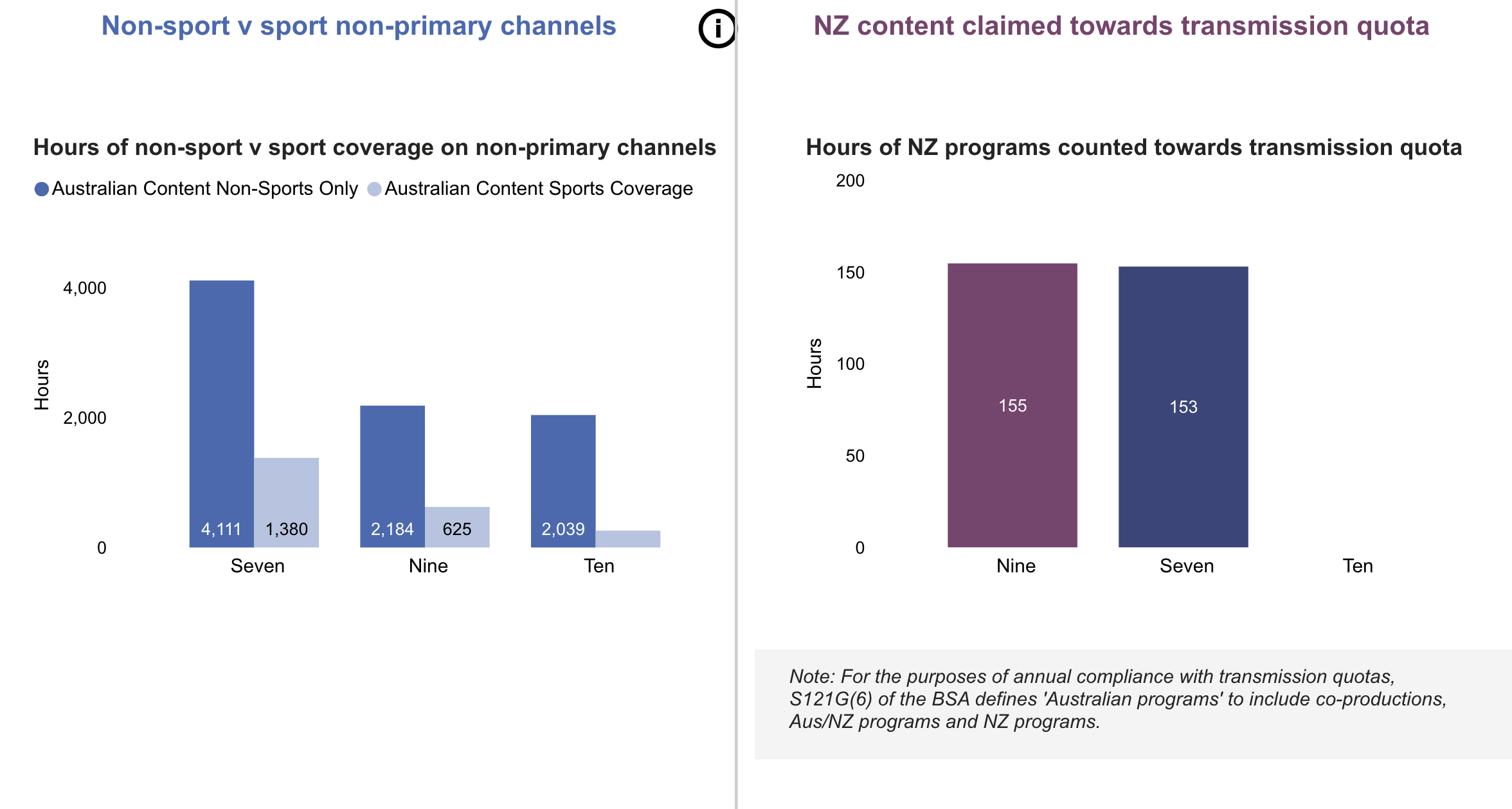
ACMA found that all commercial television licensees met their Australian content obligations in 2025. Seven, Nine and Ten each reported 284 points towards their first-release Australian content requirement, including points carried over from 2024.
Under the framework introduced in 2021, broadcasters must meet an annual quota of at least 250 points through eligible first-release Australian programming. Commissioned drama, documentaries, and children’s programs qualify, along with acquired Australian feature films. Film points vary according to the licence fee paid.
SPA said Nine drew on a broad range of Australian feature films in its 2025 first-release slate, while Seven continued to rely heavily on Home and Away.
Although film acquisitions provide producers with an important secondary market, SPA argued they do not generate the same sustained production activity as newly commissioned programs.
“When the current framework was introduced, SPA warned that removing dedicated safeguards for particular genres risked reducing the breadth of Australian commissioning.
“The data now shows Australian adult drama expenditure 44 per cent below 2019–20 levels, while investment in children’s content has fallen to a fraction of its former level.
“It is encouraging to see Australian feature films finding audiences on commercial television, and that secondary market is important for Australian producers. But acquired films cannot substitute for sustained commissioning and investment across the Australian production ecosystem.”
SPA also pointed to the employment, training and skills development supported by returning productions such as Neighbours, arguing its conclusion presented an opportunity for Ten to invest in another long-running Australian production.
Streaming and public broadcasters in focus
SPA said changes in commercial television commissioning increased the importance of investment from streaming services and public broadcasters.
The organisation called for ACMA reporting under the SVOD content scheme to provide a fuller picture of investment.
ACMA already publishes voluntary expenditure data from five streaming providers. Its 2024–25 report recorded almost $414 million in Australian program spending by Prime Video, Disney+, Netflix, Stan and Paramount+, including $316.6 million on commissioned and co-commissioned programs. That reporting is distinct from data collected under the content scheme.
Deaner said sustained public broadcaster commissioning remained essential.
“As commercial television commissioning changes and streaming investment becomes increasingly important, the role of our public broadcasters in commissioning distinctive Australian content is as critical as ever.
“We need sustained investment across the entire screen ecosystem if we are going to maintain healthy production pipelines, support Australian screen businesses and ensure Australian audiences continue to see Australian stories on screen.”
He said domestic investment also underpinned the industry’s ability to build exportable intellectual property.
“There is a significant economic opportunity for Australia in creating stories and intellectual property that can travel around the world.
“Productions such as Bluey demonstrate what can happen when Australian creativity and Australian-owned intellectual property connect with global audiences. But to realise those export opportunities, we first need to create and invest in Australian content.
“A strong domestic production sector is the foundation for Australian stories to travel, for Australian businesses to retain value from their intellectual property, and for our screen industry to compete globally.”
More from Mediaweek
The leading media trade publication in Australia.
Get our top stories straight to your inbox daily by signing up to our Newsletter
By providing your information, you agree to our Terms of Use and our Privacy Policy. We use vendors that may also process your information to help provide our services.


