


Free TV spends $1.6 billion on Australian content
Nine led primary channel local content, Seven tops multichannel hours and Ten scored highest on first-release TV points.

Commercial television broadcasters spent $1.625 billion on Australian programming in FY25, while new ACMA data shows Seven, Nine and Ten exceeded their metropolitan Australian content quotas in 2025.
Free TV Australia said local programming accounted for almost nine in every 10 programming dollars, with expenditure holding steady on the previous financial year despite difficult market conditions.
The spending included around $377 million on news, alongside sport, entertainment, drama and documentaries across metropolitan, regional and remote Australia.
Nine leads primary channel content share
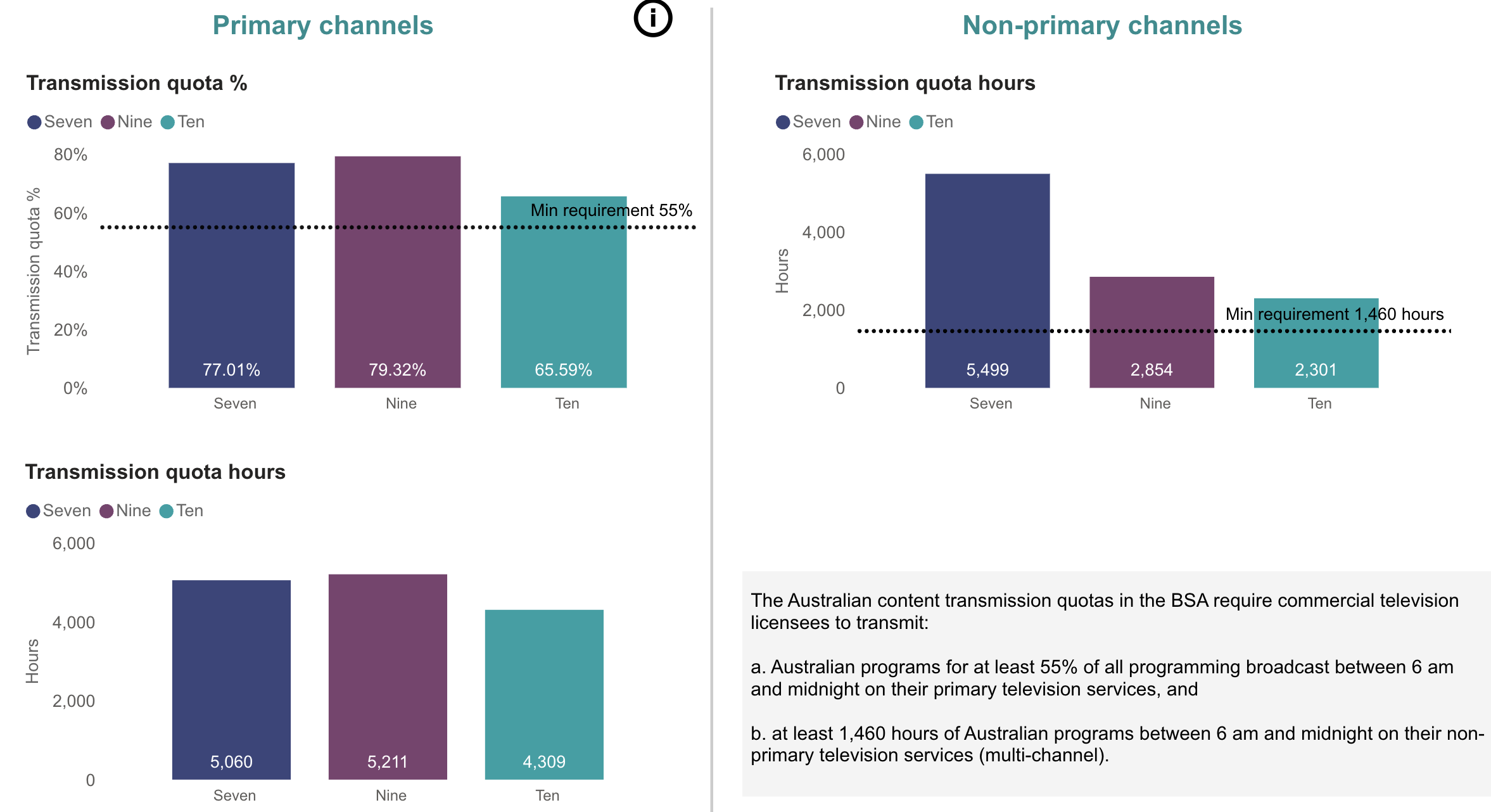
ACMA’s How broadcasters meet Australian TV content standards 2025 data shows Nine recorded the highest average share of Australian content among the three metropolitan networks, at 79.3 per cent.
Seven averaged 77 per cent, while Ten recorded 65.6 per cent. All three were above the requirement to broadcast 55 per cent Australian content between 6am and midnight on primary channels.
The annual movements differed by network. Seven’s average rose from 76.7 per cent in 2024, while Ten increased from 63.9 per cent. Nine’s share fell from 81.5 per cent but remained the highest of the three.
Among the metropolitan licensees listed, Nine’s Sydney station recorded the highest share at 79.9 per cent. Ten’s Melbourne station had the lowest at 65.4 per cent, still more than 10 percentage points above the minimum.


The leading media trade publication in Australia.
Get our top stories straight to your inbox daily by signing up to our Newsletter
By providing your information, you agree to our Terms of Use and our Privacy Policy. We use vendors that may also process your information to help provide our services.
Seven leads multichannel hours
Seven reported an average of 5,499 hours of Australian content on its metropolitan non-primary channels, compared with 2,854 hours for Nine and 2,301 hours for Ten.
The annual requirement is 1,460 hours between 6am and midnight across non-primary channels. Seven’s average was about 3.8 times that threshold.
Seven’s average increased by around 420 hours from 2024, while Ten’s rose by 66 hours. Nine’s fell by approximately 549 hours.
Ten records highest first-release points
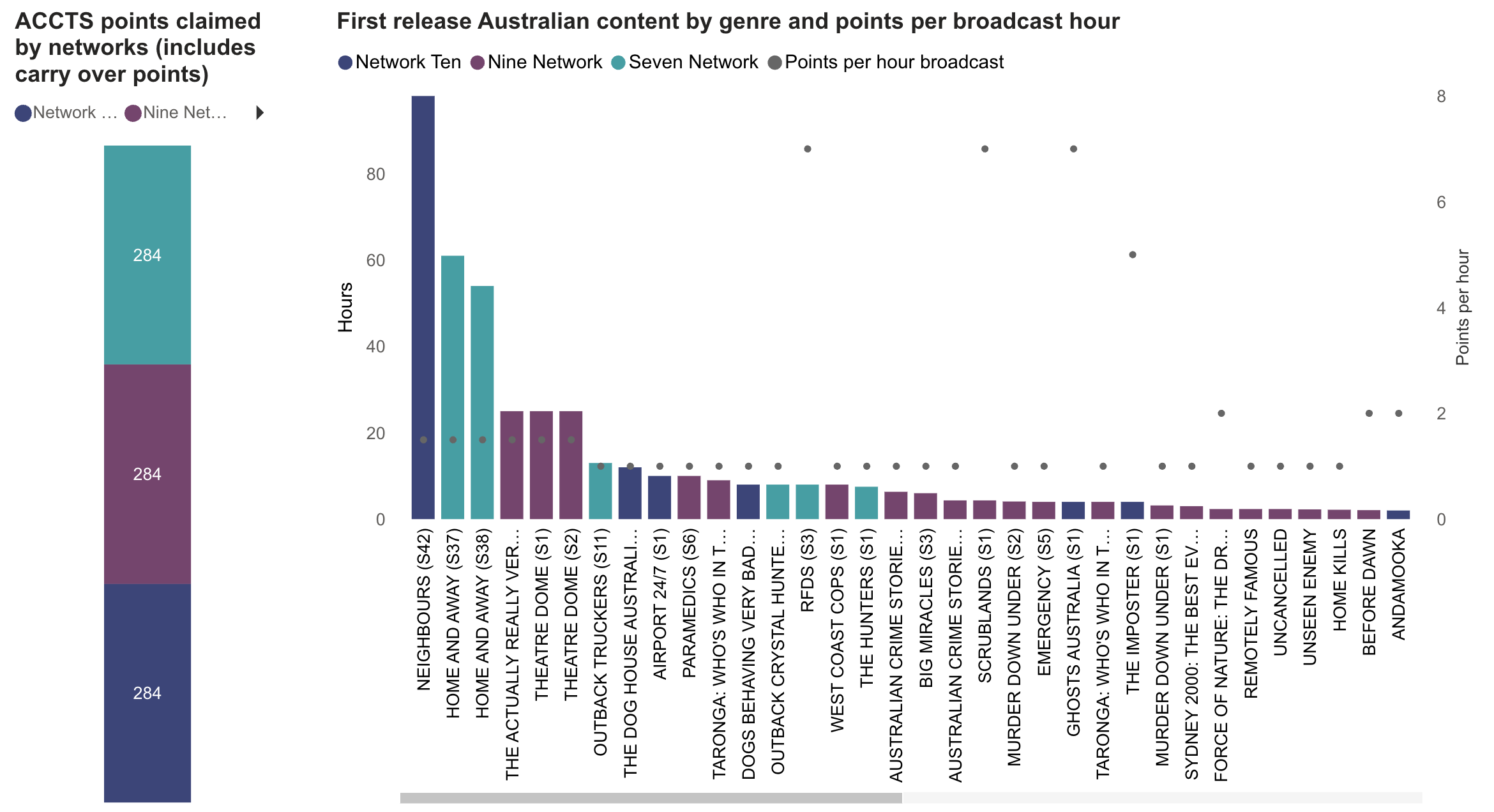
Ten recorded 339.5 points towards the first-release Australian program quota at each of its five metropolitan licensees.
Seven recorded 283.5 points at each metropolitan licensee, while Nine’s listed metropolitan stations recorded between 283.67 and 284.67 points.
Each exceeded the annual 250-point requirement. The quota covers commissioned drama, children’s non-drama programs, documentaries and acquired Australian films, with points weighted according to program category and, for some categories, production budget or licence fee. ACMA
Free TV identified RFDS, Scrublands, Ghosts Australia, The Imposter and Home & Away among the Australian titles broadcast.
Free TV Australia CEO Bridget Fair said the results demonstrated commercial broadcasters’ contribution to local programming.
“We are incredibly proud of these results,” Fair said.
“No one invests in Australian stories like Free TV broadcasters. The same news bulletin, the same grand final, the same Aussie drama – watched together right across the country, and free for everyone. That's what makes free TV a shared civic space – all funded by advertising, while global streamers and AI platforms don't even come close to our contribution.”
Free TV presses Canberra for action
The figures come as the federal government consults on the future of television. Free TV welcomed the consultation paper’s release on 15 September and said it would participate alongside the telecommunications sector and other stakeholders.
The industry body also cited Deloitte Access Economics’ Towards a More United Nation report, which found 78 per cent of Australians believe commercial television creates shared experiences in their communities.
Fair used the results to renew calls for government action on AI, advertising technology and access to free television.
“Free television is cultural infrastructure, and it can't be taken for granted,” Fair said.
“As the Government consults on the future of free TV, it's time to back the broadcasters who back Australian stories – by protecting our content from AI theft, fixing competition failure in ad tech, and guaranteeing free, universal access for the 20 million Australians who watch every week.”
More from Mediaweek
The leading media trade publication in Australia.
Get our top stories straight to your inbox daily by signing up to our Newsletter
By providing your information, you agree to our Terms of Use and our Privacy Policy. We use vendors that may also process your information to help provide our services.


