

Comedy’s boycott problem: Jerry Seinfeld sparks an exodus, but Saudi money barely moved the bill
Lisbon artists walked away from Seinfeld. In Riyadh, comedy's free-speech champions found Saudi payday harder to refuse.

Comedians are famously protective of the right to offend. The right to refuse a lucrative booking, it seems, is rather more contentious.
At least six acts have withdrawn from Lisbon's inaugural MEO Commedia a La Carte Fest, where Jerry Seinfeld is due to headline in November, amid objections to his public support for Israel.
The departures have been branded performative, self-defeating and "woke". US comedian and media commentator Tim Young told Fox News the artists were sacrificing their own success for what he called a "stupid stance", describing Seinfeld as "uncancellable".
Yet the ferocity directed at performers who walked away from a stage sits awkwardly beside another comedy festival, held only a year earlier, where some of the industry's biggest names accepted Saudi-backed cheques despite the kingdom's record on free speech and human rights.
That contrast is difficult to miss. In Lisbon, artists are mocked for putting principle ahead of opportunity. In Riyadh, many stars put opportunity ahead of principle and still reached for the language of free expression.
The Lisbon walkout
The MEO Commedia a La Carte Fest is scheduled to run in Lisbon from 29 October to 1 November, with Seinfeld remaining its principal international drawcard.
Portuguese actor Inês Aires Pereira withdrew her show Namastê, writing that one name on the bill "persistently defends ideas and acts that I consider indefensible". She added: "We cannot minimise or normalise a genocide."


The leading media trade publication in Australia.
Get our top stories straight to your inbox daily by signing up to our Newsletter
By providing your information, you agree to our Terms of Use and our Privacy Policy. We use vendors that may also process your information to help provide our services.
Musical comedy duo Cebola Mole, comprising Eduardo Madeira and Filipe Homem Fonseca, also pulled out. Their statement invoked "justice, freedom and joy" and they carried a watermelon, widely used as a symbol of Palestinian solidarity.
Comedian Pedro Tochas, pop project Tributo Pop, collective Conjunto Cuca Monga and visual artist Vhils also left the program, although they did not all publicly give a reason.
The criticism quickly shifted from the substance of their decision to its effect on their careers. Young argued that any performer should want to share a festival with "one of the most successful comedians in world history" and dismissed the withdrawals as "a group of woke people performing for woke people".
It is true that Seinfeld is unlikely to suffer professionally. He remains on the bill, tickets remain on sale, and a handful of Portuguese acts cannot meaningfully "cancel" a billionaire comedy institution.
But that rather misses the point. A boycott is not always an attempt to destroy somebody's career. Sometimes it is simply a refusal to lend your own name to the same poster.
The Riyadh test
The 2025 Riyadh Comedy Festival offered a harder test of comedy's attachment to free speech.
The Saudi-backed event featured Dave Chappelle, Bill Burr, Jimmy Carr, Pete Davidson, Aziz Ansari, Kevin Hart, Louis C.K., Tom Segura and other major international acts.
Human Rights Watch said the festival was being used to deflect attention from Saudi Arabia's repression of free speech and wider human-rights abuses.
The organisation noted that the festival overlapped with the seventh anniversary of the Saudi state-sponsored murder of journalist Jamal Khashoggi. It also urged performers to call for the release of detained activists, journalists and dissidents.
Representatives contacted by Human Rights Watch did not respond to its request for a meeting.
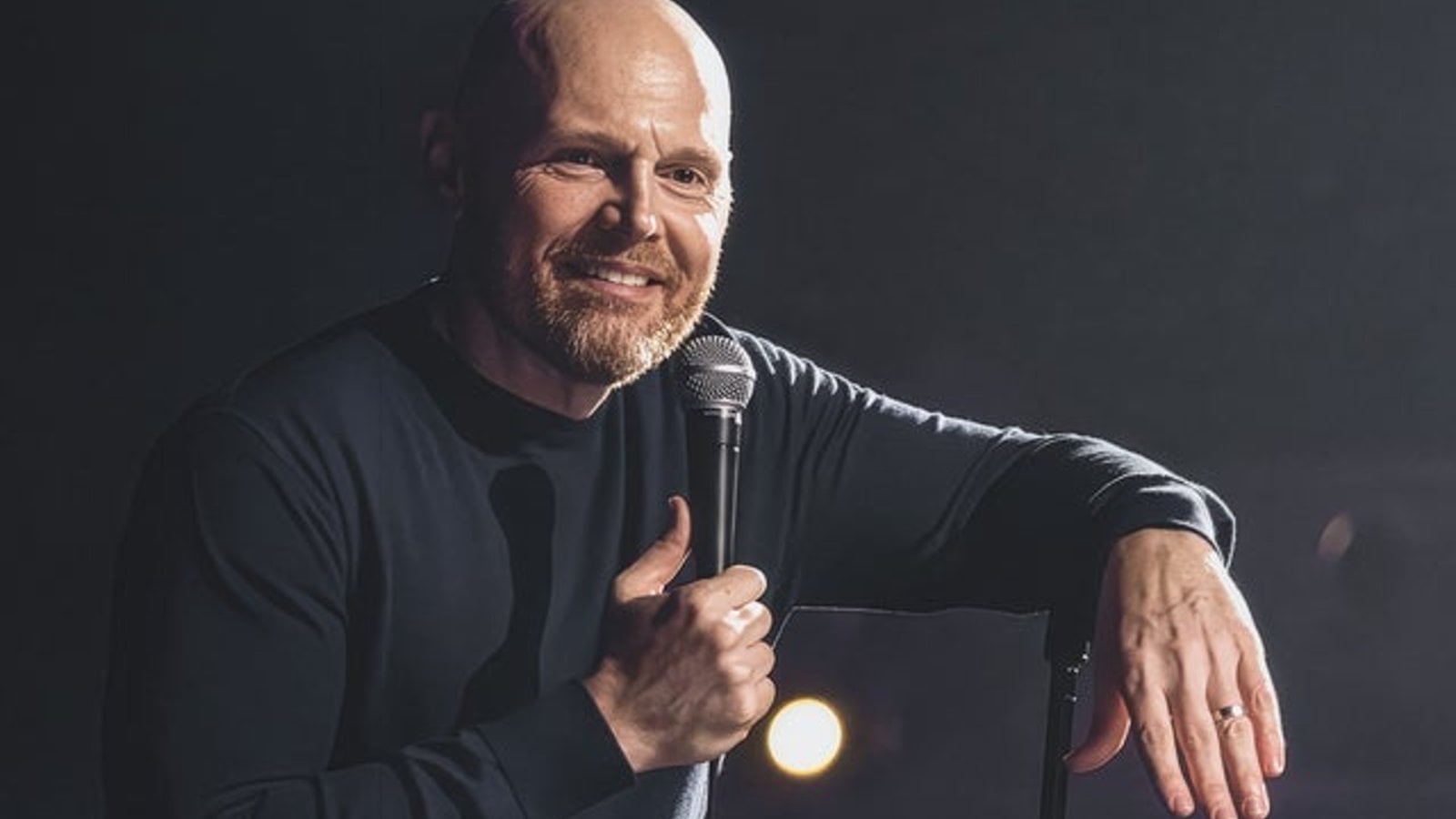
Some comedians did object. Marc Maron and David Cross condemned the event, while Atsuko Okatsuka rejected an invitation and publicised restrictions placed on material. Shane Gillis and others also declined.
Jessica Kirson later expressed regret for taking part, while Aziz Ansari offered to donate part of his fee to human-rights organisations - an offer Human Rights Watch declined to accept.
So there was outrage. But much of it came from outside the Riyadh bill or after the show had gone on.
The festival retained a deep roster of stars, many of whom have built brands around saying what others will not.
That is where the comparison bites. Lisbon's withdrawing performers gave up exposure and proximity to Seinfeld. Riyadh's participating performers accepted a state-backed platform reportedly governed by restrictions on criticism of the Saudi royal family, government and religion.
One comedian was actually dropped
No direct overlap exists between the publicly named Lisbon withdrawals and the Riyadh headliners. The strongest link is not a shared performer but a reversal of the cancellation story.
In Lisbon, critics invoked cancel culture after artists voluntarily removed themselves from a festival.
In Riyadh, Tim Dillon said organisers removed him after he joked on his podcast about Saudi Arabia's human-rights record and the money being offered to performers.
Dillon had said he was prepared to take US$375,000 (AU$523,646) for one show, later claiming Saudi organisers were unhappy with his remarks about migrant workers and other abuses.
One episode involved performers choosing not to appear beside a comedian whose politics they opposed. The other reportedly involved a government-backed festival dropping a comedian after he joked about the government funding it.
Only one resembles an institution silencing a performer. It was not Lisbon.
The contradiction sharpened once the Riyadh festival began. Chappelle reportedly joked on stage that it was easier to speak in Saudi Arabia than in the United States.
Carr, whose act has long traded on pushing the limits of acceptable material, performed despite Human Rights Watch highlighting the kingdom's punishment of dissent. Burr later defended his appearance and attacked critics as sanctimonious and phony.
Several participants argued that comedy could open doors, connect with Saudi audiences, and encourage cultural change.
That case deserves to be heard. Audiences are not their governments, and cultural engagement is not automatically endorsement.
But the same generosity should then extend to the artists in Lisbon. If appearing can be defended as an exercise of artistic freedom, declining to appear must be treated as one too.
Principle, politics and the size of the cheque
The two festivals are not moral mirror images. Seinfeld is an individual performer with publicly stated views; the Riyadh festival was backed by a state accused of grave abuses. Nor is criticism of Israel interchangeable with criticism of Saudi Arabia.
What can be compared is the industry's response to a booking.
In Lisbon, relatively less powerful artists surrendered work because they did not want to share a platform with Seinfeld. Their decision was ridiculed as career vandalism.
In Riyadh, wealthy global comics appeared at a state-backed festival despite pressure to withdraw. Some then presented attendance as dialogue, defended the money or dismissed their critics.
Comedy cannot have it both ways. It cannot hail the performer who takes the cheque as a fearless champion of open exchange, then call the performer who refuses one a whining censor.
The more revealing question is why the artists who walked away from him have attracted such scorn, while those who flew to Riyadh were so often invited to explain themselves on their own terms.
Perhaps the dividing line is not free speech at all. Perhaps it is who holds the power, who absorbs the career risk and, when principle becomes inconvenient, how many zeroes are printed on the offer.
More from Mediaweek
The leading media trade publication in Australia.
Get our top stories straight to your inbox daily by signing up to our Newsletter
By providing your information, you agree to our Terms of Use and our Privacy Policy. We use vendors that may also process your information to help provide our services.


