



Jonathan LaPaglia on surviving the Apocalypse
Jonathan LaPaglia returns to reality TV as 14 people surrender their phones, comforts and social order for 28 long days.

Jonathan LaPaglia knows just how attached we have become to modern life. A forgotten phone during a quick trip to the shops was enough to make him feel anxious.
It is a minor inconvenience compared with the conditions faced by the contestants on Apocalypse, but LaPaglia said it highlighted our growing dependence on modern conveniences, particularly our phones.
“It’s like, what? I’m just going down to the store,” he said.
For the contestants, however, that separation lasts far longer. They must navigate the experiment without phones, supplies or any contact with the outside world, forcing them to confront just how much modern life depends on constant connection.
His brief bout of phone-separation anxiety helps explain the challenge at the centre of the new BINGE reality series narrated by the former Australian Survivor host.
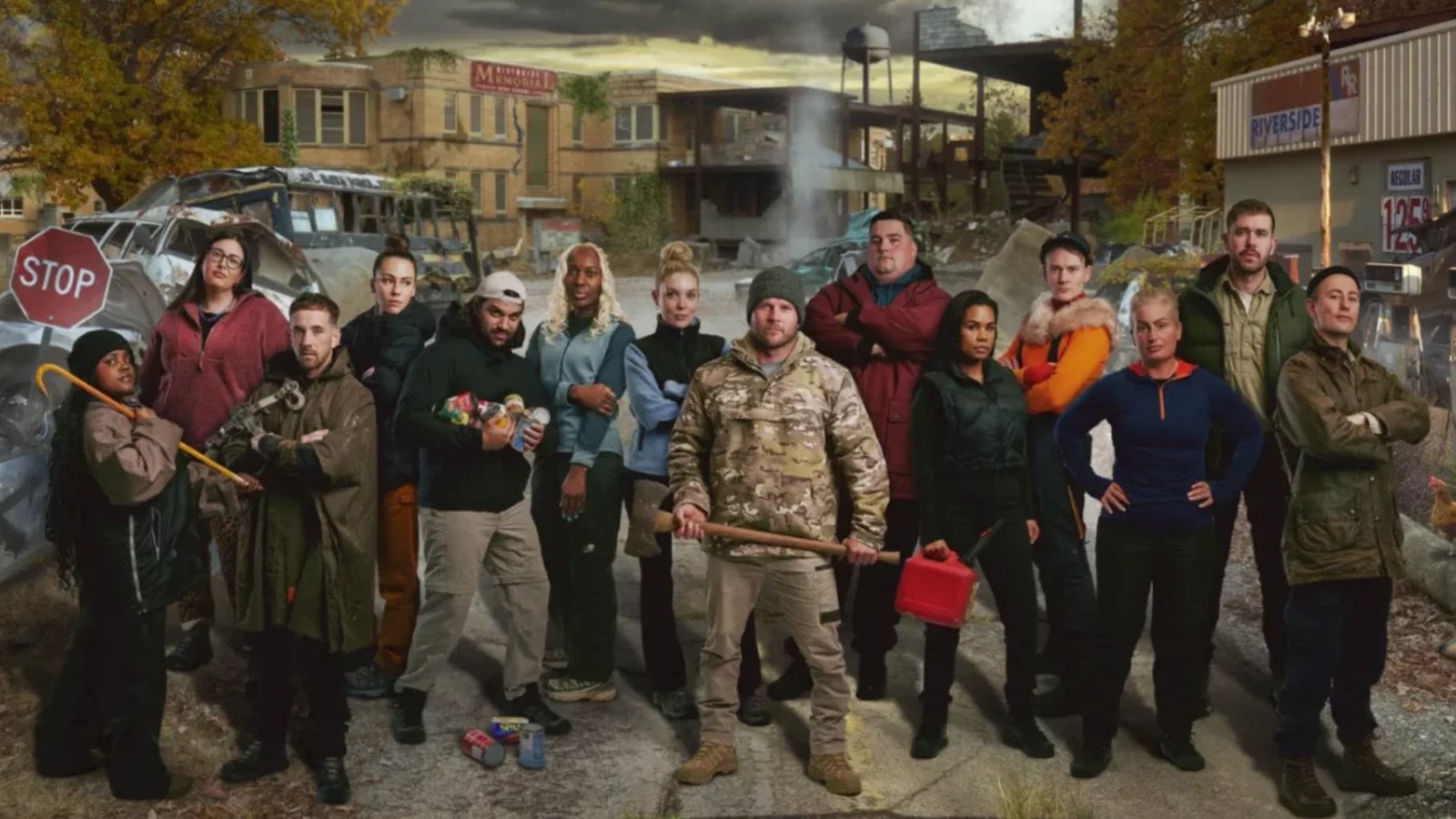
The eight-part series takes 14 Australians and Britons, drops them into the ruins of an abandoned city and removes almost everything they rely on. There is no electricity, running water, food, phone access or contact with the outside world.
Their task is to survive for 28 days.


The leading media trade publication in Australia.
Get our top stories straight to your inbox daily by signing up to our Newsletter
By providing your information, you agree to our Terms of Use and our Privacy Policy. We use vendors that may also process your information to help provide our services.
READ MORE: BINGE Upfront: The streaming giant goes back to the future as local icons lead its 2027 play
Welcome to the end of the world
A co-commission between BINGE and the UK’s Channel 4, Apocalypse was filmed inside an abandoned town now used as an urban warfare training centre.
The location, reportedly the size of Sydney’s CBD, has been turned into a post-apocalyptic world where the contestants must find food, shelter and a way to live with each other.
The Australians include a chef, Paralympian, psychologist, diesel mechanic and cattle farmer. The British contestants include a paramedic, politician, student nurse, mechanic, cab driver and content creator.
LaPaglia said simply going without a phone would test people accustomed to carrying their lives around in their pockets.
“It doesn't matter if I don't have my phone, but that's the kind of, that's where things have gone, right? So to live without just that, let alone all the other modern conveniences, it's a big ask for sure.
“So somehow they [the producers] convince them to do that. So they're obviously pretty skilled at getting people to sign up for stuff.”
LaPaglia takes the easier job
For LaPaglia, Apocalypse marks a return to reality television after nearly a decade hosting Australian Survivor. This time, however, he could watch the deprivation unfold from the comfort of a recording booth.
“It was a much, much easier gig. I mean, they write the scripts, and I execute them,” he laughed.
LaPaglia said the producers welcomed his ideas during the recording process, making the series a fun and collaborative project.
The role was also considerably less demanding than hosting Australian Survivor, where there were no autocues and every shoot required him to memorise large amounts of material while up to 20 cameras captured the action.
“There were reams and reams of things that I’d memorised, and I had to make sure that I hit everything,” he said.
“It’s very different from that point of view. Much more relaxed, this one.”
Survival exposes character
The physical conditions provide the scale and drama, but the contestants’ behaviour gives the series its tension.
With resources running low, they must decide whose skills matter, how to divide supplies, and whether the group's needs come before their own.
LaPaglia described the series as a social experiment that gradually exposes each contestant’s character and core values. Under pressure, it becomes clear who is motivated by self-preservation and who is prepared to work for the survival of the wider community.
“The atmosphere that they've created with this show is a real pressure cooker,” he said.
That pressure also produces unexpected reactions, with some contestants behaving in ways LaPaglia did not anticipate.
“There are certain characters, and you think, oh, no, they're not going to react that way, and they do,” he said. “It's pretty fascinating.”
Why we keep watching the world end
Television has never lost its appetite for the apocalypse. Remove the jobs, bills, emails and notifications, and life suddenly becomes much simpler. Only one task remains: stay alive.
LaPaglia believes that simplicity helps explain the enduring appeal of survival formats. Modern life, he said, has become bogged down in problems and minutiae, making the fictional end of the world feel strangely freeing.
“In the apocalypse when everything disappears, your existence is simplified into one goal, and that's just survival, right?” he said.
For viewers, the attraction also lies in watching from the safety of home and asking whether they would make better decisions under the same conditions.
“You're really forced to ask yourself, well, what would I do in that situation? Could I survive it?” LaPaglia said.
The format keeps returning because audiences remain drawn to that question, even if the answer may be uncomfortable.
“We're all kind of drawn to it in some weird sadistic way.”
An Australian production built for the world
Foxtel Group executive director of entertainment Daniel Monaghan said the series reflected the company’s push to take Australian productions to international audiences.
“Apocalypse reflects BINGE and DAZN’s commitment to championing exciting Australian stories on a global scale. The series combines cinematic scale and spectacle with an unfiltered exploration of human behaviour, putting ordinary people in extraordinary circumstances and challenging viewers to consider how they’d survive an apocalyptic event. We can’t wait for Australia to tune in as the fight for survival unfolds.”
ITV Studios Australia chief content officer Beth Hart said the location let contestants become immersed in the experiment.
“Apocalypse is a ground-breaking series, both in its ambitious international co-production model and in the extraordinary stories it has delivered. The jaw-dropping location allowed the participants to fully immerse in the ‘end of the world’. They quickly had to work out if they could cope when everything we take for granted disappears. It also taps into the armchair survivalist in all of us – you can’t watch without asking yourself, ‘What would I do? Would I actually survive?’”
Apocalypse is produced by The Garden, part of ITV Studios, and ITV Studios Australia for Channel 4 and DAZN’s Foxtel Group.
The series premieres with a double episode on BINGE on Wednesday, 16 September, followed by weekly episodes.
More from Mediaweek
The leading media trade publication in Australia.
Get our top stories straight to your inbox daily by signing up to our Newsletter
By providing your information, you agree to our Terms of Use and our Privacy Policy. We use vendors that may also process your information to help provide our services.


.jpg%3Fv%3D1788733026776&w=3840&q=75)
