


Eyeliner, ageing and the media’s MAGA obsession
From Natalie Harp’s eyeliner to Karoline Leavitt’s pores, political analysis keeps slipping into the same, old misogyny.

Let's be honest, plenty of reasons exist to scrutinise the women surrounding Donald Trump: their politics, their proximity to power, the decisions they help make.
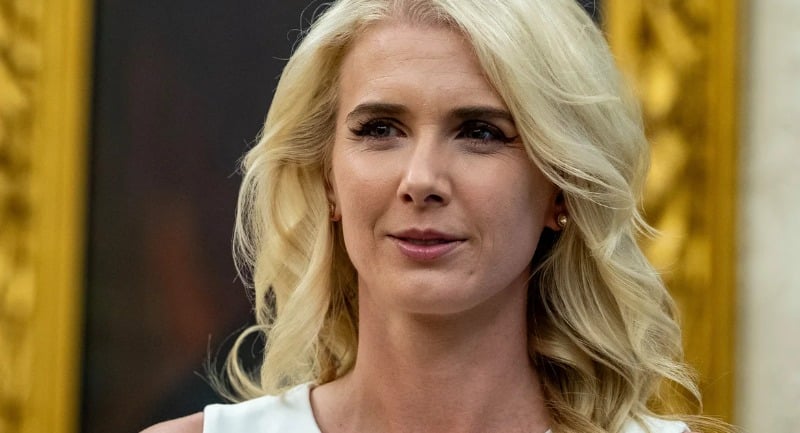
With that in mind, meet Natalie Harp. She is Trump's executive assistant and reportedly one of his most devoted aides. Given her extraordinary access to the president, and her willingness to operate as his "human printer" (whatever that means), she absolutely belongs on that list.
Her face, or rather, her eyeliner, does not.
The staff at the female-focused magazine The Cut, however, beg to differ.
The publication, which describes itself in four vacuous words: Style. Self. Culture. Power., put Harp's cat eye through the kind of forensic examination not seen since the Zapruder film.
They consulted five makeup artists (five) to determine whether it channelled 2016, the 1980s, or the 1950s and '60s. One called it "costumey". Another suggested White House staff thought Harp looked "hot". The piece even floated the idea that she was improving her "canthal tilt" - the angle of the eyes.
The culture, it seems, is one blowout away from going completely and collectively bezerk. Although, evidently, the writers at The Cut may already have forged ahead of us.


The leading media trade publication in Australia.
Get our top stories straight to your inbox daily by signing up to our Newsletter
By providing your information, you agree to our Terms of Use and our Privacy Policy. We use vendors that may also process your information to help provide our services.
Style. Self. Culture. Power. Insanity.
Loaded language dressed as analysis
Harp is introduced as "the platinum blonde"; her makeup is understated "especially by Republican standards". Her eyeliner becomes Exhibit A in a theory about ambition, submission and survival.
Perhaps, the article suggests, she wears it to look feminine without pulling focus from Trump, or to make herself "digestible" to powerful men. Only at the end does one artist offer the obvious explanation: "she might just think it makes her look pretty."
God forbid.
Here's the thing: feminism does not reserve its power for women who look a certain way. While some may cry foul at the sight of a sister-in-arms wearing a slick of colour on her lips, or in this case a flick of winged eyeliner, surely we are beyond the era of assuming that every feminine aesthetic a woman embraces exists purely for the male gaze.
Surely. Surely?
Well, it seems not.
Look, everyone knows that political movements communicate through image, and Trump's world is quite possibly one of the more obvious examples. Just consider his TV career, his pageantry background and branding. But there's a real difference between examining how an administration manufactures its image and assembling a panel to pick apart one woman's eyeliner.
One helps you understand power. The other just picks apart her face.
READ MORE: BBC tries to subpoena Trump's family
The woman running the White House
The theory that women enter Trump's orbit by conforming to one hyperfeminine look runs into a problem: Susie Wiles.
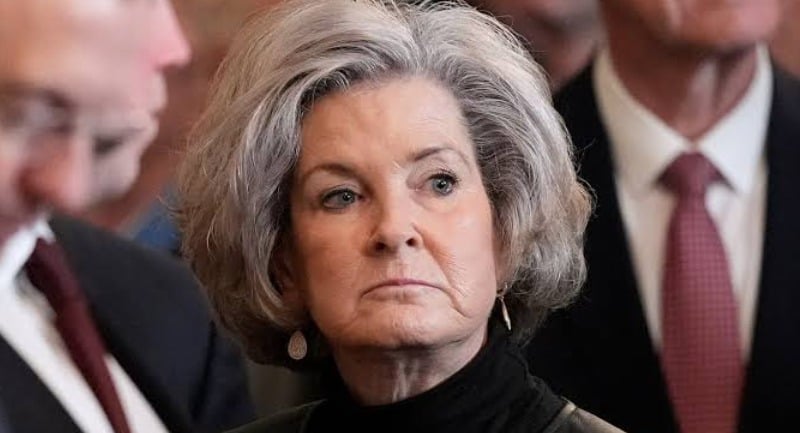
Wiles is White House chief of staff, the first woman to hold the role permanently, and arguably the administration's most powerful figure after Trump. She isn't hovering at the edge of the frame; she decides who gets into it.
And yet Wiles attracts far less beauty coverage than Harp, Karoline Leavitt, Pam Bondi or Kristi Noem. Maybe that's because she doesn't fit the theory. If appearance really were the key to advancement in this administration, then wouldn't its most senior woman be central to the story, and not just a mere footnote?
Surely. Surely?
Of course, let’s not forget the absence of articles poring over the pores of their male political counterparts.
The feminist critique staring at breasts
In May 2025, Ms. Magazine published "Why Do MAGA Women Dress Like That?", exploring the contradiction between the right's restrictive sexual politics and its highly sexualised version of traditional femininity.
Fair enough, except the article itself describes women at the conservative outlet Evie Magazine as "more likely than not to show off their breasts". A brave statement given no amount of guesswork can ever predict just what a woman might do two wines in.
One woman's breasts are described as "falling out" of her dress; others are catalogued by bustier, neckline, slit and stiletto.
The piece argues women shouldn't be slut-shamed, then spends most of its word count discussing their breasts - condemning objectification while using women's bodies as its main exhibit.
It's like Schrödinger's cat… but for tits.
Karoline Leavitt and the politics of the pore
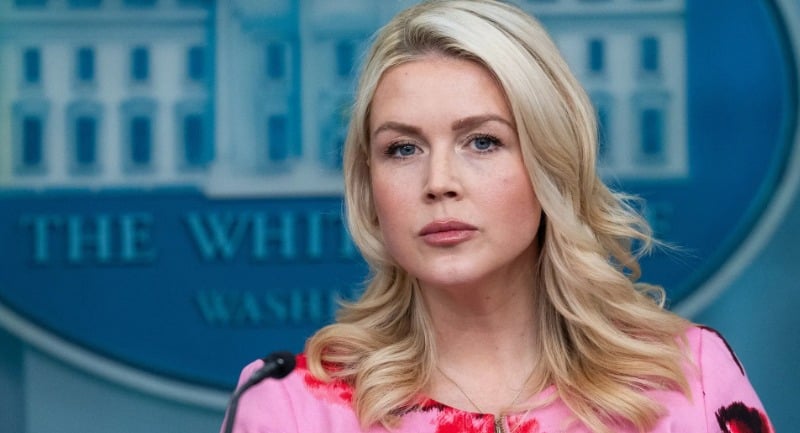
When Vanity Fair published a close portrait of Leavitt, the internet dissected her lips, skin, makeup and apparent age. Some said she had "the face she deserves"; others suggested politics had made her look older, or uglier.
Search Leavitt, and you'll find headlines about her "spiciest outfits", her transformation, her pre-MAGA appearance. Search former Biden press secretary Karine Jean-Pierre and the frame changes entirely. Her natural hair broke political norms. Her wardrobe was "professional" and "polished". People discussed her appearance in terms of representation, as the first Black and openly LGBTQ person in the role.
Jean-Pierre gets context. Leavitt gets consumed.
Sure, republican women may promote policies that do not appeal to everyone. And, like all political contenders or players, their actions deserve scrutiny. But understand the nuance.
Dissecting the appearance of women on any side of the playing field does no one any favours.
Scrutinise Wiles's control of the West Wing. Examine Harp's access. Challenge Leavitt's claims. Hold these women accountable for what they say, enable and do with power - but leave their faces alone.
More from Mediaweek
The leading media trade publication in Australia.
Get our top stories straight to your inbox daily by signing up to our Newsletter
By providing your information, you agree to our Terms of Use and our Privacy Policy. We use vendors that may also process your information to help provide our services.


