



Newsmakers: SCA and Seven explain why your "guilty pleasure" is worth millions to advertisers
New SCA and Seven data shows demand forms well before the click — the case for brand spend, backed by real hard numbers.

"Brands make assumptions: if the consumer does this, they must do that," said Kim Loasby, Southern Cross Austereo's (SCA) Head of Digital Ad Product and Operations. "But people go to media for different reasons."
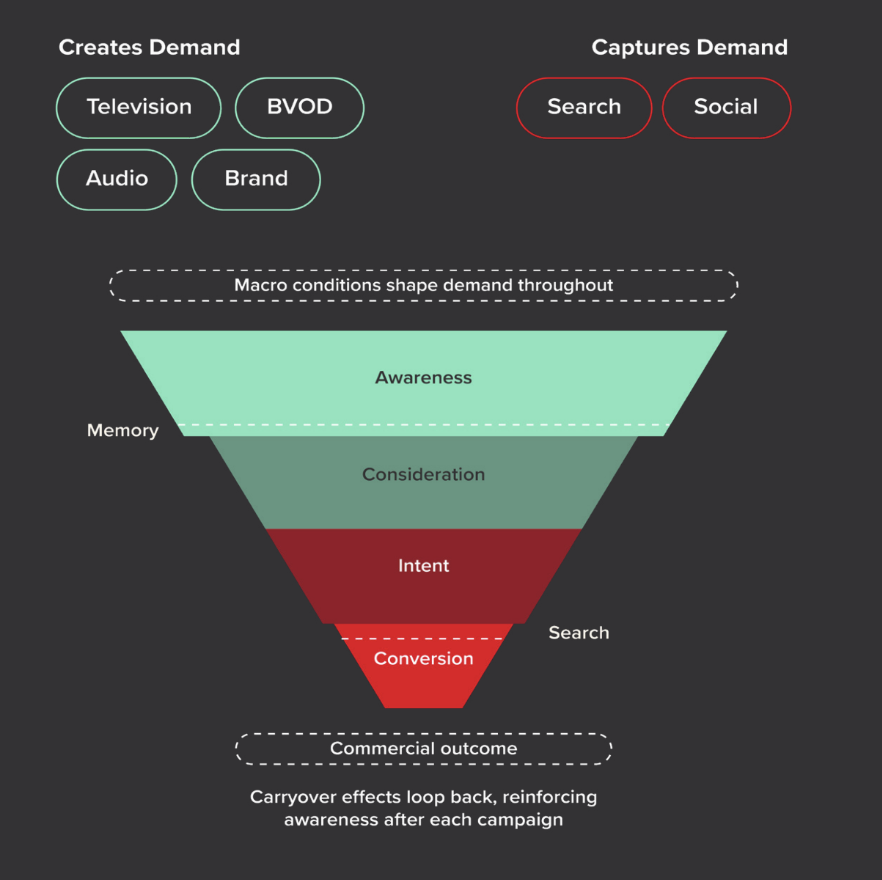
That gap between assumption and actual behaviour sits behind new research from SCA and Seven, which shows consumer demand is shaped well before a shopper searches, clicks, or converts - and that conventional attribution models wrongly credit platforms such as Google and Meta for demand those channels did not generate.
Olly Newton, SCA's Group Digital Commercial Director, and Loasby presented the findings at "Behaviour, Accelerated," an insights breakfast hosted by SCA and Seven for more than 200 clients and agencies in Sydney last month.
The analysis drew on almost $73.3 million in media investment and more than 615,000 customer outcomes across two years of activity in the automotive, retail and software categories.


The leading media trade publication in Australia.
Get our top stories straight to your inbox daily by signing up to our Newsletter
By providing your information, you agree to our Terms of Use and our Privacy Policy. We use vendors that may also process your information to help provide our services.
Across every category studied, a consistent pattern emerged: demand was already being shaped before consumers searched, clicked or converted.
The findings suggest media mix modelling built on last-click attribution understates the contribution of channels that build awareness ahead of a purchase decision - and that marketers relying solely on performance channels risk a slow decline, since performance media eventually stops working without brand-building activity to feed it.
Declared versus inferred
Loasby said the value of SCA and Seven's data lies in what it reveals beyond what audiences say about themselves.
"There's a difference between declared information, what somebody tells you they're going to consume on a platform, versus inferred," she said.
Declared data - a survey answer, a stated preference - only captures what an audience is willing to admit to. Inferred data, drawn from actual viewing and listening behaviour, tells a fuller story: everyone has their guilty and not-so-guilty pleasures, and SCA and Seven can map exactly where those shows sit in someone's day and life.
Loasby called that behavioural layer a "secret weapon" for marketers. A brand wanting to reach consumers in the morning, for example, can learn not just what they're consuming then but how they're likely to feel while consuming it.
"It's important because your message has to be sensitive to how your potential customer will receive it," she said.
No single channel, no single moment
Consumers rarely buy because of one advertisement, according to the research - decisions build from an accumulation of smaller influences over time, from awareness through to intent.
Loasby pointed to Mick Molloy as an example: audiences watch him on The Front Bar and listen to him on audio to meet entirely different needs.
"The people who gravitate to him on audio do so to fulfil a different need in their day. It's doing a different job," she said. "The role the media fulfils in their life is different."
Scale without losing precision
Newton said the combined reach of SCA and Seven's audio, television and publishing assets gives the business a position no competitor can match.
"We are in a very unique position in Australian media. We can talk to an AFL fan across TV, audio, and publishing on a level no other media company can," he said.
Blending that data lets SCA and Seven target narrowly without losing scale, Newton said. "If you take Seven Plus as an example, the total sign-up database is about 16 million. More importantly, over the last 12 months, 10 million different people have signed into 7Plus. So it's not an insignificant number."
Reaching people in the moment
Loasby said the same data also tracks how one person shifts between roles throughout the day, which shapes how a campaign should land.
"No one person is one persona. They can be a sports fan, a dad, a small business owner... all of those things at one time," she said. “Our ability to see that across our entire ecosystem is the asset that brands can tap into.”
More from Mediaweek
The leading media trade publication in Australia.
Get our top stories straight to your inbox daily by signing up to our Newsletter
By providing your information, you agree to our Terms of Use and our Privacy Policy. We use vendors that may also process your information to help provide our services.


