



We've confused compassion with silence in the Ariana Grande debate
When does compassion become silence? Mediaweek Editor Natasha Lee on why Ariana Grande's story forces us to confront a difficult question.

There are moments when language feels impossibly inadequate. They are rare, but they do exist.
When you see someone who appears to be struggling, what do you say? What can you say? And what if saying nothing at all feels just as wrong?
That is the conversation surrounding Ariana Grande.
For months, every discussion has ended in the same refrain: Don't comment on a woman's body.
Ordinarily, I'd agree.
Women's bodies have never belonged to the public. They aren't public property. They're not debate topics, and they are certainly not invitations for strangers to dissect every perceived change.
Isn't that what got us into this whole sour mess in the first place?


The leading media trade publication in Australia.
Get our top stories straight to your inbox daily by signing up to our Newsletter
By providing your information, you agree to our Terms of Use and our Privacy Policy. We use vendors that may also process your information to help provide our services.
Well, yes and no.
There is a difference, and Grande is an example of it. Not because she's famous. Not because she's a woman. And certainly not because anyone is entitled to an opinion about how she looks.
It feels different because we've reached the point where refusing to acknowledge what millions of people can plainly see has somehow become the compassionate option.
It's not.
The excuse that we "don't know what to say" doesn't hold up anymore. There is always something better than silence.
That idea has become increasingly unfashionable.
Over the weekend, actress and activist Jameela Jamil criticised the public conversation around Grande's appearance, arguing that we don't know what someone is going through and that commenting on women's bodies can do real harm.
She's right about one thing: we don't know what Grande is going through.
We don't know what is happening behind closed doors. We don't know what conversations are taking place with the people who love her. We don't know what support she already has.
What we do know is that, in recent years, Grande has spoken openly about the relentless scrutiny that comes with living so publicly. She's protected her peace by stepping back from the spotlight between projects, choosing privacy over constant visibility in a way that suggests the weight of fame is not something she carries lightly.
None of that tells us what is happening now. Nor should it invite speculation.
But acknowledging that uncertainty shouldn't require us to pretend there is nothing to see.
Concern is not the same as commentary.
Sometimes concern simply says, I hope you're okay.
We've confused concern with criticism
We know far more about eating disorders than we once did. We know they are complex illnesses born from far more than food. We know they flourish in secrecy, in denial and in the comforting fiction that everything is fine.
So why, when confronted with someone who appears visibly unwell, have we decided the most compassionate response is collective silence?
For decades, women have had every inch of their bodies scrutinised. Too big. Too small. Too curvy. Too thin. Too old. Too young.
It makes perfect sense that we've swung hard in the opposite direction.
But somewhere along the way, we've blurred the line between judgment and concern.
They are not the same thing.
In many ways, my perspective comes from my own history.
At 14, I started on an Australian television show. It wasn't Hollywood. It wasn't global fame. But it was public.
Just months into filming, I developed an eating disorder, and week after week, Australia watched me slowly disappear.
Of course my family noticed. The ripple effect of the disease is felt every so acutely by loved ones who are forced to stand by helplessly.
But on set? Among the people who happily cosplayed as a "family" alongside me whenever the cameras or publicity machine demanded it?
Nothing.
Even as I slipped further into my illness, and its effects became impossible to ignore, the silence remained.
Not a kind word. Not a concerned word. Not a hopeful word. Not even a subtle head nod.
Nothing.
I didn't want much. Just a quiet, “Are you okay?” would've done. Anything that told me I wasn't disappearing unnoticed.
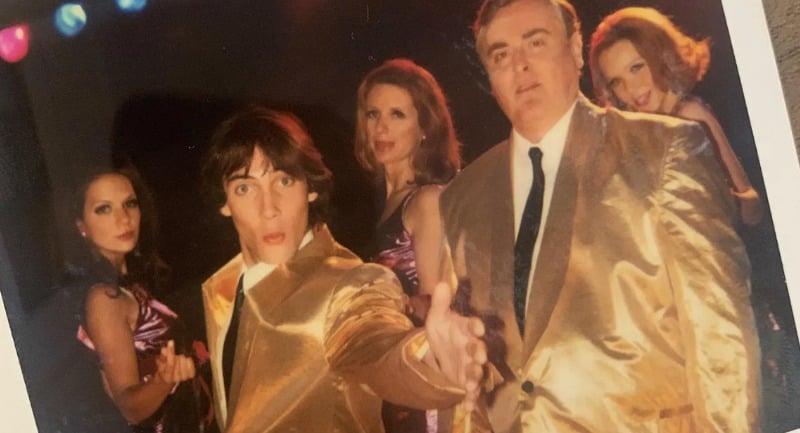
I spent two horrific months repenting recovering at Westmead Children's Hospital. To this day I remain bewildered at the “you've been a naughty girl/boy”-esque style treatment doled out to eating disorder patients.
My stay coincided with a filming break (ever the people pleaser), and so, upon my return, I had expected someone, anyone, to ask how I had spent my break. That, I reasoned, was an easy in for them, an easy way to broach the subject.
And yet, no one asked.
Once again, no one said a word.
The collective silence
This isn't about Grande alone anymore.
Once you're one of the most photographed women in the world, your image inevitably becomes part of our wider cultural conversation. Fairly or unfairly, it becomes something millions of people consume, compare themselves to and internalise.
For young women especially, celebrity bodies have always functioned as a kind of social currency. We absorb them, consciously or not, measuring ourselves against impossible standards that shift with every trend cycle. We know this because we've lived it before. From the heroin chic era of the '90s to the size-zero obsession of the early 2000s, popular culture has never simply reflected beauty ideals; it has helped create them.
That's precisely why this conversation matters.
Ignoring extreme thinness doesn't protect vulnerable people. If anything, it risks reinforcing the very idea that this is simply another beauty standard to aspire to rather than a possible sign that someone may be unwell.
In Oscar Wilde's The Picture of Dorian Grey, Grey remains ageless while all his sins and the ruins of time are revealed through a portrait he keeps hidden
Celebrity, however, can work in reverse.
The public image becomes the portrait through which people search for clues about the person behind it. Not because they're entitled to know, but because human beings are wired to recognise distress in one another.
Perhaps that's the question we should be asking ourselves.
Not whether we should comment on a woman's body.
But whether we've become so terrified of saying the wrong thing that we've forgotten how to recognise suffering with compassion.
Because silence isn't always kindness.
If you or anyone you know needs help or support for an eating disorder or concerns about body image, call Butterfly Foundation National Helpline on 1800 334 673
More from Mediaweek
The leading media trade publication in Australia.
Get our top stories straight to your inbox daily by signing up to our Newsletter
By providing your information, you agree to our Terms of Use and our Privacy Policy. We use vendors that may also process your information to help provide our services.


