



GTA VI is coming for streaming's prime time, and its subscribers
GTA VI drew 7.91 million live viewers on launch day. Clive Dickens says streamers should watch the clock, not the views.

Somewhere in Australia this week, a perfectly good streaming subscription is quietly renewing itself while the household paying for it is busy holding up a convenience store in Leonida.
Grand Theft Auto VI unlocked in New Zealand at midnight on 19 November and rolled west around the globe, and a remarkable number of people stopped what they were doing to watch it happen. Analytics firm Streams Charts clocked a combined peak of 7.91 million concurrent livestream viewers across Twitch, YouTube, and Kick in the game's first 24 hours.
That is more than four and a half times the previous game-launch record of 1.74 million, set by Valorant's closed beta in 2020.
Twitch peaked at 3.31 million, YouTube at 3.22 million and Kick at 1.50 million. Those peaks landed at different moments, so they don't add up neatly to the combined figure. Over the full 24 hours, viewers logged 125.47 million hours watching others play: 52.3 million on Twitch, 44 million on YouTube, and 27.8 million on Kick.
And that's just the watching.
Sensor Tower estimates the game sold 17.07 million copies through launch day, worth roughly US$1.65 billion (about A$2.4 billion), more than double what GTA V made in its first 24 hours in 2013. Take-Two is yet to publish official figures.
Every one of those players has the same 24 hours in a day as a Netflix subscriber. Plenty of them are Netflix subscribers. That's the problem.


The leading media trade publication in Australia.
Get our top stories straight to your inbox daily by signing up to our Newsletter
By providing your information, you agree to our Terms of Use and our Privacy Policy. We use vendors that may also process your information to help provide our services.
READ MORE: GTA didn’t build a game. It built a franchise. Most marketing plans don’t know the difference.
There is only time spent
Clive Dickens, founder and international managing partner of The Meliora Company, has spent a career on the content side of the screen, including stints as chief digital officer at Seven West Media and in a senior television and content role at Optus. He says GTA VI is the clearest illustration yet of what media is really trading in.
The "big currency in media now is time spent," he tells Mediaweek.
"And the reason this is happening is because there is no more people and there is no more time. There is only time spent."
Gaming isn't the only rival claiming those hours. Dickens points to generative AI as another, with these options now crowding into the same finite day: "whether it's time spent with AI, which is also impacting SVOD and Netflix and YouTube, or time spent with gaming."
The local data backs him up. Deloitte's Media & Entertainment Consumer Insights 2026 report found Australians' total weekly media and entertainment time is flat at 45 hours and 20 minutes. Inside that unchanged pie, gaming grew 40 minutes to 3 hours and 45 minutes a week. Video remains the biggest slice at 16 hours and 55 minutes, but it is losing share. Some 64% of Australians now game regularly, rising to 90% of Gen Z.
The pie isn't getting bigger. Gaming's slice is.
The quiet cancel
Listen, let's be real here: nobody cancels Stan the moment they plug in a console. The damage is slower than that. An unused subscription becomes a line on the bank statement, and a line on the bank statement becomes a target; slowly, slowly, the culling begins.
Australians are already in that habit.
Deloitte found 30% cancelled at least one subscription in the past six months, mostly to cut spending, and 76% periodically review what they're paying for. Finder's 2026 Household Report puts a number on the dead weight: 34% of Australians, or 7.4 million people, pay for at least one subscription they don't use.
The consolation for streamers is that subscribers tend to come back. Mediaweek reported earlier this month that, according to Deloitte, 22% of consumers had cancelled a paid streaming service and returned to the same one within six months.
The risk isn't so much a mass exodus as a GTA-shaped gap in the calendar, landing in Australia just as the school holidays and long summer evenings arrive.
For Dickens, it all adds up to the problem the big streamers already had: "growing their time spent, growing their engagement and growing their subscription households." Growth at those companies has slowed, he notes, and their share prices have felt it.

Days versus seconds
While gamers are measuring their week in days, the world's biggest video platform has been lowering the bar for what counts as a view.
On 24 August, YouTube began counting a public view the moment a video starts playing, across long-form, Shorts, and live streams. Long-form views had generally been understood to need around 30 seconds of watch time. Then, on 16 November, YouTube started adding estimated co-viewers to public view counts for videos watched on TV screens, so one living-room playback can now register as several views. Creator payouts are unaffected by either change.
Dickens has some sympathy for the co-viewing logic. "And co-viewing has been a factor for BVOD and for television for years. So, therefore, co-viewing is an understandable development for YouTube as we move towards more content on a large screen," he says.
His issue is that YouTube is adding a co-viewing factor "to create more plays, even though they don't actually know how many humans are in front of the screen." The shorter threshold bothers him more.
"And then, to actually reduce the amount of time that you spend with a video to pump up the views is very unhelpful, because it's artificially inflating the view count."
Put the two trends side by side, and the contrast is stark. "People are now spending days in a game when the number one video platform in the world is counting seconds as engagement," Dickens says.
His argument is that the industry keeps reaching for play counts when "time spent in engagement is the real metric."
Foreground versus background
It isn't only how long people spend with something, Dickens argues. It's how they spend it.
Background media is the daytime TV murmuring while you work, or the mood playlist on while you cook. It has grown since COVID, he says, because more of us are working from home in front of devices. But it isn't where the value sits.
"But in fact, the area where we're much more interested is foreground media. Because foreground media is the one that actually generates the most value," he says.
"So, think about primetime television, live sport, morning radio, podcasts, audiobooks, and gaming. These are foreground media."
Advertising lands differently on the brain in each mode, he says, and the two have always been priced differently. Reaching someone during the Grand Final or the Super Bowl is one thing; seeing the same ad repeatedly across a schedule, network, or series is another. Both matter, but they carry different CPMs.
The trick is the mix. "The key thing is, if you have background only, then you're just very unlikely to have a sustainable business model. And probably, if you have foreground only, it's also challenging as well because it's expensive."
He points to this year's AFL and NRL grand finals, which he says delivered huge ratings alongside the highest cost per minute ever for content. That is why broadcasters lean on cheaper morning shows and music-led programming to balance the books.
Which brings it back to GTA.
A game like this is pure foreground: lean-in, hands-on, eyes locked. It isn't competing with the Netflix show left running while someone folds the washing. It's competing with the 8 pm prime-time slot, the most valuable hours streamers have.
A media company inside a game
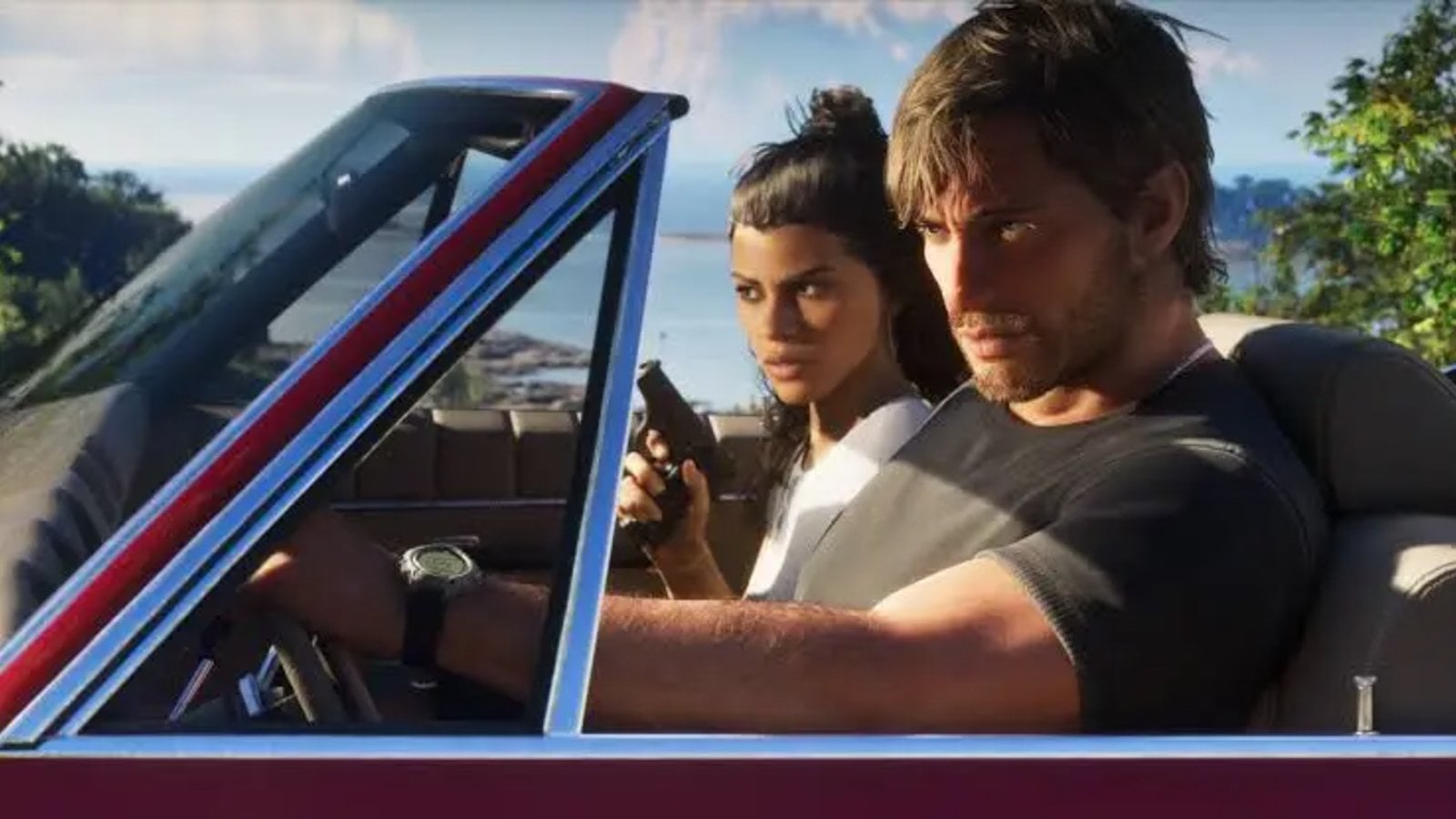
Dickens notes that GTA VI doesn't even open like a game. "The game starts with actually a piece of long-form entertainment, a bit like a movie. So even before you start immersing yourself in the world, you've got a piece of long-form content."
Then there's the media inside it. Grand Theft Auto has long featured in-game radio stations, so players can have their background media while they play. "So, if you want your background media, whilst gaming, they're controlling the whole ecosystem," Dickens says.
The streamers have noticed. Netflix has added games to its service, which Dickens describes as a modest success built mostly on mobile titles. More tellingly, Rockstar premiered Grand Theft Auto VI: An Extended Look exclusively on Netflix on 27 August, six hours before it went to YouTube. The 27-minute gameplay showcase racked up 31.1 million views in four days and hit No. 1 in 87 of the 93 countries Netflix tracks.
The money says the same thing. Microsoft closed its US$68.7 billion (about A$101 billion) acquisition of Activision Blizzard in 2023. In 2024, Disney took a US$1.5 billion (about A$2.2 billion) equity stake in Fortnite maker Epic Games, a move Dickens says shows "Bob Iger understands that gaming is part of the ecosystem." And in August this year, Electronic Arts completed its US$55 billion (about A$81 billion) take-private by Saudi Arabia's Public Investment Fund, Silver Lake, and Affinity Partners.
Not just for the kids
If streamers are comforting themselves that this is a young man's distraction, Dickens has bad news. "There's this incorrect perception that gaming is played by young people. In fact, that's never been the case."
Video games have been around since the 1980s, he points out, and the people who grew up on them are now in their 60s. Ipsos iris data supports that: Australians aged 55 to 64 spend more time playing online games than any other age group, averaging 19 hours a month.
The bigger difference, Dickens says, is how social gaming has become. Where social media keeps users scrolling an algorithmic feed alone, GTA puts them in a world with other people.
"The thing about GTA 6, it's a very social environment. You're playing the game with countless other people," he says. "Social media rarely creates a social environment."
Watch the Clock
Dickens' advice to anyone selling attention is to stop counting plays.
"So, the number one factor for people to think about, in my opinion, is engagement, which is really demonstrated by the combination of time spent and this view around foreground or background time spent."
Netflix, for its part, appears to have found at least one way to compete with Grand Theft Auto VI: put Grand Theft Auto VI on Netflix.
More from Mediaweek
The leading media trade publication in Australia.
Get our top stories straight to your inbox daily by signing up to our Newsletter
By providing your information, you agree to our Terms of Use and our Privacy Policy. We use vendors that may also process your information to help provide our services.


