



ACMA updates commercial radio code with AI disclosure, kids-hours and music debate
It's a first for Australian broadcasting codes.

Australia’s broadcast regulator has formally stepped into the AI debate, registering new commercial radio rules that will require stations to disclose when synthetic voices are used on air - a first for Australian broadcasting codes and a move that lands as automation reshapes radio newsrooms.
The updated Commercial Radio Code of Practice 2026, registered by the Australian Communications and Media Authority (ACMA), introduces mandatory AI transparency, tighter safeguards around children’s listening times, strengthened correction obligations and revised Australian music provisions.
The new rules will take effect from 1 July 2026.
The changes come amid heightened industry scrutiny of AI’s role in radio operations, following recent newsroom restructures - including cuts at Southern Cross Austereo (SCA) - where automation and efficiency gains have been cited as contributing factors, as exclusively revealed by Mediaweek.
AI disclosure enters the broadcasting rulebook
Under the revised code, commercial radio stations must clearly inform audiences when a regularly scheduled program or news broadcast is hosted by a synthetic voice.
It marks the first time artificial intelligence has been explicitly addressed in an Australian broadcasting code of practice.
ACMA Chair Nerida O’Loughlin said the changes were designed to keep regulation aligned with both technology and listener expectations.


The leading media trade publication in Australia.
Get our top stories straight to your inbox daily by signing up to our Newsletter
By providing your information, you agree to our Terms of Use and our Privacy Policy. We use vendors that may also process your information to help provide our services.
“Broadcasting rules must keep pace with technology and with community expectations. AI is a powerful tool that offers a lot of innovation for broadcasters,” Ms O’Loughlin said.
“However, listeners want greater transparency about when AI is being used. We welcome the commitments by the radio industry to address listener concerns.”
The regulator has framed the disclosure requirement as a transparency measure rather than a restriction on the use of AI itself - a notable distinction as broadcasters increasingly deploy synthetic voices across news updates, overnight programming, and digital extensions.
 ACMA chair Nerida O’Loughlin
New safeguards for child listening hours
The code also introduces a formal “special care” obligation during school drop-off and pick-up times - defined as 8:00 am–9:00 am and 3:00 pm–4:00 pm on school days, colloquially known in the industry as the “kids in the car” hours - when children are more likely to be listening with families.
“Listeners are also worried about inappropriate content at peak travel times when families listen together,” Ms O’Loughlin said. “These new rules set clear time windows where broadcasters must consider whether their content is suitable for children, giving parents and carers greater confidence when tuning in.”
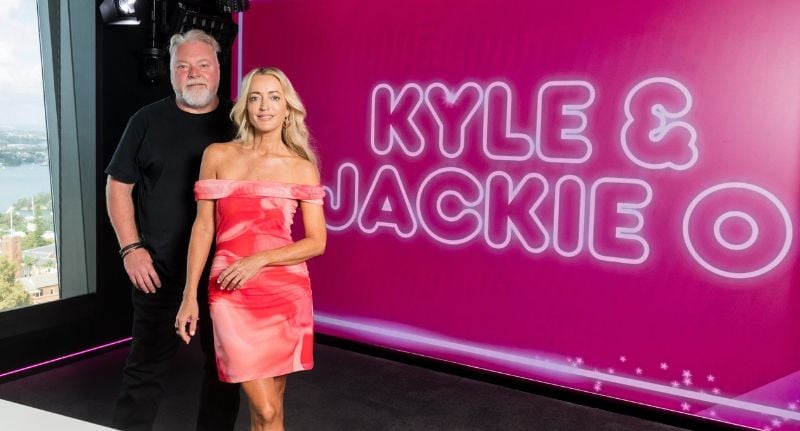
The obligation comes as ACMA’s broader compliance focus, including proposed licence conditions on Australian Radio Network’s (ARN) The Kyle & Jackie O Show over repeated content breaches, has sharpened public attention on how high-profile programming intersects with community standards.
ACMA said the special care measures aim to strengthen trust between audiences and commercial radio, while stopping short of prescribing specific content bans.
CRA supports changes, but the regulator drives the agenda
Industry body Commercial Radio & Audio (CRA), which developed the revised code in consultation with ACMA, welcomed the regulator’s decision to register the changes.
CRA CEO Lizzie Young said the industry had moved proactively to address evolving standards.
“We’re proud to lead the way with this new Code. The Australian radio industry is pleased to be proactively addressing evolving community standards, positioning the local commercial radio sector to navigate technological and social changes responsibly,” Young said.
She added that the review process involved close engagement with the regulator, members and the public.
“Over the course of the review, we’ve worked closely with the Australian Communications and Media Authority, our members, and the Australian public who shared their views during consultation. The result is a new Code that reflects what matters most to the communities that commercial radio connects with every day, and we’re committed to continuing our work with the ACMA as it takes effect.”
While CRA authored the code, ACMA made clear it will oversee compliance, including how stations apply revised Australian music categories and meet longstanding local content obligations.
 Annabelle Herd
Music quotas draw sharp response from ARIA
The most contentious element of the new code sits around Australian music quotas, where ACMA opted not to mandate stronger requirements despite acknowledging significant submissions calling for reform.
That decision has drawn strong criticism from the Australian Recording Industry Association (ARIA), which argues existing loopholes allow stations to meet quotas on paper while pushing Australian music into low-audience overnight slots.
ARIA and Phonographic Performance Company of Australia CEO Annabelle Herd said the regulator had missed a rare opportunity to fix what she described as a failing policy framework.
“We are extremely disappointed that despite all the evidence put forward showing that these quotas aren’t working, the ACMA has not pursued any reasonable or practical changes,” Herd said.
“Commercial radio uses publicly owned spectrum to generate over $1 billion of revenue annually. That is a privilege, and it comes with a responsibility to surface Australian stories, Australian voices, and Australian music at times when audiences are actually tuned in.”
Herd also criticised changes to genre categories being made without direct consultation with the music industry.
“For the ACMA to agree to changes to important music genre categories without any input from the music industry is baffling.”
While ACMA has committed to enforcing existing obligations more closely and working with CRA to ensure categories are applied correctly, ARIA argues the practical effect remains unchanged for artists.
“At a minimum, we are simply asking for Australian music to be played when Australians are listening. That is a modest and reasonable expectation,” Herd said.
Taken together, the new code represents a significant regulatory update for commercial radio - one that formally acknowledges AI’s growing role in broadcasting, strengthens protections for child listeners, and sharpens oversight of complaints and corrections.
ACMA has also flagged expectations that code safeguards be voluntarily extended to on-demand audio and streaming services, warning that further regulation may follow if industry action falls short.
More from Mediaweek
The leading media trade publication in Australia.
Get our top stories straight to your inbox daily by signing up to our Newsletter
By providing your information, you agree to our Terms of Use and our Privacy Policy. We use vendors that may also process your information to help provide our services.


.jpg%3Fv%3D1789512601600&w=3840&q=75)

