



OOH measures all formats nationwide with $20M MOVE launch
The Australian outdoor industry's $20 million MOVE platform lands March 9, with world leading human attention metrics.

The Australian out-of-home (OOH) sector is preparing for a major evolution. For the uninitiated, MOVE stands for Measurement of Outdoor Visibility and Exposure. And it operates as the official audience measurement currency that media buyers use to calculate exactly how many people see outdoor advertisements.
Backed by a $20 million industry investment, the new MOVE platform officially launches on March 9. That’s ahead of a hard switch replacing the legacy MOVE 1.5 system on 16 March 2026.
MOVE introduces a 365-day, hour-by-hour currency that spans both metropolitan and regional areas, bringing an unprecedented level of granularity to the medium.
Ahead of the March 9 launch, Mediaweek spoke with Elizabeth McIntyre, chief executive officer of the Outdoor Media Association (OMA) and MOVE, John O'Neill, chief executive officer of QMS, and James Taylor, chief executive officer of oOh!media, to unpack the platform's impending impacts.
The new data confirms that OOH reaches 97% of Australians every week. McIntyre believes this concrete proof fundamentally shifts how buyers must evaluate the channel.
“We are not just talking about outdoor purely as a top-of-funnel awareness channel, we are talking about the strongest and fastest reaching medium that can deliver impact at scale,” McIntyre said.
“Advertisers now plan and evaluate OOH – with more precision, and build smarter combinations of formats based on how people move, not just where OOH assets are located.”


The leading media trade publication in Australia.
Get our top stories straight to your inbox daily by signing up to our Newsletter
By providing your information, you agree to our Terms of Use and our Privacy Policy. We use vendors that may also process your information to help provide our services.
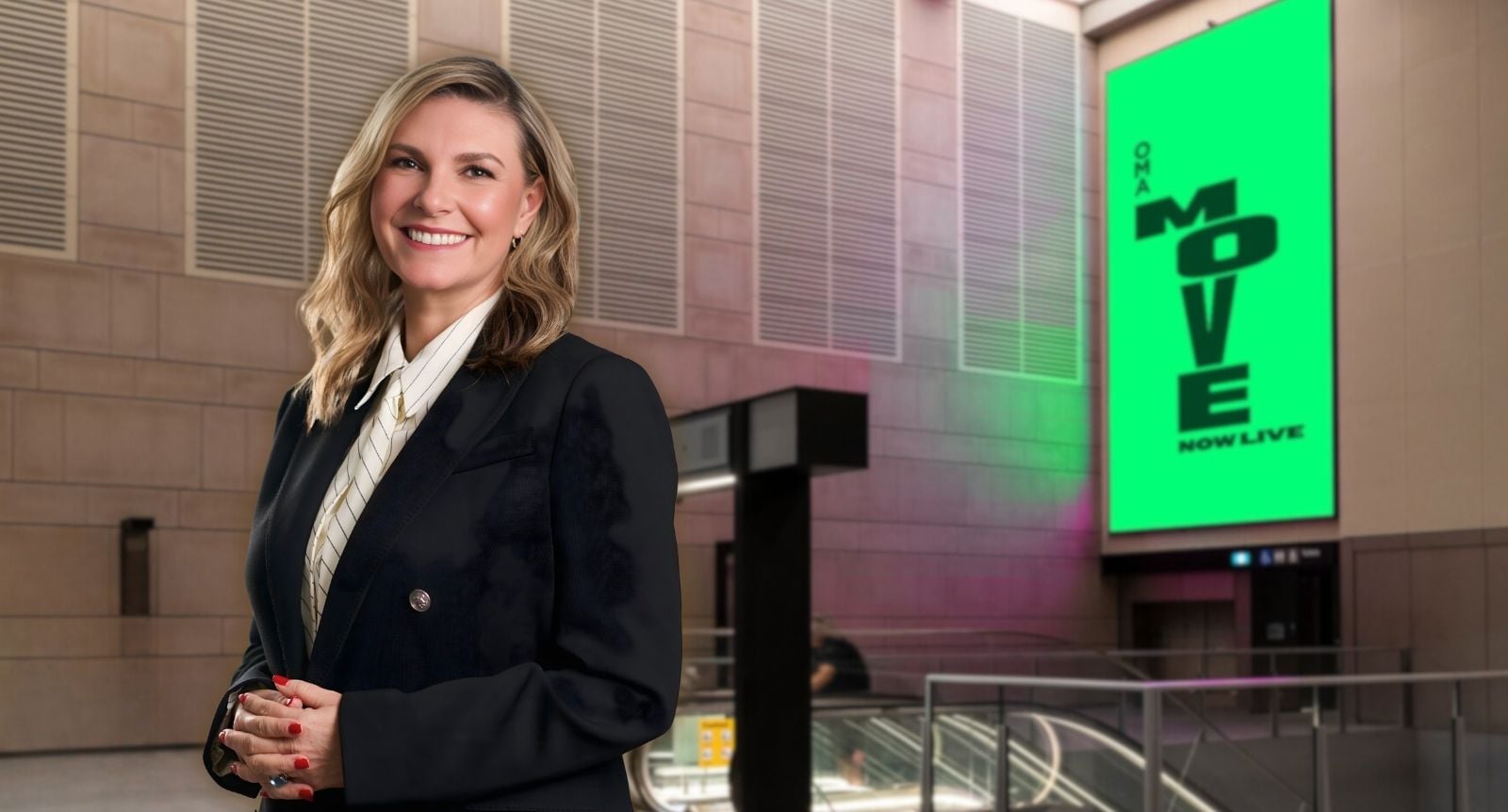 Elizabeth McIntyre, chief executive officer of the Outdoor Media Association (OMA) and MOVE. Image: supplied
Emerging as the true broadcast alternative
Industry leaders agree that the days of pigeonholing outdoor media strictly as an awareness tool are over. O'Neill pointed out that strong revenue growth in the sector continues to outpace the broader market.
“I think the days of pigeonholing OOH as only a top of funnel medium are long gone,” O'Neill said. “Digitisation again has really extended the role that OOH can play in a communication strategy and when combined with the right content, tech and data, it is a highly effective medium to drive audiences through the funnel to purchase.”
Taylor echoed this sentiment. He framed the upgraded medium as a formidable opponent to traditional television and digital buys.
“OOH has been on a steady growth trajectory but is now coming into its own as the true broadcast alternative, offering advertisers a genuine platform to secure physical, unskippable and unblockable reach to audiences at serious scale,” Taylor said.
“If used in multiple contexts it can play a solid role at driving outcomes at the register.”
Panel-level transparency and human attention
A significant change in the new system replaces older ‘opportunity-to-see’ and ‘visibility’ metrics with Visibility Adjusted Contacts (VAC). This enables the industry to apply an attention filter at individual sign level, delivering more precise audience measurement.
Taylor explained that clients ultimately care about verified human engagement when assessing their return on investment.
“For our advertising partners, it’s a currency that is thoroughly transparent and holistic. They can assess not just reach, but quality and visibility metrics down to a panel level,” he noted.
“While some formats and locations will naturally see shifts as the data becomes more precise, the real step change is that we can now prove actual attention, not just theoretical exposure.”
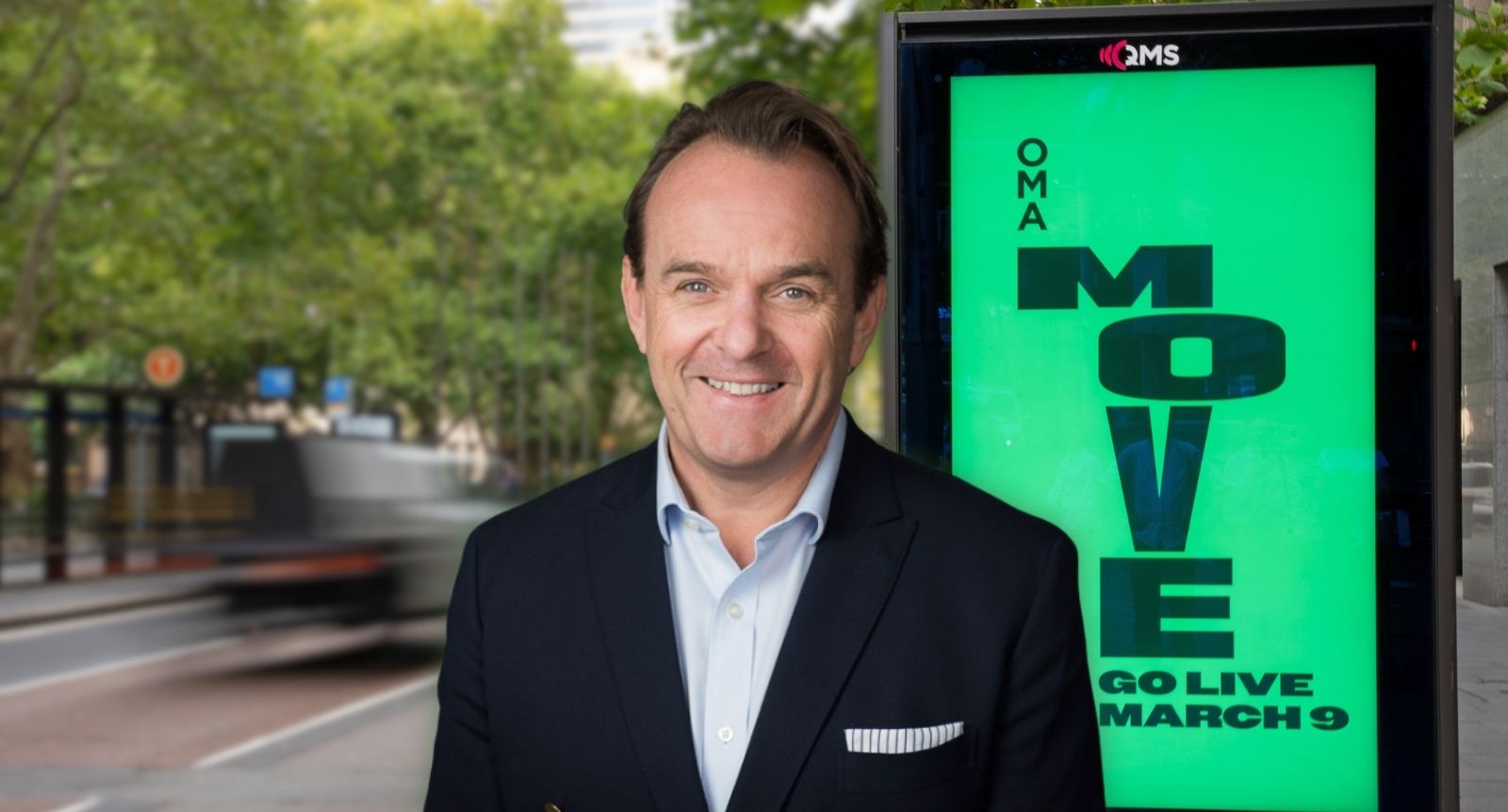 John O'Neill, chief executive officer of QMS. Image: supplied
O'Neill noted that accurately measuring the medium remains challenging given its highly diverse environments.
“One of the beauties, and challenges, of our medium is its nuance,” O'Neill said. “That’s why we’ve led the industry in understanding Attention in DOOH. Ensuring buyers retain deep qualitative insights alongside this new quantitative data.”
Network synergy across regional and rail assets
MOVE now covers 21 regional areas, providing national advertisers with a single, consistent dataset across the entire country. McIntyre highlighted this expansion as a significant commercial unlock.
Regional audiences have historically been under-measured. So consistent, standardised data means these audiences can be integrated into national strategies, rather than alone..
Taylor added that unified coverage allows national brands to map the consumer journey much more effectively. “We have always known that retail, street, and rail, along with our billboard, office tower and airport assets reach audiences at every step of their consumer journey,” Taylor said.
“Being able to demonstrate the combined impact is a genuine step change, showing how scale from a single provider can deliver buyer efficiency, underpinned all by a single currency.”
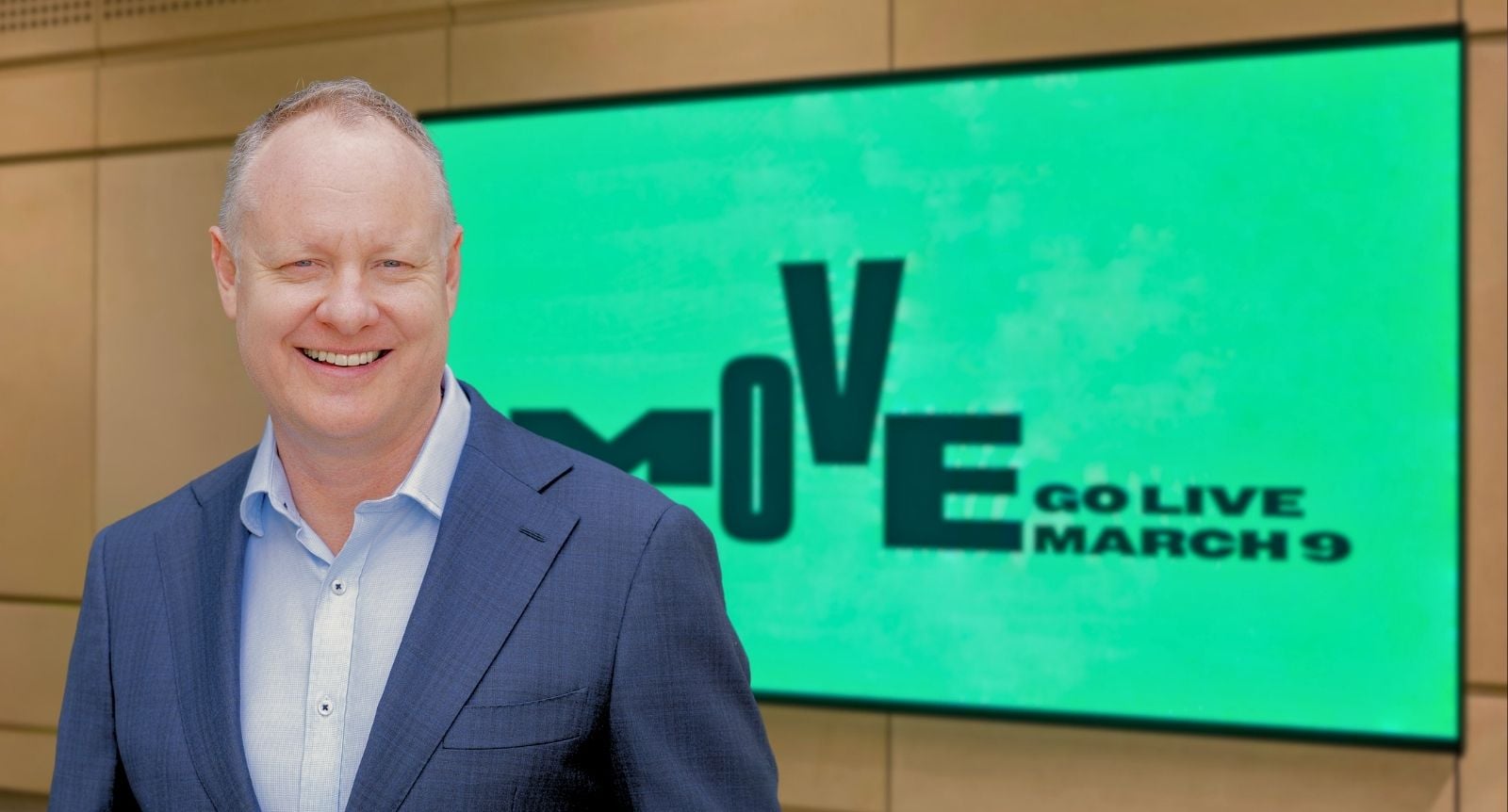 James Taylor, chief executive officer of oOh!media. Image: supplied
A new canvas for tailored creative
The granular data also offers creative agencies a highly detailed view of audience behaviour, enabling them to design campaigns around specific times, seasons, and locations. Taylor pointed out that retail panels are typically viewed while walking. While billboards are usually seen from a vehicle on a freeway.
“Since contextual, purposeful creative drives the greatest ROI, creative agencies have a real opportunity to design work that reflects how consumers actually behave,” Taylor said. “It is the same principle as tailoring content for a phone scroll versus a 15 or 30-second TVC. You would never rely on one creative for both.”
Managing the hard switch and global envy
With the March hard switch looming, the OMA knows that adapting to massive new data sets can feel overwhelming for time-poor media planners.
“Education and support have been central to the transition,” McIntyre said, noting the rollout of training sessions and practical guides. “Importantly, MOVE has been designed to make its complexity extremely user-friendly. And while the data is deeper and richer, the interface allows planners to extract insights quickly.”
Ultimately, this collaborative effort sets Australia apart on the global stage. McIntyre emphasized that the rest of the world is watching closely.
“What makes Australia stand out is the integration of a single, unified currency across every OMA member and format. And getting 63 members and agencies to agree on a methodology is unprecedented,” McIntyre concluded.
“That level of industry alignment and methodological consistency is rare globally. And I think everyone is envious of how united we are as an industry.”
More from Mediaweek
The leading media trade publication in Australia.
Get our top stories straight to your inbox daily by signing up to our Newsletter
By providing your information, you agree to our Terms of Use and our Privacy Policy. We use vendors that may also process your information to help provide our services.
.jpg%3Fv%3D1792558944902&w=3840&q=75)


