



Social media is coming for TV news - Nine's top news boss says she's ready
One point separates TV and social media as our most-used news source, but Fiona Dear is prepared for that multi-platform shift.

New research shows social media is closing in on traditional television as Australia's most-used news source - but Nine's Executive Director of TV News and Current Affairs, Fiona Dear, says the network is prepared.
In an interview with Mediaweek, Dear said that "9News is pioneering a TV news transformation in Australia, changing the way we produce and deliver news to better align with consumer behaviour."
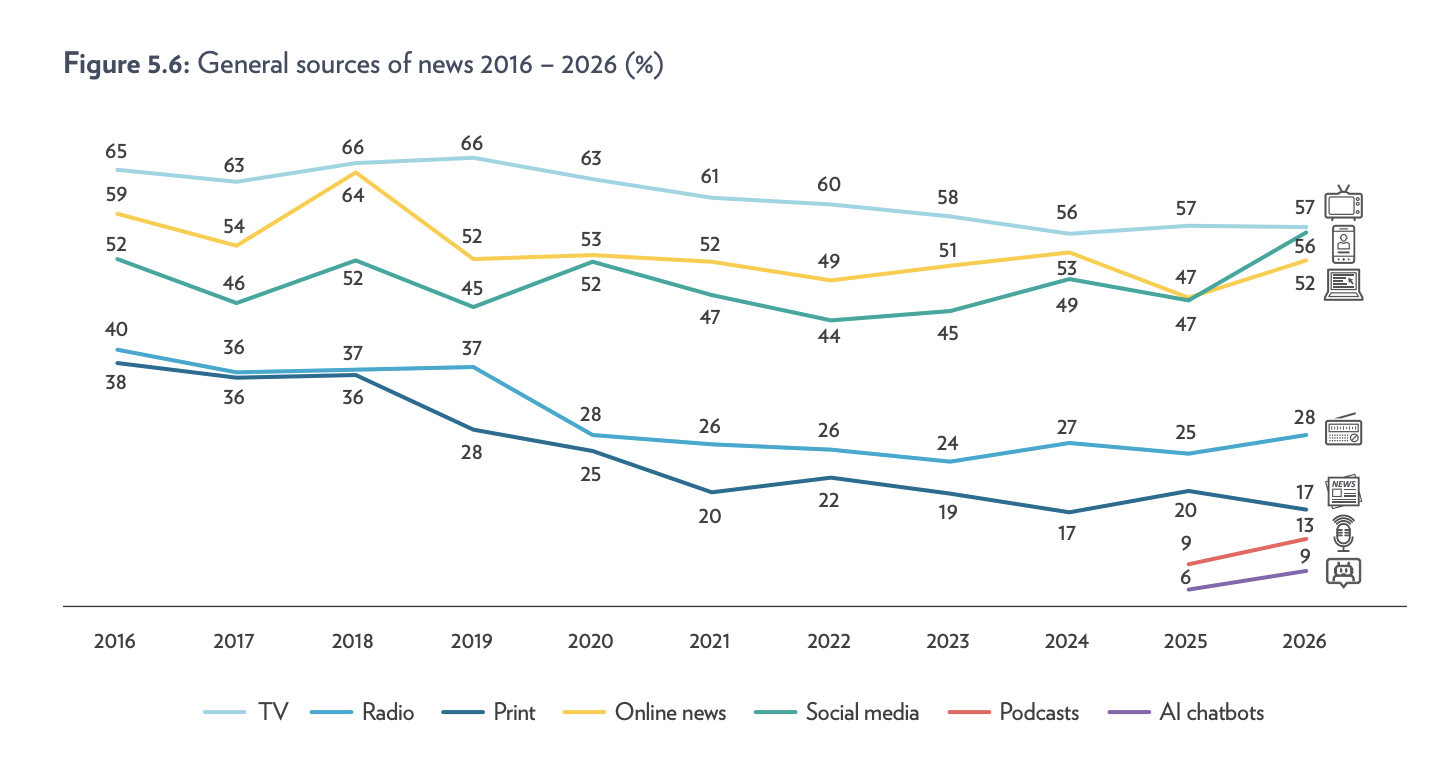
The Digital News Report: Australia 2026, published by the News and Media Research Centre at the University of Canberra and based on a YouGov survey of 2,025 Australians, found television (57%) holds a narrow one-point lead over social media (56%) as the most widely used general news source in the country - a gap that has narrowed sharply over the past year.
"How audiences consume news is shifting, and 'Future News' will allow us to meet audiences where they are, across multiple platforms, instantly," Dear said.
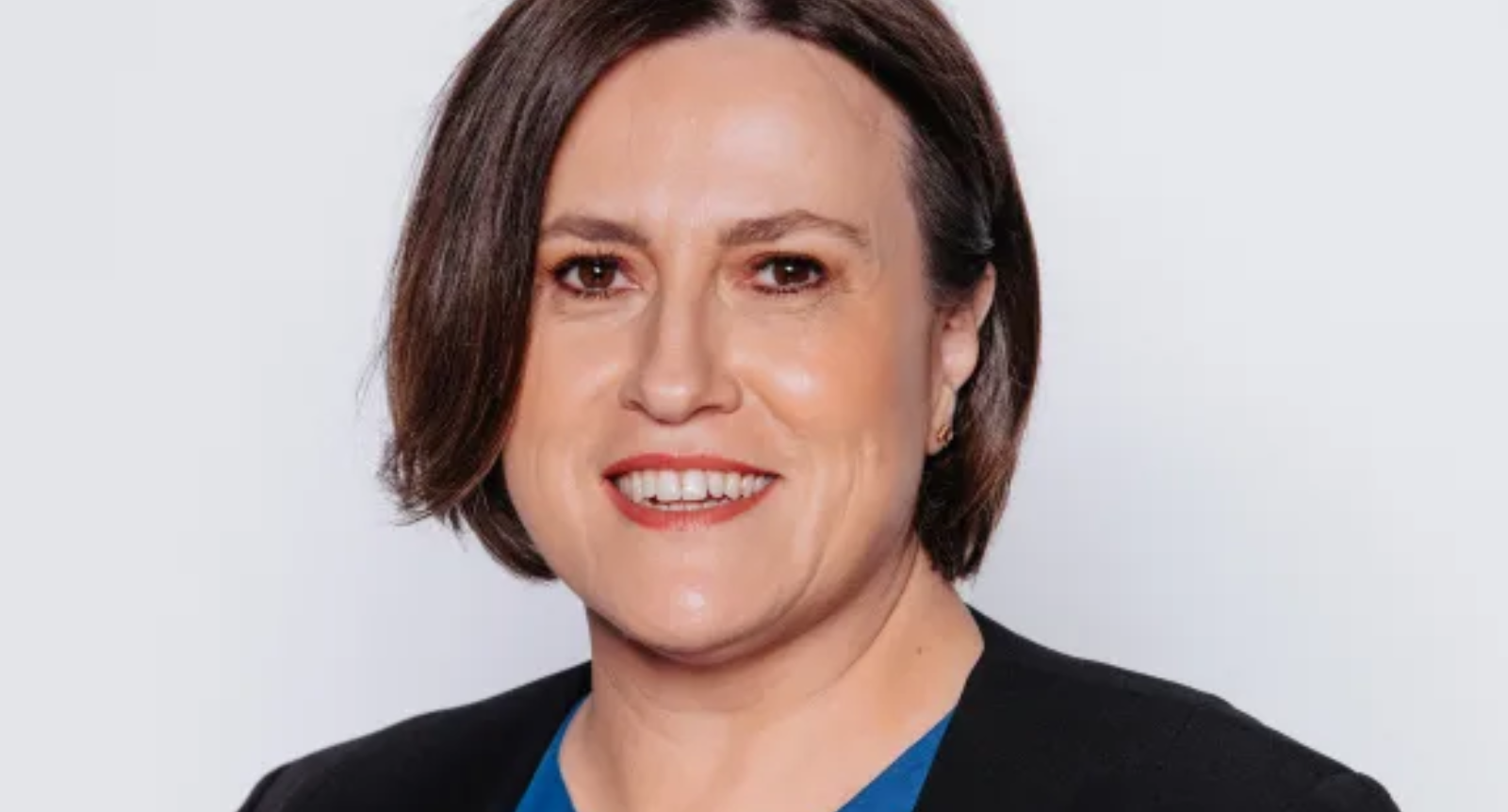 Fiona Dear
Social media closes the gap
The report found it is now the second most-used news source in Australia, up nine percentage points on the previous year, and has overtaken direct website access as the primary pathway to online news for the first time, accounting for 32% of online news pathways compared to direct access at 31%.
Among 18–24-year-olds, 48% now use TikTok for news, up 12 points. Facebook (39%) and YouTube (34%) both outperform dedicated news websites and apps (26%) for news video consumption.


The leading media trade publication in Australia.
Get our top stories straight to your inbox daily by signing up to our Newsletter
By providing your information, you agree to our Terms of Use and our Privacy Policy. We use vendors that may also process your information to help provide our services.
Short-form video under two minutes dominates on Facebook and Instagram, each at 71%.
 The Digital News Report: Australia 2026
Dear acknowledged the shift in viewing behaviour. "While linear television remains a critical part of how audiences consume news, it is no longer the only way," she said.
Trust remains a challenge for social platforms
Despite the growth in social media news consumption, trust in news on those platforms remains low.
The report found just 21% of Australians trust news encountered on social media, while 51% actively distrust it.
By contrast, 54% of Australians trust the news they personally choose to consume - a figure that rose five points from the previous year.
Traditional news brands recorded an increase in trust over the past year, with trust among under-35s rising by 6 points to 60%.
The report identified high-quality coverage of major events - including the Bondi Beach attack and the federal election- as a driver of increased news interest, particularly among younger Australians.
Dear cited trust as central to broadcast news's continued relevance. "In a world of misinformation, audiences want news they can trust - evidenced by the millions of Australians who watch Nine's bulletins each night and the increase in viewers we see during breaking news events," she said.
Influencers a growing but partial substitute
The report found 43% of Australian news consumers now access news from creators or influencers, rising to 70% among 18–24-year-olds and 72% among 25–34-year-olds. However, more than half of influencer news consumers said creators meet only some of their news needs, with most still relying on other sources.
Other key findings
Overall news consumption rose three percentage points, with 56% of Australians accessing news more than once a day.
Nearly one in 10 Australians (9%, +3) now use generative AI chatbots for news. Payment for online news remained stable at 23%, though Australia holds the highest proportion globally of people paying for digital-only news brands, at 35%.
Concern about misinformation rose three points to 77%.
The Digital News Report: Australia 2026 is the 12th annual edition produced by the News and Media Research Centre, forming part of an international study coordinated by the Reuters Institute for the Study of Journalism at Oxford University, spanning 48 countries.
More from Mediaweek
The leading media trade publication in Australia.
Get our top stories straight to your inbox daily by signing up to our Newsletter
By providing your information, you agree to our Terms of Use and our Privacy Policy. We use vendors that may also process your information to help provide our services.
.jpg%3Fv%3D1783988377889&w=3840&q=75)


