






Vevo launches nostalgia targeting as Gen Z embraces a past it never lived
Vevo turns shared cultural memory into an ad product as Gen Z embraces music and moments from before its time.

Marketers have spent years chasing the next cultural moment. Vevo is betting there is just as much value in the ones audiences already know by heart, even when they were not alive to experience them.
The music video network has launched a nostalgia-purchasing layer within its Vevo Evolve ad-targeting suite, allowing advertisers to align campaigns with catalogue music moments that generate renewed cultural attention.
The product is backed by Vevo’s Then is Now research, which found nostalgia is increasingly shaping media consumption, music discovery and brand engagement across generations.
Gen Z is nostalgic for a past it never lived
Vevo surveyed 1,800 Gen Z, Millennial and Gen X consumers across Australia, the UK and the US, including 600 Australians. The research was conducted among general population consumers in January 2026.
Among the findings, 60% of respondents identified with “shared nostalgia”, where cultural memories are built collectively through revivals, reboots and widely shared content, rather than solely through personal experience.
For Gen Z, the trend is even more pronounced. The study found 65% feel nostalgic for cultural moments from before they were born or were too young to remember, compared with 55% of Millennials and 54% of Gen X. Vevo has labelled the phenomenon “borrowed nostalgia”.
One in three Gen Z respondents also said they felt they were “born in the wrong generation”.


The leading media trade publication in Australia.
Get our top stories straight to your inbox daily by signing up to our Newsletter
By providing your information, you agree to our Terms of Use and our Privacy Policy. We use vendors that may also process your information to help provide our services.
Tim O’Connor, General Manager APAC Sales at Vevo, told Mediaweek that the behaviour is already visible across digital platforms, citing TikTok year-end data showing that 20 of its top 50 songs were catalogue tracks rather than new releases.
“Like half of those people on TikTok, they were not alive when that song came out,” O’Connor said.
“And I think that’s what’s really cool, is for those audiences, you’re discovering something for the first time. And for you, that experience is new, and it’s fresh. You don’t really care that it’s maybe 20 or 30 years old in some cases. You’re just enjoying that music or that music video because you can relate to it and you’re passionate about it.”
The research suggests nostalgia cycles may also be getting shorter. Gen Z respondents were most likely to associate the 2000s with nostalgia (54%), while 41% already viewed the 2010s through a nostalgic lens. Millennials gravitated towards the 1990s, while Gen X remained firmly attached to the 1980s.

Nostalgia is influencing what audiences watch
The findings indicate nostalgia is not confined to the occasional throwback playlist.
Among Gen Z respondents, 88% said nostalgia makes emotional experiences feel deeper and more meaningful, while 79% said it can be as powerful as discovering something new. Almost two-thirds (64%) said nostalgic feelings strongly influence the media and content they choose to watch.
The effect can also push audiences deeper into an artist’s catalogue. Across respondents, 78% said hearing older music reminded them of a particular person or moment, 69% said it encouraged them to revisit artists, albums or genres they once loved, and 67% wanted to explore more music from the same era.
That matters for advertisers because the initial nostalgic hit does not necessarily end with one song or video. It can open a longer rediscovery session, giving catalogue content a fresh commercial life.
Nostalgia builds relatability and emotional connection
Vevo found nostalgic content was perceived as more effective than newer content at building emotional connections with customers (+22%), re-engaging audiences (+17%) and strengthening relationships with long-standing customers (+11%).
Nostalgia also recorded an advantage for reinforcing brand heritage (+10%) and increasing brand relatability (+8%). Premieres, meanwhile, remained stronger for introducing products, positioning brands as innovative and encouraging trial.
Separately, 72% of respondents said nostalgic messaging makes a brand feel more relatable, 71% said it creates a positive emotional association, and 67% said it makes them more likely to pay attention.
Within music, the video format carried the strongest nostalgic pull. Music videos were selected by 68% of respondents, ahead of audio tracks at 59% and live-performance videos at 50%.
“The research also showed that music was the biggest driver of nostalgia, more than movies, TV shows, gaming or sports,” O’Connor said.
“So music is incredibly powerful, and in and amongst music itself, music videos delivered the highest levels of nostalgia. I think that’s because it’s that amazing time capsule of fashion and style and really getting a feel for what was iconic at that point in history.”
Genre also matters. Pop nostalgia was relatively consistent across age groups and strengthened with age, while hip-hop skewed younger and rock remained anchored among Gen X. R&B showed a steadier cross-generational spread.
Algorithms are turning catalogue into current culture
Vevo’s report points to social platforms as a key engine behind the resurgence of older content.
A viral trend encouraging users to revisit the music of 2016 drove searches for videos including Aminé’s Caroline, Rae Sremmurd’s Black Beatles, Justin Bieber’s Sorry, Fifth Harmony’s Work from Home and Zara Larsson’s Lush Life.
The report links that period with the shift towards algorithmic discovery, including Instagram’s move away from a chronological feed, increasingly AI-driven YouTube recommendations and TikTok’s hyper-personalised For You model.
The oddity is hard to miss: audiences are now nostalgic for the era in which the algorithm began deciding what they would see. Someone, please call 2004-era Zach Braff before he writes and directs Garden State to let him know YOU'RE NOT ALONE.
Streaming film and television can produce similar spikes. Vevo recorded a 547% increase for Harry Styles’ Sign of the Times following its use in Project Hail Mary, while Sade’s No Ordinary Love rose 52% after appearing in Love Story. The Beatles’ catalogue increased 62% following the release of The Beatles Anthology.
Brand activity can have a comparable effect. Gap’s use of Kelis’ Milkshake drove a 66% increase in monthly video views, while Justin Bieber’s catalogue rose 221% after he revisited his video archive during his Coachella performance.
Australian catalogue artists surge around cultural moments
Vevo’s local platform data suggests nostalgia is not just a survey finding, but measurable audience behaviour.
INXS recorded a 792% increase in views during January, driven by Australia Day and Michael Hutchence’s birthday. Men at Work’s catalogue jumped 353% around Australia Day, while AC/DC recorded a 92% uplift after returning to tour Australia for the first time in a decade.
The trend extends beyond classic rock. Australia’s 2010s indie and electronic wave is beginning to enter its own nostalgic window, with Gen Z engagement rising 58% for Tame Impala, 51% for Troye Sivan and 44% for Flume.
The Gen Z increases outpaced those among Millennials, which were 25% for Tame Impala, 11% for Sivan and 30% for Flume.
Older catalogue audiences are also younger than marketers may assume. Vevo found two in five viewers of 1970s music videos were born after 1979, while one in five viewers of 1980s videos were born after 1989.
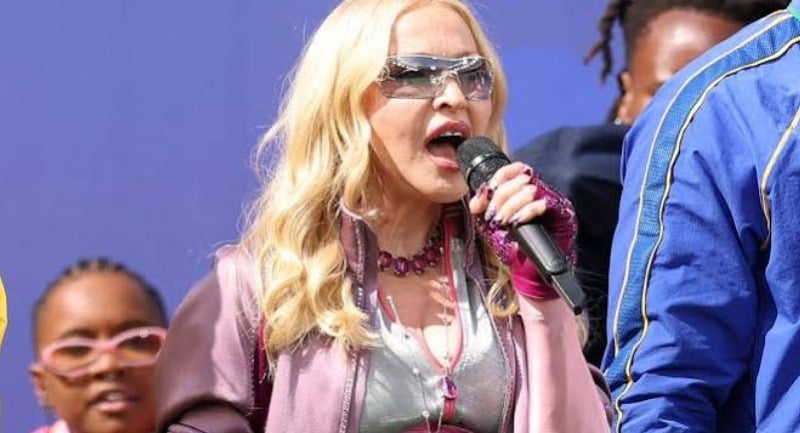
Bob Marley was the clearest example, with 74% of his viewers born after 1979. Madonna’s catalogue drew 62% of its audience from people born after 1989.
Vevo wants brands to stop predicting trends
The new nostalgia layer within Vevo Evolve has been designed to help advertisers capitalise on emerging cultural moments in real time, rather than forecasting them months in advance.
“It’s incredibly hard to create a trend, particularly if audiences know that it’s coming from a business,” O’Connor said.
O’Connor went on to add that the product can identify spikes driven by streaming releases, sporting events and other cultural triggers, then report back on what caused the renewed interest.
“What Vevo Evolve hopefully addresses and solves is you don’t have to predict the trends, you don’t have to predict the future — let Vevo Evolve, and our nostalgia product do that for you,” he said.
“That’s the benefit for brands - we do all that heavy lifting for them.”
For O’Connor, the broader opportunity lies in treating nostalgia as a strategic media lever rather than a passing creative device.
Older music and cultural moments are not simply being rediscovered. They are increasingly feeding back into new releases, as artists borrow familiar sounds, visuals and aesthetics and introduce catalogue material to younger audiences.
“We’re seeing nostalgia become a strategic advantage for brands, not just a creative trend,” O’Connor said.
That gives advertisers an opportunity to move beyond traditional demographic targeting and connect audiences through shared cultural touchpoints.
“The strongest strategies won’t choose between premieres and nostalgia - they’ll use both, recognising that each plays a different role in delivering campaign objectives.”
The full Then is Now report is available from Vevo.
More from Mediaweek
The leading media trade publication in Australia.
Get our top stories straight to your inbox daily by signing up to our Newsletter
By providing your information, you agree to our Terms of Use and our Privacy Policy. We use vendors that may also process your information to help provide our services.


