

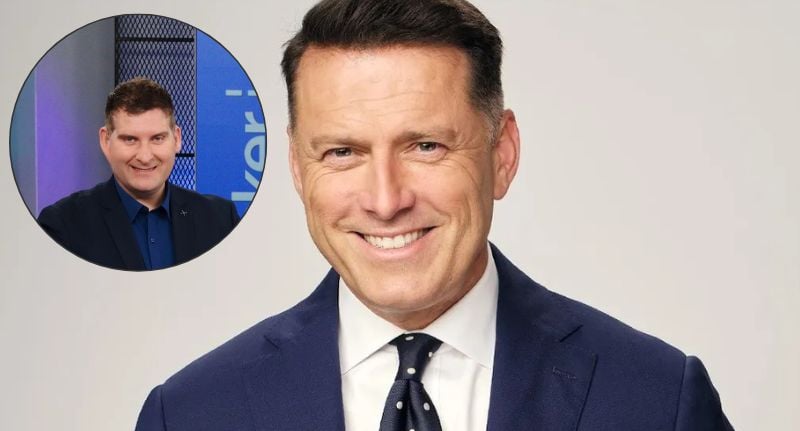
By Ahron Young, former Sky News journalist and founder of Australia’s first streaming news network, Ticker News
Watching Piers Morgan’s interview with Karl Stefanovic on YouTube, I was really fascinated by their reflections and Piers’ lessons for the Aussie breakfast TV presenter on his journey after network television.
Now I’m not Karl, but you can clearly see the shock and uncertainty in his interview. I recognised that feeling. When I left my presenting and reporting role at Sky News after 13 years, I thankfully realised the opportunity ahead could be much more fulfilling than the job I’d left.
The fear of what came next had lingered in the back of my mind for a long time. The truth is, no job in the media ever feels completely safe. My managers were loyal to me, but television is a subjective business.
People will always champion your success, and others will hope you fail. That’s unfortunately the nature of our industry, and it’s something every broadcaster eventually learns to accept.
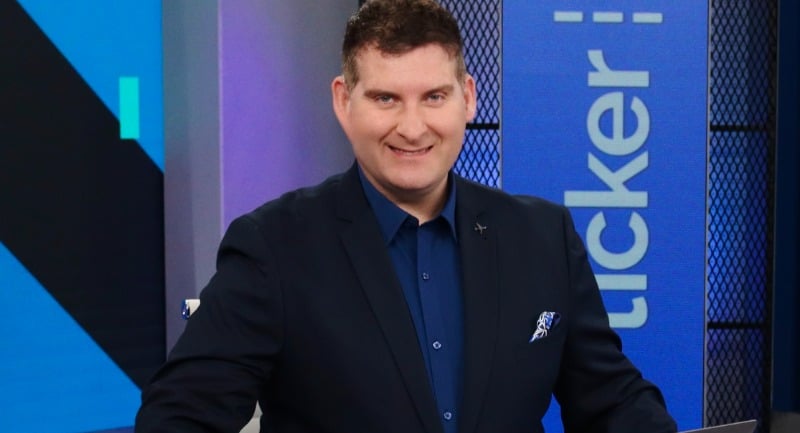
Ahron Young
Three years before I left, I asked one of my bosses a question that many people on television eventually ask.
“What comes next?”
He smiled and replied, “Ahron, I’ve never met anyone on television in their 30s who hasn’t asked that.”
I didn’t really want to spend the rest of my career jumping between networks. I had entertained an offer from another TV newsroom, but something about it felt flat.
I’d always wanted to build something, and this was my chance.
As journalists, we spend our careers questioning other people’s decisions. But I’ve always admired the people who simply decide to create. They build businesses, launch airlines, invent products and take risks.
Eventually, I realised it was time to stop just asking questions and start building.
The rise of streaming happened at the perfect time for me.
In my case, I launched Ticker with limited capital, no formal business plan and an overdose of optimism. I had to suspend the fear of failure. If Ticker were The Castle, the “vibe” would probably capture the original 2019 business model.
Seven years later, I’m still climbing the mountain, because the mountain has no peak.
The media industry has changed more in those seven years than it probably had in the previous twenty. As Piers and Karl noted in their interview, the barriers to entry have disappeared. Audiences are global but also fragmented. Technology is cheaper but making good, polished video content is still a skill. Distribution is easier but also complex. Most importantly, talented people no longer need permission from a television network to build an audience.
If I were starting at 19 again, would I seek a low-paying newsroom cadetship or launch my own YouTube channel?
Clearly Karl is serious about building something of his own, so if I can be so bold – let me share a couple of my own lessons:
Think globally from day one
Piers makes this point in his chat (on what appears to be a very nice yacht in Cannes). One of the biggest mistakes traditional broadcasters make is assuming their audience lives within the boundaries of a television licence area or within reach on a TV antenna.
That world is over. It’s been over for years, but no one wants to admit it.
Today, the audience could be in Sydney, Singapore, Dallas, New York or Dubai. They don’t care where your studio is. They care what you’re offering them.
The internet rewards expertise, authenticity and consistency. Not geography. After all, as humans we all face similar problems.
Build for the world, not your old audience. In the case of Ticker we went out early on looking for partners – not just YouTube – who could ensure we were on smart TVs around the world.
Today, Ticker is on Comcast/Xumo, NewsWorld, Samsung and LG and that helps us reach a business focused professional audience of more than 4 million people a month from around the world.
That’s just our linear TV audience.
READ MORE: Karl Stefanovic fires back at Albanese over Tommy Robinson fallout
READ MORE: Karl Stefanovic exits Nine immediately over podcast conflict
Build a community, not just an audience
One of the biggest adjustments I had to make after leaving television was changing the way I thought about success in the media industry of the future.
In traditional TV, bigger almost always means more revenue. More viewers equals better ratings, bigger advertising deals and more influence. In that world, the most valuable audience is the one who can buy.
The creator economy doesn’t work quite like that.
Views still matter. They help people discover you and build influence.
What really matters is building a community that knows you, trusts you and keeps coming back. A loyal audience of 5,000 decision-makers who genuinely value your content can be far more powerful than two million anonymous viewers who can’t be monetised.
That’s because modern media is a two-lane highway.
On one side, you’re building a relationship with your audience. On the other side, you’re creating value for commercial partners who want to reach that community. They’re not simply buying views; they’re buying access.
At Ticker, I recognised that professionals aged 30-50 weren’t being served by the mainstream media. These are people with money and credit cards, who travel the world and are making key financial decisions.
They’re my friends and colleagues. They’ve lost interest in traditional media but they’re highly engaged and connected. That’s a niche, but a great niche that exists in every city globally.
Be authentic to your audience
This is an area that Karl won’t have a problem with but many others from mainstream media often do. One advantage creators have over traditional media is clarity and you don’t have to be everything to everyone.
In fact, trying to be usually guarantees you’ll become nothing to anyone.
For Ticker it took some time for us to become crystal clear about exactly who Ticker was built for, but then every decision became easier.
In my mind I have a really clear idea of who that person is. At Ticker we know that we’re targeting that business professional in their 30s or 40s who is interested in news, business and technology.
Be that specific. We knew what stories mattered. We knew how to present them. We knew which commercial partnerships made sense. And perhaps more importantly, we knew which ones didn’t.
Authenticity isn’t just good editorial policy. It’s good business and good strategy.
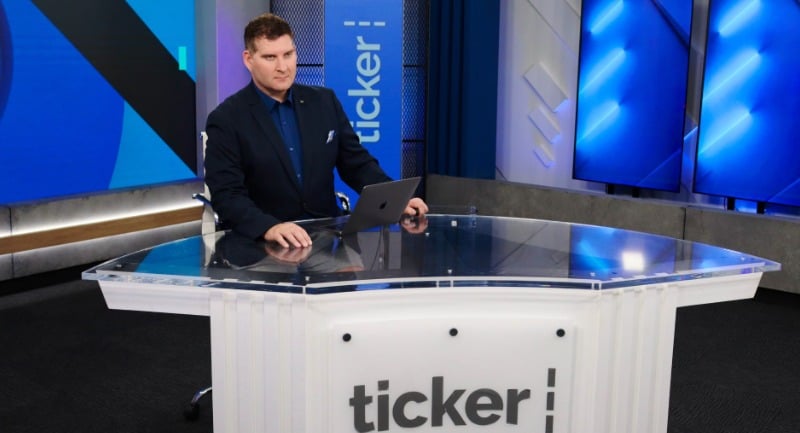
Ahron Young
Respect your critics but never let them define you
Again, I feel like this might come easier to Karl in his 2.0 era, especially in the wake of last week.
If you’re going to have opinions, people will disagree with them.
Don’t allow loud voices on social media to dictate your editorial direction but also listen if you think you might have erred.
The internet has made criticism louder than ever before, but it has also made audiences smarter.
Original ideas always beat louder opinions
Opinion has become one of the easiest forms of content to produce. Everyone has one, and they come for free.
The best media businesses combine strong opinions with journalism, thoughtful storytelling and commercially sustainable ideas.
Karl has spent decades proving he’s more than a presenter.
He’s a journalist, an interviewer and an entertainer – the triple threat.
Those strengths don’t disappear simply because the logo behind him changes.
Focus on quality
One of the biggest surprises for me has been how willing people are to support quality content. You must focus on quality.
I’ve watched a few of his Youtube podcast interviews where the primary camera is blurry and the sound is off. These things matter, just like they do in TV.
I noticed during his interview with Piers that Karl wore no make up while Piers did. They may seem trivial, but makeup departments exist for a reason. The look still matters.
It’s why Piers rents out the News studio in London, and Megyn Kelly has built her own home studio that could easily be Fox. If the audience is used to seeing you a certain way, don’t stray too far from that.
When you consistently provide value, build trust and genuinely help or entertain people, an audience will reward you. The same goes for commercial partners. They have expectations around quality.
If you create value and quality, opportunities follow. When we started Ticker, the idea of sponsors that major brands would come on board felt impossible. In the years since we’ve had a plethora of brands come on, do interviews, sponsor full shows and everything in between.
My final advice to Karl
Now, while both of us have worked in TV, Karl is a Gold Logie megastar who has become a category of his own.
One person who’s found that balance well is Piers Morgan. He has strong opinions, isn’t afraid to challenge guests and his own audience and understands how to create compelling content.
That’s the balance all need to aim for. Chasing views alone from people who agree with you is only picking one lane of the highway.
To build something that lasts, you need commercial partners who see value in your audience.
There’s something incredibly exciting about building something that belongs to you.
Yes, there will be days when you wonder why you ever left the comfort of a TV network job. But there will also be something television rarely gives you anymore: ownership.
Ownership of your ideas, ownership of your audience, ownership of your future. And also ownership of your mistakes.
Karl is an entertainer but he’s also an effective journalist.
Outrage can build an audience but it probably won’t pay the bills.
Because in today’s media landscape, trust and authenticity are the most valuable assets any broadcaster can own, and Karl has built a career on them.