


A day after oOh!media reported higher profits and dividends, CEO James Taylor outlined the deeper forces reshaping the advertising market, arguing that brands are shifting budgets to Out of Home because it delivers a trifecta for those seeking to maximise exposure in an increasingly fragmented media landscape.
They are: visibility, trust, and certainty.
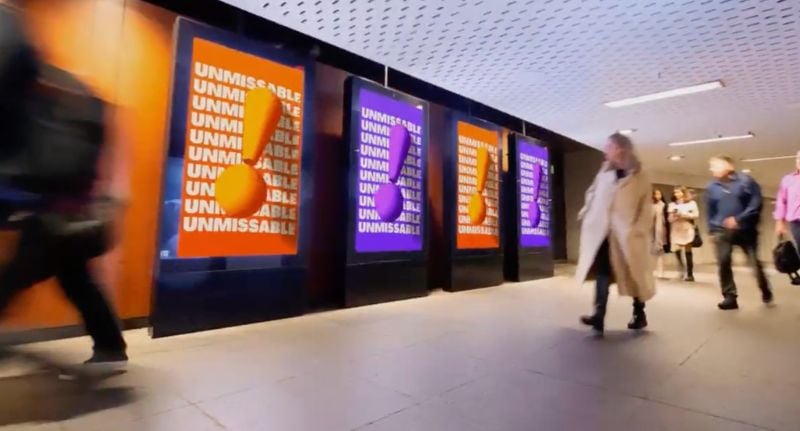
“It’s physical, and it’s trusted. It’s unskippable. It’s unmissable. And so it’s omnipresent,” Taylor told Mediaweek.
“And I think that being present in moments that matter for consumers is really wonderful. It has a level of trust that other platforms, particularly digital ones, have not managed to maintain.”
His comments come after the ASX-listed outdoor media company yesterday posted adjusted net profit after tax of $63.0 million for the year to 31 December 2025, up 7%, alongside an 8% increase in underlying EBITDA to $139.1 million. The Board also lifted its final dividend 14% to 4.0 cents per share.
Yet for Taylor, the results are less about short-term performance and more about a structural shift underway across the entire media ecosystem.
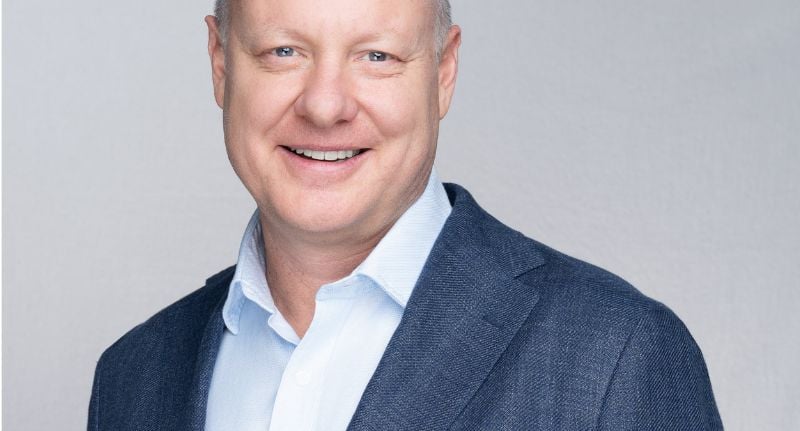
James Taylor. Source: oOh!Media
The FOMO effect
Taylor said the Out of Home sector has fundamentally repositioned itself in marketers’ media plans, evolving from a supplementary channel into a core strategic investment.
“I think if you play back 10 or 15 years, out-of-home was considered an additional buy for marketers,” he said.
“That is not the case now. It’s moving to the centre of their media spend, and there’s an appreciation that out-of-home can do things that other platforms simply can’t.”
That shift is reflected in the sector’s record 16.4% share of agency media spend and in oOh!’s own performance, which maintained a 35% share of the ANZ market and secured approximately $90 million in new contract revenue during the year.
Taylor attributed that growth to a convergence of structural and behavioural factors, such as population density and infrastructure integration.
“We’re seeing more people in our cities, and more people move around our cities, and that helps as well. And we’ve won vastly more contracts than ever before. We’ve got a win rate of 89%, which is pretty good.”
He added that Out of Home’s integration into the physical fabric of cities creates a unique connection between brands and consumers.
“What I particularly love about out-of-home as a sector, and as an operator, is the integration of the offer into urban infrastructure and into people’s lives, the way they actually move through cities,” he said.
“The integration of high-quality advertising into the high-quality infrastructure we build, install, and maintain can make a meaningful societal contribution, but it also presents people’s brands and ad messages in ways no other platform can.”
Nine’s QMS deal confirms the land grab
Taylor said Nine Entertainment’s $850 million acquisition of QMS further validates the sector’s rising strategic importance.
“The purchase of QMS by Nine is a stunning endorsement of the out-of-home sector,” he said.
“It reinforces what I’ve been saying about the sector’s attractiveness, acknowledging both the structural tailwinds and the unique capacity of our outcomes to deliver results that other platforms simply can’t.”
“In terms of our market position, our thesis is that being independent and a specialist is in the best interest of our clients.”
The acquisition underscores a broader trend of traditional media companies expanding into Out of Home to offset audience fragmentation and secure more reliable advertising inventory.
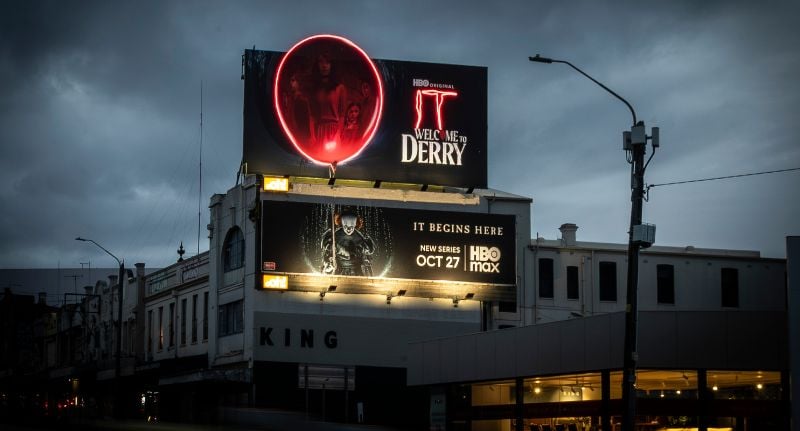
One of oOh!media’s campaigns. Source: oOh!media
Infrastructure, contracts and digital expansion drive momentum
Across oOh!’s portfolio, growth was led by digital billboards and transport infrastructure, with billboard revenue rising 10% to $237.1 million and street furniture and rail climbing 11% to $226.4 million. Airport revenue surged 29% as travel demand rebounded.
Taylor highlighted the strategic power of high-impact digital infrastructure in key urban corridors.
“I was in Melbourne last week, and you drive into town from the airport, and you see the multi-bridge assets that we have there, which is, if my maths is right, six brilliant new digital signs on the way into Melbourne, five brilliant digital signs on the way out,” he said.
“That’s like an audience watching a two-and-a-half-minute commercial every time they walk into the city. It allows brands to stagger messaging across those assets.”
Despite a softer second half and the loss of Auckland Transport inventory, the company’s financial position remains strong, with low gearing and continued investment in premium digital sites.
MOVE measurement resets advertiser confidence
A key driver of future growth is MOVE (Measurement of Outdoor Visibility and Exposure), the industry’s new measurement platform that provides detailed audience insights across the entire Out of Home ecosystem.
Taylor said MOVE would significantly reshape how advertisers evaluate the channel.
“One of the things that we are really pleased about is the way we’ll capture formats that have not been captured before, for example, cinema and youth, and the way we’ll dramatically recast the way in which retail is perceived and valued and measured, knowing that we are the market leader in retail,” he said.
“We are present in the retail centres that represent 50% of retail centre spend, really high-quality assets, and we feel like we’re in a really good position to benefit from MOVE.”
The platform represents a fundamental shift in how campaigns are planned and measured, providing agencies and advertisers with deeper visibility into audience movement and campaign effectiveness.
Early signs momentum is accelerating
Momentum has already carried into 2026, with Australian revenue pacing 7% higher in the first quarter and oOh! gaining market share during key trading months.
“It was an interesting year. A historically large half-one with a more subdued half-two,” Taylor said.
“Looking at CY26, Q1 pacing is up 7% in Australia. And the nice thing about that is that we’ve taken share in both December and January, which is a really strong endorsement of the quality of our sales team, about the way in which they’re approaching the market and the way the market is feeling about them.”
He added that the broader trajectory remains clear, regardless of short-term market fluctuations.
“We’ve provided guidance for Q1, which is plus 7% Australia, and that’s brought on some really strong momentum coming out of the end of last year.”
“What we are confident about is that we will continue to enjoy the benefits of the structural movement of money from other sectors into our own.”