

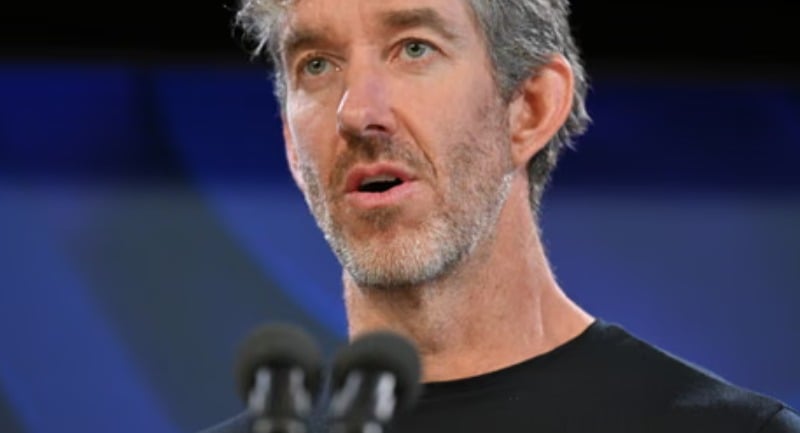
Tech Council of Australia chair Scott Farquhar’s call for urgent copyright reform to unlock AI data centre investment has drawn swift and pointed rebukes from two of Australia’s most senior music industry executives, who say his central claims are factually wrong.
Farquhar made the remarks at The Australian Financial Review AI Summit on Tuesday.
APRA AMCOS chief executive Dean Ormston was blunt in his assessment.
“Every few months, Scott Farquhar discovers that Australian copyright law exists, as it does in over 180 other countries. Every few months, Australia’s songwriters, composers, authors and artists explain why that’s a feature, not a bug,” Ormston said.
Farquhar, who co-founded Atlassian before stepping down in 2024, argued the existing copyright framework made it effectively impossible for AI developers to operate legally in Australia.
“If I train in Australia, I need to cut a deal with every single recording artist in the entire world, because of the way our copyright laws work, so without some government change, it is impossible,” he said.
Ormston rejected the claim outright.
“Now Scott Farquhar says it’s ‘impossible’ to train AI in Australia under existing copyright law. That’s simply not true.”
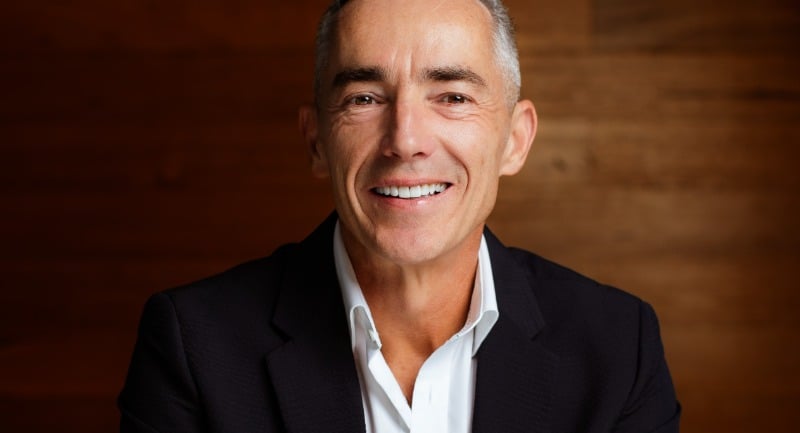
APRA AMCOS chief executive Dean Ormston
‘Five phone numbers’
Annabelle Herd, chief executive of the Australian Recording Industry Association (ARIA), also pushed back – and offered a pointed counter to Farquhar’s characterisation of the licensing landscape.
“It’s pretty contradictory and hard to follow what he’s actually saying. I don’t think he knows, but to say that you need to get the permission of every single recording artist in the world to train on AI in Australia is simply not how licencing works,” Herd told The Quarter Hour podcast.
Her argument was simple: “You don’t have to go into every single territory and discuss these things with every rights holder. I could give you five phone numbers, and you would have 80%, probably more, of the world’s sound recordings licenced.”
Herd outlined the existing deal structure – Sony, Warner, and Universal for the three major labels, plus Merlin for independent labels – as the framework that already underpins licensing on Spotify, TikTok, YouTube, and every other major platform globally.
“Most of these deals are global,” she said. “Australian rights holders are covered by those licensing deals. None of this is even remotely recognised in this conversation.”
The data centre argument dismantled
Ormston also challenged the broader claim that copyright laws were deterring AI infrastructure investment in Australia, noting that the country’s own financial press had undermined that claim.
“AI investment decisions are ‘primarily based on access to capital, energy, water and physical land’, not copyright law. The data centre argument is a distraction. The copyright argument is a negotiating position, one being prosecuted with particular urgency as the major AI platforms position themselves for IPO,” he said.
That context matters: no new text and data mining exemptions have been introduced anywhere in the world since ChatGPT launched in 2022, and major AI data centre investments across the Asia-Pacific have flowed to India, Malaysia, and Thailand – countries with copyright laws equally as strict as Australia’s.

Annabelle Herd, chief executive of the Australian Recording Industry Association (ARIA)
‘A receipt for a robbery’
Ormston reserved his sharpest language for what he described as a coordinated push to entirely sideline ongoing licensing obligations.
“The proposal doing the rounds – a one-off fund distributed as a goodwill gesture in exchange for closing off any ongoing licensing obligation – is not a licensing framework. It is a receipt for a robbery,” he said.
Herd echoed the sentiment, accusing AI companies of approaching the issue in bad faith.
“They don’t think the law should apply to them. They think that for some reason they are above copyright, that they should be allowed to just have free access to all of our books, films, music, everything, and be able to do whatever they want with that in an AI world.”
Ormston’s closing assessment was unambiguous: “The AI industry has had every opportunity to negotiate, to engage, and to treat Australian creators as partners rather than a cost to be avoided. They have chosen not to. That is not a legal problem. That is a choice.”
Attorney-General Michelle Rowland has repeatedly rejected calls for a blanket text and data mining exemption, though negotiations with industry and media sectors are continuing.
Copyright Agency chief executive Josephine Johnston has pointed to collective licensing as a practical middle ground.