


Music has become one of the internet’s most powerful attention drivers.
For the creator economy, trending audio can feel like easy access to the algorithm and a shortcut into culture. However, for music labels and rights holders, those same posts are becoming a hunting ground for potential copyright infringement.
The risk is no longer an afterthought. As organic posts shift into paid media, one copyright mistake can turn a viral moment into a million-dollar mistake.
Platform access = music permission?
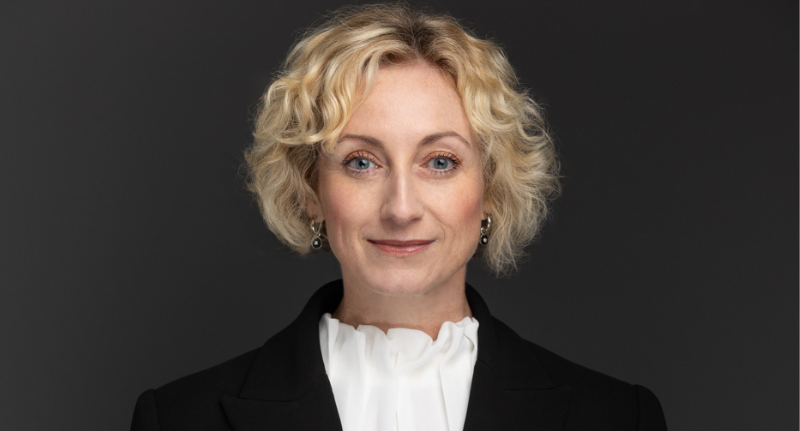
Monica Allen is a media and commercial litigation lawyer with experience handling complex, high-profile disputes in Australia’s Supreme and Federal Courts. Her expertise includes defamation, media law, corporate governance, financial services litigation and commercial disputes.
To investigate the grey area, Mediaweek sat down with Monica Allen, Partner at BlackBay Lawyers, who said one of the most common issues facing clients is confusion around music in platform libraries.
“Just because music is publicly available inside a platform like TikTok or Instagram, there is an automatic assumption that it is cleared for commercial use,” Allen said.
“Quite often, it is not.”
Allen added that many brands and creators still fail to understand the difference between platform access and commercial permission.
“We regularly see brands and creators using trending audio in paid campaigns without understanding that platform licences are very different for personal and commercial advertising use.”
For Allen, the line is clear: access does not equal permission.
She pointed to the specific licensing arrangements that govern platform music libraries, where the distinction between user-generated content and commercial advertising is often blurred.
“A song being available to a creator on TikTok definitely does not mean that a brand can use that same track in a paid campaign.”
Allen said creators can protect themselves by ensuring responsibility is clearly defined before a campaign goes live.
“I think it is about contractual allocation and understanding who is responsible for what. That is really important.”
The biggest influencer marketing trap
The second disruptor, Allen highlighted, is the legal shift that occurs when organic content is repurposed into paid media.
OK, but what does that actually mean?
Allen explained: “It might have started out as something uploaded organically by a creator, but once it is boosted by a brand or used in an ad campaign.
“It changes the legal equation significantly.”
Allen called it “one of the biggest traps” in influencer marketing at the moment.
“We are seeing quite a lot of disputes where the issue is not arising from the original upload, but from the subsequent commercialisation of the content.”
But who takes the blame if the trap works: the creator, the brand, or the agency?
The answer is all of them, but not equally.
Allen said the blame tends to fall on those with the “deepest pocket” (brands).
“But agencies and creators are not insulated simply because they did not upload the content.”
Under Australian law, liability can arise from authorisation, publication, reproduction and commercial exploitation.
“If an agency approved the content, or a brand directed or benefited from it, and the creator uploaded it,” Allen said, “they can all face exposure.”
Australia’s enforcement wake-up call
The law may already be in place, but enforcement in Australia has historically been anything but consistent.
Allen said music clearance is still too often treated as an afterthought.
“The law is catching up, but we are moving much more towards the American space, which has been far more litigated over the years.”
The issue, Allen said, is not that Australia’s laws are particularly different or lacking. The real shift is “a much bigger trend of actually enforcing rights holders’ rights.”
“Multinationals are obviously better resourced and more across it, but in Australia particularly, using unlicensed music content was viewed as low risk because enforcement was so inconsistent.”
AI adds a ‘new layer of uncertainty’
Things get even murkier when AI joins the conversation, or in Allen’s words, adds a whole “new layer of uncertainty”.
One of the biggest questions from a legal lens, she said, is what material AI systems have been trained on, and whether copyrighted works were used without permission.
For brands, the risk does not stop there.
AI-generated tracks that imitate the sound, voice, or style of well-known artists can still create legal and reputational exposure, if not infringement, “particularly if audiences are being misled into believing that an artist endorsed or participated in their campaign.”
“The law is very much still catching up with that area.”
Spotify x Universal Music Group AI deal
But the tables have unexpectedly turned. Spotify and Universal Music Group have locked in a licensing deal that will allow Premium subscribers to generate song covers and remixes using artificial intelligence.
For Allen, the key takeaway is clear: AI-generated music is not a legal free-for-all, but this deal does the opposite.
“In many ways, this deal highlights the opposite: music rights remain highly valuable and heavily protected in the AI era.”
Allen added that even when music is AI-generated, brands and creators can still face exposure if the output reproduces protected musical elements or closely imitates an artist’s voice or style.
“The fact that major platforms and labels are negotiating sophisticated licensing agreements demonstrates that rights holders are taking this issue extremely seriously.”
Allen concluded with a simple warning for creators and brands: do not assume AI-generated content is automatically safe to use commercially.
Universal Music Group has been one of the loudest advocates in the music industry’s AI copyright crackdown.
Most recently, Universal Music Publishing Group joined Concord Music Group and ABKCO Music in a second lawsuit against Anthropic, seeking more than A$4.18 billion in potential statutory damages over alleged infringement of more than 20,000 songs.
Main image: DC Studio on Magnific