
Tuesday May 12, 2026
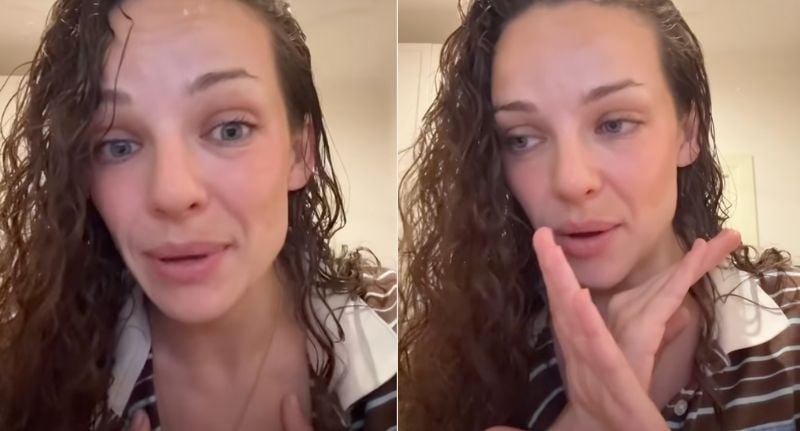
Abbie Chatfield apologies for 'joke' as Keli Holiday denied entry to US
Abbie Chatfield has made a lengthy apology for “a very bad joke” she posted to her social media a year ago.
It comes less than a day after the media identity’s long-time partner, singer Keli Holiday (aka Adam Hyde), was denied entry into the US for unconfirmed reasons, forcing him to cancel scheduled performances.
Since 2025, border control in the US has intensified scrutiny of travellers, after President Donald Trump announced plans to overhaul entry to the US, demanding persons wanting to enter disclose history of their social media.
However, Chatfield, an outspoken Trump dissenter, has denied the two incidents are related, writing in the comments, “No, there has been no clear reason given for that but people are conflating the two things. A video from a year ago.”
In the caption of her effusive apology video, Chatfield says:
“An apology and a clarification on some headlines I’ve been seeing about a (very bad) joke I posted over a year ago that I believe is now being exaggerated and words have been put I my mouth. Regardless, I’m truly sorry for anyone this hurt, and want to make it clear this was not a serious call to action, but is poorly aimed joke at the violence of incels and commentary about the interesting reaction to Luigi Mangione in where a man accused of unaliving someone was suddenly a heart throb.
The influencer adds, “There were layers to it that I should have at least explained in the caption, or the video OR ideally, I shouldn’t have posted it at all! This “joke” was in extremely poor taste, but I want to make it clear that I do not think political violence is ever okay, and as I said when CK [Charlie Kirk] was assassinated, it is not good for anyone.
“I’m genuinely making a huge effort to be more careful with my words, and understand the impact of them, joke or not. I honestly want to apologise to all of you, including and particularly those who disagree with my political stances.”
Chatfield also promises to be more careful with her words.
“I am truly taking more time to reflect on my words and my jokes, because even if you do get the joke, is it helpful? No. It isn’t. It’s stupid, unnecessary, and had potential for harm. That is why I deleted it as soon as I saw how it was being interpreted months after posting, after the media made headlines stripping the joke of context.”
Chatfield’s post ends with her hoping the public “can forgive me, and we can move forward”, adding that “I also want to make it clear Adam hadn’t even seen this video, so any vitriol toward him is unwarranted.”
View this post on Instagram
Abbie Chatfield apologises for video
For context on the current situation and to explain why Chatfield has denied that her history is connected to Holiday’s visa revocation, Chatfield has been an open critic of aspects of US politics, beyond her Charlie Kirk/Luigi Mangione ‘joke’ for which she’s now apologising.
The popular social media influencer also made headlines last year for a rant against US President Donald Trump, in which she repeatedly used a handgun gesture.
Sky News’ conservative Rita Panahi said this month that Chatfield has been “relentlessly promoted” by the media who’ve “embraced” her “far-left” ideas.
Earlier this month, Panahi wrote of her two-week gig as KIIS FM’s breakfast host:
“Somehow, the brains trust at ARN… thinks it’s perfectly fine to put a woman on KIIS who has encouraged people to assassinate President Donald Trump.
“Abbie Chatfield thought it was a great idea to post a video online telling Americans to assassinate their President – and that’s after he had survived two assassination attempts.”
Holiday is now back in Australia.
Top image: Abbie Chatfield
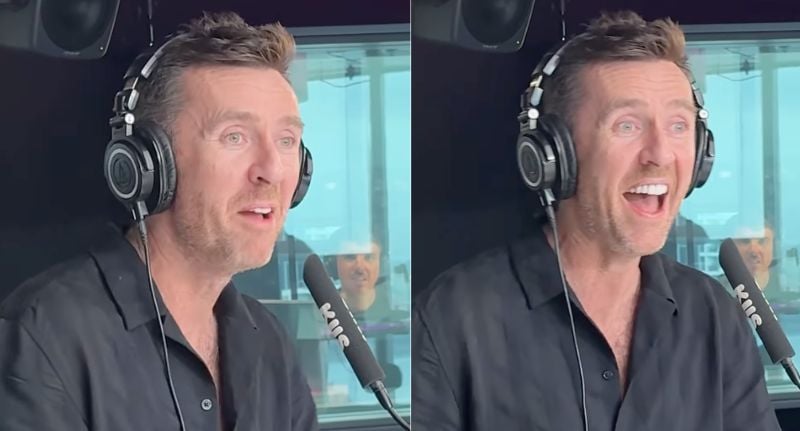
‘Will I have a job?’: Intern Pete lifts lid on KIIS chaos after Kyle and Jackie O exit
A day after announcing his move from KIIS FM to GOLD, Intern Pete, also known as Pete Deppeler, has spoken publicly about the fallout following the end of The Kyle and Jackie O Show.
Appearing on The Quarter Hour podcast with Wade Kingsley, Deppeler reflected on the emotional impact of ARN’s decision to terminate the contracts of both Kyle Sandilands and Jackie ‘O’ Henderson, bringing the long-running breakfast program to an end.
“It was full on,” Deppeler said, adding that he experienced “sadness” before moving into a period of “reflection”.
“That part has been absolutely taking its toll.”
‘Will I have a job?’
Deppeler also discussed the uncertainty surrounding the show’s collapse during an appearance on McKnight Tonight with Rob McKnight.
“I was definitely worried,” he said.
“The first thing I thought was, where do I sit? Will I have a job?”
The longtime producer and on-air contributor, who spent almost 13 years with the program, credited ARN management for supporting staff during the transition period.
“Yes, the two main hosts aren’t there, but there is this beautiful family that’s still happening,” he said, referring to the current KIIS FM breakfast team, which includes former Kyle and Jackie O staffers such as newsreader Brooklyn Ross and executive producer Nat Penfold.
“We’re all sticking together.”
Moving to GOLD and The Christian O’Connell Show
The interviews coincided with Deppeler announcing he was “graduating” from KIIS to join GOLD’s networked Breakfast program, The Christian O’Connell Show.
Deppeler will take on an on-air role as roving reporter and senior producer across the national breakfast show, which airs in Sydney, Melbourne, Brisbane, Perth and Adelaide.
The move comes as Christian O’Connell continues building an audience in Sydney on GOLD101.7 following a soft start in the market. GOLD101.7 breakfast recorded a 6.1% share in GfK Survey 1 before slipping to 5.5% in Survey 2.
Speaking to Kingsley, Deppeler said he was not concerned about the ratings and believed Sydney audiences would warm to O’Connell’s style over time.
“Sydney is going to realise it’s a very solid radio show.”
Deppeler’s final day on KIIS Breakfast will be Friday, 22 May, before making his on-air debut with The Christian O’Connell Show on Monday, 25 May.
The program airs from 6am–9am weekdays on GOLD101.7 in Sydney, GOLD104.3 in Melbourne, GOLD DAB+ in Perth, Adelaide and Brisbane, and via the iHeart app.
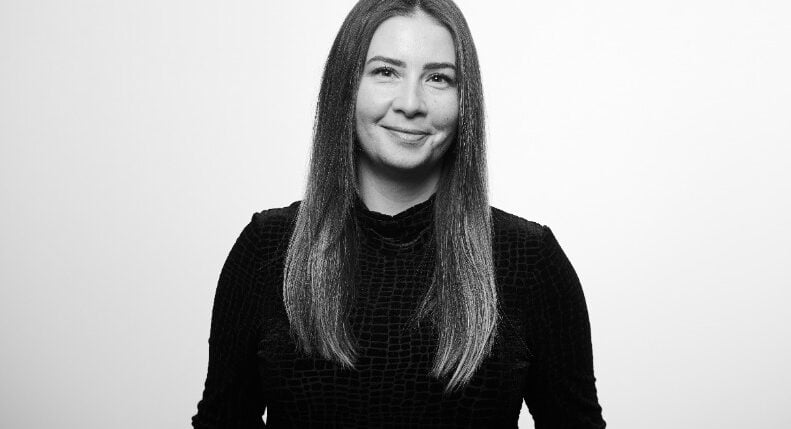
WPP Media appoints Marcelle Hoyek to lead EssenceMediacom Sydney portfolio
WPP Media has appointed Marcelle Hoyek as Client Managing Director at EssenceMediacom Sydney, with oversight of a client portfolio that includes Lion, HBO Max, Uber, Commonwealth Bank, KFC and UPI.
Hoyek joins the agency from iProspect, where she has served as National Managing Director for the past three years, following an earlier stint as Sydney managing director.
The appointment comes as EssenceMediacom continues expanding its media, data, technology and integrated communications capabilities across the Australian market.
Reporting to Pippa Berlocher, Hoyek will oversee EssenceMediacom Sydney’s clients, people and operations, while working alongside the ANZ leadership team to drive further growth.
Berlocher said Hoyek’s experience and leadership style made her a strong fit for the business’s next phase.
“Marcelle is an outstanding leader with a deep understanding of the evolving role of media in driving growth. What I love is her genuine passion for people and delivering excellence for clients, and her hands-on focus on building strong, high-performing teams,” Berlocher said.
“She brings the right mix of strategic rigour, empathy and ambition to lead our Sydney business into its next chapter. I’m thrilled to welcome her to EssenceMediacom.”

Pippa Berlocher
Hoyek said the agency’s momentum and culture were key factors behind the move.
“EssenceMediacom has built something incredibly special. It’s a business with momentum, ambition and a genuine commitment to people and clients,” she said.
“I’m excited to join the team and bring my passion, creativity and energy to help elevate what is already a brilliant business and partner closely with clients to help drive meaningful growth in an increasingly complex communications landscape.”
Hoyek will officially commence with WPP Media on 1 July.
Main image: Marcelle Hoyek
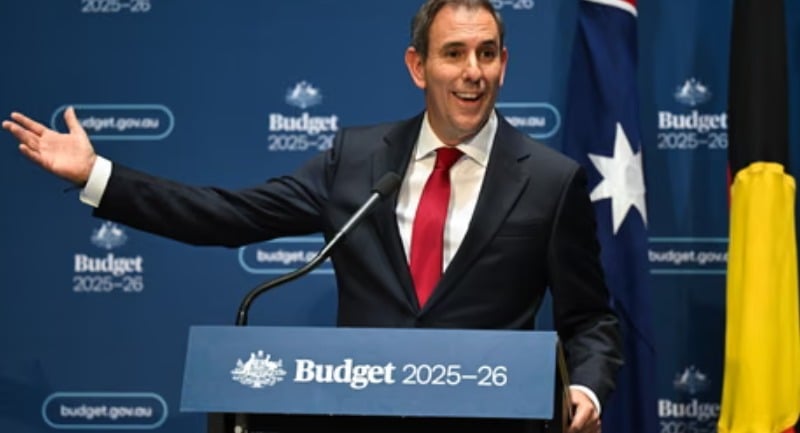
How the networks are covering Budget night 2026
Australia’s major broadcasters are rolling out wall-to-wall coverage plans for Budget Night 2026, with special programming, live analysis and multi-platform streaming set to dominate schedules.
Networks are promising deep dives into Treasurer Jim Chalmers’ fifth Federal Budget, with a strong focus on cost-of-living pressures, housing, tax reform and household finances.
Coverage will span broadcast, streaming, radio, digital, and social platforms as networks compete to break down what the Budget means for Australians in real time.
Here’s what they’ve got planned…
ABC
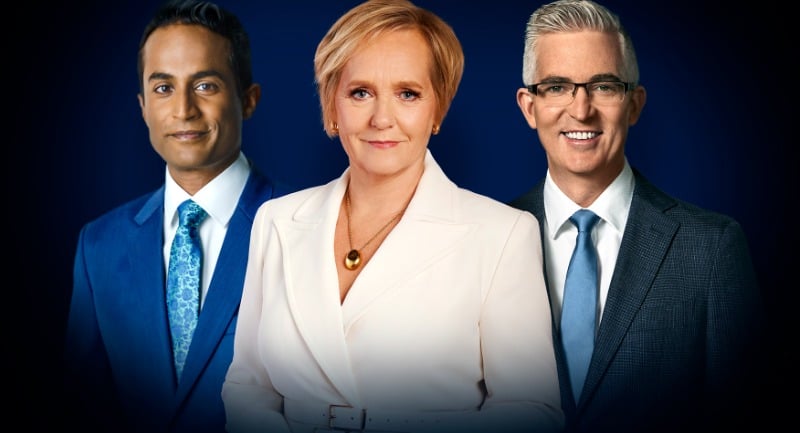
Jeremy Fernandez, Sarah Ferguson, and David Speers
ABC TV and ABC iview
Coverage will begin with a Budget preview hosted by Jeremy Fernandez live from Parliament House during the eastern states 7pm News bulletin.
At 7.30pm, the network will broadcast Treasurer Jim Chalmers’ Budget speech in full.
From 8pm, Sarah Ferguson will host a 7.30 Budget Special, featuring interviews with Chalmers and Shadow Treasurer Tim Wilson, alongside analysis from Jane Norman, Jacob Greber, Ian Verrender and Tom Crowley.
At 8.30pm, David Speers will front a primetime Insiders Budget Special. He will be joined by budget experts Chris Richardson and Aruna Sathanapally, as well as political commentators Patricia Karvelas, Melissa Clarke and Jacob Greber.
Business reporter David Chau will examine the implications for small and large businesses, while disability affairs reporter Nas Campanella will analyse changes to the NDIS.
At 9.30pm, The Business will see Kirsten Aiken joined by Ian Verrender, Michael Brennan and Devika Shivadekar to break down the Budget’s economic and household impact.
The program will also feature housing analysis from Michael Janda and business reaction reporting from Alicia Barry, while David Taylor reports from inside the Budget lock-up.
ABC Radio
The broadcaster’s radio coverage will also begin with the Treasurer’s speech at 7.30pm, continuing through to 9pm across ABC radio stations and the ABC listen app.
The coverage will focus on unpacking how the Budget measures are expected to affect Australians, with live analysis and reporting throughout the evening.
ABC Online
The ABC News website will run rolling digital coverage of the Federal Budget, including a live blog featuring specialist analysis, expert commentary, and breakdowns of the Budget’s key winners and losers.
The broadcaster also confirmed it will air Opposition Leader Angus Taylor’s Budget Reply speech live at 7.30pm on Thursday, 14 May.
7NEWS
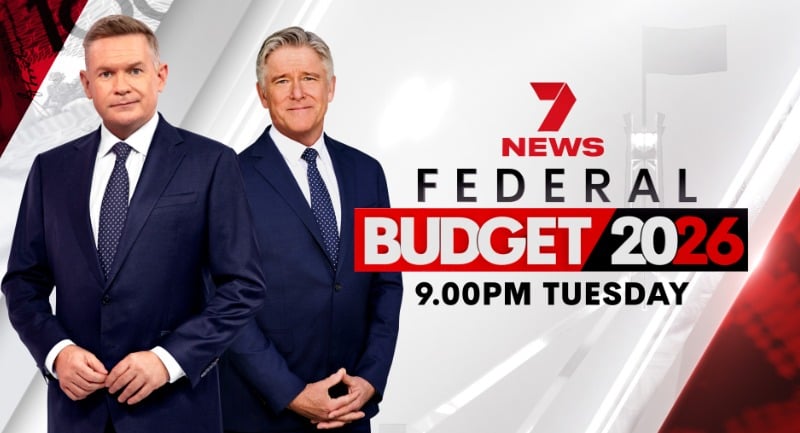
Michael Usher and Mark Riley
Coverage will begin from 6pm, focusing on the major economic measures expected to affect Australian households, including cost-of-living pressures, mortgages and tax policy changes.
Breaking updates from Canberra will continue throughout the evening across Seven and 7plus as Treasurer Jim Chalmers delivers the Federal Budget from 7.30pm.
At 9pm, Michael Usher will host a one-hour 7NEWS Budget special alongside Mark Riley and a panel of economists and political commentators examining the Budget’s impact on households and the broader economy.
The special will also feature audience questions directed to the government, with the network positioning viewers as part of the national Budget conversation.
Seven said coverage would focus on major policy settings expected to feature in the Budget, including potential changes to negative gearing and capital gains tax.
Riley will lead the political analysis and interview coverage from Canberra as the network examines the government’s economic agenda and fiscal decisions.
Budget coverage will continue from 5.30am on Wednesday, 13 May, during Sunrise, with analysis of the Budget’s winners and losers.
The broadcaster’s digital coverage will also run throughout the night via the 7NEWS website, featuring rolling updates, analysis and Budget insights.
Nine
Coverage will begin at 6pm during the network’s flagship 9News bulletin, featuring analysis from Chris Kohler, Effie Zahos, Charles Croucher and Andrew Probyn.
From 7.30pm AEST, the broadcaster will stream Budget Revealed live on 9Now, alongside coverage across its TikTok, YouTube and Facebook channels as Treasurer Jim Chalmers delivers the Federal Budget.
At 8.30pm, Peter Overton will host a 9News Budget Special, offering further analysis of the government’s spending measures and their impact on Australian households.
Throughout the evening, the network’s panel of finance and political reporters will also respond to viewer questions submitted via social media and on-screen QR code prompts.
Network 10
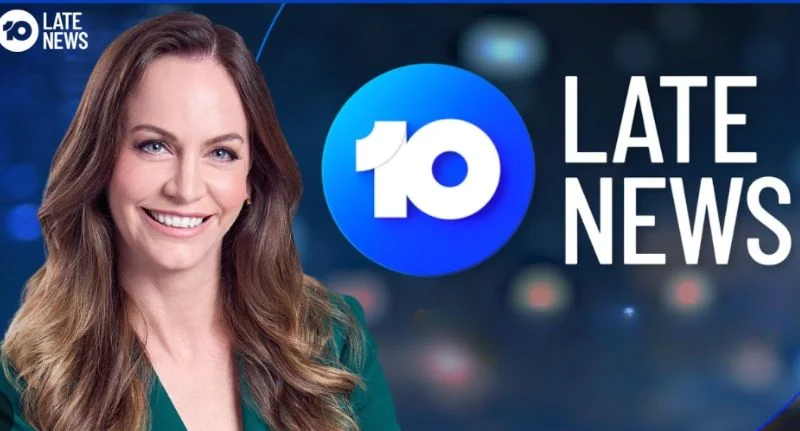
Network 10 will cover the 2026–27 Federal Budget during 10’s Late News at 9.40pm, following The Cheap Seats.
Sky News Australia
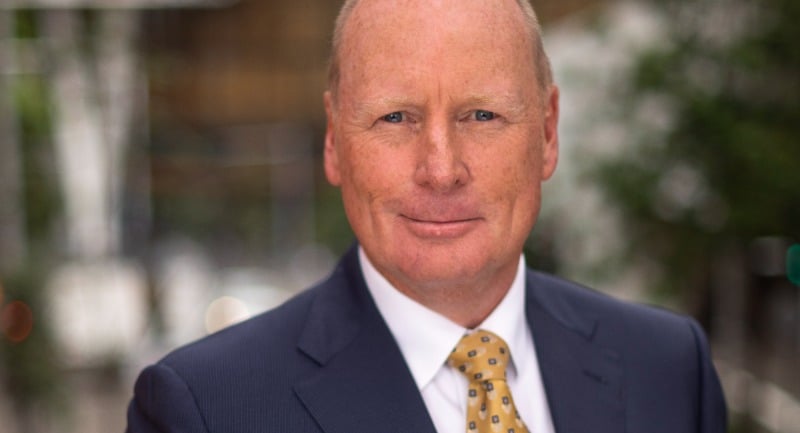
Ross Greenwood
Chris Kenny will open the network’s Budget Night coverage from 5pm, previewing the key policy issues expected to shape the Budget.
From 6pm, Peta Credlin will host a 90-minute Budget special of Credlin, offering analysis ahead of the Treasurer’s speech from Parliament House.
At 7.30pm, Sky News will broadcast Treasurer Jim Chalmers’ Budget speech live.
Coverage will continue from 8pm with Budget 2026 LIVE, hosted by Kieran Gilbert alongside a panel including Andrew Clennell, Ross Greenwood, Chris Uhlmann and Laura Jayes.
The program will feature interviews with leading political figures including Jim Chalmers, Shadow Treasurer Tim Wilson and One Nation MP Barnaby Joyce.
Additional commentary will come from Andrew Bolt and former Labor ministers Stephen Conroy and Joel Fitzgibbon.
The broadcaster said viewers would also hear reactions from Australians on the ground, with regional correspondent Jaynie Seal reporting from Bendigo, Victoria, and Queensland political reporter Harry Clarke crossing live from Logan.
At 9.30pm, Paul Murray will front a 90-minute Budget special edition of Paul Murray Live, focusing on the broader economic and political implications of the government’s financial decisions.
From 11pm, The Late Debate with James Macpherson, Caleb Bond and Danica De Giorgio will examine the first newspaper reactions and political fallout from Budget Night.
The broadcaster’s Budget programming will also include a special edition of Budget Battleground with Ross Greenwood, airing Sunday, 10 May at 7.30pm.
On Wednesday, 13 May at 12.30pm, Sky News will broadcast Jim Chalmers’ address to the National Press Club of Australia live from Parliament’s Great Hall.
Coverage will conclude on Thursday, 14 May at 7.30pm with Opposition Leader Angus Taylor delivering the Coalition’s Budget Reply speech live on the network.
Nine and Magnite push programmatic boundaries
Securing millions of eyeballs during prime time looks great on a network press release. However, monetising those streaming audiences at the speed of live television, presents a completely different challenge.
Behind the screen, Connected TV (CTV) and programmatic advertising serve as the vital plumbing that turns those viewers into revenue. This unseen engine dictates exactly which ad plays to which household in a matter of milliseconds.
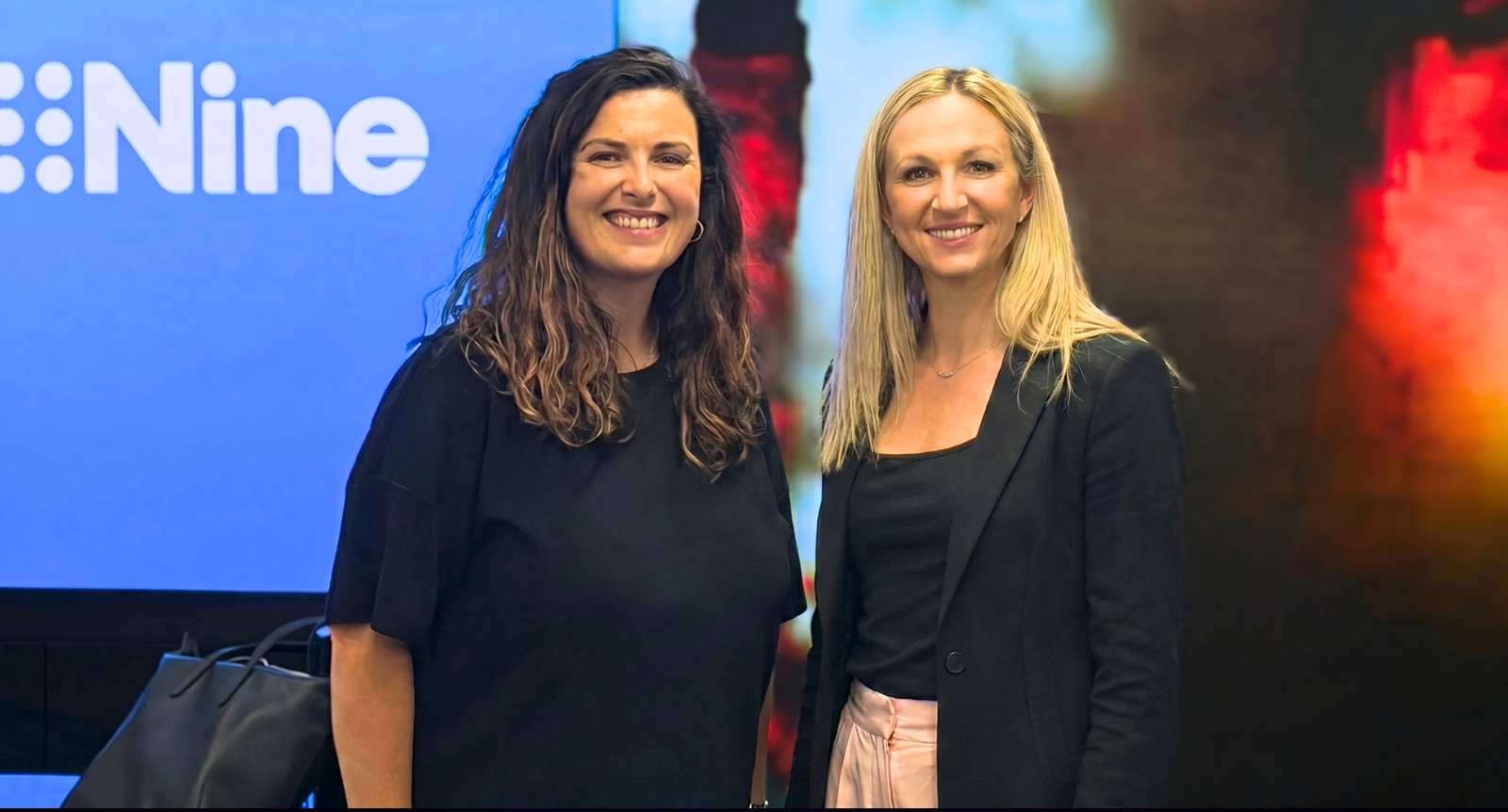
To unpack exactly how this technical wizardry works, we sat down with Julia Edwards, director of programmatic sales at Nine, and Maddy Mewing, director of platforms at Magnite, for Mediaweek’s Newsmakers podcast.
A monster first quarter of consumer hits created an equally massive stress test upon the ad tech stack at Nine. Edwards knows the sheer scale of this challenge firsthand.
“We call it the quarter of two quarters,” Edwards said during the podcast. “It has definitely been a remarkable first quarter. Obviously, from a 9Now perspective, we have dominated the key demographics. We have had major hits like Married at First Sight, Winter Olympics, Australian Open.”
Busting the black box myth
Packaging those premium viewers often leads marketers into the world of programmatic advertising, where they can reach audiences across multiple publishers in a more scalable and efficient way.
Mewing pushed back on the industry narrative that programmatic advertising remains inherently flawed.
“It hurts me when programmatic is said that it is a black box, because I think if you are with the right partners, that is not the case,” Mewing said. “At Magnite, one of our biggest mantras is transparency. We provide the technology, and the broadcasters use it how they would like it to be used.”
The challenge to media agencies
That direct relationship between publisher and tech partner provides the ultimate weapon for supply path optimisation. When multiple tech intermediaries clip the ticket along the way, working media budgets quickly evaporate.
Mewing laid down a direct challenge to media buyers who still rely on bloated multi-hop supply paths.
“Research shows that 50 to 60 cents of the dollar reaches the publisher,” Mewing noted. “So those intermediaries that come through there, I would challenge your agency: what are those values, who are they, and what are they charging? Demand that transparency so you ensure that all of your dollars are going towards your working media.”
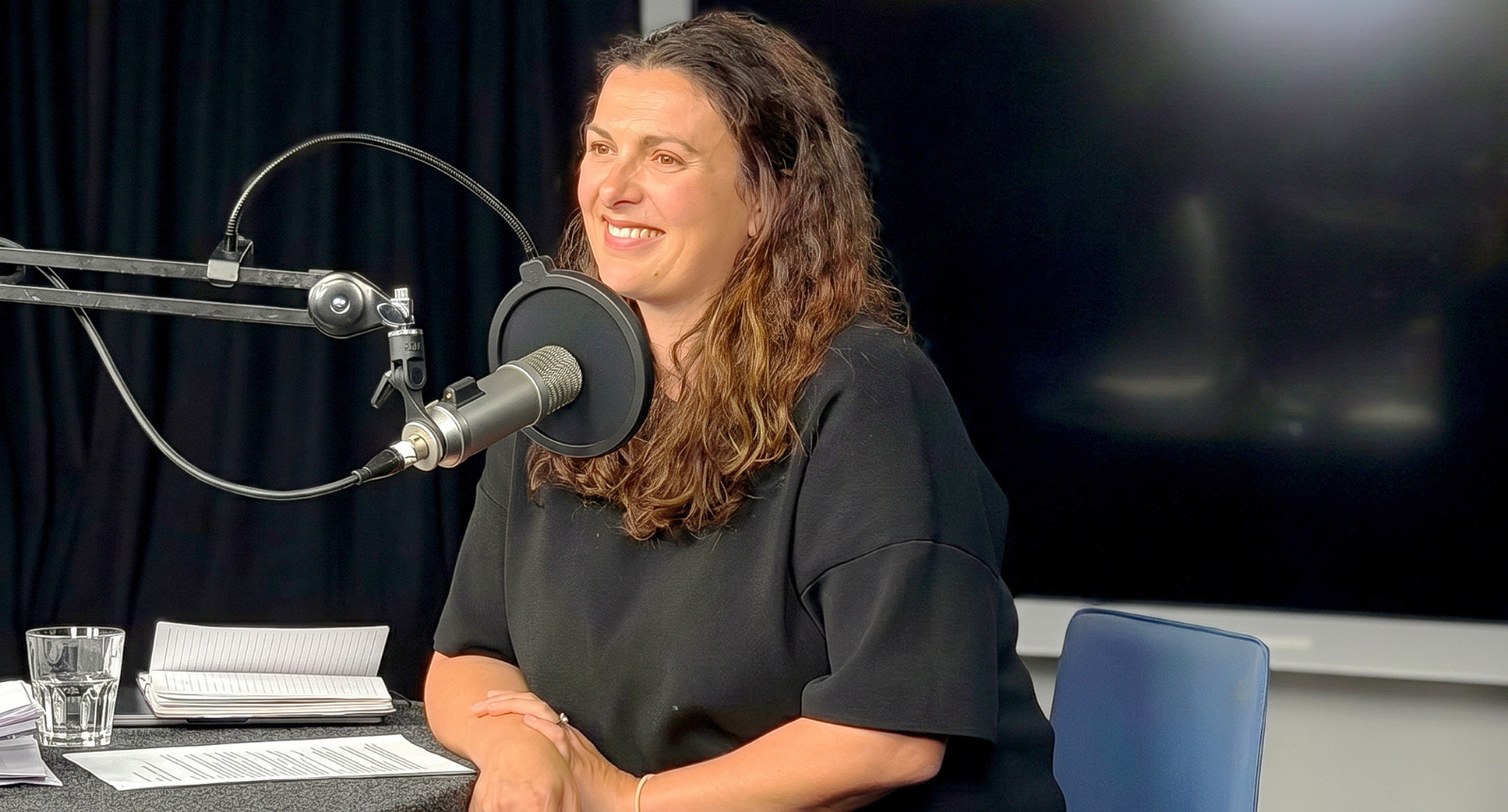
Maddy Mewing: “At Magnite, one of our biggest mantras is transparency”. Image: supplied
Taming the live sport beast
Standard digital campaigns afford buyers the luxury of time to calibrate pacing and delivery. Live sport operates in a completely different reality.
When a major game kicks off, millions log on simultaneously. This traffic surge forces the infrastructure to make split-second decisions without crashing.
“We are talking about bidders that work in milliseconds, right?” Edwards explained. “But a millisecond that has to go to the US West Coast and then come back to an APAC Singapore region to come back to Australia to make a decision in the middle of State of Origin, you have got to make that faster. Any delay is a missed revenue opportunity.”
This exact challenge is why Nine leverages Magnite’s purpose-built live infrastructure, which includes Live Scheduler.
The technology allows Nine to ingest metadata, forecast demand ahead of a big moment, and pre-position inventory rather than reacting blindly to a sudden traffic surge.
The agentic future of buying
The industry currently braces for incoming privacy changes and the rise of artificial intelligence. Consequently, the technical complexity behind the scenes only increases.
“The big buzzword at the moment is agentic, and how that will work within the programmatic ecosystem,” Mewing said, referencing the shift toward automated AI buyers and sellers. “Making sure that there is transparency across the funnel is very hard to just pick up and run. As these technologies mature, they have the potential to streamline workflows, improve decision-making, and unlock greater efficiency across the ecosystem.”
If the industry hands the keys over to automated agents, we’d be best reminded that the most resilient tool in a programmatic tech stack might not a piece of software. But a transparent, human partnership.
Listen to the podcast:
Feature image- Maddy Mewing and Julia Edwards: supplied.
Gonorrhoea, chlamydia and syphilis: Emotive and AiCandy tackle the issue of rising STI rates
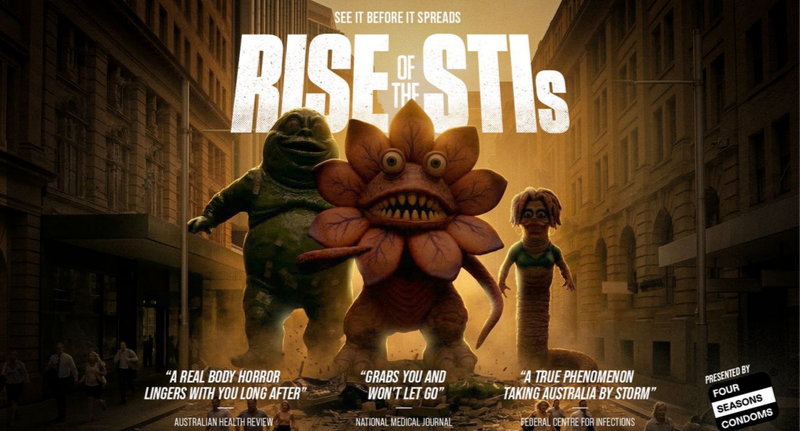
Four Seasons Naked Condoms has launched a new AI campaign in collaboration with Emotive and AiCandy Australia, using AI filmmaking and monster-movie storytelling to take on rising STI rates among Gen Z.
Titled The Rise of the STIs, the campaign transforms the risks of unsafe sex into grotesque cinematic monsters invading the real world.
A doomsday world of STI monsters
Directed by AiCandy’s filmmaking duo Too Short For Modelling, the hero film opens on an intimate, everyday moment between two young adults.
“Do you wanna put a condom on?”
A simple “what’s the worst that could happen?” decision to decline a condom quickly escalates into cinematic chaos, as abstract risks become literal monsters.
The film features a giant baby kaiju crashing through the city, followed by grotesque personifications of gonorrhoea, chlamydia and syphilis tearing through streets and buildings.
Why the campaign lands now
The campaign arrives as STI rates continue to climb in Australia.
Data from the Kirby Institute cited in the release shows more than 101,000 chlamydia cases in Australia in 2024, with around half among 20 to 29-year-olds, alongside rising gonorrhoea infections.
Research from La Trobe University cited in the release also shows condom use is falling, with more than half of young Australians not using one the last time they had sex.
Dr Lucy Herron, GP at Coogee Beach Doctors in Sydney, said STIs are a regular issue in general practice.
“In general practice, we see young patients presenting with sexually transmitted infections every single day,” Herron said.
“Chlamydia is very common and often has no symptoms, but can lead to serious complications, including infertility, if not detected early.”
To unpack the AI madness, Mediaweek sat down with the brains behind the idea and the technology: Simon Joyce, Founder and CEO of Emotive; Gavin McLeod, CCO of Emotive; and AiCandy founders Kent Boswell and Marcus Tesoriero.
Why humour, not shame, was the brief
Speaking about the strategy behind the campaign, Joyce told Mediaweek the challenge was to make sexual health messaging connect with Gen Z without sounding like a public service announcement.
“We’ve got Gen Zs who have more access to sexual health content than ever before, but it isn’t connecting.
“The driving insight behind this idea was: don’t show up like a public service announcement. Don’t shame them.”
Joyce said the best way to bring the idea to life was through a combination of absurdity and humour.
The idea evolved into The Rise of the STIs, where sexually transmitted infections became cinematic giants.
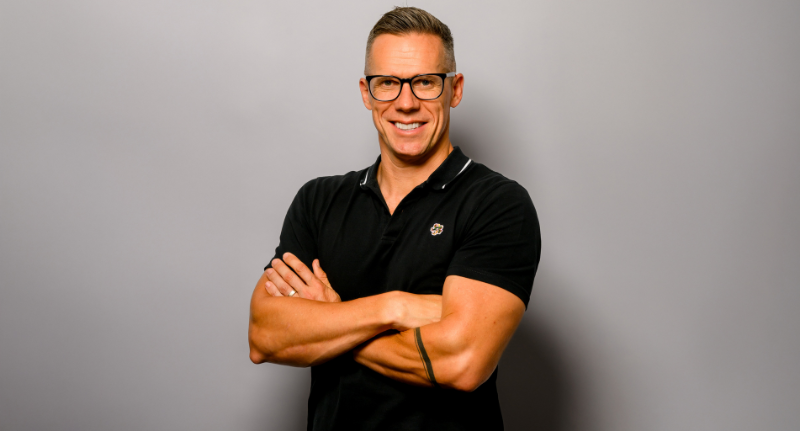
Simon Joyce: “It was designed to cut through, not to put the fear of God into you, but to cut through.”
“This whole story started coming together around the potential risks of not practising safe sex.”
When the idea arrived, Joyce said the team realised “the only way to truly unlock this idea is AI.”
“This is a very deliberate use of AI. AI enabled an entire world that would not have been possible otherwise, unless we had millions and millions of dollars.”
‘I f**king hate AI’: tackling AI fatigue
McLeod added that the team was conscious of AI fatigue and the backlash that often follows AI-led creative work.
“We actually did a deep dive on all the AI content that has been created, which really hit momentum in social and awareness, and bucketed the responses.
“There are a bunch of common buckets. There are the AI haters, and you can go through the comment sections and see the same language come up.”
McLeod said one of the most common responses is: “I f**king hate AI.”
Rather than ignore that reaction, McLeod said the campaign is built to respond to it in real time.
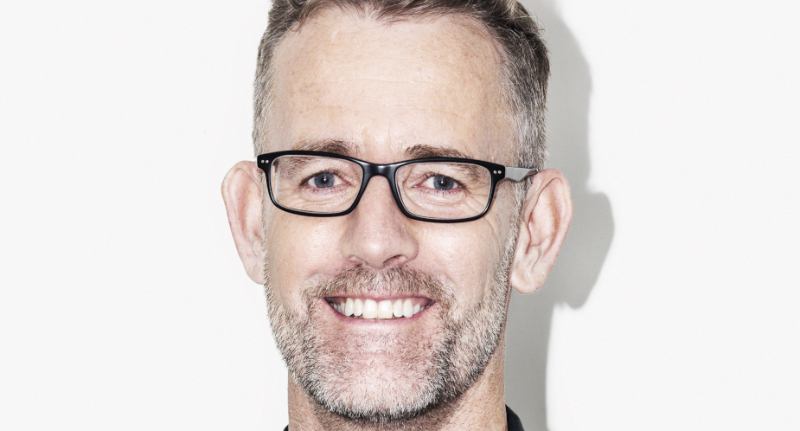
Gavin Mcloed: “We’ve looked at that, knowing this campaign is going to have advocates and people who react against AI.”
That response strategy includes social content designed to incorporate criticism into the campaign’s momentum.
The campaign is also designed to evolve in the public eye. As it rolls out, characters from the campaign will respond directly to audience comments, turning social reactions into part of the storytelling.
“For example, if someone posts, ‘I f**king hate AI,’ gonorrhoea is going to come back with a little viral clip of it doing a dance, celebrating the fact that it has gone viral with 100,000 cases over the last five years.”
“So we’re making this not just a piece of film. It’s something that is going to live and breathe beyond just watching it,” McLeod concluded.
AiCandy on imagination, craft and AI
Emotive worked closely with AiCandy Australia to create the campaign’s cinematic world, using emerging AI filmmaking techniques to create scale that the release says would have been almost impossible through traditional production methods.
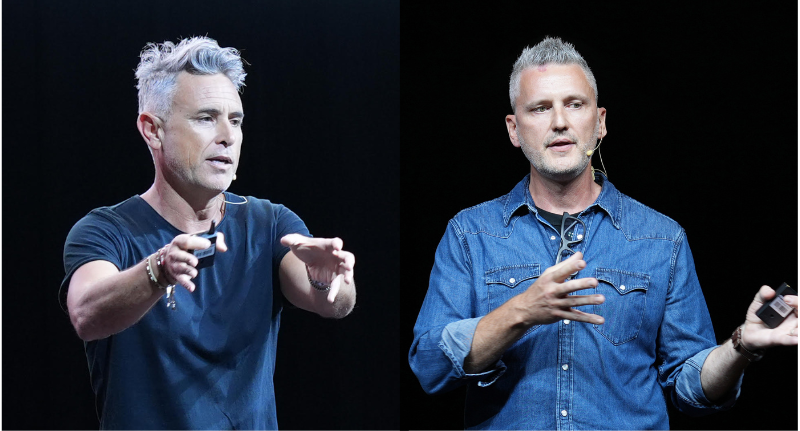
AiCandy founders Marcus Tesoriero and Kent Boswell
Boswell and Tesoriero told Mediaweek the campaign was driven by imagination, not tools or prompts.
“A lot of people lean into the technology side of what made this possible, what tools, what prompts. But you know what? It’s actually your imagination,” Tesoriero said.
“Kent and I made a firm stake in the ground when we first started: nothing leaves our door without elevated craft and creativity.”
Boswell said the hardest part is more than just pressing a button. It is about thinking clearly about what you want to do.
Founders said the work should be judged by whether it makes audiences feel something, not simply whether it was made with AI.
The pair said AiCandy sees itself as a story company first, not just an AI company.
“What we like to do is come from a craft and creativity lens to help build amazing scripts into extraordinary, amazing scripts, and unlock the possibilities of AI that wouldn’t have been possible a year or two ago.”
The campaign launches on Snapchat, featuring short-form content and social extensions created by Emotive Productions’ specialist AI team.
CREDITS
Client: Four Seasons Naked Condoms
Creative Agency: Emotive
AI Film Production: AiCandy Australia
Social AI Production: Emotive Productions
PR: Emotive
Client: Four Seasons Naked Condoms
Managing Director: Michael Porter
Creative Agency, Social AI Production & PR: Emotive
CEO & Founder: Simon Joyce
CCO: Gavin McLeod
Creative: Gary Eck
Head of PR & Influencer: Rhania Farah
Head of Social & Content: Clément Simon
Business Director/s: Zoe Hartas, Tian Skene
General Manager, Emotive Productions: Hayley-Ritz Pelling
Creative Direction and AI Artists: Paul Sharp, Ed Macaulay
Head of Design: Daniel Mortensen
Editor: Sam Gadsden
Producer: Michael Hollis
Post Producer: Rebecca Love-Williams
Sound Design: Electric Sheep Music
AI Film Production: AiCandy Australia
Head of Production: Kent Boswell
Head of Creative: Marcus Tesoriero
AI Directors: Too Short For Modelling
Social Media Buying
All Social: Ruud Spierings
Top image: AI STI kaiju/Monsters
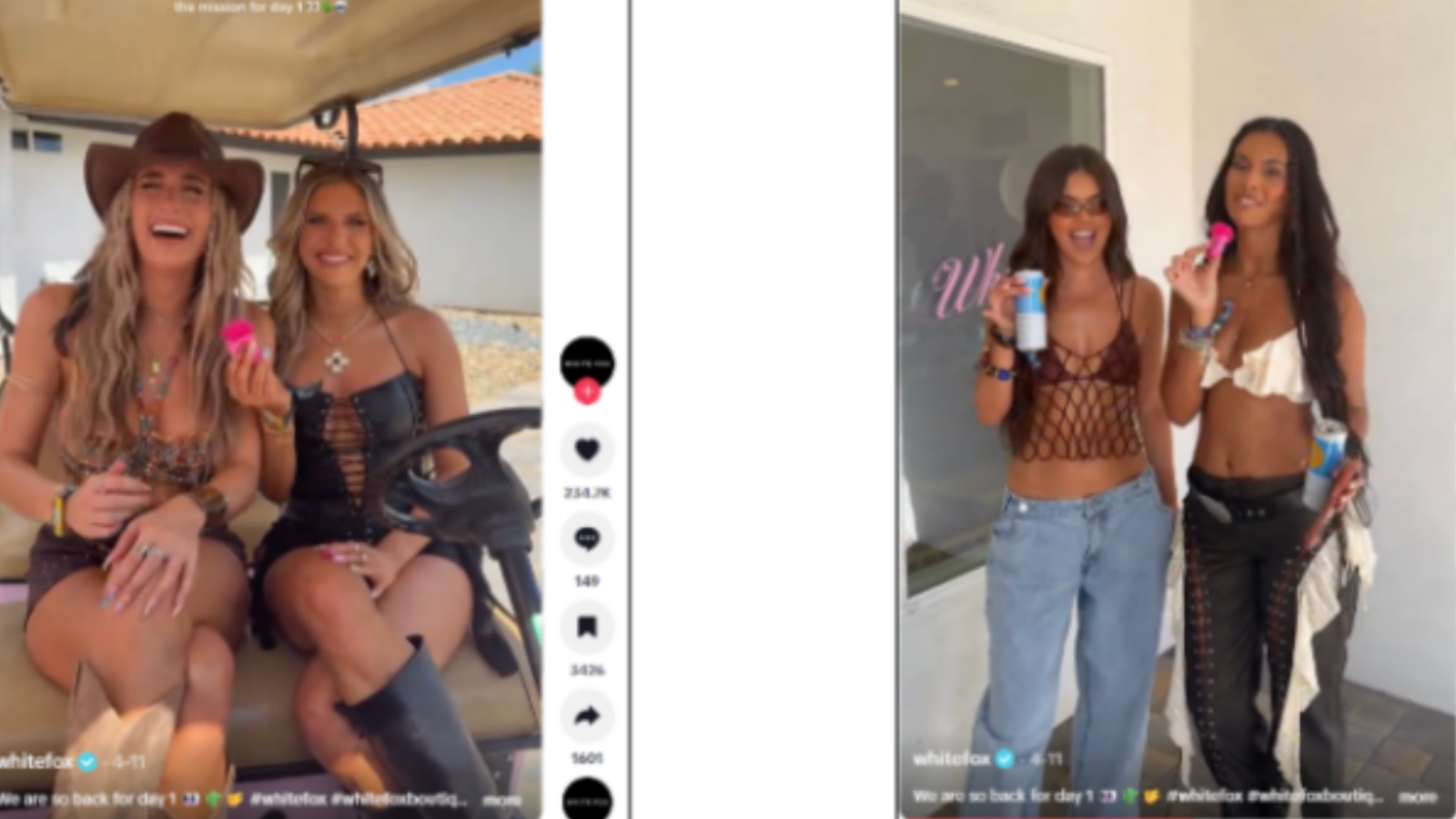
White Fox reported to TikTok by Ad Standards
A TikTok post made by online fashion retailer White Fox Boutique has been found in breach of ad standards codes for promoting heavy drinking.
The ad depicts a group of female influencers stating what their plans are for the day at a ‘festival house’.
They include:
‘My mission is to get Chloe as drunk as possible.’
‘My mission for the day is to have as many tequila shots as possible, and force Sammy to have as many tequila shots as possible.’
‘My mission of the day is not to throw up when Sophie makes me have as many tequila shots as possible.’
A complaint was submitted to the Ad Standards Community Panel because it showed influencers promoting heavy drinking.
“Given that the advertiser’s brand is well-known and loved by teenagers, this is inappropriate,” the complaint reads.
The Ad Standards Community Panel reported that “The advertiser did not respond to this complaint.”
The panel found that the ad normalised excessive alcohol consumption, “which is widely acknowledged as contrary to prevailing community standards.”
The panel also found that the ad actively condoned and encouraged getting drunk, which would “likely be considered to be unhealthy or unsafe regardless of one’s age.”
The ad was ultimately found to have breached section 2.6 of the Australian Association of National Advertisers (AANA) Code of Ethics.
As White Fox did not respond to the breach decision, the complaint has been referred to TikTok.
Top image: White Fox Boutique’s TikTok ad. Image: Ad Standards
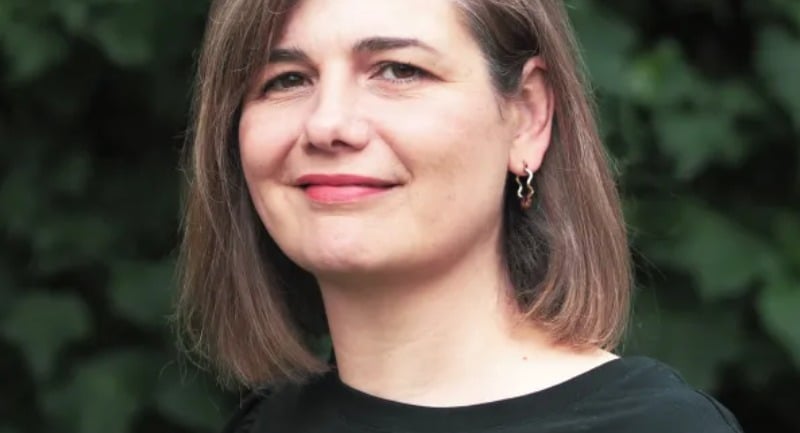
Sophie Black joins Guardian Australia as Associate Editor
Sophie Black is leaving Crikey to join The Guardian Australia as Associate Editor.
Black, currently Editor-in-Chief of Crikey, will work across several areas of the newsroom, including features, lifestyle and culture.
In an internal email sighted by Mediaweek, acting editor David Munk said he was “excited” to announce the appointment.
The email continued: “She will be based in the Melbourne office. Please join me in welcoming her.”
The appointment comes months after longtime Guardian Australia Editor Lenore Taylor announced she would step down from the top editorial role after a decade in the position.
Taylor revealed her decision in February, describing the role as both rewarding and relentless.
“I’ve been musing on this decision for some time. But there’s always been another challenge, another big story or another reason to defer it. There’s always the next thing in a job that is so utterly exhilarating and all-consuming.
“But it is also utterly exhausting. Ten years is a long time to work at this pace. It leaves little time to care for yourself or for those you love. So, for many reasons, I have decided it’s time to pass the baton.”
Main image: Sophie Black

What happens to us when we die? One company has the answer
Former Fisher & Paykel and Tyrrell’s Wines marketer Peter Russell never expected his next venture would land in the middle of Australia’s $1.6 billion funeral industry.
But after years spent building brands and businesses – including founding LayAway Travel before its sale to Afterpay – Russell has launched Reterniti, a company attempting to carve out a new category in what’s increasingly being dubbed ‘death tech’.
Its flagship product is what the company describes as the world’s first Cremation Stone, designed as an alternative to traditional urns, memorial boxes and fixed gravesites.
It’s a category play aimed squarely at changing consumer behaviour.
Australia’s funeral sector remains dominated by major operators, including InvoCare – owner of White Lady Funerals and Simplicity Funerals – alongside Propel Funeral Partners. But the market is shifting, with growing demand for lower-cost cremations, personalised “celebration of life” services and more flexible memorial options.
A simple no-service cremation can cost around $4,000, while a full-service burial can stretch beyond $20,000.
Reterniti’s own research, commissioned as part of the launch, found 70% of Australians believe rising burial costs and increased relocation are making gravesites harder to choose when honouring loved ones.
Russell believes modern life itself has fundamentally changed the way people grieve.
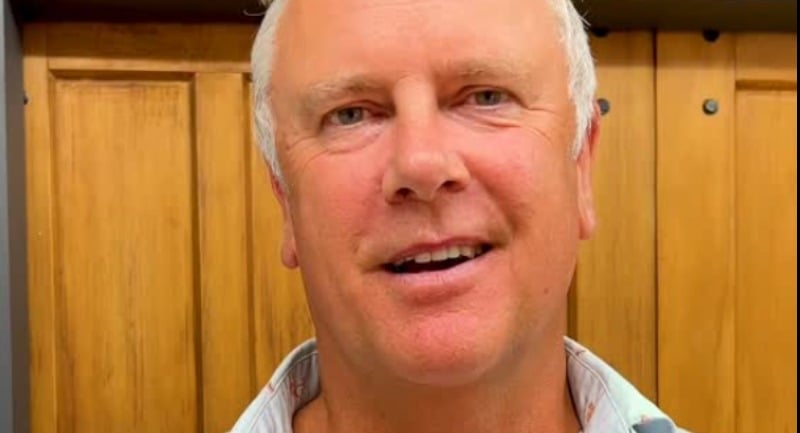
Peter Russell
A late-night trip to the park
The idea for Reterniti didn’t emerge from a strategy deck or a whiteboard session. It came after the death of the family dog.
“I honestly never thought I’d be anywhere near this industry,” Russell told Mediaweek.
“We had a golden retriever in Sydney, and when he passed away, the kids said, Dad, what are we going to do with his ashes?
“So we snuck one night down to the local park, which was our dog’s favourite place. There was a big boulder at one end, so we dug a shallow grave beneath it and put him there.”
When the family later returned, the landmark was gone.
“Then we went back one night, and the boulder had gone. We were just mortified. It was one of those shake your fist at the heavens moments.”
The experience sparked a broader question about portability, permanence and, of course, remembrance.
“It also turned into an epiphany because I thought if there was only a way in which we could have taken the ashes with us.
“All this sort of went through my mind in about a nanosecond. Then I went, hold on, and so Reterniti was born.”
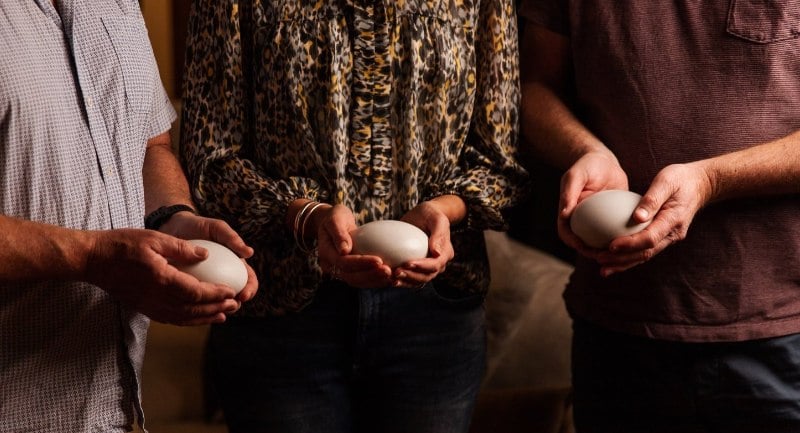
The Reternity stones.
A slow-moving industry meets modern consumers
Russell is candid about the market opportunity – and the gaps he believes exist inside the traditional funeral sector.
“The entire death care industry is just this behemoth, but it’s also slow-moving, lacking innovation, and very slow to respond,” he said.
“Not many brands cut across pets and people.”
According to the company, many households no longer feel connected to traditional urns or memorial sites, but are equally reluctant to scatter ashes, leaving many remains stored indefinitely inside homes.
COVID, Russell argues, also changed the conversation around mortality.
“I think younger people are thinking about death much earlier. It’s not the sort of thing that you talk about around the dining table, but people are quite open about it now,” he said.
“I think if I had tried to launch this pre-COVID, it may not have worked.”
Part of that shift, he says, was emotional. Another part was logistical.
“COVID has normalised talk about this sort of stuff – all the death ‘what ifs’.
“The second thing is that couriers have gotten so much better, and because our business is primarily online, we rely heavily on courier movements.”
Designed to sit quietly in the home
For Russell, the product itself had to feel less clinical and more like an object people actually wanted to live with.
“It was design-led before I even took it to market,” he said.
“I had our brand guidelines, and every touch point was researched.”
Living in Christchurch influenced the design process, though not always in the way he expected.
“I’m in Christchurch, and there are a lot of beautiful rivers around here with tumble river stones, and I thought surely that would be appealing to people, but actually it wasn’t, because it looks like a river stone, and people didn’t want them like that.”
The final design landed somewhere between a sculpture, a keepsake, and an industrial design exercise.
“No one wants to hold a cube or something man-made with sharp edges, either. And while they don’t want a ball, the most pleasing shape, curiously, was this elliptical kind of flattened spherical shape.
“So that shape and the fact that it had to fit into the palm of a hand were carefully researched. And it worked.”
Russell said Scandinavian design principles also heavily informed the product’s final aesthetic.
“I think they’re the masters of design, of materiality, of simplicity, of pairing everything.
“It will fit most people’s decor and just sit there quietly, reservedly, and discreetly. And it’s there if you want it to be. It can even sit next to your PC at work.”
View this post on Instagram
Marketing a product nobody wants to need
Reterniti’s marketing strategy is deliberately understated – less hard sell, more quiet familiarity.
“This is not the sort of campaign you would put on a bus back, or on billboards, TV, or even in a magazine. This is not that sort of product,” Russell said.
Instead, the company relies heavily on social media advertising across platforms such as Instagram and Facebook.
“And if a potential customer sees it once or twice, that’s enough,” he said.
“You only need to be tangentially aware of this, so that when the day comes, if it’s your cat or your dog, or even a friend or your parents’, at least you know enough to look into the product.
“That’s all we need. You’re planting the seed for the future.”
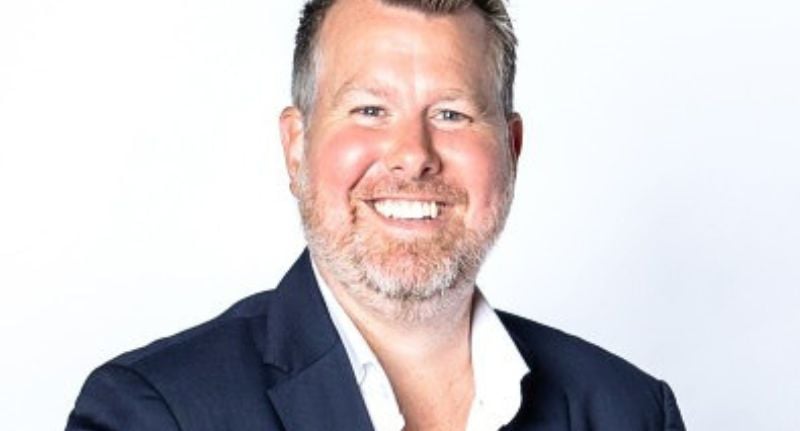
Why regional Australia has become TV’s most overlooked growth play
Nick Bower, General Manager – Advertising Sales, Paramount Australia and New Zealand
When big TV moments happen, Australians show up. All of them. Wherever they are.
Over six million of us watched our CommBank Matildas in the AFC Women’s Asian Cup on Network 10. That wasn’t just a Sydney or Melbourne moment; it was felt in every postcode across the
country.
More than 3.7 million tuned in for the start of the F1 season, hoping Oscar Piastri would deliver, and then collectively held their breath when he crashed on the formation lap. Over a million of those viewers were regional Australians. That’s not a footnote. That’s 43% additional reach.
Like any media professional worth their salt, I will always fly the Paramount flag, but that doesn’t mean I can’t appreciate the cultural moments that connect all Australians, wherever they air. Like when Travis Head was taking England apart in the Ashes, the cheers were just as loud in Bundaberg as they were in Brisbane (apologies to half the media industry here in Australia).
Nine’s Winter Olympics coverage told the same story, audiences spiking well beyond the capital cities.
The point is simple: great TV doesn’t care where you live.
And here’s what’s changed: it’s not just how regional and metro Australians watch TV together, it’s how they spend time together too. Income levels, purchase intent, buying behaviour – the gap has closed.
There is no line on the map anymore.
That’s the Boomtown story. And it just hit a pretty remarkable milestone: 10 million Australians, contributing $250 billion to the national economy. That’s not a secondary market. That is four in every ten Australians.
For brands, the opportunity is obvious. A national approach to broadcast sponsorship, one that treats regional audiences as essential rather than optional, means access to a bigger, more engaged audience than metro-only buying ever delivers. And engagement is the keyword.
Our Science of Sponsorship research shows that a fully integrated sponsorship drives unprompted recall 167% higher than a standard TVC alone. Weave a brand into the content itself and purchase intent lifts by up to 46%. When the right brand meets the right moment, it stops being advertising and starts being part of the conversation.
We’ve seen it work in sport, and this year’s calendar has been extraordinary for brands wanting to connect with Australians at scale. We’ve seen it work in entertainment too, whether that’s the positive and uplifting feelings emanating from the MasterChef Australia kitchen, the familiar comfort of Home & Away, or, let’s be honest, whatever it was that Gia and Bec were
doing to each other on Married At First Sight.
The case has never been clearer. Regional Australia isn’t an add-on. It’s half the audience, half the economy, and just as invested in the moments that matter.
So, for any brand that still isn’t including regional in their plans, I’ll borrow a line from Lara Bingle, tongue firmly in cheek, and ask: “Where the bloody hell are you?”


Mother’s Day weekend delivers record box office for Australian cinemas
Australian cinemas have delivered the biggest Mother’s Day weekend box office result on record, with audiences turning out in strong numbers across the country.
From Thursday to Sunday last week, cinemas generated $21.2 million and attracted 1 million admissions.
The result was driven by The Devil Wears Prada 2, which accounted for one-third of total weekend box office admissions.
The Devil Wears Prada 2 drives admissions
In just two weeks, The Devil Wears Prada 2 has delivered more than 1 million admissions and $25.4 million at the box office.
The film has also become the eighth biggest comedy of all time in Australia.
Biopic Michael also continued to draw audiences across the weekend, alongside new releases including Mortal Kombat II, Sheep Detectives and Billie Eilish – Hit Me Hard And Soft: The Tour.
The Billie Eilish concert film delivered the fifth-biggest opening ever for a documentary in Australia.
Val Morgan Cinema on the result
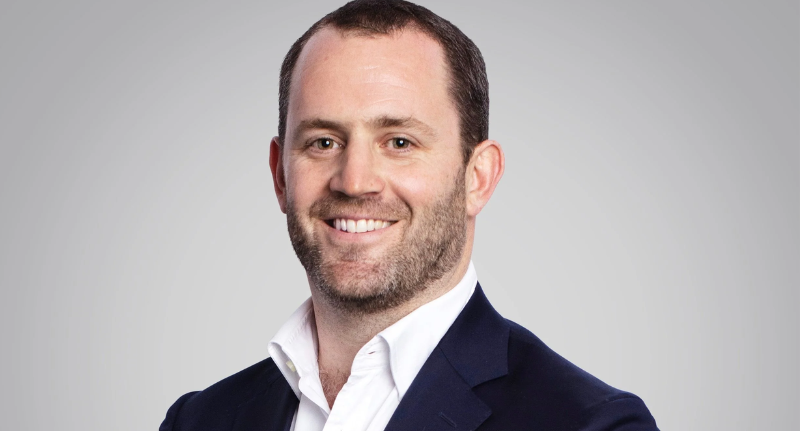
Guy Burbidge
Guy Burbidge, Managing Director of Val Morgan Cinema, said the weekend showed the continued strength of cinemagoing in Australia, especially for families.
“It also reflects the findings from our Famous for Families research, highlighting the role cinema continues to play in bringing families together, as well as the commercial gains for brands in being part of that shared experience.”
Burbidge said the box office is expected to continue strengthening over the coming months, supported by a slate of multi-generational IP and original content.
“There’s a lot for both audiences and brands to look forward to as we head into the second half of the year, particularly over the winter school holidays, with titles like Toy Story 5, Minions & Monsters and Moana all landing in cinemas across that key holiday period.
“Other highly anticipated titles like The Odyssey and Spider-Man: Brand New Day, releasing in July, continue to build on that momentum and will set Cinema up for a record-breaking 2026, driven by a release schedule that delivers depth, quality, and cultural moments that brands should be looking to align with.”
Top image: Val Morgan Cinema

AI hallucinations cost Aussie brands millions in lost sales
Just when the corporate world thought it grasped search engine optimisation, a new invisible threat quietly wrecks brand reputations. New data from Atlas Digital reveals AI platforms inaccurately represent the majority of Australian businesses.
This creates a commercial black hole for companies asleep at the wheel.
The global growth partner dubs the phenomenon an ‘AI reputation breach’. The issue explodes when generative engines like ChatGPT, Google Gemini, Perplexity AI, and Claude generate incorrect, outdated, or completely fabricated information about a business.
Recent Atlas Digital audits across the technology and financial services sectors uncovered a startling reality.
A staggering 72% of brands suffered at least one factual error in AI-generated responses. Meanwhile, 70% completely failed to appear in AI recommendations for their own specific categories.
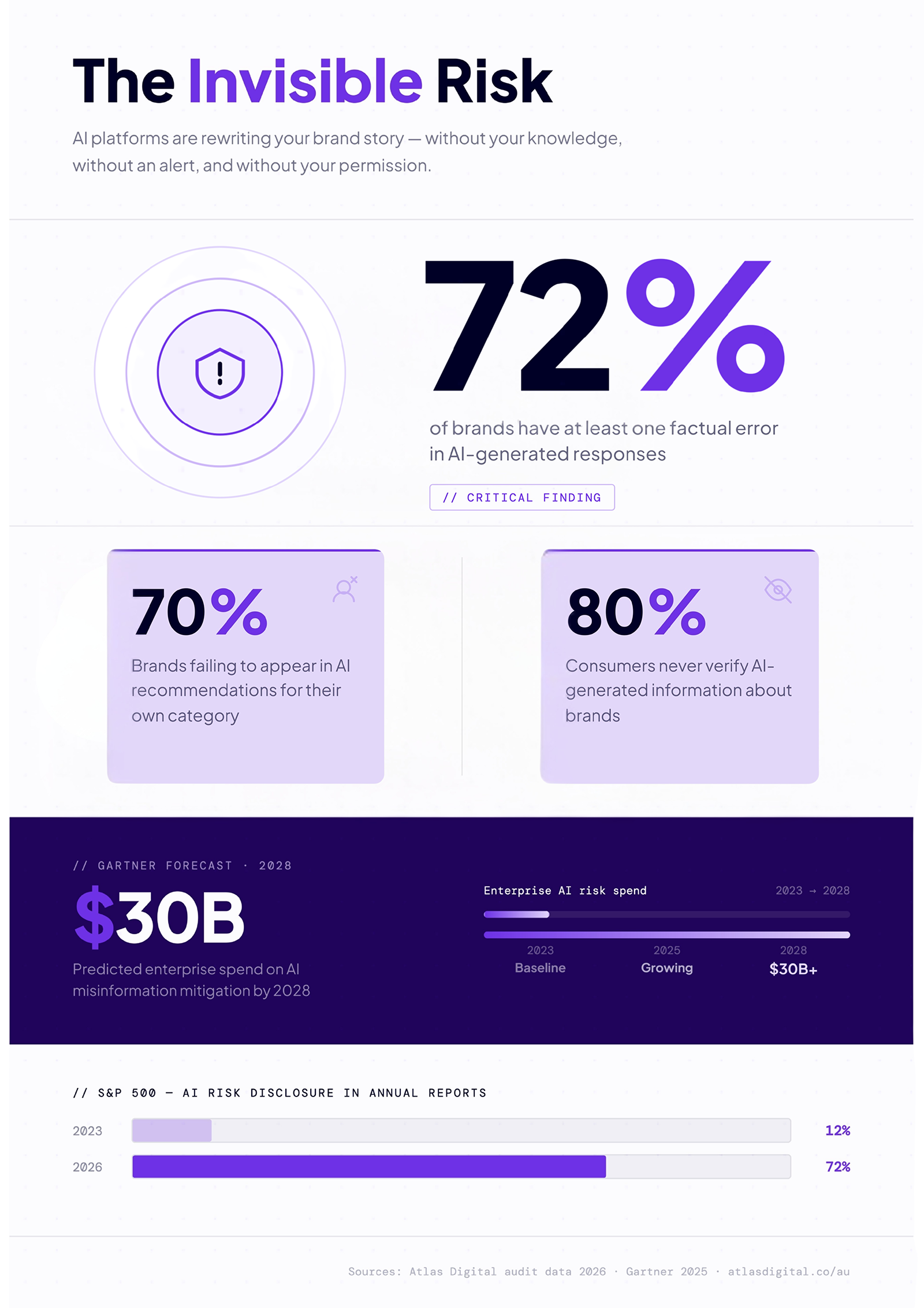
If enterprise spending on AI misinformation mitigation hits $30 billion by 2028, where is that money coming from? Image: supplied
The invisible reputation breach
To make matters worse, most users blindly trust the bots and never check the information’s accuracy.
Mediaweek spoke with Atlas Digital founder and chief executive officer Ryan McMillan, who warns that AI shapes business reputations and compliance positions without any corporate oversight.
“AI is now a front door to decision-making, but it is not always getting the facts right,” McMillan said. “There is no alert, no complaint. The customer simply chooses a competitor, and the impact goes unseen.”
The analysis proves the issue hits complex businesses the hardest. McMillan highlighted the severe risk for businesses operating in strict industries.
“We had one client that only had a 44% hit rate in terms of accuracy, and they are in the fintech space,” McMillan said. “You can actually imagine in a highly regulated financial space when there are inaccuracies. In their case, a lot of it was around features they offered and pricing.”
The commercial cost of hallucination
Atlas Digital organic product lead Alla Lvovich highlights that the commercial implications accelerate daily as AI rapidly embeds itself into everyday consumer behaviour.
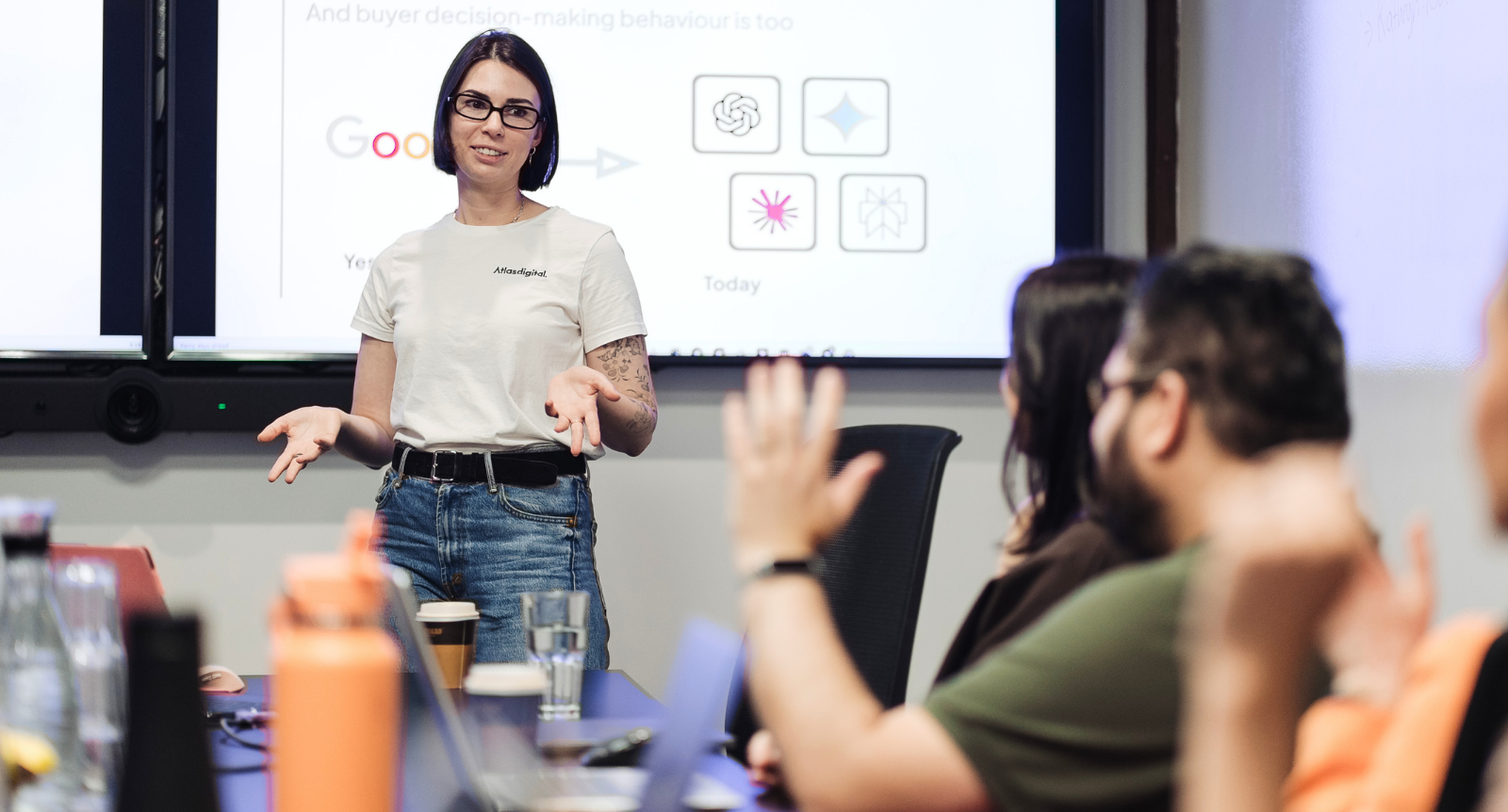
Alla Lvovich says, “AI referral traffic to websites has increased by 1,200% year-on-year”. Image: supplied
“ChatGPT alone now reaches more than 900 million weekly users, while Google’s AI Overviews are seen by more than two billion people globally,” Lvovich said. “In Australia, AI referral traffic to websites has increased by 1,200% year-on-year.”
The real kicker lies in the conversion metrics.
While traditional search might only muster a 5% to 10% conversion rate for highly targeted ads, AI platforms blow those numbers out of the water.
“With an LLM, we are seeing 17% to 25%, and I have seen as high as 40% to 50% conversion rates on average for LLM results coming through,” McMillan noted. “People seem to trust an LLM recommendation more like that of a friend than of an advertisement. And actually, 80% of people do not double-check the LLM results anyway, so they just take it at face value.”
The new cybersecurity
Model accuracy continuously fails to keep pace with consumer adoption.
Hallucination rates across major AI models range from 15% to 52%, with engines frequently repeating and amplifying fabricated claims over time. Worse still, bad actors actively exploit these vulnerabilities.
“There have been several tests done by cybersecurity firms around the world cracking LLMs and exploiting them,” McMillan said. He pointed to astroturfing tactics on platforms like Reddit, where bad actors create fake accounts to flood channels with seeded opinions.
“There was a university research organisation in Zurich that actually ran a test to see if they could influence that using Reddit, and they did,” McMillan added. “So there are real vulnerabilities out there for people to sway opinions.”
Taking control of the narrative
With tech moving at breakneck speed, McMillan urges businesses to treat their AI-generated presence as a core pillar of their commercial strategy rather than waiting for lawmakers to catch up.
“There is obviously a massive lack of regulation,” McMillan said. “The technology seems to be moving a lot faster than the regulation anyway. I think it is in their favour to just go and try to take control of that rather than hope that regulation will help them.”
Taking control starts with a basic, internal audit. McMillan advises marketers to step into the shoes of their customers and manually test the platforms to see exactly how the bots treat their brand.
“Businesses need to jump into ChatGPT, Gemini, and Claude and literally ask, ‘What are the pros and cons of my business?’ or ‘Who are the best providers in my industry?’,” McMillan said. “You need to see exactly what your customers see when they do their research.”
Once a brand establishes its baseline, it can identify dangerous hallucinations and critical knowledge gaps. From there, companies can begin actively feeding accurate, structured data and digital PR signals back into the ecosystem to correct the record.
“Do not wait for the platform to fix it for you,” McMillan added. “Take control of your narrative now, because your competitors probably already are.”
Feature image- Ryan McMillan, Atlas Digital founder and chief executive officer: supplied