

Emotive has introduced Emotive Productions, a new production arm designed to bring creative and execution together from the outset, shaped by the agency’s experience delivering more than 130 productions across film, content, and brand experiences.
The independent agencies‘ new business is built on a simple premise: the best work happens when ideas and making stay connected throughout the process.
Built for modern content
The model reflects how production is evolving beyond traditional TV, with a focus on social-first content and the growing role of AI. The new arm is structured around five core pillars: AI production, motion and static, branded entertainment, events and experiences, and influencer co-production.
Hayley Ritz Pelling has been appointed general manager, stepping into the role after more than a decade with the business, accompanied by a core team including Sam Gadsden (head of post), Sophia Del (integrated executive producer) and Rebecca Love Williams (post producer), alongside new hire Kimm McTavish (integrated producer).
Why now?
Speaking to Mediaweek, Simon Joyce, founder and CEO of Emotive, explained why this was the right time to launch.
“This is a whole new discipline,” Joyce said.
The first factor, he said, is the evolution of AI, where “creatives become creators” in terms of production capabilities. Because of that, production, which once sat downstream, now needs to be integrated so that production thinking can influence ideas and vice versa.
The second driver is the fragmentation of media channels and the pace at which modern ideas travel, prompting a deliberate focus on the agency’s production pillars.
“We’ve been very deliberate with the disciplines. The best ideas are travelling across more touchpoints and needing more platform intentionality,” he said.
“You need the left arm talking to the right, because creatively, it’s all happening together. Before, it was more of a pass off, especially when ideas were dominated by one channel.”
The final factor is a shift in client needs, particularly as more brands build stronger in-house creative teams.
“We’ve always had the creative agency, but some clients have really good in-house creative teams. At times, they only need a production offering and don’t need the full agency service,” Joyce said.
Traditional production model under fire
Joyce said the shift toward integrated production is also being driven by the fact that ideas are increasingly coming to life outside traditional formats.
“I can’t speak for them. I do know that if you look at the shape of how our ideas are coming to life, more and more they’re coming to life in what we call non traditionally,” he said.
He pointed to a significant shift over the past 18 months.
“If you go back 18 months, probably 70% of the ideas we were bringing to life were more through core film and static, very much TVC-led and then iterating for social. Now, 70% of our ideas are coming to life with more of an earned first lens and travelling through a really non-traditional idea ecosystem.”
Despite the shift, Joyce said craft and talent remain central.
“It’s unquestionably shifting, but that doesn’t mean we don’t want to have craft and amazing talent to push what we do. We’re just doing it in slightly different ways.”
He added that traditional production is not disappearing, but becoming less dominant.
A shift in creative process
Joyce said AI production is now playing a central role in shaping ideas.
“More content doesn’t equal more connection. It’s making it harder for brands to connect, because we’re just bombarded with stuff where we’re asking, ‘Is it real? Is it not?” he said.
He added that the agency’s AI production capability is already contributing to new business, including a major AI-led motion project set to launch in May in partnership with AI Candy, Australia’s first AI-powered film production company.
Mediaweek had early access to the spot, which targets Gen Z around sexual health.
“It’s been six months of prompting, a tech stack of 10,000 to 15,000 plus prompts, an amazing process, and a lot harder than what everyone realises,” he said.
A key consideration when using AI, Joyce said, is transparency.
“Never try to dupe the audience. Don’t try it.”
He concluded that AI should only be used when it genuinely adds value: “Only use AI production if it’s going to improve your concepts or unlock something that you couldn’t without it.”
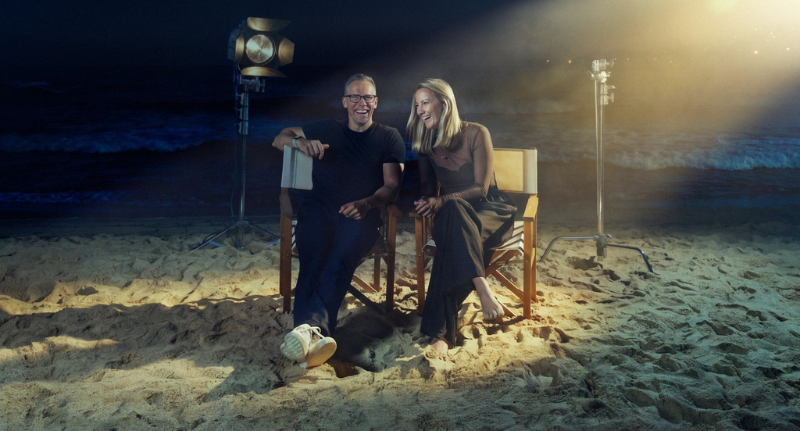
Top image: Simon Joyce and Hayley Ritz Pelling