

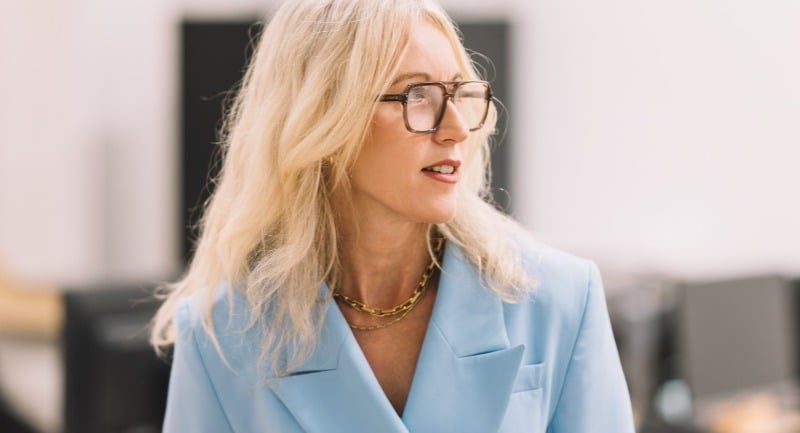
Sharyn Smith, Founder and CEO, Social Soup
Mark Ritson has done more to drag marketing back toward rigour than almost anyone of our generation. He has armed tens of thousands of marketers with a spine. I saw him speak recently at an event built, in part, to take some big swings with social media advertising, and I went in as a fan and came out still a fan.
But in terms of influence, Mark has a blind spot. It’s a big one, and it needs to be addressed: when someone is this good and this loud, the few things they get wrong travel just as far as the many things they get right.
His latest column on Tim Payne – the unremarkable Wellington Phoenix defender who went from 4,700 Instagram followers to more than 5 million in a week, more than the All Whites, twice the All Blacks, twenty times Heinz – spells it out perfectly. Mark concludes that brands “will never get social” because a person is a natural object of affection, and a brand is a gatecrasher that the room can feel.
He’s right about the gatecrasher part. It’s a lovely piece of writing. But Ritson walks straight past the fact that Tim Payne didn’t make Tim Payne go viral. An influencer did that job for him.
A single Argentine creator, El Scarso, ranked all 1,248 players at the World Cup, chose the least famous one, and pointed his audience square onto Tim Payne with a mission to make him famous. That spark trickled through thousands of micro- and nano-accounts, into communities, and then began to influence the general population at a zeitgeist level. That is not a story about why brands can’t do social, because the fact of the matter is that in this case, Tim Payne is the brand.
In reality, this might be the single cleanest case study you can find of how social contagion actually works: it is seeded by one influential node, amplified by a network, and converted into mass attention and action in hours.
Ritson saw the entire mechanism fire in front of him and concluded the lesson was “social media is social media.” The actual lesson to take from this is that influence spreads through people in cascades. Social media is an excellent vehicle for spreading that influence quickly, but it is not the thing driving the influence itself: that is, the community. Brands that understand how this works can absolutely leverage the flow of influence across social media to deliver outstanding results.
This follows a pattern for Ritson. In 2018, he paid influencers to make a photo of his backside go viral and declared the whole category “full of it” and “the whole approach has that sneaky, sticky feeling of just not being quite right”. The industry was young, best practices were thin, and the public was building an appetite for content. But the stunt was also a cheap shot: a deliberately bad campaign, run with no strategy, no expert influencer selection, and no brand-values-fit alignment, is proof that the discipline doesn’t work.
Communities online can love stupid content. But communities online can also love authentic advice, recommendations and guidance; we see this in the social-powered growth of brands almost annually at this point.
All social media is not all social media.
Then, in March this year, Ritson conceded that micro-influencers “work” before quickly framing them as not real brand builders. Which would land if anyone, anywhere, had ever claimed influence is the only thing a brand should do.
Nobody serious has.
It sits alongside reach, alongside distinctiveness, alongside everything he teaches. It’s just having a responsible and impactful media mix: the sort of thing CMOs are paid to understand.
The “not a brand-builder” line really falls down by ignoring evidence from the very institutions Ritson bases his case on. The IPA’s own landmark 2025 effectiveness study across 220 campaigns, 144 brands, 36 sectors found influencer marketing delivers a long-term ROI index of 151, with the highest long-term multiplier of any channel at 3.35, edging out even linear TV at 3.27.
System1’s interpretation of the same data is blunter still: creators behave less like performance marketing and more like modern brand building, influencing memory structures, affinity, trust and salience among non-buyers.
Then, at the recent event I attended on social media advertising, when asked about influencer marketing in front of 300+ marketers, Ritson’s advice was: ‘don’t do it or just do one or two big ones.’ Later in the night, the concession came that the smaller ones are actually a better value.
Both can’t be the strategy. For a man who has built a career on don’t give me an opinion, give me the evidence, that’s a confusing thing to send 300+ marketers home with.
That evidence is no longer thin. Over half of consumers now say they trust influencers more than traditional ads. Sprout Social’s 2026 research showed trust in influencer recommendations over advertising is now sitting around 74% in some categories.
What Mark sees on social media is not what everyone sees.
The algorithm builds a different world for a 53-year-old marketing professor than it does for an 18-year-old woman in Western Sydney, whose feed is her primary trust layer, whose purchase decisions are shaped by creators she’s followed for years and who probably won’t come across many TV ads.
An opinion formed from one feed and broadcast as fact to an entire industry is exactly the kind of unexamined assumption Mark himself has spent two decades demolishing in others.
So, I suppose instead, Mr Ritson, I’ve decided to risk incurring your wrath on the internet. My respectful challenge is to please hold influence to the same standard you hold everything else to.
I’ve spent 19 years in this industry delivering influence long before social media became the fastest vehicle. I’ve established hundreds of case studies and built a 200,000-strong community. I’d genuinely love the opportunity to put the academic research, diffusion science, and evidence on the table alongside Mark’s frameworks and see whether the picture changes. I think it would.
Mark, you’ve asked the whole industry to do better for 20 years. It’s made us all sharper. I’m asking you to do the same thing here: replace the instinct with the evidence. Come clean on the blind spot. Influence isn’t the enemy of brand-building. Understood properly, it’s one of the most powerful engines of it.