

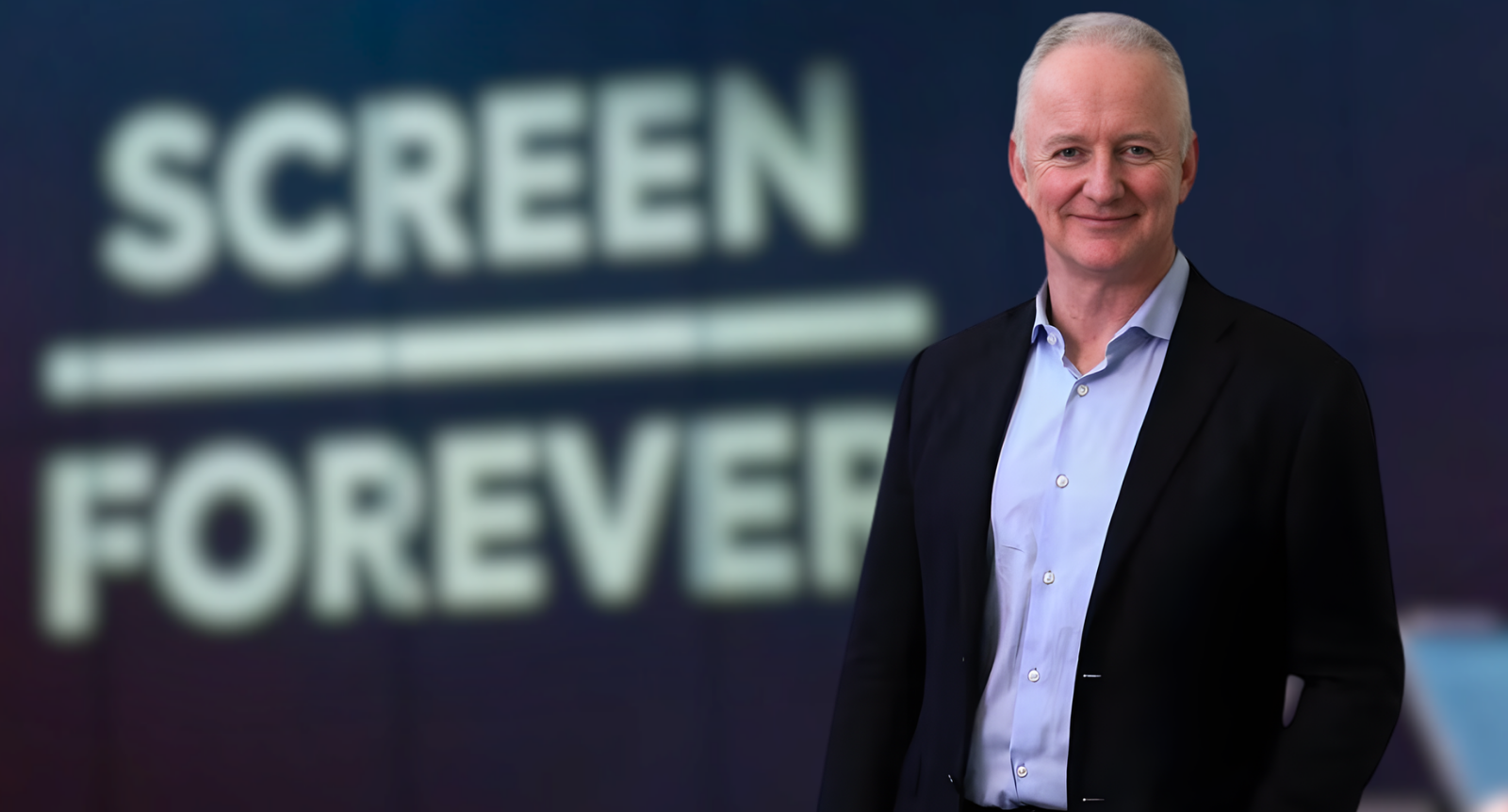
As the Australian production sector navigates a brutal squeeze between shrinking network budgets and dominant global streamers, the demand for radical structural change has never been louder.
Appearing on the “Second Act: Reimagining Australia’s Screen Future” panel at Screen Forever this week, ABC managing director Hugh Marks left the standard industry PR script at the door.
Moderator Virginia Trioli opened the session by noting with a laugh that Marks harboured some rather contentious thoughts lately. Marks leaned into the joke, admitting to the room that his own team now looks visibly nervous whenever he starts a sentence with the phrase, “I was thinking about…”
True to form, Marks used that thinking time to deliver a blunt message to the independent production sector. The national broadcaster plans to tear up its traditional commissioning strategy.
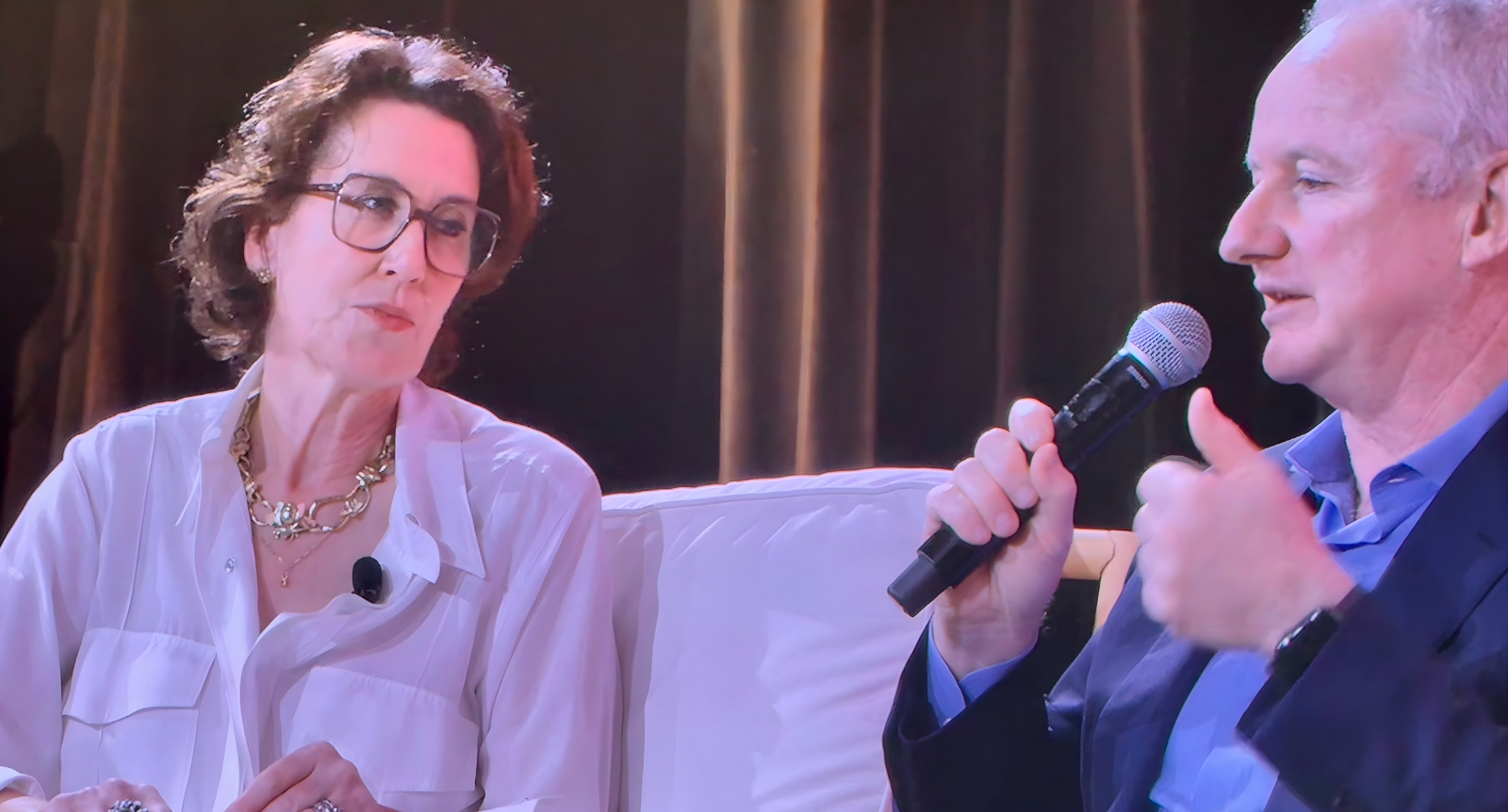
ABC managing director Hugh Marks and panel moderator Virginia Trioli at Screen Forever 40.
Responding to Trioli’s direct questioning, Marks urged the industry to stop squabbling over minor licensing crumbs and start thinking about macroeconomic survival.
He delivered his vision for the ABC alongside a heavyweight lineup that featured independent producers Mark Fennessy and Jude Troy, acclaimed showrunner Tony Ayres, director Rachel Perkins, and Screen Australia’s Deirdre Brennan.
Stopping the offshore risk shift
Marks sees intellectual property retention as the single biggest hurdle facing the Australian production sector. Expanding on thoughts he shared with trade press ahead of the event, Marks argued that Australia allowed its own financing and distribution capacity to erode over time.
Local producers build the shows and broadcasters bring them to market, but international partners continually take on the distribution risk. Marks insists that by shifting that risk offshore, the Australian industry entirely outsources its long term upside.
“At the moment, we seem to be constantly caught in little discussions about $5,000 second windows or this rights or that rights,” Marks told the room. “To me, it is the wrong discussion. The right discussion is what is going to benefit the industry as a whole.”
The Bluey lesson and keeping IP local
To illustrate the painful cost of losing IP, Marks pointed straight to the biggest children’s television export in Australian history.
He noted that the global success of Bluey ships an estimated $300 million of income offshore to the UK, a number that must make a few producers weep into their conference lanyards.
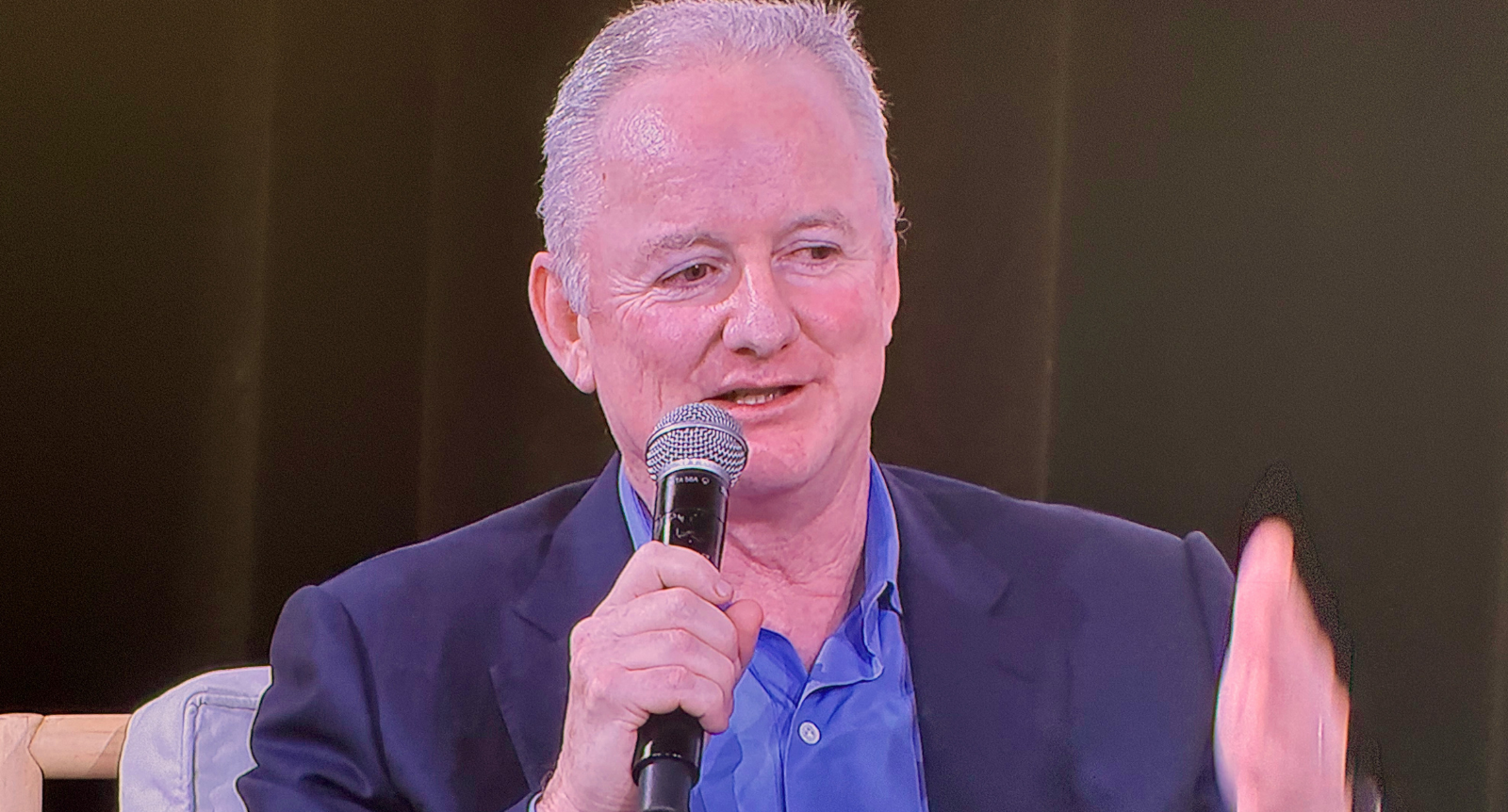
Hugh Marks is over the glacial pace of television development.
“We have never really got to the position where we have been able to generate a sufficient royalty income from our creative endeavours in this market for a way that becomes self-fulfilling and becomes a reinvestment in the industry,” Marks explained. “So to me at the moment, it is all about intellectual property.”
Speed to market and taking real risks
The glacial pace of television development clearly also upsets the ABC executive. He highlighted the danger of the traditional development cycle, noting that audiences often move on entirely (or age out of the demographic) before a long-gestating project finally hits the screen.
“Sometimes the thing that frustrates me is the time it takes from the creation of the original idea through multiple stages of development,” Marks said. “From multiple stages of financing, it can be three, four or five years between a great idea to realisation. We need to bring these ideas, the ones that we really love, through faster.”
He cited evidence of this new mandate by revealing that the ABC greenlit a new entertainment show just three weeks ago. The broadcaster skipped the protracted development phase and pushed the project straight into a fast-tracked production schedule for an October broadcast.
The press release must be just around the corner.
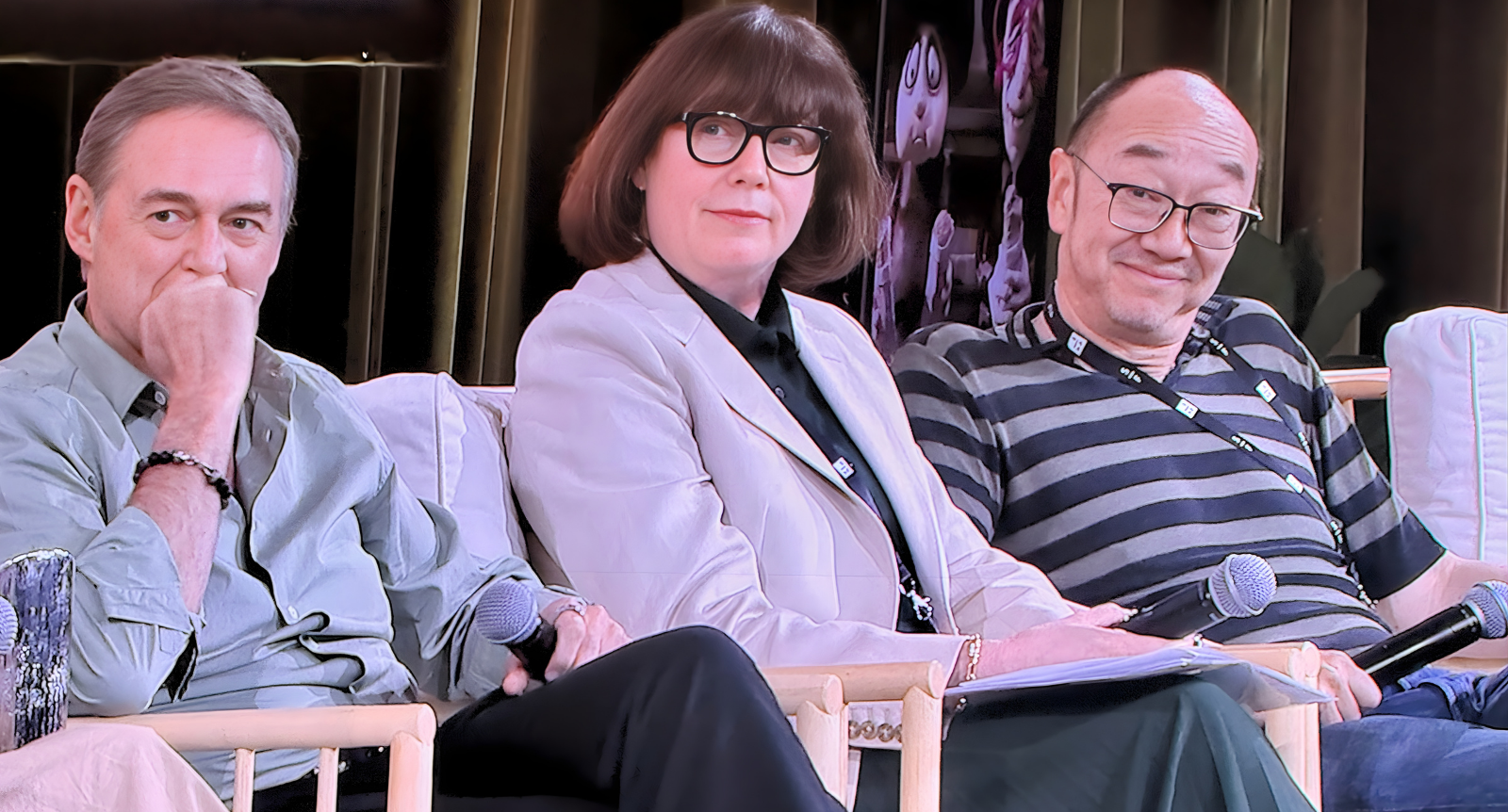
Helium Pictures’ Mark Fennessy, Screen Australia’s Deirdre Brennan and Tony Ayres of Big and Little Films.
Creative risk and online dating
While Marks painted an optimistic picture of shared IP and faster greenlights, Fennessy offered a sobering reality check from the trenches. He pointed out that the local market is shrinking dramatically and international buyers largely hold producers at their mercy.
“I think it is probably the most challenging period I can ever remember for independent producers,” Fennessy said. “The decline of network television commissioning, certainly in scripted, is not being made up by the streamers.”
To cut through this highly challenging market, Ayres argued that broadcasters must abandon conservative choices entirely.
He urged the ABC and other networks to champion unapologetically bold ideas that originate on the fringes of local culture rather than trying to safely replicate international trends.
“Commissioners should always have something on their slate that they are terrified of losing their job over if it fails,” Ayres told the room. “The thing that other people in other places in the world want to hear are not things that they are already hearing. And you are more likely to find that on the edge of taste.”
Ayres then offered the room a hilariously bleak, yet accurate, comparison for the modern commissioning process.
“It is a numbers game. It’s like online dating,” Ayres joked. “You basically have to swipe often enough to hit one.”
Tearing up the traditional deal model
Marks responded to this creative and commercial squeeze by promising that the ABC will step up to alleviate the risk and reverse the trend of outsourcing the upside to international distributors.
He asked producers to bring big ideas to the ABC and challenge the network to find workable funding solutions.
“We will look at a different deal model,” Marks promised. “That deal model will be around two things: speed to market, and basically trading away not all- but some of that risk so that the ABC is in the position to take that risk rather than the external market.”
By sharing IP and stepping in to solve financing gaps locally, Marks believes the ABC can rebuild the sector’s financing capacity and prove to both the industry and the taxpayer that bold investments yield massive cultural and financial returns.
Can’t wait until Screen Forever 41.