


The world has been upended over the last six years, with the global landscape now defined by rapid, compounding disruption.
From pandemics and conflicts to shifting geopolitical alliances and the structural integration of Artificial Intelligence into commercial models, businesses are now operating in an environment that demands constant calibration.
At Nine’s recent Melbourne Independent Exchange event, Managing Director of Publishing, Tory Maguire, sat down with some of the country’s most respected journalists – Matthew Knott, Foreign Affairs and National Security Correspondent, The Sydney Morning Herald and The Age, Joyce Moullakis, Associate Editor, The Australian Financial Review, and James Thomson, Senior Chanticleer Columnist, The Australian Financial Review – to unpack the global market forces shaping 2026.
The new macroeconomic reality
The ceasefire between the US and Iran has provided a temporary global reprieve, but the structural aftershocks will continue to reverberate in boardrooms. The panel agreed that corporate focus has moved from theoretical environmental metrics to immediate energy security and affordability.
“The [US and Iran] war might be over, but the aftershocks are not over,” noted James Thomson.
“It’s going to take months to get the global energy complex rebuilt, and we’ll still have a change in the view of most countries around the world as to how they see energy security.”
Joyce Moullakis identified a stark divergence between consumer mood and action. “Optimism has returned, but there are still a lot of questions around the consumer. Sentiment is very, very low, but consumers are still spending.”
Thomson explained that this spending resilience is propped up by a massive $3 trillion surge in Australian household wealth over the past two years, driven by rising property values and superannuation returns.
This “K-shaped” economic reality means brands must look beyond surface-level data to effectively target distinct consumer segments.
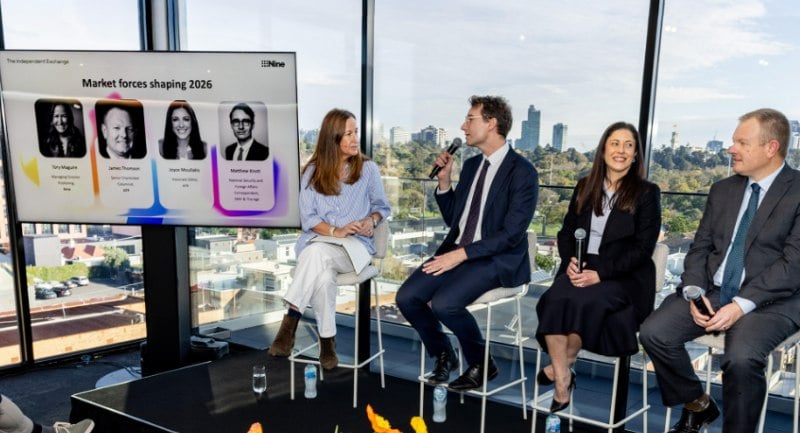
Tory Maguire, Matthew Knott, Joyce Moullakis, James Thomson
AI evolution: Past the hype to the real bottom line
AI has progressed from speculative experimentation to a rigid economic necessity. However, corporate Australia is facing an unexpected structural teething problem: the astronomical cost of “token bills”.
“Employees are doing exactly what their bosses have told them,” Thomson said.
“They’ve been told to go and use AI for everything, and that’s what they’re doing. And suddenly the cost of the AI is becoming a real issue.”
Moullakis pointed to major tech adopters like Uber, which chewed through its entire 12-month token budget in four months.
The consensus was clear: the race to integrate AI is no longer optional because no business can afford to slow down while its competitors move ahead.
For brands and marketers, the critical differentiator in an AI-saturated market will be data quality.
The ultimate output of any model relies entirely on the verified, premium data sources fed into it.
Moullakis noted that while progressive companies are successfully deploying AI agents to personalise the consumer journey, corporate leaders’ back-end focus is shifting toward cost management.
“CEOs that I speak to do have a level of excitement about the opportunity, but also headcount reduction. When an economy’s not growing very much, cost is something they are looking at very closely.”

Tory Maguire, Matthew Knott, Joyce Moullakis, James Thomson
Navigating a fractured consumer landscape
The political arena is mirroring the fragmentation seen across modern media consumption. The traditional stability of Australia’s two-party system is being tested, with the pace accelerated by cost-of-living frustrations and the mainstreaming of alternative political movements.
Matthew Knott emphasised that this shift is being incubated outside traditional channels. Utilising sophisticated, highly produced, independent video ecosystems on platforms like YouTube, alternative movements are bypassing legacy media campaign structures entirely.
“In the way that the traditional parties are doing quite lame TikToks, populist movements are thriving in that part that many people aren’t even aware is going on out there.”
Thomson noted that top-tier ASX executives are scrambling to decode why up to 30% of their customer bases are migrating toward these alternative alignments. He warned that the corporate sector’s core growth strategies could face headwinds if anti-immigration sentiment stalls population growth.
“Corporate leaders like population growth; they like new skills coming into the workforce. If we didn’t have immigration, we would be in an actual recession.”
The ultimate premium on human connection
Despite macro volatility, geopolitical pivots, and the rapid rise of the algorithm, the panel closed with a powerful note of clarity regarding the enduring value of human capability.
As automation absorbs data entry, administrative processing and predictable tasks, the premium on baseline human capability is skyrocketing.
Thomson shared a key takeaway from a recent interview with National Australia Bank CEO Andrew Irvine, outlining the ultimate strategy for the modern workforce.
“His point was, what you need to teach kids is to have a good handshake and really good personal skills, because that is what AI will never be able to kill. A bank like NAB is actually investing more in frontline bankers because that’s the thing that AI can’t beat.”
The overarching strategic takeaway for the market is clear: the most valuable asset in 2026 is a business strategy that successfully blends technical AI fluency with high-level interpersonal skills, critical thinking, and genuine relationship-building. AI can optimise the process, but the human edge remains the ultimate corporate advantage.
As we navigate these complex waters, Nine remains committed to providing the clarity and insight your brand needs to stay ahead. Whether it’s decoding the impact of policy shifts or understanding the evolution of the media landscape, we’re here to help you turn disruption into opportunity.
Main image: Tory Maguire, Matthew Knott, Joyce Moullakis, James Thomson
This post is partnered content with Nine for Brands.