


By Amber Groves, Creative Strategy Director, Weave
There is a one-tonne elephant seal currently terrorising Tasmania, and he is proving more memorable than 90% of the Cannes Lion brand activations.
His name is Neil, and twice a year he hauls himself out of the sea, tramples his way into town and does whatever the hell he wants. His resume includes knocking over bollards, getting into scraps with Land Cruisers, and winning the hearts of a global audience.
Neil is unpredictable… yet consistent, disruptive… yet delightful, powerful… yet compelling. In fact, Neil might just be the most successful brand presence of the year.
@neiltheseal316 When Neil is fully grown, his full-power adult voice will be incredibly loud the Decibel levels can blast between 80 to over 100 dB (that is as loud as a chainsaw or a concert!) His adult whinny will carry through the air for up to 1.5 kilometres 🦭 #neiltheseal video sent in by @⚡ JUSTIN ⚡ ♬ original sound – Neil the Seal 🦭
But there’s no set of Neil ‘behaviour principles’, no Neil playbook, no Neil tone of voice, and yet 1.4 million people on TikTok have decided he’s the most captivating personality on the internet.
Meanwhile, actual brands are grappling with increasingly difficult challenges. We’ve entered an era where trust and authenticity need to be paired with ‘machine legibility’ and ‘agent optimisation’, resulting in an apex of frictionless consistency that’s safe for everyone but loved by no one.
I’d point out the irony of calling this a slickness problem when we’re taking brand lessons from a seal, but here we are.
The point is, Neil is never going to be approved by legal. He is structurally a brand-safety nightmare. And this is exactly why people can’t look away.
Maybe that’s because what captures our attention has never been ease or consistency alone… it’s balls-to-the-wall character. The brands we remember aren’t the ones that flattened their charisma; they’re the ones that turned the volume up. The ones that make us think, and smile, and wince, and feel uncomfortable. In short, the ones that feel as visceral as a five-year-old seal smashing through roadside barriers intended to keep him out.
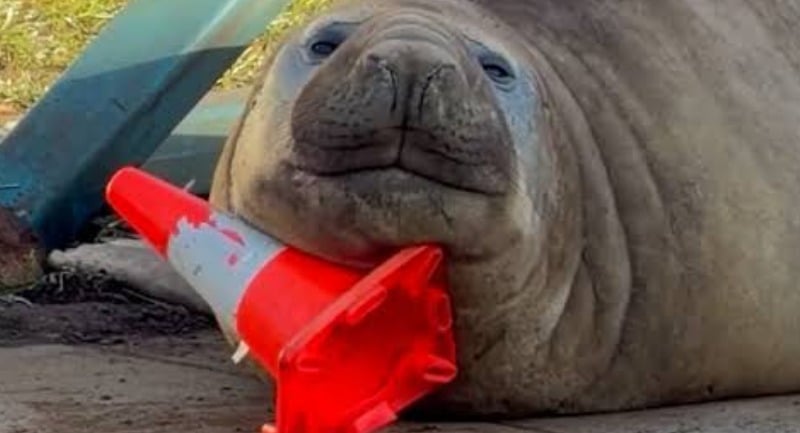
Neil vs traffic cone: Removing barriers to entry
Somewhere along the way we’ve mistaken coherence for uniformity, and now every interaction feels like it emerged from the same immaculate prompt, before being spat out as a series of soothing shapes and words for our delectation.
Because in ironing out inconsistency, we often iron out true uniqueness. Neil reminds us that memorability rarely comes from behaving exactly as expected. It comes from being unmistakably and distinctly ‘you’.
An ungovernable brand has a pulse, a real point of view; it says the interesting thing instead of the expected one, it creates stories instead of ‘assets’, it feels alive because every single interaction adds another layer to its character, until the brand becomes bigger than its identity system… not unlike Neil himself.
Luckily, Neil isn’t alone.
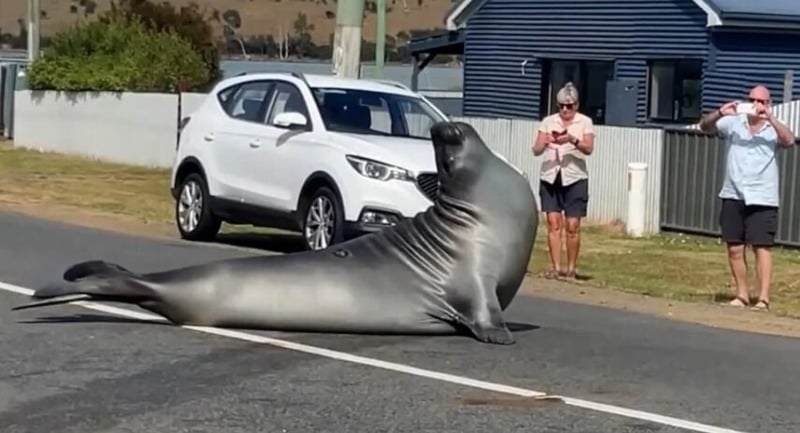
Neil vs Land Cruiser: aggressive category disruption
ALDI has proven again and again that supermarket produce can become a cultural conversation if you have enough personality, while Polaroid has chosen to champion the analogue world in the middle of an AI gold rush, and Liquid Death continues to behave like a thrash metal band that happens to sell water. In a sea of increasingly optimised brands, it’s heartening to see those that stand out for having remained deliciously difficult to rein in.
But like any lesson, being ungovernable has its downsides. Officials in Tasmania have begun warning the public about ‘loving Neil to death’, with his popularity becoming a potential threat to his safety.
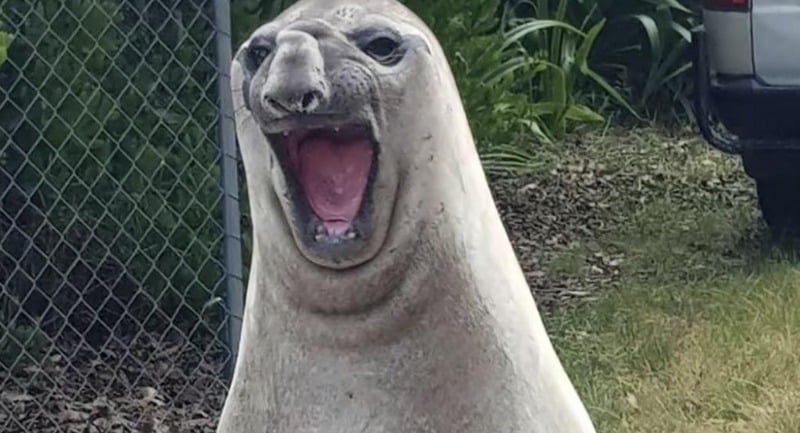
Neil yelling into the void: share of voice
Which is a sobering caveat to chaos as a brand strategy: left unwatched, it comes at a risk. Brands that get remembered for being unruly without good reason usually don’t survive in the wild. Ultimately, big, brash character isn’t an excuse to skip strategy; it’s what a good strategy is built to protect.
Neil doesn’t have a strategist, but you do. Which means your brand shouldn’t have to choose between being memorable and being manageable; in fact, the best strategies don’t make brands easier to govern; they make them impossible to ignore.
But maybe leave the traffic cone altercations to the experts.