

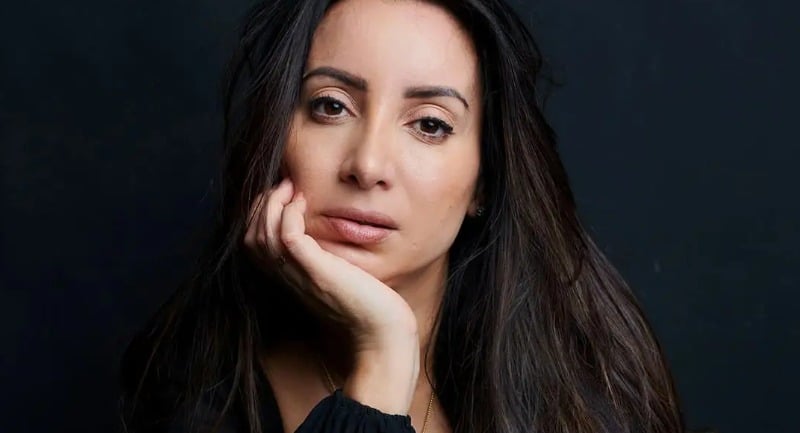
Antoinette Lattouf isn’t just famous.
And she isn’t simply infamous either.
She has become one of the most consequential figures in recent Australian media history – a journalist whose dismissal sparked a Federal Court precedent and ignited a national debate about political expression, editorial independence, and the cost of becoming the story.
Now, in a candid appearance on Mediaweek’s Newsmakers podcast, Lattouf opens up about the moment her career changed – and the fallout that followed.
The interview comes after the Federal Court ruled the Australian Broadcasting Corporation unlawfully terminated Lattouf after she reposted a Human Rights Watch social media post alleging the Israeli military was using starvation as a weapon of war in Gaza.
The ruling established that dismissing an employee for expressing political opinions – even when shared from external sources – can constitute unlawful termination under the Fair Work Act.
The ABC was ordered to pay Lattouf a $150,000 penalty, in addition to $70,000 compensation previously awarded by Justice Darryl Rangiah.
‘I was smeared’
Speaking on Newsmakers, Lattouf said she was stunned by how quickly allegations against her took hold.
“I was smeared to suggest that I broke social media policy. That I didn’t listen to a manager. That I breached editorial policy,” she said.
“But I think anybody who has worked with me would’ve been like, well, that’s not Antoinette.
“People make mistakes, don’t get me wrong. But I was just not the person who would do all three things. It’s just not me.”
Lattouf also described the moment she was asked to leave the ABC building.
“When I was asked to collect my bags and leave the building, I was shocked,” she said.
“The meeting lasted only a couple of minutes, and I was flabbergasted.”
She said the Federal Court later found she had not been given an opportunity to respond to the allegations against her.
“I was never given a right of reply. I was never given an opportunity to defend myself.”
‘I mourn the old Antoinette’
The interview also explores the personal toll of the case.
“When I stop and reflect, I mourn the lightness of Antoinette before this all happened,” she said.
“I also mourn the loss of the faith, reverence, and esteem I held [for] the public broadcaster.”
Lattouf said the experience changed both her career and personal life, revealing she struggled with anxiety and paranoia during the legal battle.
“There were many moments when I felt overwhelmed by anxiety, emotion, and the weight of the expectation of other people,” she said.
“I was self-medicating with alcohol. I was having bouts of paranoia in public.”
She also reflected on feeling isolated within parts of the media and public sphere following the controversy.
“Sometimes at social outings, some people in public-facing roles wouldn’t wanna be in a photograph with me,” she said.
Reflecting on the public reaction to the case – and the way she says some people distanced themselves from her socially and professionally – Lattouf became visibly blunt about the scale of the backlash.
“I have done nothing wrong,” she said.
“I am a journalist who shared a fact.
“I am not a war criminal. I am not a killer. I am not a rapist.”
You can listen to the full interview with Lattouf here or wherever you get your podcasts.
‘Women Who Win’ is available now.