

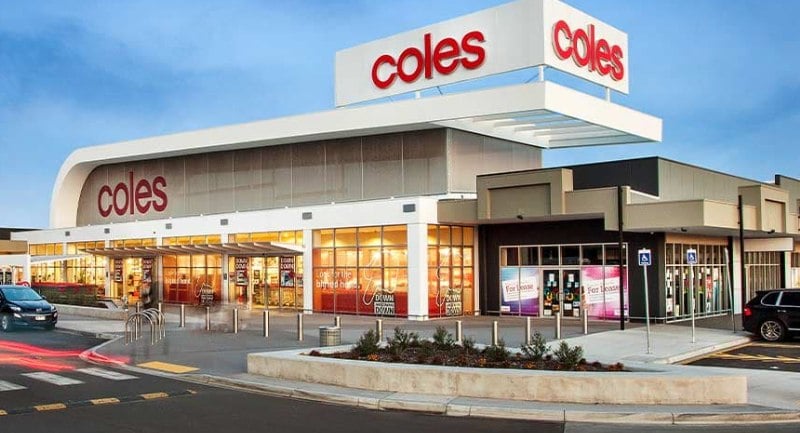
The Australian Competition and Consumer Commission (ACCC) has blocked Coles Supermarkets from acquiring a leasehold interest over a proposed new supermarket and liquor site in Kalgoorlie-Boulder, Western Australia, finding the deal would substantially lessen competition in the region’s grocery market.
The decision, handed down following a Phase 2 assessment, prevents Coles from proceeding with its proposed lease of a vacant site at 95-106 Great Eastern Highway, Somerville – where the supermarket chain had planned to open a full-line supermarket of 2,800 square metres alongside a Liquorland store.
READ MORE: ACCC takes Amazon to Federal Court over Prime Video ads shake-up
READ MORE: Federal Court rules Coles misled shoppers with Down Down discounts
Independent competitors in the crosshairs
Kalgoorlie currently has four large, full-line supermarkets – Coles, Woolworths, and two independent stores – plus two smaller independent outlets.
The ACCC found a real commercial likelihood that a new Coles store would force the exit of at least one effective independent competitor from the market.
ACCC Deputy Chair Mick Keogh said the regulator’s concern centred on the role independent supermarkets play in keeping major chains honest.
“Independent supermarkets are an important competitive constraint on the major supermarket chains. They provide consumers with meaningful choice, competition on service, quality and range, and competition on price for some products,” Keogh said.
While acknowledging a new Coles store would benefit some consumers, Keogh said the longer-term competitive consequences outweighed those gains.
“We found that while a new Coles supermarket will offer benefits to some consumers, there is a real prospect that the acquisition would lead to the exit of an effective independent competitor, and its assets leaving the market. New entry would not be timely enough and sufficient to offset the loss of competition likely to result from the acquisition,” he said.

ACCC Deputy Chair Mick Keogh
Coles pushes back
Coles rejected the ACCC’s findings, saying the decision denies Kalgoorlie shoppers choice rather than protecting it.
“We disagree with the ACCC’s decision. Blocking the development of a new supermarket on a vacant site does not promote competition. It denies Kalgoorlie shoppers greater choice and convenience,” a Coles spokesperson said in a statement to Mediaweek.
The company said the proposed store would have given South Kalgoorlie customers access to more than 24,000 products, improved store amenities, and expanded online home delivery capacity.
It also argued shoppers would have benefited from Coles’ statewide pricing model, paying the same grocery prices as customers in metropolitan Perth.
Coles disputed the ACCC’s market read, arguing the regulator had underestimated the city’s growth trajectory.
“The ACCC has underestimated Kalgoorlie’s future growth and demand. Kalgoorlie is experiencing significant industrial activity, planned residential growth and comprises a substantial FIFO workforce, all of which are increasing demand for supermarket capacity across the region,” the spokesperson said.
“Even with the proposed Coles store, supermarket capacity in Kalgoorlie would be lower than, or comparable to, similar regional centres such as Albany, Busselton and Geraldton.”
The chain also pushed back on the ACCC’s suggestion that an existing operator would be forced out, saying its business case assumed continued growth among competitors over time. Beyond grocery competition, Coles said the store would have supported 120 local jobs and the development of around 250 new homes “at a time of critical housing shortage in the city.”
“We will review the ACCC’s decision and consider our next steps,” the spokesperson said.
Coles under the ACCC’s microscope
The Kalgoorlie block is the latest in a string of regulatory actions against Coles in 2026.
In May, the Federal Court found Coles misled shoppers through its Down Down pricing program, ruling the supermarket chain had advertised discounts based on higher prices that had only been in place for short periods – in most cases around four weeks, falling well short of the 12-week threshold Justice Michael O’Bryan said consumers would need before a discount could reasonably be considered genuine.
The ACCC launched those proceedings against Coles and Woolworths in late 2024, amid broader scrutiny of supermarket pricing and cost-of-living pressures.
The regulatory heat has only intensified since: from today, the ACCC gains new powers under the Food and Grocery Code to monitor and investigate excessive pricing at retailers with annual revenue exceeding $30 billion – a threshold that captures only Coles and Woolworths.
The regulatory path
Coles, Australia’s second-largest supermarket chain, with 860 stores nationally, notified the ACCC of the proposed Kalgoorlie acquisition in November 2025, ahead of the mandatory notification regime that came into effect on 1 January 2026.
The ACCC escalated the matter to a Phase 2 assessment in January 2026 after its initial review raised concerns.
Under Australia’s merger control regime, Coles and Woolworths are required to notify the ACCC of any supermarket acquisition or land interest above a certain size, regardless of standard monetary thresholds.
Phase 2 assessments must be completed within 90 business days, unless extended.
“Based on our assessment of all of the material before us, we are satisfied that there is a real commercial likelihood that Coles’ proposed acquisition would substantially lessen competition in Kalgoorlie in the longer-term, to the overall detriment of consumers,” Keogh said.
The full Phase 2 Determination is available on the ACCC’s acquisitions register.
Main image: The current Coles in Kalgoorlie