



Sea Cleaners, JCDecaux target litter as brand risk
Sea Cleaners and JCDecaux launch a model that treats branded litter as damaging outdoor media.

Sea Cleaners and JCDecaux have launched a new initiative that reframes litter as a form of negative outdoor advertising, arguing that discarded branded packaging can damage consumer perception and reduce product value.
Called Reverse Media Schedules, the model combines litter audits, audience data and media modelling to estimate where branded waste appears, how many people are likely to see it, and the potential commercial impact of removing it.
How the model works
The initiative was developed by Sea Cleaners, JCDecaux, Dentsu Creative and Carat, with advisory support from Finch and audience data from Nielsen. It treats bottles, cans and wrappers as unintended brand impressions, particularly when they appear in public coastal environments.
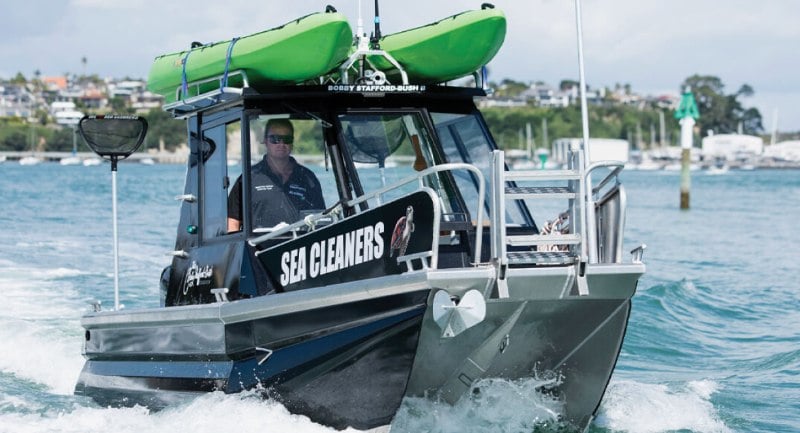 Sea Cleaners
According to the partners, the system identifies litter hotspots, benchmarks brands against others in their category, and provides dashboards showing the estimated value created through clean-up activity.
Research points to reputational cost
The launch is supported by earlier research published in the Journal of Business Research, which found consumers were willing to pay 2 per cent less for a product after seeing that brand appear as litter. Nielsen also validated the idea for the New Zealand market through research across 124 coastal destinations.
That Nielsen study surveyed 1,026 people and found 17.2 per cent could recall specific brands they had seen as litter seven days after visiting coastal areas. It also found 75 per cent said they would view a brand more favourably if it partnered with Sea Cleaners.


The leading media trade publication in Australia.
Get our top stories straight to your inbox daily by signing up to our Newsletter
By providing your information, you agree to our Terms of Use and our Privacy Policy. We use vendors that may also process your information to help provide our services.
Brands back the programme
New Zealand brands including Heineken, Export and Monteith’s have already signed on to the programme. Their investment will help fund Sea Cleaners’ ongoing ocean and coastal clean-up work.
The initiative positions clean-up activity as a media investment rather than a charitable contribution, giving brands a commercial framework for environmental action.
Sea Cleaners looks to scale support
Sea Cleaners said the model could help create a more sustainable funding base for its operations. The organisation has removed more than 21 million litres of rubbish from New Zealand beaches and waterways over the past 23 years.
Hayden Smith, founding trustee of Sea Cleaners, said: “The hardest part of the job isn’t picking up the litter, it’s the constant hustle required to raise funds and keep our boats in the water. This tool gives us a reason to talk to dozens of companies and a concrete business value that we are delivering for them.”
Kurt Malcolm, head of trading platforms at JCDecaux, said: “Removing the worst outdoor ads allows us to deliver on our sustainability commitments, but also our commitment to iconic, impactful out of home advertising and making sure our clients are only seen in the right way, in the right places.”
Brett Colliver, chief creative officer of dentsu New Zealand, said the model connected environmental action with business outcomes. He said the approach had potential to scale internationally.
John Mescall, global chief creative partner at Dentsu Creative, added: “The responsibility for litter lies not just with the public and companies creating packaging. It also lies with us, the advertisers who help those products become so popular.”
The partners said the long-term ambition is to expand Reverse Media Schedules into other markets, including Australia.
More from Mediaweek
The leading media trade publication in Australia.
Get our top stories straight to your inbox daily by signing up to our Newsletter
By providing your information, you agree to our Terms of Use and our Privacy Policy. We use vendors that may also process your information to help provide our services.

.jpg%3Fv%3D1787017979605&w=3840&q=75)
.jpg%3Fv%3D1786665475914&w=3840&q=75)

