

Less than two months after Mediaweek revealed Southern Cross Austereo’s (SCA) shift towards an AI-assisted newsroom model following a wave of redundancies, the broadcaster is now facing the fallout from a serious on-air breakdown that wrongly turned a working journalist into a wanted man.
SCA has launched an internal investigation after multiple Adelaide radio bulletins falsely named a News Corp reporter as the alleged perpetrator of a violent attack on police.
How the error went to air
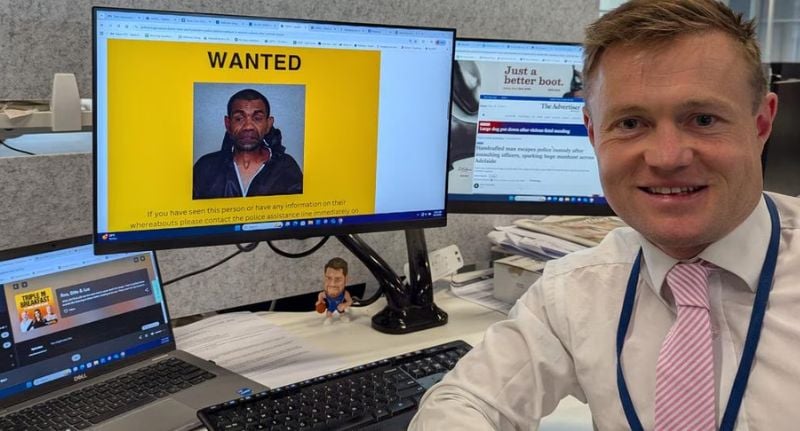
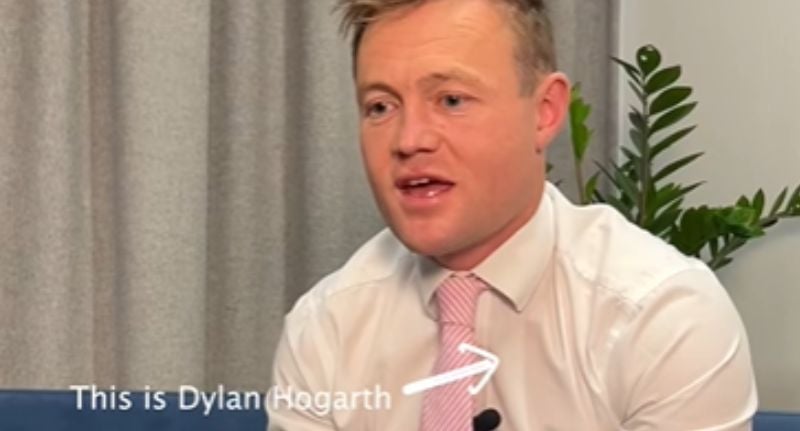
Across six separate updates on Friday morning on Triple M and SAFM, including flagship breakfast show Roo, Ditts & Loz, The Advertiser’s Dylan Hogarth was incorrectly identified as a man accused of attacking officers with a hammer before allegedly escaping custody at the Queen Elizabeth Hospital. Listeners were urged to call triple-zero if they saw him.
In reality, Hogarth had written the original online story about the police manhunt earlier that day. When the SCA-owned stations lifted details from that report, his byline appears to have been mistaken for the suspect’s identity.
Within an hour, as alarmed messages from friends poured in, the stations issued online corrections.
SCA executive general manager for Western Australia and Adelaide, Robert Iannazzo, said the company’s preliminary findings pointed to human error. Still, he did not rule out the involvement of AI-assisted newsroom systems, confirming both would form part of the investigation.

SCA executive general manager for Western Australia and Adelaide, Robert Iannazzo
The AI tilt behind the scenes
The incident lands squarely against the backdrop of SCA’s newsroom restructure, which multiple sources previously confirmed to Mediaweek was directly linked to the introduction of a new AI-assisted production model.
While the shift followed the company’s merger announcement with Seven West Media, SCA has stressed that the redundancies and restructure are not connected to the deal.
At the time, an SCA spokesperson said the broadcaster was “evolving the way we gather and prepare news bulletins to better serve audiences across Australia, now and into the future”.
Sources said the new model integrates AI at the scripting and collation stages of bulletin production, streamlining workflows but reducing the need for staff.
One insider said the system would make it “quicker for journalists to put together their bulletins”. When asked if the technology was directly linked to recent job losses, the response was blunt: “Yes”.
At the same time, industry figures raised concerns about whether SCA could continue to meet its Australian Communications and Media Authority (ACMA) local content requirements, which mandate at least 62.5 minutes of original local programming each week for regional broadcasters.
One source told Mediaweek at the time that “no way” could those targets be met under the new model. SCA strongly rejected that claim, calling it “factually incorrect” and insisting regional bulletin volumes would actually increase.
In a later statement, the broadcaster confirmed it had built a proprietary in-house software platform with AI capabilities to support journalists in gathering information and drafting bulletins, stressing all content remains fact-checked, edited and read by journalists in metro and provincial hubs.
Trust, safeguards and the reputational hit
For The Advertiser editor Gemma Jones, the damage runs deeper than one incorrect name.
She described the wrongful identification of Hogarth as “egregious”, accusing the radio stations of lifting stories without credit and warning that the incident exposed serious failures in editorial safeguards.
Hogarth has declined to comment on whether he will pursue legal action, but said his primary concern was how such a failure could make it to air in the first place.
In an era already saturated with misinformation and disinformation, he warned, the stakes for news organisations are only getting higher.
Not the first AI flashpoint in radio
This is also not the first brush with controversy for AI in Australian radio.
Earlier this year, Mediaweek reported backlash over the Australian Radio Network’s (ARN) use of an undisclosed AI-generated host, “Thy”, modelled on an employee and broadcast in four-hour segments.
The trial was defended as a technology experiment but drew sharp criticism for its lack of transparency and representation.
For SCA, the latest incident adds new urgency to an already delicate equation: faster workflows, fewer journalists and rising automation, all while audience trust remains fragile.