
Wednesday May 6, 2026

Tom Malone bets on Tapt Media as radio’s next power play goes national and digital
Tom Malone didn’t set out to run a national audio network, but he sure built his career like someone who might.
In this episode of Mediaweek’s Newsmakers, the Tapt Media CEO traces his path from newsroom floor to the top job, unpacking the decisions, discipline and industry shifts that now sit behind the launch of the new independent audio business.
From reporter to CEO
Before leading Tapt Media, Malone worked his way up the radio ranks, starting as a reporter before making a strategic pivot.
“I made the switch from reporter to producer because I thought there would be more of a career opportunity for me,” Malone said.
That early move now frames his approach to leadership: understand the mechanics, then scale them.
He did it at Nine, and now he’s planning to do it at Tapt Media.
Malone will also be working closely with the famed Laundy family, who purchased the key talk radio assets from Nine Entertainment Co., including 2GB, 3AW, 4BC and 6PR.
Building from the bottom up
Despite the scale of the assets, Malone keeps returning to the entry point and driving home the importance of training future radio stars from the ground up.
“People come in, and they learn the business,” he explained. “One of the things that we’ve done in the radio business that I’m most proud of is the internships we’ve introduced.”
The program runs multiple times a year across Sydney, Melbourne, Brisbane and Perth, and crucially (and, given this is the media industry we’re talking about), they’re paid.
“The employment rate post those internships is something like 90%,” he added. “Most of the people end up staying on, either in news, digital, social or programming.”
It’s a practical answer to a broader industry question: how to build talent pipelines that actually convert.
The difference between talking and connecting
Malone draws a clear line between performance and connection.
“There’s something about radio that you have to love,” he said. “But I think also there are things that can be learned as well.”
For example, did you know there’s a difference between being a good announcer and being a good broadcaster?
Well, there is.
“A broadcaster’s someone that’s on air, and they’re talking to the audience and having a conversation with them, not talking at them.”
It’s a definition that speaks directly to talkback radio’s core strength – real-time engagement at scale.
The people behind the mic
There’s also a quieter and rarely seen code to managing on-air talent.
“In some ways, radio personalities are a lot more fragile than TV personalities,” Malone said, “it’s because they’re behind a microphone, and they’re not used to the exposure as much as TV stars are.”
A new phase for radio
For Malone, Tapt Media represents both continuity and change.
“Tapt Media as a brand is initially a corporate brand and a trade brand. We want to have a national footprint,” he says.
While the strength of 2GB, 3AW, 4BC and 6PR remains central, the focus is on building a unified digital platform that brings streaming, podcasts and on-demand content into a single ecosystem.
“We want to get to a national digital platform where you can stream all of our radio stations and access all of our content.”
Alongside that sits a broader commercial ambition – expanding beyond traditional ad models and investing in new formats and distribution.
“There’s an incredible energy around the opportunity not only to improve the performance of the current business but also to better exploit and commercialise our content.”
You can listen to the full conversation here or wherever you get your podcasts.
Main image: Tom Malone

James Murdoch reportedly bids $415m for part of ‘New York’ parent
Lupa Systems, the company controlled by media mogul James Murdoch, is in talks to acquire major parts of Vox Media, the parent company of New York magazine, it’s being widely reported.
According to the Wall Street Journal the Australian Financial Review, the information comes from two sources with knowledge of the discussions.
Murdoch is said to be in talks with Vox Media about buying New York magazine and Vox podcast division assets, Rupert Murdoch’s the Wall Street Journal reported, citing sources – and claiming the deal is not definite.
New York magazine has been owned by Vox Media since 2019, when it was bought from Pamela Wasserstein, the daughter of investment banker Bruce Wasserstein, who had owned the publication since 2004.
The AFR reports that: “The acquisitions would further expand James and his wife Kathryn Murdoch’s portfolio of zeitgeisty media properties. Lupa’s investments include stakes in Tribeca Enterprises, which runs the Tribeca Film Festival, as well as Art Basel parent MCH Group.
“Kathryn Murdoch has invested in the Bulwark, a fast-growing digital news startup for people who don’t support President Trump.”

James Murdoch and his wife, Kathryn.
James Murdoch has recently been growing his venture company Lupa Systems, since he exited 21st Century Fox in 2019.
The Hollywood Reporter says: “If a deal closes, Murdoch would be vaulted more prominently into the world of billionaires who own a single, influential news outlet, like Jeff Bezos’ Washington Post or Marc Benioff at Time.
“Most of those owners could be considered a vanity media owners. Most have, at one point, invested in the long-term growth of those properties and a few have since retrenched and cut costs.
“By contrast, James Murdoch has the bank account of a vanity owner but has had a long career as a media operator.”
Over the past few years, James has distanced himself from his older brother Lachlan’s more conservative-leaning politics, instead behaving as a centrist by donating to climate change non-profits and Democrat-focussed issues.
Top image: James Murdoch. Image: WSJ

UK users can access porn again after ban lifted - but not all of them
Aylo, the parent company of Pornhub and other major porn sites, announced today that in the UK, iPhone and iPad users will be able to access its sites again, ending an over three month ban that Aylo initially enacted because of the region’s age verification law.
As of Tuesday, following the iOS 26.4 rollout in the UK, users on the new operating system can visit Pornhub and Aylo’s other sites from their iPhones.
On April 29, Apple announced that it would start requiring mobile users to confirm ages on their devices to check if they’re 18 or older: “You can confirm your age with a credit card that belongs to you, or by scanning your passport, driving licence, or one of the following PASS-accredited Proof of Age cards: CitizenCard, My ID Card, TOTUM ID card or Young Scot National Entitlement Card. Debit cards and gift cards aren’t supported,” according to Apple.
Web content filters and communication safety tools are turned on automatically for children, as well as adults who haven’t confirmed their age, Apple wrote.
In January, Aylo announced that starting February 2 it would restrict people visiting the site from the UK. Leadership at Aylo and Ethical Capital Partners (ECP), which acquired Aylo in 2023, said at the time that the UK’s Online Safety Act was a failure.
Before January, UK-based visitors to Aylo sites—which include RedTube, YouPorn, Brazzers, and many more—had to verify their ages by entering a credit card or uploading a government ID or other identification to an age estimation system called All Pass Trust. After February, anyone in the UK not already verified was locked out of those sites.
In the UK, the Online Safety Act, which went into effect in 2025, requires sites to implement age verification or face millions of dollars in fines and jail—or up to 10 percent of global revenues, whichever is higher. In the US, more than half of states have strict age verification laws in place, and in many of those states, Aylo blocks access and directs users to contact their representatives.
This is the first time Aylo has come back to a market after restricting access to its sites in response to age verification laws.
“As of about 30 minutes ago, we’re now live again in the UK, accessible to Apple users who have updated to the most recent version of the iOS,” Alex Kekesi, VP Brand and Community at Aylo, said.
Visitors to the sites who are using a Windows PC, Android device, or other non-iPhone or other mobile Apple devices such as iPads that use iOS in the UK will still not have access.
In November 2025, Pornhub’s parent company Aylo sent letters to Apple, Google, and Microsoft urging them to support device-based age verification in their app stores and operating systems.

Same old pitch problems, ‘couple of surprises’: Darren Woolley breaks down 2026 State of the Pitch
TrinityP3 has released its 2026 State of the Pitch report, revealing a marginal lift in pitch satisfaction, with agencies giving Australian marketers and procurement teams an average score of 3.22 out of five.
The report, now in its third year, surveyed agencies across 59 pitches over six months, covering 24 industry categories and agency fees ranging from $50,000 to $10 million.
But while the score has improved from 2.99 out of five last year, Darren Woolley, global CEO of TrinityP3, said the result should be viewed in context. The number of pitches recorded was lower than in previous years, down from 70 and 77.
What stood out this year?
In a chat with Mediaweek, Woolley said one of the most notable shifts in this year’s report was TrinityP3’s decision to publicly identify the advertiser categories where agencies reported the most challenging pitch experiences.
The reason, he said, was simple: the same categories of advertisers keep showing up every year. Those categories include financial services, utilities and telcos.
“These services clients appear more likely to run pitches poorly from the agency’s perspective than, say, consumer packaged goods,” Woolley said.
There were also a ‘couple of surprises in there’, as Woolley flagged.
“Charities were particularly bad at communicating with agencies or providing feedback, and that was a bit of a surprise,” he said.
Woolley said part of the issue is that marketers often run their own pitches without realising how time-consuming and labour-intensive the process can be.
“We estimate that if three people in the marketing department are intimately involved in the pitch process, collectively they’ll spend around 400 hours during that process. And this is on top of their already full-time job.”
“They take on the responsibility, only to find that, at the end of the day, they don’t have the resources or time to do it,” Woolley explained.
The 30% problem
Woolley said the uplift in scores should be treated with caution, arguing that there are still too many marketers and procurement teams “scoring a D or even an F when it comes to how they run a pitch.”
“If you look at the graph on page 10, under question 28, what you’ll see is that the big improvement is in the number of agencies that scored pitches four out of five,” he said.
Woolley said the previous dominant score was three out of five. While this year’s lift points to improvement, it does not erase the number of pitches still receiving one out of five.
“We talk about ‘ditch the pitch’ and people say the pitch process is ruined and doesn’t work, but what we’re talking about here is around 30% of pitches being run poorly. That means 70% are being run in a passable way, or even really well.”
In other words, Woolley said the perception that the pitch process is broken is largely being driven by the bottom 30%.
Unpaid pitch work still rules
The report highlighted that more than 80% of pitches did not pay agencies for their time, while almost 30% required agencies to assign IP as part of the process. It also found the number of pitches taking six to 12 months had doubled.
Woolley said there has been some movement on pitch fees, but much of it remains tokenistic.
“It has gone up a little bit, but it has mainly gone up in the sort of token payment of $5,000 to $10,000, not the $20,000-plus range,” he said.
“At least marketers are starting to acknowledge the agency’s investment. It just isn’t very commercial.”
When Mediaweek asked why unpaid pitch work remains so normalised, Woolley said agencies also need to confront their role in sustaining the system.
The simple answer, he said, is that agencies are still willing to pitch for free.
“While there are agencies out there that are very happy to pitch for free, why would you pay if you can get enough agencies to do it for free?”
While $5,000 or $10,000 may be better than nothing, Woolley said it often falls short of covering the time, resources and materials agencies put into pitches.
Procurement outperforms marketers
One of the report’s more notable findings was that procurement and finance-led pitches scored better than marketer-led pitches for the first time.
While procurement is often seen as a source of frustration for agencies, Woolley said its stronger performance may stem from clearer commercial requirements.
Procurement teams were more likely to define what agencies would actually be expected to deliver, giving agencies a better sense of whether the opportunity was worth pursuing.
“Marketers really struggled with defining that,” Woolley said.
“That clarity is a good thing for agencies, because they can start to evaluate whether the size of the prize is worth the effort of tendering or pitching.”
However, Woolley said procurement still has work to do, particularly when processes become overly reliant on tendering systems and limit direct communication between clients and agencies.
“These are the sorts of things that go to the very core of dissatisfaction among agencies, and they are the things that make agencies dislike the procurement process,” he said.
But he added that the issue is not universal across procurement.
“This is not either-or. Some do it, and others don’t.”
A fair pitch code, or not?
The report also raises the question of whether Australia needs clearer standards for how pitches are run.
Woolley said guidelines can help lift standards, but warned against treating pitch reform as a one-size-fits-all exercise.
“That’s the problem: the industry is obsessed with one way to run a pitch,” he said.
He said the focus should be on the principles behind a fair process, rather than prescribing a single fixed model.
TrinityP3’s Tender Charter is built around five principles: transparency and fairness, respect for resources and people, mutual accountability, confidentiality and trust, and commitment to partnership.
“They are the things we think every marketer should abide by and build into their pitch process,” Woolley said.
But he cautioned against any code that dictates exactly how every pitch should be structured.
Education, Woolley said, is the solution.
“As an industry, we need to spend time educating clients, not on how to run a pitch, but on the things they need to consider if they are going to run a pitch and not get a bad reputation.”
Agencies need to know when to walk away
For agencies, Woolley said the uncomfortable lesson from the report is that change will be slow unless agencies become more disciplined about which pitches they choose to enter.
He said agencies need to treat pitch invitations as commercial decisions, rather than automatically accepting every opportunity and challenging the terms later.
“What we are seeing is a lot of agencies saying, ‘I’ll be in the pitch,’ and then complaining about the rules,” Woolley said.
He compared it to agreeing to play a sport, then discovering halfway through that the umpire plays for the other team.
“It’s a bit too late. You can complain about it, but that’s not going to change the outcome.”
Woolley said agencies need to do more due diligence upfront, including asking about timelines, the number of competing agencies, evaluation criteria, pitch fees and the expected scope of work.
“Agencies need to show more rigour and more diligence in assessing whether they will play or not, because until then, nothing will change.”
The issue is not unique to Australia.
TrinityP3’s State of the Pitch survey is now in its second year in the US and Canada, and is set to be rolled out in Germany and Asia-Pacific later this year. View the full report here.
Top Image: Darren Woolley

Ladbrokes and Neds caught out: 500+ BetStop breaches trigger crackdown
Entain Group Pty Ltd, the parent company of Ladbrokes AU and Neds AU, has entered into a legally binding undertaking with the Australian Communications and Media Authority (ACMA) following an investigation that found it provided services to individuals registered with BetStop – the National Self-Exclusion Register, while also failing to close accounts belonging to self-excluded customers.
The investigation found more than 500 breaches of national self-exclusion rules.
Under the rules, wagering providers must close a person’s account as soon as practicable once they register with BetStop.
Beyond account management failures, the ACMA also found Entain did not adequately promote BetStop in customer communications, including texts and emails, as required under the rules.
System failures across multiple accounts
ACMA member Carolyn Lidgerwood said many of the contraventions stemmed from customers holding multiple accounts across Entain’s Ladbrokes and Neds brands.
“When someone signs up to BetStop, wagering companies must close all of that person’s accounts held within their services.
“In this case, Entain’s systems did not adequately identify and link all wagering accounts held by those customers across its services, including one account that remained open for more than a year after the customer had self-excluded,” Ms Lidgerwood said.
The investigation found further breaches where new wagering accounts were opened for individuals already registered with BetStop.
“When people register for self-exclusion, there should be no way for them to open new accounts for licensed wagering services in Australia,” Ms Lidgerwood said.
18-month undertaking and compliance overhaul
In response, the ACMA has accepted a comprehensive 18-month court-enforceable undertaking from Entain.
The agreement commits the company to an independent review of its compliance systems and processes, as well as the implementation of any recommended improvements.
While the ACMA did not issue an infringement notice – an option not available in this case – it warned that failure to comply with the undertaking could result in court-ordered financial penalties.

IAB report finds video ad spend grows despite economic anxiety
Australian marketers are continuing to invest in video advertising, even as economic uncertainty shortens planning windows and increases pressure on media accountability.
The IAB Australia 2026 Video Advertising State of the Nation Report found video advertising reached a 29 per cent share of the total online advertising market in 2025, growing 19 per cent year on year.
The most recent IAB Australia Internet Advertising Expenditure Report, prepared by PwC, put Australian video advertising at $5.4 billion in 2025, up 19.8 per cent year on year.
Economic uncertainty sharpens focus on outcomes
The report found agencies and marketers remain willing to spend on brand video advertising. But that investment is happening in a more cautious market.
Almost half of agency leaders (48 per cent) identified the economy as their leading concern. That placed it ahead of cross-channel media measurement and the impact of AI, both cited by 41 per cent of respondents.
Gai Le Roy, CEO of IAB Australia, said advertisers were not retreating from video investment, but were demanding stronger proof of performance.
“Advertisers are operating in a more cautious market, but they are not pulling back from investment in video advertising,” Le Roy said.
“They do, however, have stronger expectations of media accountability and a continued need to balance brand and performance investment. The next phase of growth in video advertising will depend on how well the industry can support advertisers with consistent measurement, and better visibility across an increasingly complex media environment.”

Gai Le Roy
Planning and measurement are not yet aligned
IAB Australia found nine in 10 agencies have a unified strategy for planning video campaigns across screens, including Market Mix Modelling.
However, one in four agencies rarely or never unify effectiveness measurement across those same screens. The report said this creates a gap between how video campaigns are planned and how they are assessed.
The mismatch is also visible in success metrics. While 49 per cent of respondents identified sales and conversions as their top media investment goal for 2026, brand metrics remained the most cited measure of campaign success at 80 per cent.
IAB Australia said the findings underline the role of its Future of Measurement project, which is developing guidance on best-practice frameworks and how measurement is likely to evolve in Australia.
CTV, streaming and retail media drive growth
Ad-supported subscription streaming platforms were named as a key growth area, with 71 per cent of ad buyers expecting to increase spend this year.
Programmatic CTV is also gaining momentum, with 46 per cent of respondents planning to increase investment in 2026. Frequency control was the top expectation when buying CTV and OTT programmatically, cited by 50 per cent of respondents.
The report also found retail data is becoming more important to video planning. More than half of respondents, at 54 per cent, are regularly using or testing retailer first-party shopper data to target video campaigns across digital video environments.
The same proportion are regularly using or testing CTV commerce integrations that link video ads to shopping.
Live streaming is also becoming a larger part of digital video strategies. Six in 10 ad buyers surveyed have placed ads in live event content on streaming networks or platforms.
AI expected to support measurement
The report found Australian agencies see opportunities for AI in analysing and reporting performance data against campaign goals, Market Mix Modelling, attribution and incremental lift.
IAB Australia also referenced IAB US research that found AI-led improvements in advanced measurement could unlock US$26 billion in total media investment within two years by representing channels more fairly and crediting what is already working.
Vikki Pearce, Head of Digital at Zenith and IAB Australia Video Council co-chair, said video remains a strategic part of the media mix because it can support both brand and performance outcomes.
“What’s changing in 2026 is not the ambition, but the operating environment,” Pearce said.
“Buyers are navigating more platforms, more formats, and more ways to activate, from streaming and CTV to live moments and creator-led ecosystems, while still being accountable for performance.”
Pearce said the report showed momentum, but also a need to align definitions, improve cross-platform measurement and lift the quality of data inputs used in modern models.

Vikki Pearce
Data consistency remains a challenge
Natalie Stanbury, Director of Research at IAB Australia, said buyers are moving towards more advanced outcomes measurement, but the consistency of data signals varies across video environments.
“That matters when advertisers are being asked to compare investment across BVOD, social video, AVOD and ad-supported streaming platforms,” Stanbury said.
“The work the industry is doing today on unified measurement standards, consistent creative tracking and cross-platform measurement frameworks is critical to supporting the next stage of video advertising growth in a multi-platform environment.”
What the report found
Among the report’s additional findings, 42 per cent of ad buyers expect to spend more on brand advertising this year, while 28 per cent expect to spend more on performance advertising.
Digital brand lift studies remain the most used tool for assessing video advertising effectiveness. Use of Market Mix Modelling has also increased compared with previous IAB Video State of the Nation surveys.
Better cross-platform measurement was the area ad buyers were most excited about in the continued growth of video streaming, cited by 59 per cent of respondents. It was followed by improved targeting and personalisation.
The IAB Australia Video Advertising State of the Nation 2026 Report was developed by the IAB Australia Video Council and is based on a survey of 78 advertising agency decision makers conducted in April 2026. It is the sixth annual edition of the survey.
Main image: AI-generated

Kids outsmart social media age checks by drawing fake moustaches
In a sure sign that creativity is not dead, children have been caught drawing fake moustaches in order to bypass online age checks in the UK.
Not since Spankie and Buckwheat stood on the shoulders of their fellow Little Rascals, donned an oversized coat, fake beard and attempted (and succeeded) in applying for a bank loan, has the world been gifted with such youthful ingenuity.
A report from Internet Matters, based on a survey of more than 1,000 school-aged children and their parents, found widespread awareness of workarounds.
In one example cited, a mother said her 12-year-old son used an eyebrow pencil to draw a moustache to pass a platform’s facial age-estimation check, and was verified as 15. Overall, 46 per cent of respondents said age checks are easy to bypass, while 32 per cent said they had done so.
Posts on Reddit, meanwhile, have outlined methods to circumvent restrictions, including using printed mesh face masks purchased on Temu to interfere with facial recognition systems. Other users reported using virtual private networks (VPNs) to mask their location.
Australian data points to continued access
Local findings show similar trends. A survey conducted last month by the Molly Rose Foundation of 1,050 Australians aged 12 to 15 found more than 60 per cent of respondents who had social media accounts prior to the ban still had access to at least one platform.
Platforms including TikTok, YouTube and Instagram were found to have retained more than half of their users under 16. Around two-thirds of respondents said platforms had taken “no action” to remove or reactivate pre-existing accounts.
Meta moves in
Curiously, Meta today announced it is expanding measures to detect and remove underage users in Australia as part of its compliance with the legislation.
The company said it already uses systems to identify and remove accounts belonging to users believed to be under 13 on Instagram and Facebook, and under 16 in Australia.
It has also restricted access to Instagram, Threads and Facebook for users it understands to be under 16, including through age assurance technology provided by Yoti.
Additional measures are set to roll out over the coming months, including AI-powered textual analysis of profiles for age signals and visual analysis tools designed to detect age-related cues in images and video.
The company said it will begin testing visual analysis tools in the US, with plans to expand globally for under-13 detection, before extending to under-16 users in Australia.
Meta said it has also introduced simplified reporting tools for underage accounts, supported by AI-led review systems, alongside measures to prevent users from returning after accounts are deactivated.

Regulators step up enforcement
Meta’s latest developments come on the back of the Australian government’s flagging potential legal action against major platforms over alleged breaches of the under-16s ban.
In March, the eSafety Commissioner confirmed it had launched investigations into several platforms for suspected non-compliance, three months after the restrictions came into effect.
Platforms under review include Meta’s Instagram and Facebook, Google’s YouTube, and Snapchat and TikTok.
At the time, Communications Minister Anika Wells said the government is compiling evidence to support potential court action.
“We have spent the summer building that evidence base of all the stories that no doubt you have all heard … about how kids are getting around that,” she said.
Well, at least now, we have some semblance of an idea.
Main image: Spankie and Buckwheat from the 1994 movie The Little Rascals.

Chinese court rules companies can't fire people if AI takes their job
A Chinese court has ruled that companies cannot legally fire workers simply because artificial intelligence can perform their jobs more cheaply.
The decision from the Hangzhou Intermediate People’s Court found that AI-driven replacement does not, by itself, meet the legal threshold for a “major change in objective circumstances” under Chinese labour law.
The case is being closely watched by employers as AI adoption accelerates across technology, media, marketing and customer service roles.
What did the court decide?
The dispute centred on a technology worker, identified by the surname Zhou, who worked in a quality-assurance role checking the accuracy of content generated by AI language models.
The company attempted to move Zhou into another role with a lower monthly salary, reportedly cutting pay from 25,000 yuan to 15,000 yuan. When Zhou rejected the reassignment, the company terminated the employment contract.
Labour arbitration first backed Zhou, before the employer took the matter to court. The Yuhang District Court found the dismissal unlawful, and the Hangzhou Intermediate People’s Court later upheld that decision.
The court said adopting AI was a business strategy, not an unforeseeable external change that made the employment contract impossible to perform.
Why it matters for AI and work
The ruling does not prevent companies from using AI or restructuring roles. It does, however, make clear that automation alone is not enough to justify removing a worker.
Employers must still show valid legal grounds for termination. They must also make reasonable reassignment offers if a role changes, rather than using a lower-paid alternative as a pathway to dismissal.
For media, advertising and technology businesses, the decision adds to a growing global debate about how companies manage AI adoption while protecting workers’ rights.
Retraining over replacement
The court said companies pursuing AI-led change should prioritise retraining workers for more advanced roles that still require human oversight.
Wang Tianyu, researcher with the Chinese Academy of Social Sciences, said technological progress still needed to operate within legal limits.
“Technological progress may be irreversible, but it cannot exist outside a legal framework,” Wang said.
The court also noted that employees have a role to play in adapting to changing workplace demands, including building skills that help them work alongside AI systems.
The decision comes as governments and regulators continue to examine how AI is reshaping employment. The European Union’s AI Act, for example, includes provisions covering AI systems used in employment and worker management.
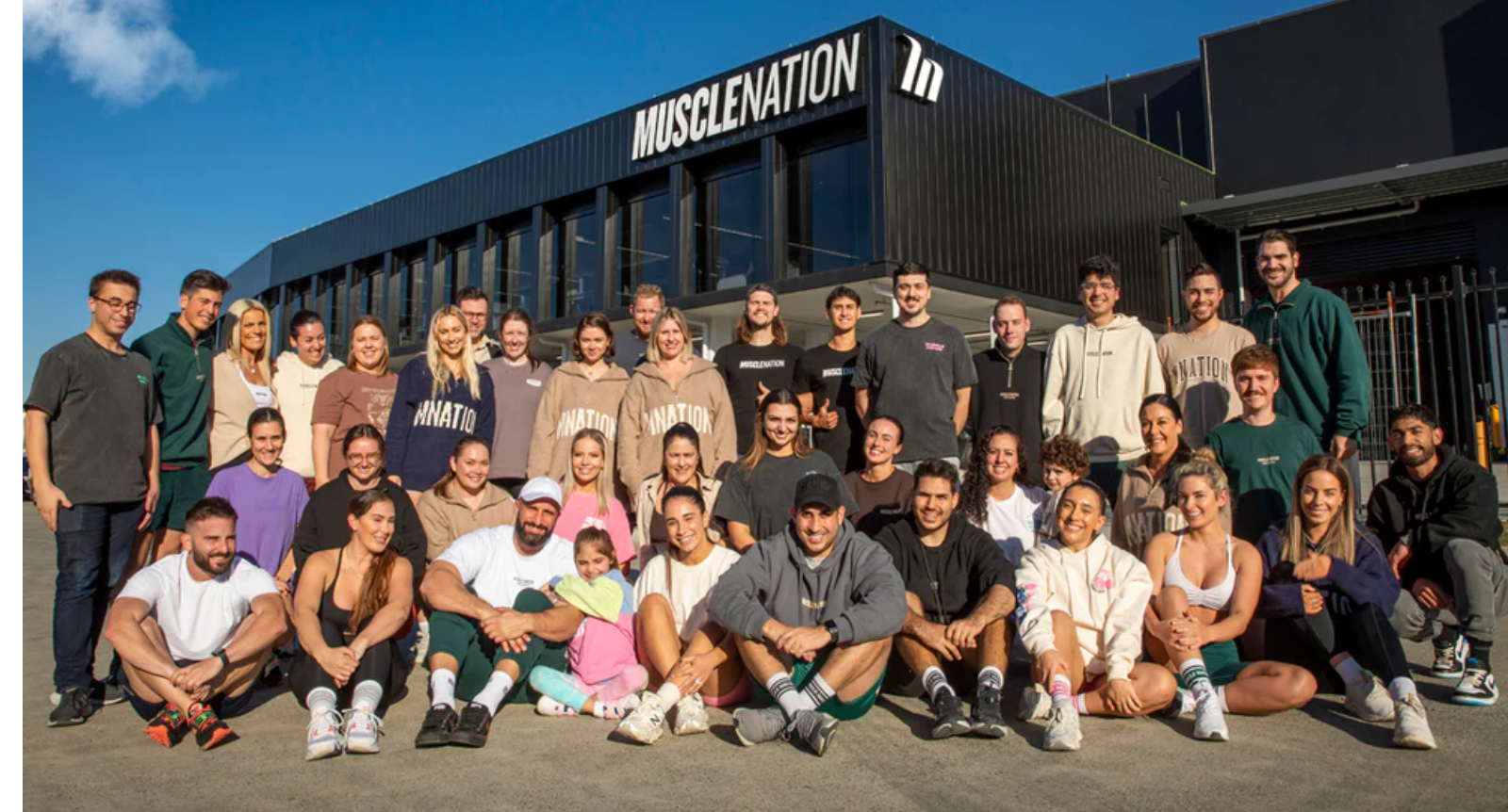
Protein isn’t just trending - it’s taking over the aisle, and Muscle Nation wants a bigger bite
A walk down the grocery aisle in 2021 looked simple. There were a few familiar protein products, a handful of bars, shakes and yoghurts, and the category was still largely geared towards gym-goers.
Fast-forward to 2026, and protein has moved from niche to everywhere.
For many shoppers, it is the first thing they check on a label. And it is no longer limited to shakes and yoghurt. It’s in everything: cheesecakes, chocolate products, cereal, milk, ice cream, and even water.
The demand is strong enough to disrupt Australia’s $2.3 billion yoghurt market, contributing to shortages.
For Muscle Nation, that shift has become one of its biggest growth drivers.
What started as a clothing brand for gym-goers has evolved into a broader player in protein and lifestyle, using the protein boom to expand into grocery, chilled products and everyday consumption.

Sam Chadwick
Mediaweek sat down with Sam Chadwick, head of marketing at Muscle Nation, to unpack how the brand is using community, creator-led marketing and grocery expansion to compete in an increasingly protein-dominant market.
“The size of that category has grown exponentially. It was one of the fastest-growing categories in grocery last year and continues to see strong growth,” Chadwick said.
He pointed to growing consumer understanding of protein and creatine as a key driver, pushing the category beyond sports nutrition and into everyday grocery.
The numbers reflect that shift. Muscle Nation’s growth in the Sports and Diet category has recorded a three-year CAGR of 17.8%, while Protein Yoghurt has surged by 61.7%.
Muscle Nation now accounts for around 17% of the Sports and Diet category and has driven the most growth over the past five years.
Building products with the community
With nearly 800,000 Instagram followers and 60,000 members in its Facebook community, Chadwick said Muscle Nation relies heavily on its audience to guide product development.
“We’re constantly putting out feelers about which flavours people want, what products they’d like to see, and what we could do better,” he said.
View this post on Instagram
That feedback, combined with market research across Australia, the US and the UK, feeds directly into the brand’s product roadmap.
“We’ll test out some different new and fun ones, and then we’ll play it safe with some safe ones that are industry standard. Then we roll those out, we might retire some old flavours and bring some new things in,” Chadwick said.
After nearly four years on grocery shelves, the challenge has been standing out against long-established names. To tackle that, Muscle Nation’s goal has been to “appear differently on the shelf and have a bit of fun with the brand.”
The brand has leaned into that through different flavours and formats, from protein peanut butter cups and popcorn to trend-driven collaborations, including its link-up with viral brand Pistachio Papi across multiple product categories.
View this post on Instagram
But while protein is the hook, Chadwick said taste still leads, even if it means compromising slightly on protein content.
“They would happily compromise on a couple of grams of protein to make sure the flavour and texture are right,” he said.
“We prioritise not making protein, or eating healthier, feels like a chore.”
Taking protein into the yoghurt aisle
That thinking has pushed the brand into one of grocery’s fastest-growing protein battlegrounds: yoghurt.
Muscle Nation’s move into protein yoghurt, with 10 SKUs, had been in the works for some time. Chadwick said the signal was already clear inside the business.
“Twelve months ago, everyone in the office was eating protein yoghurt in the morning. That’s an immediate signal it’s becoming a weekly staple,” he said.
The timing worked in the brand’s favour. Supply shortages affecting major players such as Chobani and YoPRO created an opening for new entrants, while retailers, including Woolworths, sought brands that could bring something different to the category.
“They looked at us for our protein credentials rather than dairy, and wanted to bring someone new into the category,” Chadwick said.
Rather than behaving like a traditional dairy brand, Muscle Nation has focused on bringing its protein credibility, community insight, and bolder-flavour approach to the chilled aisle.
Trend-driven flavours play a key role, inspired by social media.
“Us bringing out a vanilla when there are already four on the shelf isn’t a point of difference. But something new or unexpected gives people a reason to buy,” Chadwick said.
Why creators remain central
Alongside product expansion, creators remain central to Muscle Nation’s marketing growth.
Chadwick said founder Chris’ background in influencer marketing helped shape the brand’s approach from the beginning.
“When we talk about a marketing plan and put a strategy on the page, the big thing that he cares about is how we’re going to work with creators, how we get more reviews, and how we get more people talking about the product,” Chadwick said.
The brand now works with around 120 creators on its athlete roster, alongside roughly 1,100 smaller affiliates with between 1,000 and 25,000 followers.
But Chadwick said the strategy is not about tightly controlled talking points.
“One of the big things for our partnerships team is not telling people talking points, what we want them to post, or how we want them to post it,” he said.
That freedom, he said, is what keeps the content feeling genuine.
“I would rather someone go and try 10 flavours of yoghurt and have a review where they don’t like two or three flavours, but they’re really passionate about the other seven,” Chadwick said.
Creator content is not just driving awareness. It is also becoming a signal for what works across organic and paid media.
“We’ve also got a really good signal of what works really well in paid, and we can go and grab those and boost those and run those as ads,” Chadwick said.
The power of staying independent
But what has helped Muscle Nation adapt quickly to the rapid expansion of the protein category is not just a strong team. It is also the fact that it remains independent, bootstrapped and founder-led, with no board of investors, no private equity, and two founders still calling the shots.

Chris Anastasi and Nathaniel Anthony
“Just me and my business partner Chris, making every decision with the long game in mind,” Nathaniel Anthony, co-founder of Muscle Nation, told Mediaweek.
Chris Anastasi, the other half of the brand, added: “That’s one of the real advantages of being an independent brand: we can move quickly on the right opportunities without six layers of sign-off.”
The duo said winning feels personal, particularly in a category where 100% Australian owned and operated brands are becoming harder to find.
“The protein and supplement space in Australia has gotten seriously competitive, and a lot of the bigger names are owned by overseas corporations or backed by institutional money,” the founders said.
Despite competing against companies with deeper pockets, Muscle Nation has grown by building a direct connection with its customers.
“We’re proud to be flying the Aussie flag in this space. It matters to our community, and honestly, it matters to us too.”
Top Image: Muscle Nation Team

Foxtel Business iQ lands largest rollout with Fortescue
Foxtel Group has expanded its partnership with Fortescue to deliver the Foxtel at-home sport and entertainment experience to more than 10,000 employees across 11 remote mining accommodation villages.
The multi-year agreement marks the biggest deployment of Foxtel Business iQ ever undertaken, with approximately 11,500 screens across Fortescue villages set to be upgraded.
The move is aimed at supporting worker wellbeing by giving Fortescue employees access to live sport, entertainment and on-demand content in remote locations.
Through Foxtel Business iQ, Fortescue workers will have access to Foxtel’s full lineup of sport and entertainment channels, as well as its on-demand content library in up to 4K Ultra HD.
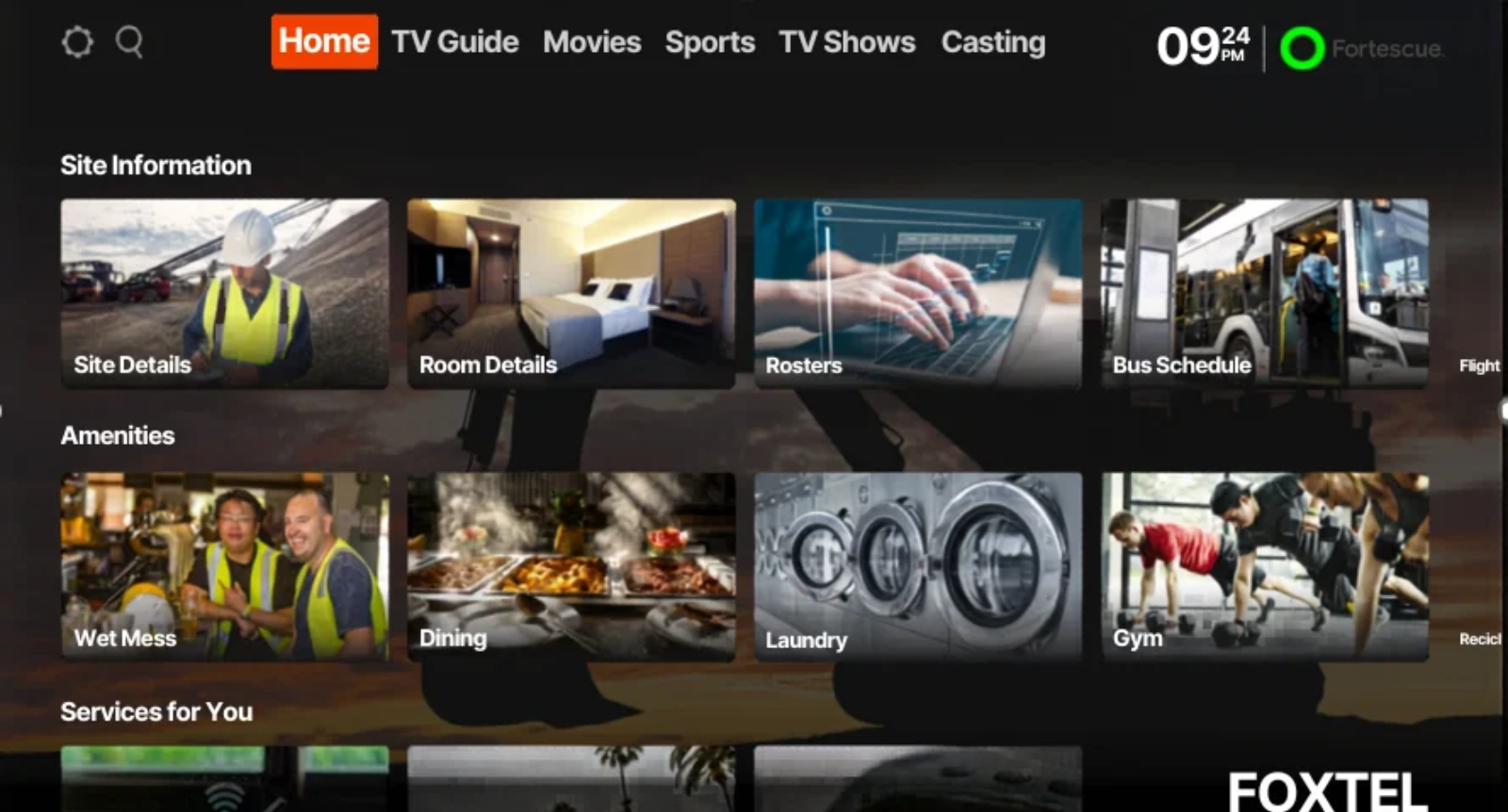
The service will be delivered in remote locations through Foxtel’s satellite network.
The content lineup includes live and on-demand sport such as cricket, AFL, NRL, F1, golf and Supercars, alongside entertainment titles including Colin From Accounts, Outlander and The Other Bennet Sister.
Main Event access expands
The agreement will also expand access to Main Event programming across accommodation rooms and common areas.
That will give employees more opportunities to watch major live events, including UFC and Boxing.
Foxtel Group said the expanded access supports Fortescue’s investment in village communities and downtime experiences.
Steve O’Connor on the partnership
Steve O’Connor, Managing Director of Foxtel Retail, Wholesale, and Commercial at Foxtel Group, said the two companies have worked together for almost a decade.
“FOXTEL and Fortescue have been in partnership for almost a decade, and we’ll continue to invest together from the outset of our long-term renewal to upgrade all living quarters and common areas across all Fortescue camps with FOXTEL’s full suite of live and streamed content through Business iQ,” O’Connor said.
He added that Foxtel is also looking to expand access beyond shared and in-room screens.
“We’ll develop delivery to staff’s personal devices through the FOXTEL app while at worksites.
“Fortescue’s very remote workforce will be the most connected and best entertained mining employees in Australia.”
Accelerated rollout
The rollout will be delivered through an accelerated installation program, with Foxtel Group’s partners ADB and BSA supporting the deployment.
ADB is Foxtel Business iQ’s technology development partner through its vuTyme platform, which is deployed across more than 400,000 screens worldwide.
BSA will provide installation services nationwide to support large-scale delivery.
Foxtel Business iQ grows in commercial properties
Foxtel Group said the agreement follows a growing number of major commercial deals to roll out Foxtel Business iQ across remote mining accommodation.
More than 60,000 rooms in commercial properties nationwide access sport and entertainment through Foxtel Business iQ.
The platform is purpose-built for multi-occupancy environments, bringing Foxtel’s at-home experience together with an integrated communications system for guests, residents, staff and customers.
Top Image: Foxtel Business iQ