


Marc Fennell’s latest investigation: Australia's Greatest Conman?
The two-part SBS doco peels back the layers of the man who fooled Australia’s biggest banks.

Marc Fennell has a knack for finding the stories that make you double-take. From art heists to stolen colonial artifacts, he has carved out a niche as Australia’s preeminent chronicler of the weird and the wealthy.
His latest project, Australia's Greatest Conman, dives into the surreal world of John Friedrich and the National Safety Council.
Marc joined Mediaweek's Newsmakers to talk behind the scenes on the doco series that investigates Australia’s biggest fraudster. A guy who built a private counter-terrorism base, gave helicopter lifts to Bob Hawke, and was awarded an Order of Australia.
And he paid for absolutely none of it.
The mystery of the man
Mediaweek: Marc, first off, I just want to say that I cannot believe that there isn't more about this guy out there in the media.
Marc Fennell: Neither could we. To be absolutely honest with you, that formed the starting point. There was a team of us in the docs unit, and we have made five or six different films and series. I think because of that, true crime stories tend to find me a lot.
And as we got into it, the mystery really became the man himself. He is an unusual conman. Most conmen acquire money for themselves. He didn't. He acquired money to run Australia's very own Thunderbirds. As conmen go, he is definitely a strange one, and it added an extra dimension to the scale of the fraud.


The leading media trade publication in Australia.
Get our top stories straight to your inbox daily by signing up to our Newsletter
By providing your information, you agree to our Terms of Use and our Privacy Policy. We use vendors that may also process your information to help provide our services.
If this had happened in another country, three movies would already exist about it. We are very good at producing a lot of factual content in this country, but if we do not tell these wild stories about Australians, no one else will. Every once in a while, you come across a story that just wouldn't have happened anywhere else.
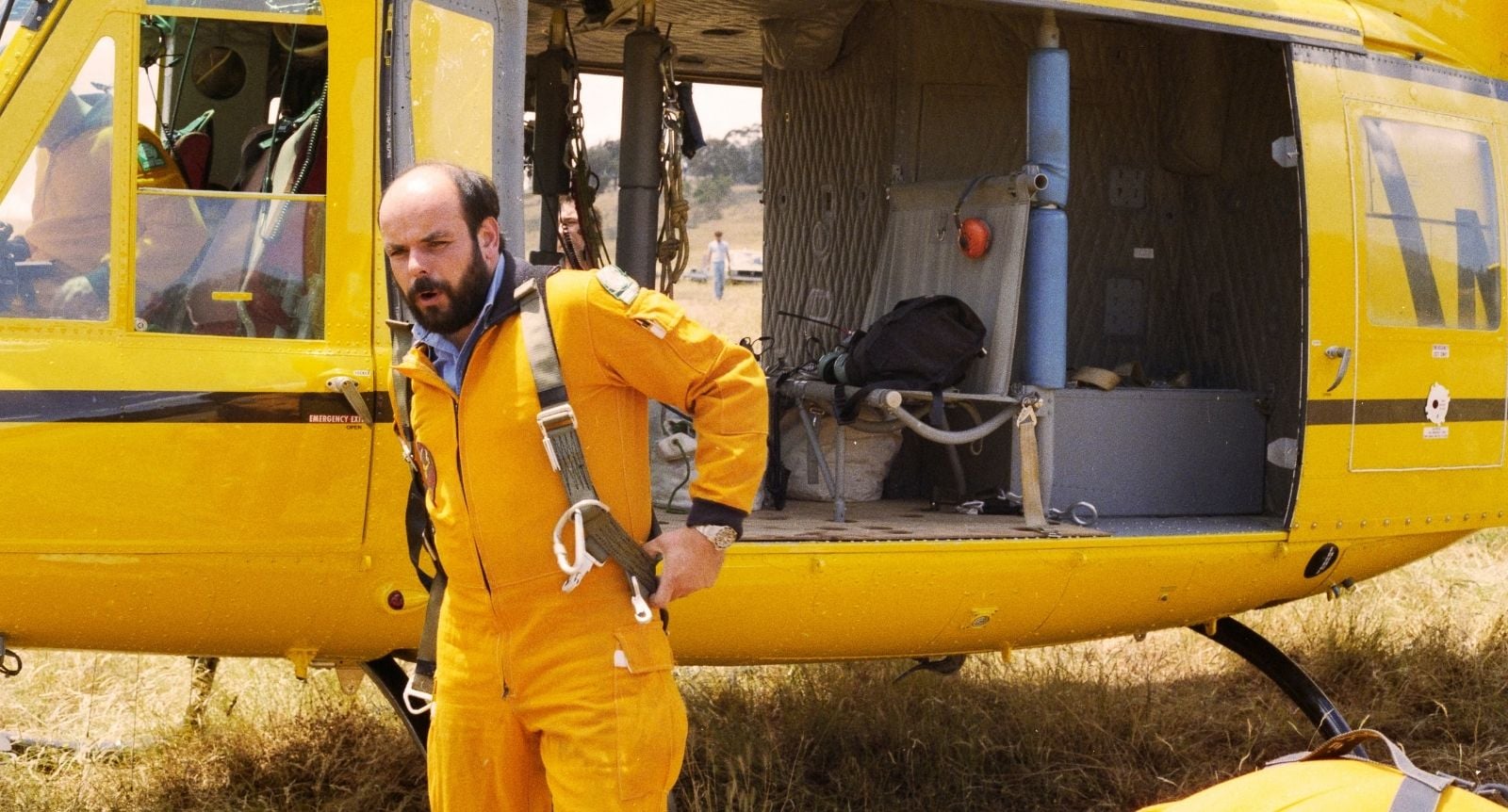 John Friedrich (pictured) was rarely photographed but his National Safety Council was well documented. Image: supplied
The gray area
MW: I feel like there is a bit of Robin Hood action going on here. He largely steals from banks and uses the cash to create an agency to save people. What do you make of that?
MF: It is interesting. His lawyer maintains that as he marched into court, one of the few times he saw the inside of a court, people cheered him. Now, I can't independently verify whether that is actually true, but the idea of him ripping off banks to run an elite search-and-rescue unit is sort of intriguing.
But at the same time, when it collapsed, it also absolutely destroyed people's lives. He certainly had a force of charisma about him, but I also think lots of people found him quite intimidating, too. One of the reasons I am so intrigued about this particular story is that it is all grey area, all the time.
The in-house production model
MW: Tell us about the setup... an in-house production unit attached to news that delivers high-end docos.
MF: We’ve run this unit since 2022, and originally we came from news, but we've now moved into the broader content division.
There is a particular kind of story that works well for programs that require shooting over a long period. Convincing people to talk can take time, so you’ll shoot a block here, a block there, and you can actually spread it out over time. Having an internal team that can work on multiple projects at once increases efficiency.
MW: Does this model allow you to spend a bit more cash on things you wouldn't typically be able to spend money on? I noticed you used some big published music. There’s some Rolling Stones and some INXS in there!
MF: SBS has an APRA deal that they negotiated, so we basically benefit from that. If we operated as an external production company, you would be licensing those songs individually, and by and large, you just wouldn't use them.
Another really subtle thing is that, as a larger news organisation, you have cadets and people early in their careers coming through, which creates an opportunity for them to work on a long-form documentary.
Boys with toys
MW: I loved the visual aesthetic, specifically the use of models and toys to represent all of the gear. Where did that come from?
MF: People kept referring to the National Safety Council as ‘John's playground’ or that ‘we were his playthings’ and ‘boys with toys.’ Corrin Grant, the director, called me and said, “I have this idea. What if we use toys, models?” My initial thought was, “This story ends in death. Are we trivialising it?”
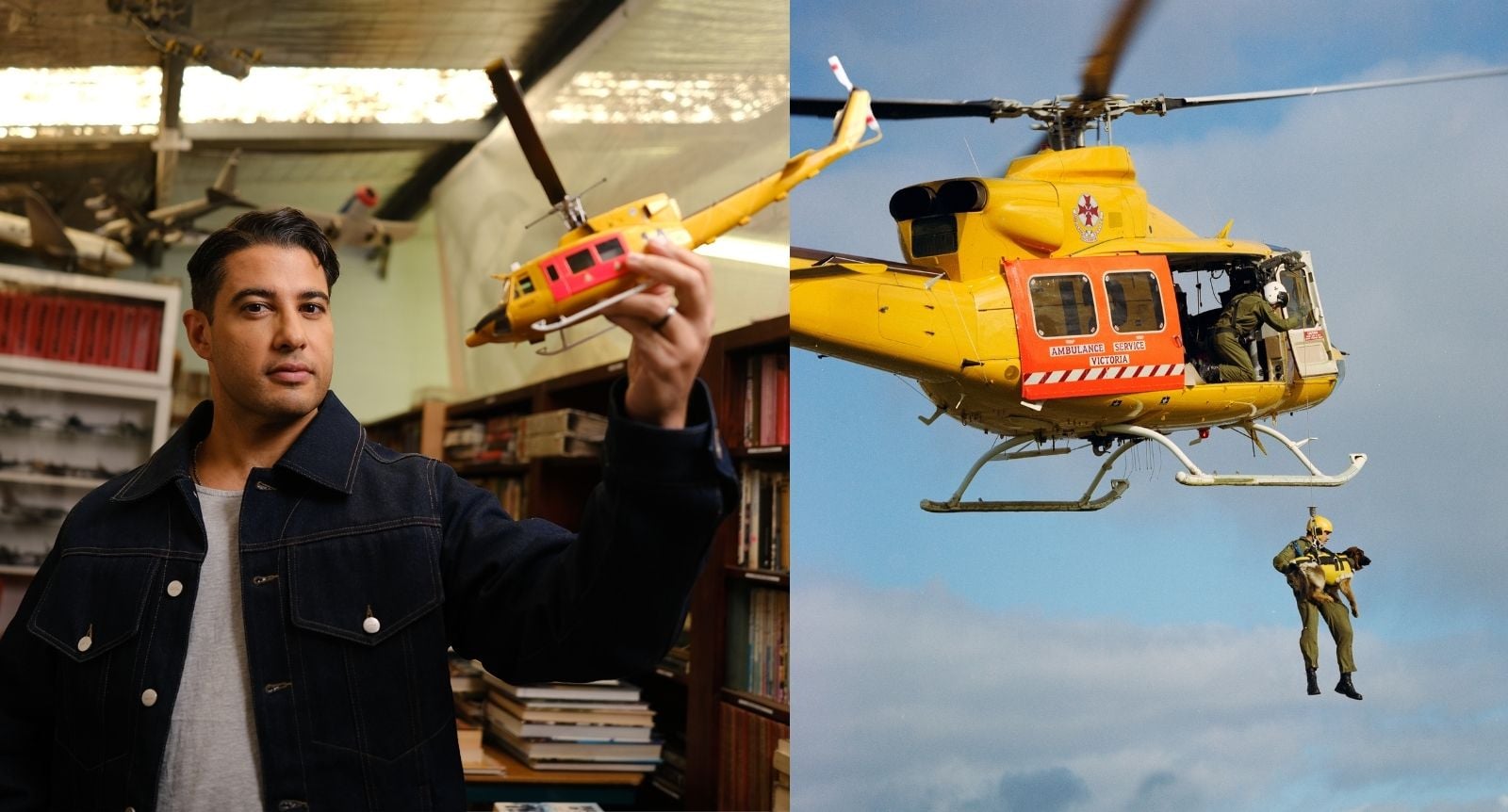 Marc Fennell with some of the models used to tell the story. Image: supplied
The original idea was to keep it as a very subtle visual cue using probe lenses. The clincher was finding a company that was game for the idea of recreating Gippsland in model form.
I think that every time you do one of these series, you do need to ask, “What is our little bit of visual invention?” You have to have an artistic reason for it, and Corrin identified that recurring phrase regarding the playthings of John Friedrich. I like that it is distinctive.
MW: You had some heavy-hitter journalists like Hugh Riminton and Kerry O'Brien in the mix?
MF: I didn't realise how frustrated he was by this story. To have Kerry O'Brien say, 'This is the most frustrating story I've ever worked on,' is like, okay, well, clearly we're onto something here.
For him and many others involved, there was a really profound sense that this story was left unfinished. With John Friedrich's passing, it was like the whole thing disappeared rather than ended.
Veneer of respectability
MW: Do you think that just because of the nature of what John Friedrich did, you know- the glossy planes and choppers, that no one really looked under the hood?
MF: There are a few things. One is the veneer of respectability. He called it the National Safety Council. It sounds like a government organisation. Then he was very good at aligning himself with people in respectable positions of power.
I mean, the guy had an Order of Australia.
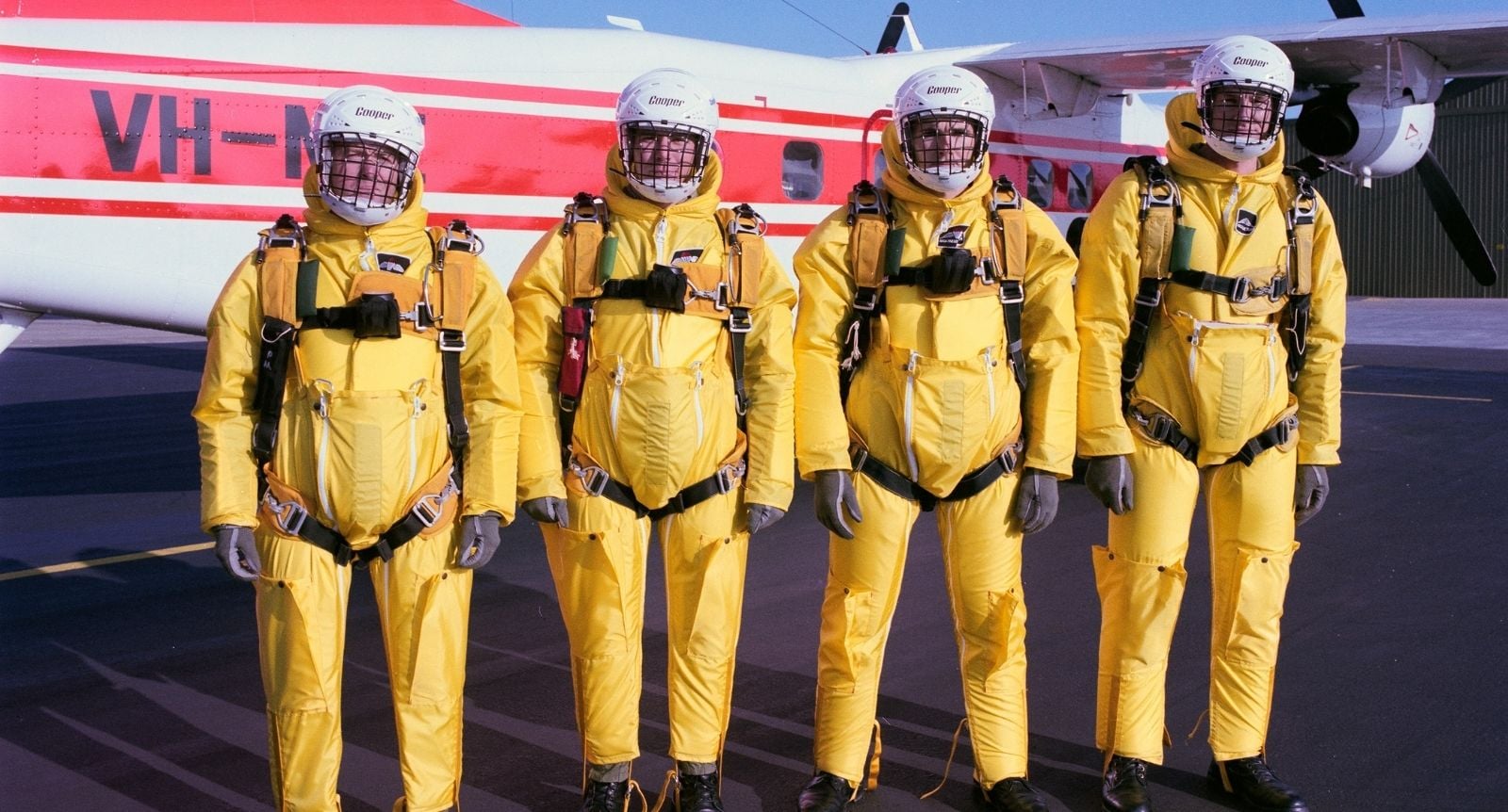 The National Safety Council was prepared for any disaster. Image: supplied
He gave Bob Hawke chopper lifts. His proximity to respectability and power proved crucial to the whole thing. They did a good thing essentially, and who wants to take too close a look at that?
MW: He had a lot of front, didn't he? He has an incredible ability to convince banks that his business is legitimate.
MF: Yeah, he would fly around and point out to the bankers, “we’ve got all these containers filled with equipment”, but then he’d say, “Oh, we couldn't possibly land. I couldn't possibly open them up. Bad weather and all.”
Somehow, they all just bought it
MF: There's this amazing moment at the end when it all fell apart. The story goes that there’s a whole bunch of bank managers standing around a chopper saying, “Well, I paid for this.” “No, I paid for this.” “I paid for this.” And so on.
Actually, they all paid for it. But there's only one chopper.
You don't get that confident without having a few runs on the board.
Australia’s Greatest Conman premieres on February 24th at 8:30pm on SBS and SBS On Demand.
Featured image- Marc Fennell on set: supplied
More from Mediaweek
The leading media trade publication in Australia.
Get our top stories straight to your inbox daily by signing up to our Newsletter
By providing your information, you agree to our Terms of Use and our Privacy Policy. We use vendors that may also process your information to help provide our services.


