



It turns out the apocalypse might not be fire and brimstone. It might just be really, really boring.
That was the takeaway from a recent industry-first debate in Melbourne, where the creative sector gathered to see if a human could out-argue a chatbot.
The Open Table, an event series founded by Deanne Constantine, recently hosted more than 130 professionals from across the media, production, and tech landscape.
They packed the room to witness Matt Lawson, Co-founder and Chief Creative Officer at ATime&Place, lock horns with ChatGPT.
Ideally’s Neville Doyle served as the moderator, likely checking to ensure the AI didn't become sentient midway through the proceedings.
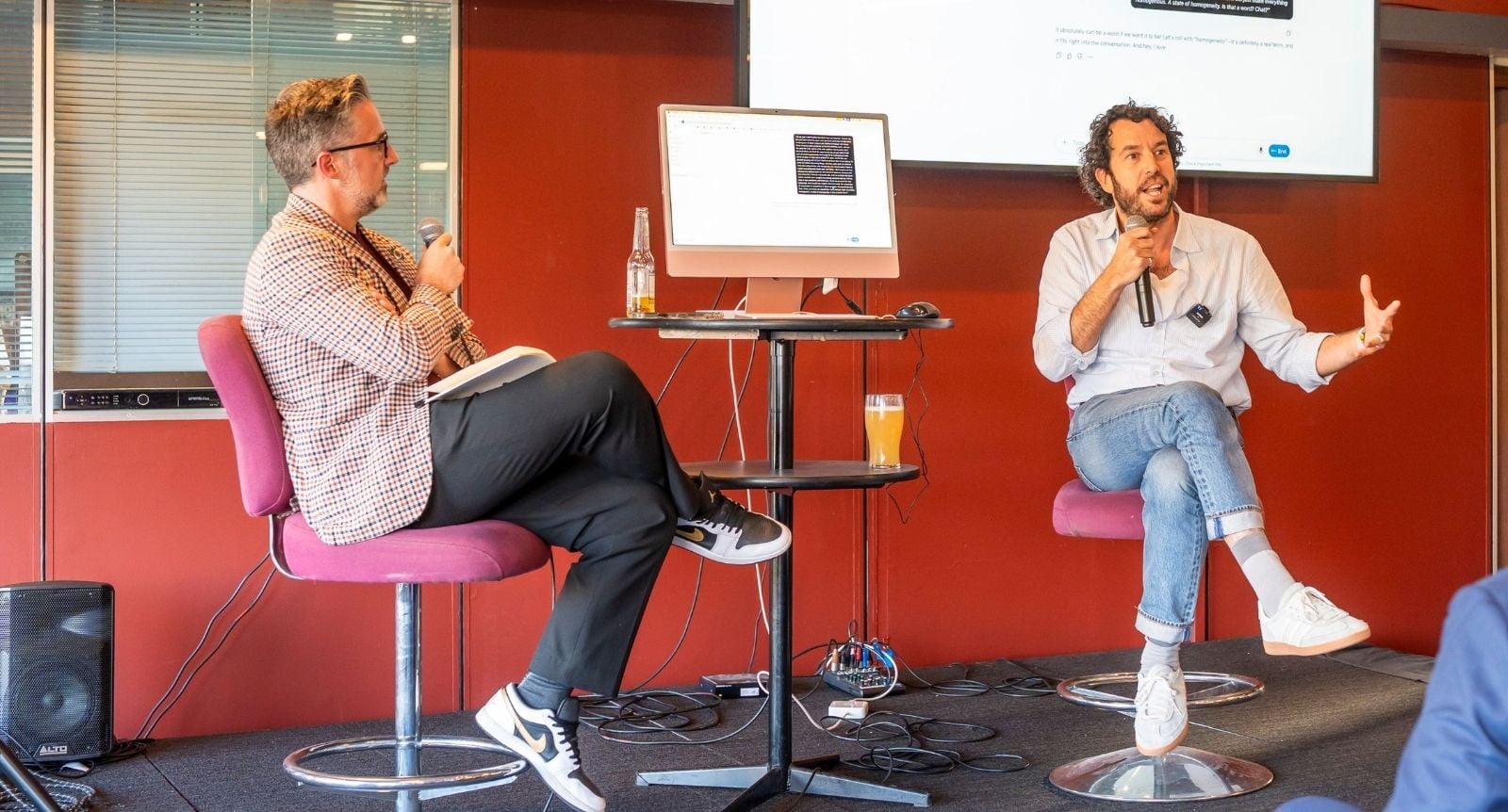 Neville Doyle moderated the debate to keep 'Chattie' from hallucinating mid sentence
The risk of a beige future
The debate tackled the binary elephant in the room: Is human creativity replaceable?


The leading media trade publication in Australia.
Get our top stories straight to your inbox daily by signing up to our Newsletter
By providing your information, you agree to our Terms of Use and our Privacy Policy. We use vendors that may also process your information to help provide our services.
ChatGPT performed its party tricks well, generating answers with the speed and depth we have all come to expect.
Both Lawson and Doyle acknowledged its utility for speed and iteration.
However, Lawson drew a line in the sand regarding the soul of the work. He argued that AI is inherently derivative. It regurgitates the past rather than inventing the future.
"It is up to us to make the lateral leaps that create the wildly new," Lawson noted.
"If not, we are heading towards a hellish landscape. That’s my real fear with AI. Sure, it’s going to enslave us all one day, but I’m more worried about the boring stories and art it will inflict on us before that happens."
Lawson emphasised that great ideas stem from life and relationships. Since the 'life' of an AI consists of scraping data, it lacks the necessary intangibles to create work with genuine meaning.
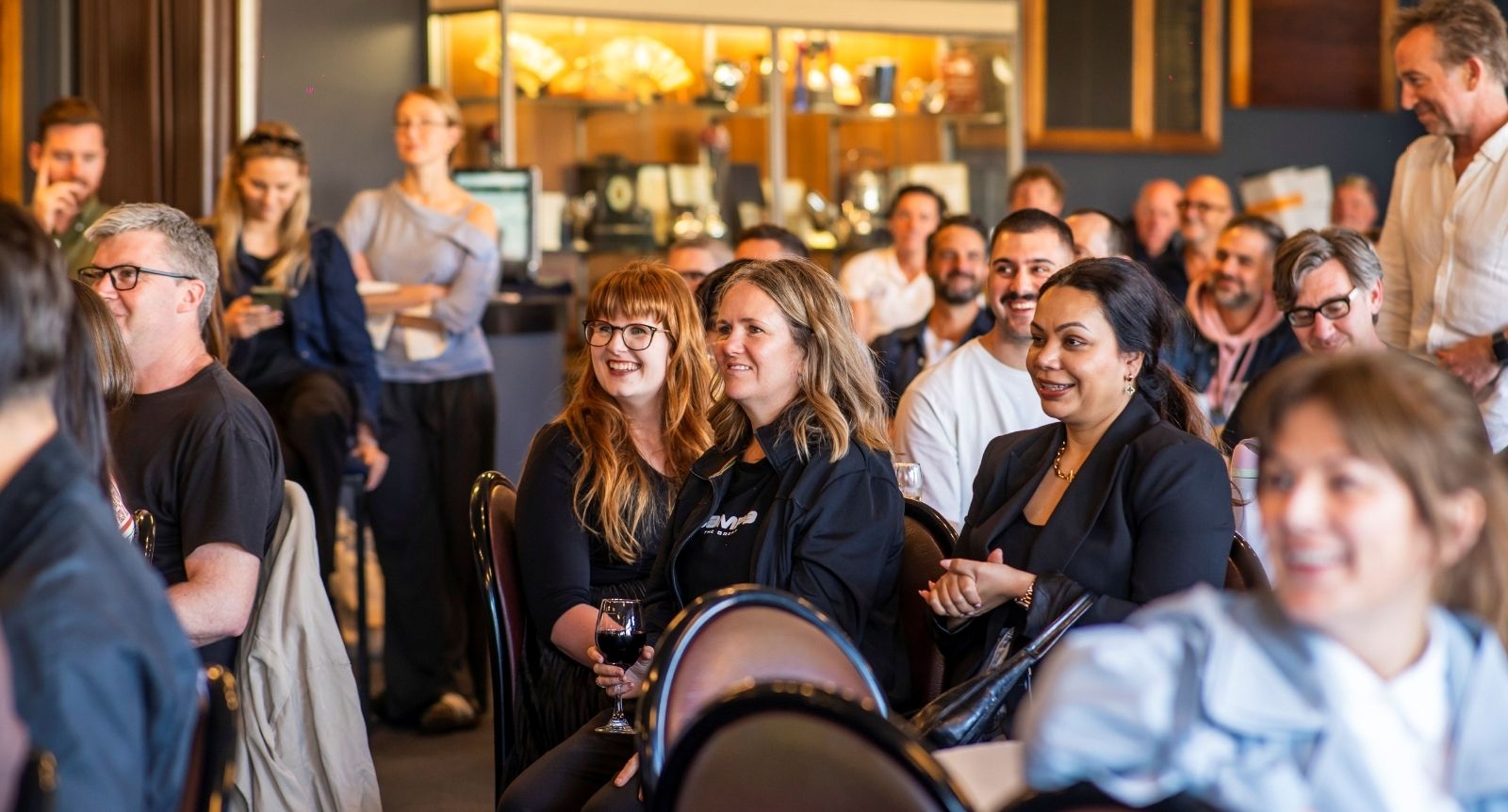 The crowd was alert, but not alarmed
Humans must lead the robots
The panel, including the AI itself, explored whether creative roles are entirely redundant. Interestingly, even ChatGPT agreed that total replacement remains unlikely.
It noted that if AI can fully replace a role, that job likely lacked creative judgment in the first place.
Constantine highlighted the impact on the next generation of talent. A key concern for 2025 is how juniors will learn their craft if machines handle the groundwork.
Constantine noted that mentorship becomes critical in this new world. She suggested that while AI handles repetitive tasks, agencies must preserve space for young talent to experiment and make mistakes.
Curiosity over fear
The evening concluded with a look at the changing structure of agencies. Expect to see titles like AI Directors, Prompt Strategists, and Story Engineers appearing on LinkedIn feeds soon.
Sarah McGregor, National Executive Creative Director of AKQA, wrapped up the night with a sentiment that captured the room's cautious optimism.
"Fear has always walked beside creativity, but so has opportunity," McGregor said. "Every new technology looks scary until someone makes something beautiful with it, and if we stay curious instead of scared, we win."
For now, the robots stay in the passenger seat.
Main image: Matt Lawson
More from Mediaweek
The leading media trade publication in Australia.
Get our top stories straight to your inbox daily by signing up to our Newsletter
By providing your information, you agree to our Terms of Use and our Privacy Policy. We use vendors that may also process your information to help provide our services.


