


Elon Musk loses OpenAI court battle
A California jury found the tech giant waited too long to sue OpenAI over its shift toward a for-profit model.

A California jury has dismissed Elon Musk’s lawsuit against OpenAI and its chief executive, Sam Altman, after finding the billionaire waited too long to bring the case.
The unanimous verdict brings an end, for now, to one of the most closely watched legal battles in artificial intelligence. Musk had accused Altman and OpenAI of abandoning the organisation’s original non-profit mission after he donated US$38 million in its early years.
Jurors deliberated for about two hours on Monday after a three-week trial in Oakland, California.
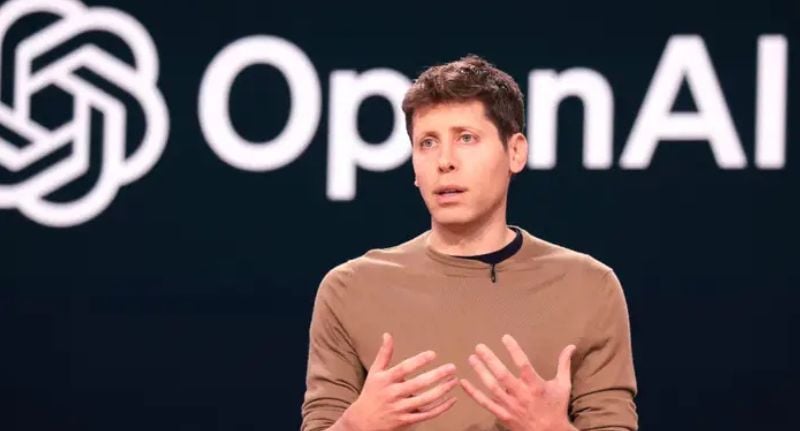 OpenAI CEO Sam Altman. Image: X
Why did Musk sue OpenAI?
Musk claimed Altman breached a non-profit contract by shifting the ChatGPT maker toward a for-profit model. He argued he had donated to OpenAI on the basis that it would develop artificial intelligence for the benefit of humanity.
The jury found that the statute of limitations had expired for Musk’s claims of breach of charitable trust and unjust enrichment. As a result, jurors did not need to decide on the merits of those claims.
Musk had also accused Microsoft of aiding and abetting OpenAI in its transition. Those claims were dismissed as a matter of law following the jury’s findings against Musk.


The leading media trade publication in Australia.
Get our top stories straight to your inbox daily by signing up to our Newsletter
By providing your information, you agree to our Terms of Use and our Privacy Policy. We use vendors that may also process your information to help provide our services.
A Microsoft spokesperson said: “The facts and the timeline in this case have long been clear.”
Musk vows to appeal
After the verdict, Musk criticised the decision on X, writing that it created “a free license to loot charities if you can keep the looting quiet for a few years!”
He also accused the judge overseeing the case of being a “terrible activist” and said he would file an appeal. Musk claimed the decision was based on a “calendar technicality” rather than the merits of the case.
Regarding the OpenAI case, the judge & jury never actually ruled on the merits of the case, just on a calendar technicality.
There is no question to anyone following the case in detail that Altman & Brockman did in fact enrich themselves by stealing a charity. The only question…
— Elon Musk (@elonmusk) May 18, 2026
Marc Toberoff, a lawyer for Musk, said outside court: “This war is not over, and I'd sum it up in one word: appeal.”
OpenAI says case was about competition
OpenAI argued the lawsuit was an attempt by Musk to slow down a competitor. Musk launched his own AI company, xAI, in 2023.
Sam Singer, a spokesperson for OpenAI, called the verdict a “tremendous victory” outside the Oakland courthouse.
“This was nothing but an effort by Mr Musk to slow down a competitor,” Singer said, adding that it was also a victory “for the justice system as well”.
William Savitt, who represented OpenAI during the trial, said Musk’s lawsuit “bears no relationship with reality”.
“We're pleased that the jury reached the right result, and reached it quickly,” Savitt said.
Inside the Musk and Altman fallout
Musk and Altman were among the group that started OpenAI in 2015. Musk left the organisation in 2018 after his co-founders denied him control.
During the trial, Musk said the case was “actually very simple”.
“It's not OK to steal a charity,” Musk said. “If it's okay to loot a charity, the entire foundation of charitable giving will be destroyed.”
Altman told jurors that Musk had supported the idea of OpenAI becoming a for-profit business and had sought long-term control of the company.
“A particularly hair-raising moment was when my co-founders asked, ‘If you have control, what happens when you die?’” Altman said in court. “He said something like, ‘maybe it should pass to my children.’”
The dispute escalated as OpenAI became one of the world’s most influential AI companies following the launch of ChatGPT. Musk has since become one of OpenAI’s most prominent critics.
Carl Tobias, a law professor at the University of Richmond School of Law, told the BBC the jury had made a “very fact-based decision”.
“This case seemed kind of weird and crazy, but this is why we trust juries, because they bring the common sense of the community to resolve factual disputes,” Tobias said.
Main image: Elon Musk
More from Mediaweek
The leading media trade publication in Australia.
Get our top stories straight to your inbox daily by signing up to our Newsletter
By providing your information, you agree to our Terms of Use and our Privacy Policy. We use vendors that may also process your information to help provide our services.


