



Why El Jannah still feels like your local chicken shop
CMO Adam Issa, and Emotive CEO Simon Joyce tell Mediaweek how they managed to toggle nostalgia with the immediacy of today.

There’s a strange trick to brands like El Jannah. The bigger they get, the harder it becomes to hold onto the thing people loved in the first place.
Most franchise businesses lose that corner-shop energy somewhere between scale and national expansion. But El Jannah - now operating as one of Australia’s fastest-growing quick-service restaurant brands - is betting that its latest campaign can bottle the feeling of walking into your local charcoal chicken shop, being yelled at affectionately from behind the counter, and leaving overfed.
The brand recently launched a new national campaign via Emotive, leaning heavily into internet nostalgia, meme culture and what both companies describe as a very deliberate refusal to feel “robotic”.
The campaign, titled Who Can Resist?, promotes El Jannah’s new Legendary Lebanese Lunch range - a lighter lunchtime offer featuring fresh charcoal chicken rolls, chips and a drink for $14, available in-store until 4pm.
But beyond the menu launch, the campaign doubles as something else: a broader play around culture, personality and human connection in the increasingly polished QSR market.
 L-R: Simon Joyce, and Adam Issa
The franchise that still wants to feel local
For El Jannah's Chief Marketing Officer, Adam Issa, the reason the company still feels like a neighbourhood business comes down to one thing.


The leading media trade publication in Australia.
Get our top stories straight to your inbox daily by signing up to our Newsletter
By providing your information, you agree to our Terms of Use and our Privacy Policy. We use vendors that may also process your information to help provide our services.
"The people,” Issa told Mediaweek over a lunch featuring the new items.
The campaign was handled by Emotive, with its CEO, Simon Joyce, telling Mediaweek he believes the appeal of El Jannah lies in the fact that the brand still behaves less like a national fast-food chain and more like a place where the staff actually care whether you’ve eaten lunch.
“The other thing I would say is there's a service level here that you don't just get anywhere else,” Joyce said.
“Like if I saw someone wearing El-Jannah’s uniform, that black T-Shirt that says ‘ask me anything except the garlic sauce recipe’ on the back, you immediately understand the tone of the place.
“That tone isn’t something you see many QSRs use, so I think that has helped with a more local, corner-store sort of feeling as well.”
Issa added: “It's robotic in most QSRs, and I think that's the difference.”
That distinction became central to the campaign strategy.
Rather than compete directly with major fast-food players in terms of scale or advertising weight, Emotive leaned into internet culture and recognisable food personalities to create what Joyce described as “shortcuts to attention”.
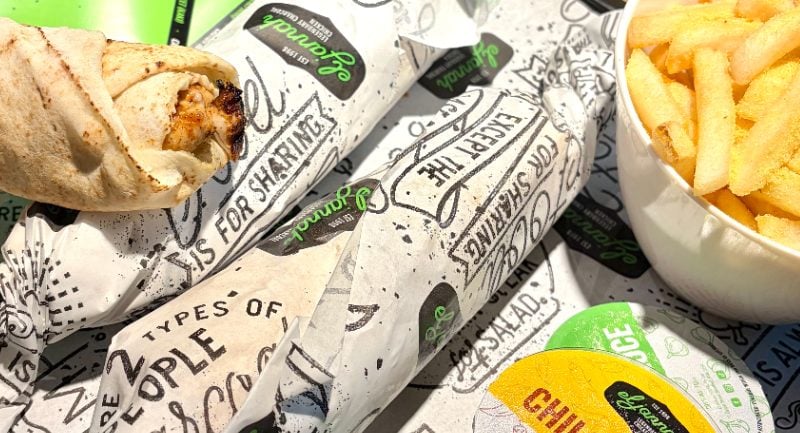 El Jannah's new lunch menu
Meme culture meets charcoal chicken
The campaign casts several familiar internet figures and cult food personalities, including the “Por Que No Los Dos?” girl, the Fat Pizza guys and the “Sushi Carol” duo.
Each arrives fiercely loyal to another food category before eventually being converted to El Jannah’s charcoal chicken.
According to Joyce, the idea came together quickly because the product truth was already there.
“It was just straight-up product truth: fresh, delicious, made to order. No one can resist it; try to resist it,” he said.
“But then we needed the shortcut to attention and find a creative way to tell that story.”
Joyce said the campaign deliberately avoids the over-produced aesthetic common across much of the QSR category.
“There's also an energy about El-Jannah that says, we don't need to be crazily polished,” he said.
“We're not going to win by shouting down KFC. We've got to find shortcuts to attention. The shortcut to attention on this one was meme culture, internet culture.”
The campaign was developed and produced end-to-end by Emotive and rolls out across film, social, earned and in-store channels.
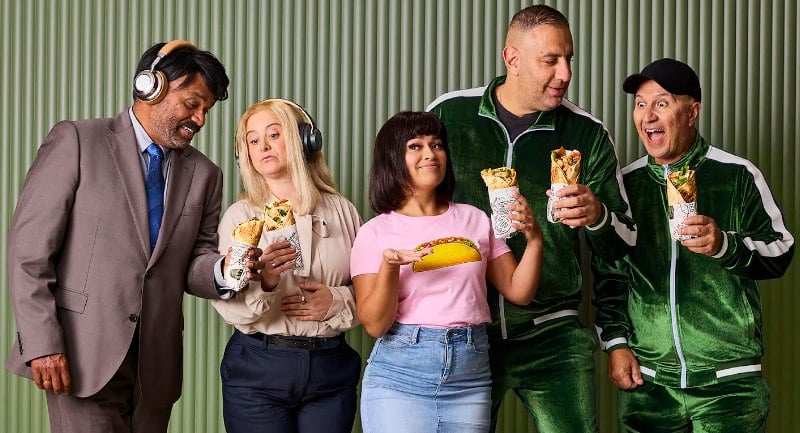 El Jannah's new campaign
Why nostalgia - and hospitality - still matter
Underpinning the campaign is a broader cultural observation around nostalgia, warmth and human interaction - themes both El Jannah and Emotive believe consumers are increasingly gravitating towards.
“The need for real connection, for genuine relational conversations beyond the surface,” Joyce said.
“And it is that, as the research suggests, the more the world feels a little bit out of control, the more we're gravitating to it.
“So you'd argue the broader cultural environment would be part of what's happening, and I feel like these guys have really tapped into that.”
Joyce said the difference inside El Jannah was that the staff didn’t feel like people following a corporate playbook.
“There are so many brands you work with, and you feel like the people are working out of a playbook,” he said.
“And then you work here, and you feel like people are the brand. And I think that's the difference.”
“I always notice in businesses, when there's a management style where people feel a sense of ownership, that ownership drives a different behaviour.”
The lunch play
The campaign also supports a more practical business objective: expanding El Jannah’s lunchtime appeal with a lighter, faster offering designed to compete in the daytime QSR market.
“So now you can come to El Jannah, and you can get products that are in line with the big majors,” Issa said.
“And customers know they're eating quality food.
“Our rolls are currently for big feeds. If you eat a roll today, you'll be full until tomorrow. So we wanted to make sure that we could have something that's light.
“Not as heavy, not toasted, easy to go in and out. So it works operationally as well. And this is how it all came about.”
For Issa, though, the brand's broader success still comes down to something much simpler than media strategy or campaign architecture.
“We keep it real,” he said.
“You know, I think Lebanese people have had a bad reputation. But you can walk into any Lebanese Mum's house, and I guarantee you won't leave without trays of food.
“Plus, our food is just amazing in quality. I don't have to do a lot of work. Food speaks for itself.”
More from Mediaweek
The leading media trade publication in Australia.
Get our top stories straight to your inbox daily by signing up to our Newsletter
By providing your information, you agree to our Terms of Use and our Privacy Policy. We use vendors that may also process your information to help provide our services.


