

“We must be monocultural. Australians must live under the one cultural umbrella,” Pauline Hanson told the Press Club in her recent address.
However, Australia, it turns out, had already built a much bigger tent – and football was holding up the poles.
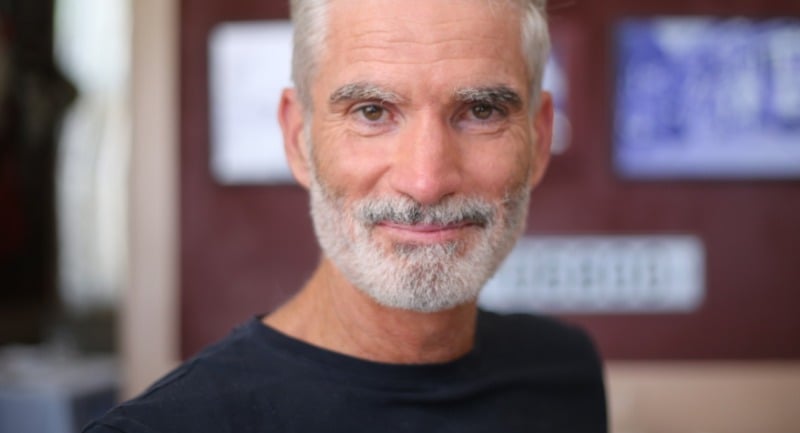
That’s the case Craig Foster makes in Wogball: Australia’s Beautiful Game, the new SBS documentary that argues that football’s migrant roots, not the politics of a single mandated culture, produced the version of Australia the country now recognises as its own.
The film lands with the 2026 World Cup now in full swing and the country once again relitigating exactly what “Australian” means.
Former Socceroo and respected commentator Foster, who is one of the documentary’s contributors, credits the Matildas for helping to push football into the broader national conversation for the first time.
“I do think we’ve got the Matildas to thank for a lot of what’s happened as well. Because it feels as though they crossed over into broader culture, and they were our first team to do that,” Foster told Mediaweek.
Foster linked that crossover to football’s history as a sport for outsiders.
“Football was always the outsider in a way that immigrants or Wogs were the outsiders. And football was always their home. And therefore, football was always actually the real Australia, but was mistreated the same way that so many immigrant communities were mistreated,” he said.
READ MORE: Socceroos drive record World Cup audience for SBS
READ MORE: SBS confirms FIFA World Cup 2026 broadcast sponsors
A team reflecting the nation
Foster traced the Socceroos’ changing composition across generations as evidence of the code’s migrant character, from the largely British squad of 1922 to the German and Yugoslav-background players of 1974, including Manfred Schaefer, Les Scheinflug and Attila Abonyi.
“And now, of course, we see a greater African representation, which also reflects broader Australia,” he said.
Foster said the current Socceroos’ squad’s pre-tournament video was a deliberate rebuttal to the kind of “monoculturalism” Hanson described.
“All they were doing was just saying, look, you know, we are Australia. They’re not saying we are Australian, they’re saying we are Australia,” he said.
View this post on Instagram
He pointed to the scale of the Socceroos’ audience as proof of where public sentiment sits.
“This is actually five million Australians watching the game on SBS, which signifies a retort to monoculturalism, qualify for the round of 32,” Foster said.
Why the documentary matters now
Foster said the timing of Wogball was well-placed, arguing that it captures football’s underappreciated role in building Australia’s multicultural identity.
“It demonstrates very clearly why the Socceroos and Matildas are so loved, why they’re so important. And it reflects on the incredible contribution of football in this country to the actual, we would say, cohesive diversity that we have today,” he said.
He acknowledged that history had not been without failure.
“There are communities silenced, there are communities attacked. There are communities that are not represented,” Foster said, adding that the broader project of Australian multiculturalism had nonetheless been “a very successful project” whose football contribution “has been forgotten.”
“So Wogball is showing Australia its own face. It’s just that through the Socceroos and Matildas, Australia has now come to love the game that actually built the country,” he said.
Wogball is available to watch now via SBS On Demand