


How Christian O’Connell did what Australian breakfast radio said couldn’t be done
Standing up, sitting down, going national.

Most men, when they hit a midlife wobble, do something modestly unhinged but geographically contained. They drain their super to buy a convertible. They invest in Just For Men. They start a craft brewery with a name that sounds like a dog.
It rarely involves leaving a wildly successful career, uprooting your family, crossing hemispheres, and starting again, publicly, in an industry that treats audience loyalty like a sacred inheritance.
And yet, that’s exactly what Christian O’Connell did.
Back in 2024, THE Australian Radio Network (ARN) made a bold promise: it would build Australia’s first true national breakfast show. At the time, the ambition sounded theoretical - another strategic moonshot in an industry allergic to risk.
Fast-forward two years, and ARN has kept its word. Only the face of that national moment isn’t who the market expected.
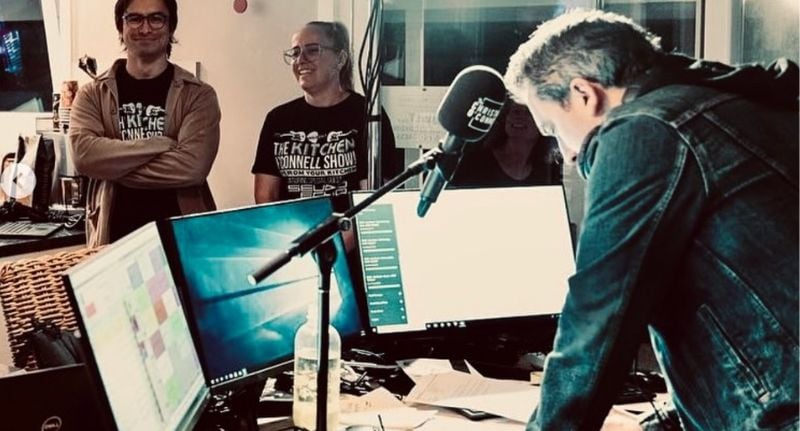
For the past month, The Christian O’Connell Show has been broadcasting not just from Melbourne but also into Sydney, now formally networked across the GOLD Network, with Brisbane, Perth, Adelaide, and regional evenings folded into the footprint.
A national breakfast show, achieved not through shock tactics or controversy, but through consistency, craft and a deeply likeable, charismatic broadcaster who understands radio at a cellular level.


The leading media trade publication in Australia.
Get our top stories straight to your inbox daily by signing up to our Newsletter
By providing your information, you agree to our Terms of Use and our Privacy Policy. We use vendors that may also process your information to help provide our services.
Blowing up a life to start again
O’Connell is unusually frank about how strange the decision looked from the outside, and how final it felt from the inside.
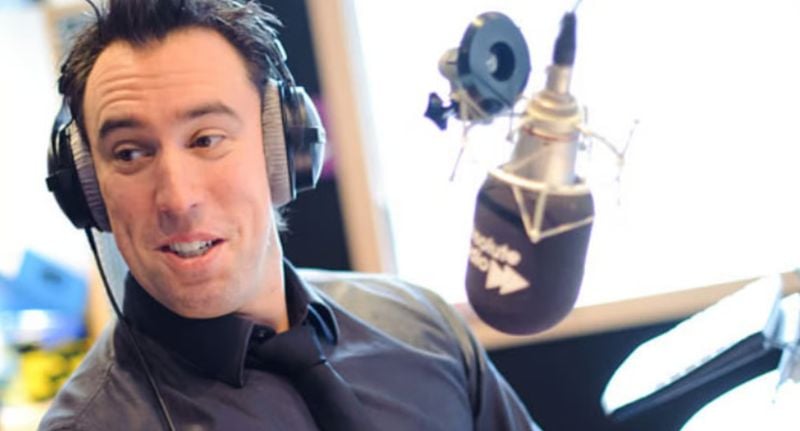
“I think there are very few people who do what I do, and who've left a successful show and then gone to the other side of the world,” he told Mediaweek.
“It does take a lot of effort, a lot of effort, to build a successful radio show. Same with any business, right? No matter what you're doing, butchers, whatever. But then to blow up and then go the other side of the world, I'd almost start again as an unknown, which is what I did do, really.”
At the time, O’Connell was walking away from a UK audience of 2.5 million listeners. Professionally, the maths didn’t stack up. Personally, the timing was worse.
“I built a show up to two and a half million listeners and thought, well, are you just going to walk out the door? To, I don't know, nothing. And we had kids who were just about to become teenagers.”
What made it possible was his wife, Sarah, and the shared sense that this wasn’t escapism, but something closer to a calling.
“But the other thing was I had my wife, huge support of my wife, Sarah. And so, without her support and a rock like that, there's no way," O'Connell gushed.
According to the broadcaster, it was Sarah who had the connection to the land Down Under, albeit a fleeting one.
"She came here backpacking when she was 19, and she'd always dreamt of coming back to Australia. But what it really was was I think sometimes in life you have these callings. And actually to resist the calling is to resist, I think it's actually to resist life.”
Why the long game worked
Commercially, ARN's slow and steady build of both O'Connell's show and his presence on Australian airwaves has paid off.
While the industry remains fixated on the noise, economics and cultural impact of The Kyle and Jackie O Show's grand national plans that are yet to eventuate, O’Connell has become the group’s most credible networking asset almost by accident.
Not because he dominates headlines, but because he dominates habit.
Introduced gradually, GOLD’s national strategy has leaned into scale without sacrificing intimacy. The show’s expansion into Sydney, now a month in, forms part of a broader play to offer advertisers consistency across markets, while retaining the local warmth that FM breakfast listeners still crave.
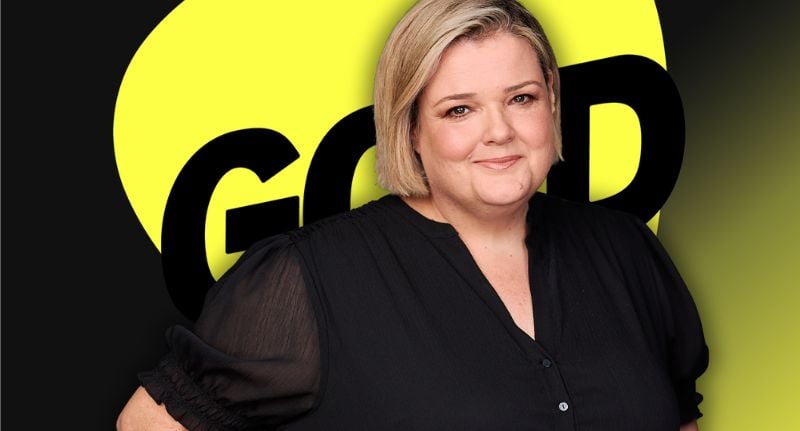
Behind the scenes, that approach has been shaped by steady leadership rather than splashy reinvention. Since joining GOLD in 2018, the network's Head of Content, Sue Carter, has focused less on disruption and more on alignment, across people, tone and expectations.
Her belief in O’Connell as a national proposition predates his Australian arrival. To her, accent and geography were irrelevant compared with connection.
“He’s just a guy with an incredible way of connecting with human beings,” she has said. Not as a slogan, but as an operating truth.
 Sue Carter
Standing, sitting, and the religion of radio
What separates O’Connell from many modern breakfast hosts is that he still treats radio as a physical craft, not just a content output.
It shows up in the way he talks about energy. And, famously, in the way he talks about standing and sitting.
“It really matters,” he said. “I love that question because it does matter, right?”
He went on to give this analogy to Mediaweek: “Think of it this way; you're very excited about something, right? Then sit on your hands. You're not allowed to move your body or your hands, but tell me this incredible, crazy story. You'd really struggle.”
At 52, O’Connell describes his job not as entertainment, but as transmission.
“I’m in the energy and emotion business. I'm like a utility company. So I have to transfer energy into my words, my stories, and to actually give energy to the people listening.”
That kinetic awareness, when to stand, when to sit, is deliberate, ritualistic, almost priestly.
“If the conversation is a bit more grounded and a bit more heartfelt - I’ll sit down. So it’s a way of literally grounding me more. And if it's a different thing, then I'll be standing.”
For radio purists, it’s catnip. Proof that this is a broadcaster who understands that breakfast radio isn’t just spoken, it’s embodied.
Becoming national without losing yourself
O’Connell is clear-eyed about how unknowable the outcome once was.
“There's no way I could have known I would end up becoming the first person to launch a national show on Australian breakfast radio.”
What Australia got in return for that leap was not a reinvention, but a refinement.
“So starting again, it just gave me a chance to find out a bit more about who I really was," he said, adding that in the process he has "become more authentic.”
In a medium often obsessed with reinvention, O’Connell’s national moment has landed because it didn’t try to be one. It arrived quietly. It grew patiently. And it worked because radio, at its core, still rewards the same things it always has: trust, craft, and the feeling that someone good is keeping you company.
More from Mediaweek
The leading media trade publication in Australia.
Get our top stories straight to your inbox daily by signing up to our Newsletter
By providing your information, you agree to our Terms of Use and our Privacy Policy. We use vendors that may also process your information to help provide our services.


