



'Cowardly': Why ARN’s ratings day silence is louder than any spin
Survey 1 for 2026 is done and dusted, yet ARN chose not to front the media to discuss the results. It was the wrong call.

There’s a rhythm to radio ratings day. In fact, you can almost set your watch to it.
No, I'm not talking about that white-knuckle thirty minutes between when the results hit inboxes across the country and when the embargo lifts. I'm talking about the refined courtship between each network and each publication that takes place in the days leading up to the results.
You see, for every survey, each network rolls out its designated voice -content directors (CDs), CEOs, the occasional newly minted “chief dude" or whatever, to face the music. Or at least, to face journalists.
It's a delicate dance.
We ask the tough questions, or, more often, we politely circle the numbers, tease out the narrative, and try to understand what it all means for the network and, crucially, for advertisers.
These are, after all, publicly listed companies. There’s a responsibility there, to shareholders, to the market, to the broader industry watching closely, and to their listeners.
Let me give you even more of a peek behind the curtain.


The leading media trade publication in Australia.
Get our top stories straight to your inbox daily by signing up to our Newsletter
By providing your information, you agree to our Terms of Use and our Privacy Policy. We use vendors that may also process your information to help provide our services.
This post-ratings tête-à-tête is such an entrenched ritual that, more often than not, the day before a survey drops, I’ll text a content director or CEO with nothing more than a time suggestion.
That’s how predictable it’s become.
Which is why, for the first survey of 2026, the absence of ARN in Mediaweek's post-ratings roundup is so glaring.
The explanation offered to this publication was simple: given the recent legal issues impacting The Kyle and Jackie O Show, it did not feel appropriate to discuss ratings.
Even after assurances that questions relating to Kyle Sandilands, Jackie 'O' Henderson and ARN’s now very well-remunerated legal teams would not be raised, the answer remained unchanged.
And so, here we are.
For a company now grappling with the consequences of a deal struck with what can only be described as tunnel vision, the decision to opt out of the conversation altogether feels… strange. More than that, it feels like a missed opportunity.
The reluctance to engage - to front up, to contextualise, to even lightly spruik its broader portfolio - is not just unusual, it is, as one current employee told Mediaweek, on the condition of anonymity, “cowardly”.
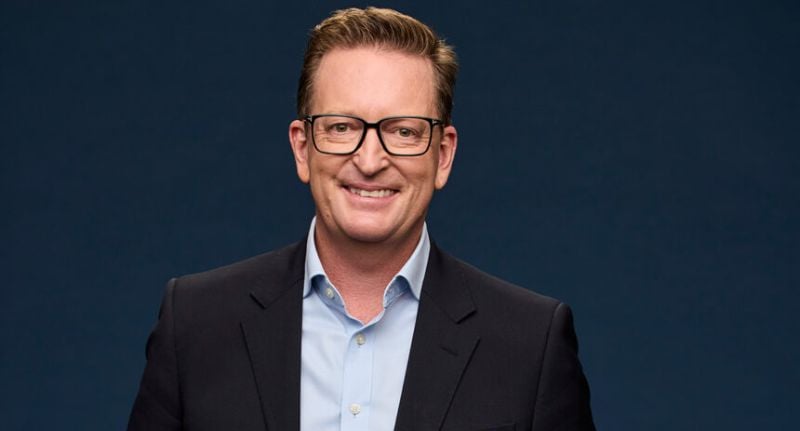 ARN CEO Michael Stephenson
Ready, set, attack
The start of 2026 hasn’t just been defined by one breakfast show controversy. Radioland, more broadly, is in flux.
Under Michael ‘Stevo’ Stephenson, the company has been repositioned as an “entertainment” outfit - a deliberate reframing that broadens the battlefield of the nation's ongoing radio wars.
At the front line, the vanguard is stacked with seasoned operators. There's Robin Bailey on KIIS' Brisbane breakfast offering on 97.3. Yes, the Bailey who, along with her co-hosts Kip Wightman and Corey Oates, was fired at the end of 2025, then rehired at the start of 2026 after listener outrage.
Bailey even went on to confront Stephenson about the original decision on-air, to which he replied: "Obviously, we made a decision at the end of last year, and quite clearly, it wasn't the right decision."
It was a rare moment of introspection. Maybe, perhaps, things had changed at the top.
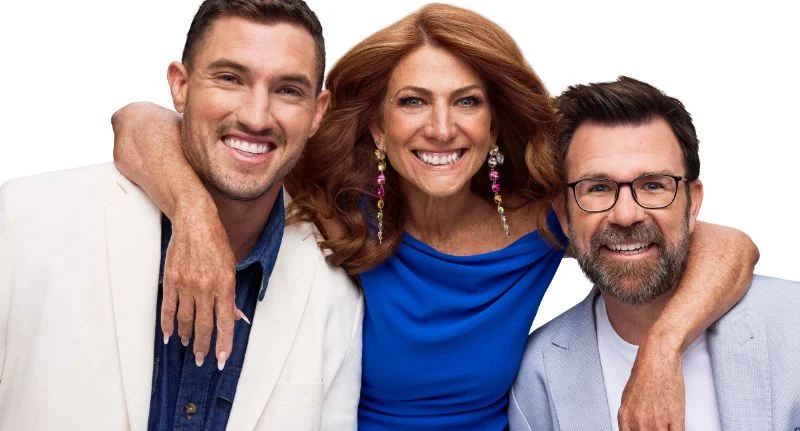 KIIS 97.3's Robin, Kip, and Corey
Then there's the newly networked Christian O’Connell. The Brit who banks on a real connection with his audience. In an interview with Mediaweek earlier this year, O'Connell was poetic about his craft, describing his job not as entertainment, but as transmission.
“I’m in the energy and emotion business. I’m like a utility company. So I have to transfer energy into my words, my stories, and to actually give energy to the people listening.”
For a broadcaster who clearly funnels so much of himself into his job, ARN should've had the decency to rally behind O'Connell, who was not only thrust into a timeslot once held by industry stalwarts Brendan Jones and Amanda Keller, but into a completely new city.
When Sandilands and Henderson began their ill-fated Melbourne networking journey, ARN did not miss an opportunity to back them.
Look back at our past coverage. The company line was towed, and hard.
Then there's the network's other broadcasting talent, such as Kent 'Smallzy' Small, Toni Tenaglia, and Gordie Waters.
And let's not forget those experiential plays. Initiatives like iHeartLIVE and larger-scale live events, which were billed as proof of the company's "entertainment" ethos.
Clearly, this isn’t a business lacking firepower, which is why the silence feels so odd.
Ratings day was never just about defending a number. It’s where networks frame the story - where they remind agencies, clients, journalists and rivals about their vision. They spruik what’s working, where the momentum sits, and why they’re still a serious player in a crowded audio market.
Stepping back doesn’t sidestep that scrutiny. If anything, it sharpens it.
More from Mediaweek
The leading media trade publication in Australia.
Get our top stories straight to your inbox daily by signing up to our Newsletter
By providing your information, you agree to our Terms of Use and our Privacy Policy. We use vendors that may also process your information to help provide our services.

.png%3Fv%3D1789531401239&w=3840&q=75)


