


By Sabri Suby, Founder, King Kong
On July 3, Taylor Swift married Travis Kelce at Madison Square Garden in front of 1,000 guests, all of whom were bound by NDAs so tight you’d think the ceremony was classified information.
It didn’t matter.
Within an hour, a wedding dress nobody had actually seen had generated more attention than most brands could dream of getting in their entire lifetime. And while Taylor Swift and Travis Kelce were saying ‘I do’, X was flooded with 2,600 posts about the event every minute. It would go on to rack up more than 2.1 million posts on X in a single day.
And this was about a wedding that we knew almost nothing about.
If you run a business and you’re still measuring marketing success by how much you spent rather than how much people talked, this is the moment to pay attention.
Taylor Swift just created one of the biggest online moments in history, and you don’t have to be a pop star to learn from her playbook.
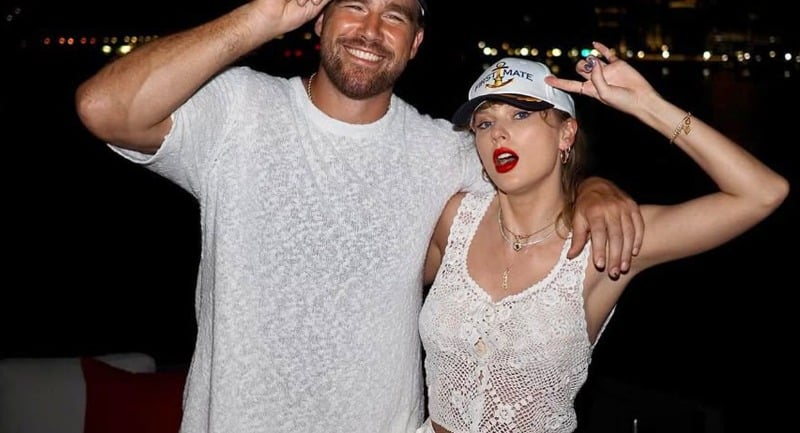
And the bride (and groom?) wore white.
The metrics marketers should be paying attention to
This wedding proves that the most important markers of a campaign are probably not what you think. Take Google search velocity. Most brands look at total search volume and call it a day, but volume only tells you what happened after the fact. Velocity, the speed and shape of the spike in the hours before and during the event, tells you how the moment actually built, and that’s a far better read on whether you’re generating real anticipation or just riding a headline.
Social mentions per minute across X, Instagram and TikTok also matter, but TikTok is the one to watch closest, because that’s where the moment gets remixed into thousands of derivative pieces of content, and that’s where the real multiplication happens.
Then there’s a metric nobody was tracking two years ago: AI search activity. How many people ask ChatGPT, Claude or Google’s AI what happened at Taylor Swift’s wedding. That’s becoming a real signal of cultural gravity, and most brands aren’t measuring it yet. If your dashboard still only has Google Trends and a vanity follower count, you’re reading last decade’s map.
Why anticipation beats the event
This cultural moment is about more than just a wedding. In fact, the wedding itself wasn’t even the peak. The engagement announcement, the dress speculation, the guest list leaks… All of that build-up generated more sustained attention than the actual event.
And why does anticipation beat the event? Because anticipation is open. Your brain hates an open loop and will keep circling back to close it, but the only thing that truly does close the loop is the event itself. That’s why the build-up, the speculation, the “will they, won’t they, what will she wear?” generates more sustained attention than the wedding itself. The moment it actually happens, the tension resolves and attention starts to drain. Smart marketers know the money is in the build-up, not the reveal.
Which brings us to the economics of it all, and this is where most businesses are actually getting it wrong: Attention has fully decoupled from ad spend.
Taylor will dominate global conversation for a week without buying a single impression.
The old model marketers swore by was pay for reach, then hope for engagement. The new model is create something people want to talk about, and reach becomes the byproduct.
Taylor Swift isn’t renting attention; she owns it, because she’s spent fifteen years building a direct emotional relationship with hundreds of millions of people. That relationship is the asset, and the wedding is just a withdrawal from it.
How to Swift-ify your marketing
So what does a business actually do with any of this, given most of us don’t have Travis Kelce or Madison Square Garden lying around?
The key is to build an audience you own before you need it.
Taylor doesn’t have to pay to reach her fans because she spent a decade earning that access directly. Most businesses rent their audience from Meta and Google, then wonder why it keeps getting more expensive every quarter.
The attention, loyalty, and respect should come first, not last.
That means engineering anticipation deliberately. Tease, don’t dump. Every product launch should have a build-up phase, not just a ‘buy now’ button slapped on day one. Nobody cares if they’re not invested. And if they don’t care, that ‘buy now’ button is useless.
It’s also important to give people something to participate in, not just something to watch. TikTok exploded around this wedding because fans got to add to the speculation themselves. If your brand moment is something people can remix, react to and make their own, your reach multiplies for free, which is the only kind of multiplication your finance team will ever fully approve of.
And finally: lead with emotion, not features. Nobody shares a spec sheet with their group chat. People share things that make them feel something. Build the feeling first, and the algorithm will end up doing your media buying for you.
The through-line, and the thing worth pinning above your desk, is this: Taylor Swift is proof that in the attention economy, the brands that win aren’t the ones that spend the most. They’re the ones people actually want to talk about, because they’re invested in the story behind the event, not just the event itself.
So if you’re a marketer who still obsesses over your ad budget instead of the audience you could be building, it’s time to realise that was never the moat you thought it was. The relationship is.