



'We can't know the future': Reanna Browne on anxiety, AI and the politics of tomorrow
Reanna Brown: 'Good futures work is about agency in the present, not perfect forecasts'.

Ask Reanna Browne what a futurist actually does, and she doesn’t talk about crystal balls. She talks about agency.
Speaking on The Growth Distillery’s Rules Don’t Apply podcast at SXSW Sydney, Brown told host Dan Krigstein her job starts with shifting how people think about tomorrow so they can move differently today.
“I help people change how they think about the future,” she said. “Because when you change how you think about the future, it changes how you act in the present."
Browne said the second part of her work is helping people make sense of change so they can actually act on it. She explained that good futures work isn’t about managing change or predicting it, but about paying attention to what’s shifting around us and using those insights to expand the choices available today.
“I think good futures work is about change. It's not managing it, it's looking at what's changing around us. But it should be in service of action and widening choices available to us today," she said.
Part philosopher, part provocateur, Browne is less interested in getting the future “right” than in helping leaders stop feeling overwhelmed and start taking small, deliberate steps.
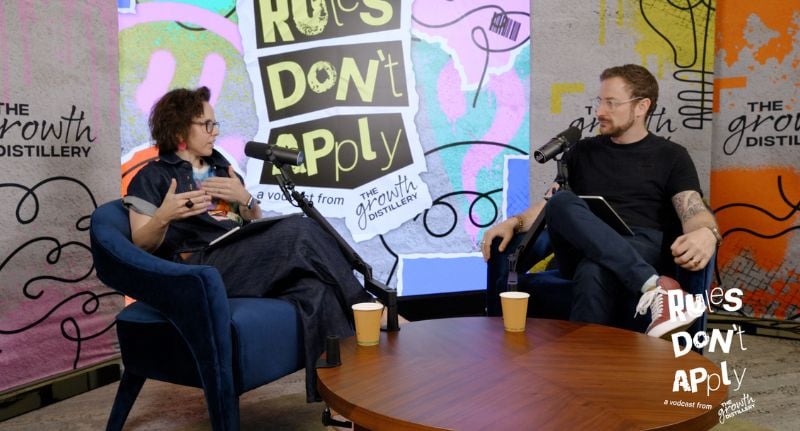 Reanna Brown and Dan Krigstein


The leading media trade publication in Australia.
Get our top stories straight to your inbox daily by signing up to our Newsletter
By providing your information, you agree to our Terms of Use and our Privacy Policy. We use vendors that may also process your information to help provide our services.
Why the future needs to start with health
When Krigstein asked what signals she was paying attention to, Browne didn’t start with AI models or the metaverse. She started with health.
“There are fundamental changes that are happening in health, and we can't escape them,” she said. Working on the future of work with one organisation, she keeps repeating the same line: “We have to centre health in that conversation.”
“In Australia, at least 50% of people have a chronic illness. You overlay mental health. You overlay caring responsibilities, you overlay women's health, you overlay disability," she said, adding that every person's experiences and needs are "fundamentally different".
For Browne, workplaces are no longer separate from physical and mental health – they’re one of the main sites where population health plays out.
“Younger workers are expecting workplaces to provide health infrastructure for their mental health,” she said.
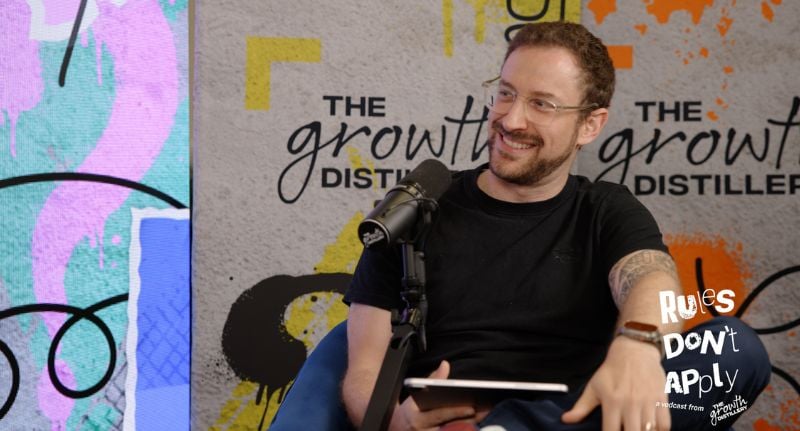 Dan Krigstein
AI as both tech and belief system
None of that means she ignores technology. But Browne is wary of how AI can dominate the conversation and distract from more foundational issues.
“I think AI and digital technology are both a technology and an ideology,” she said. “I find it increasingly hard to untangle."
“There are some amazing things that are happening in that space, which is really exciting, especially in the health sector. At the same time, there is a lot of hot air.”
Browne points to early and uncomfortable signals like “AI-induced psychosis” as examples of the kinds of realities we need to talk about, even if they make for “bad dinner guest” territory.
The politics of who gets to imagine the future
One of Browne’s core concerns is not just what futures we talk about – but who gets to talk about them.
“I always say that the future doesn't actually exist. There are no future facts because it hasn't actually happened yet,” she told Krigstein.
“So when we are talking about the future, all we are talking about is two things: either ideas and images that people have about the future, or data on what's changing now and what's changed. And then projecting that out with a probability.”
Her provocation is simple: “Whose images are they? Who gets to talk about the future? Who gets to talk about the future of work?”
“Those with the loudest voice get to shape what we think it is,” she added. “And that's something I'm really agitating that we start having more questions around.”
Letting go of prediction, focusing on the ‘next right move’
For leaders used to 10-year visions and transformation decks, Browne’s stance on prediction is disarming.
“Part of the job for me is helping people shift away from the belief that we have to get the future precisely right,” she said. “Prediction is one way to navigate the future and uncertainty. I just don't think it's really a useful one.”
“It reduces our sense of agency to act in the present because the future never arrives, because we are always in the present.”
Instead, she focuses on what she calls “small bits in a long game” – noticing patterns, asking “so what?” and “now what?”, then taking one concrete action.
“I have a little three-strikes rule. The third time I hear something, I start paying attention,” she said.
“Then asking the questions, so what, what does that mean for me… What are the consequences? And then saying, Now what? What might I do come Monday?”
The aim is “shared directionality” rather than fake certainty.
“The job is to find shared directionality. And then to come back to the present and say, what is the next right move? And how can insights about what's changing actually widen the choices available to us?”
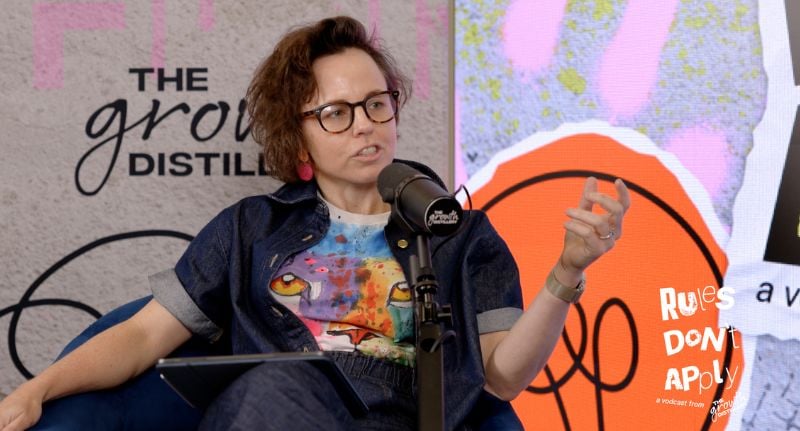
Nervous systems, surveillance and why we ‘know enough to act’
Browne links all of this back to nervous systems – for kids, workers and leaders.
“How do you help your kids balance their nervous system?” she asked, when the broader culture is increasingly dysregulated. She spoke candidly about her own “severe mental health issues” and framing them as “chronic nervous system dysregulation”, not personal failure.
That belief also informs her alarm about “very pervasive surveillance” and “boss wear technology” in workplaces – systems that track everything from log-ins to conversations and can themselves become a health risk.
Yet even here, she finds hope in resistance – from gig workers “using the algorithm playfully to accept higher value rides” to young people choosing to go offline.
“Not to reduce this down, but I often feel in my own self and society, we know enough to act,” she said. “We intuitively know what things would serve us well and what things would probably not serve us well.”
Her future's pitch, in the end, is less about 2050 and more about Monday. Not predicting the perfect world, but regulating ourselves, widening our choices, and choosing the “next right move” – one small bit at a time.
More from Mediaweek
The leading media trade publication in Australia.
Get our top stories straight to your inbox daily by signing up to our Newsletter
By providing your information, you agree to our Terms of Use and our Privacy Policy. We use vendors that may also process your information to help provide our services.


