

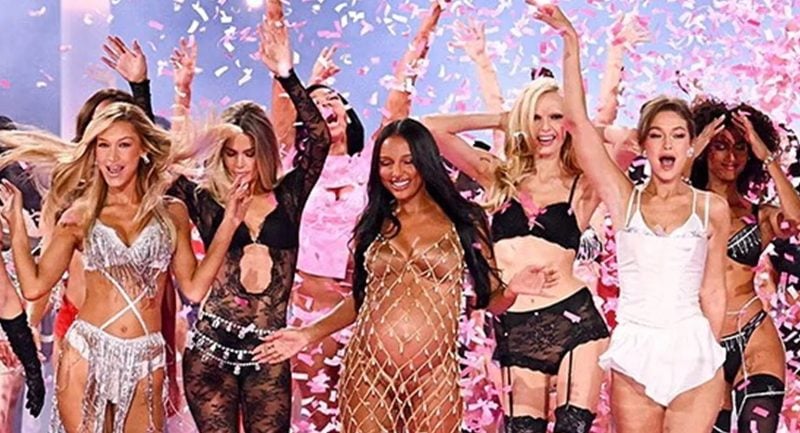
In 2019, the social media accounts of the then-bosses at Victoria’s Secret were made public…well, kind of.
The company made a full pivot from ‘brand sexy’ to ‘brand inclusive.’ Clearly, the algorithm of someone on Mahogany Road was being peppered with body-positivity posts.
And, after all, what better way to capture a new generation of shoppers than to lean into the cultural moment?
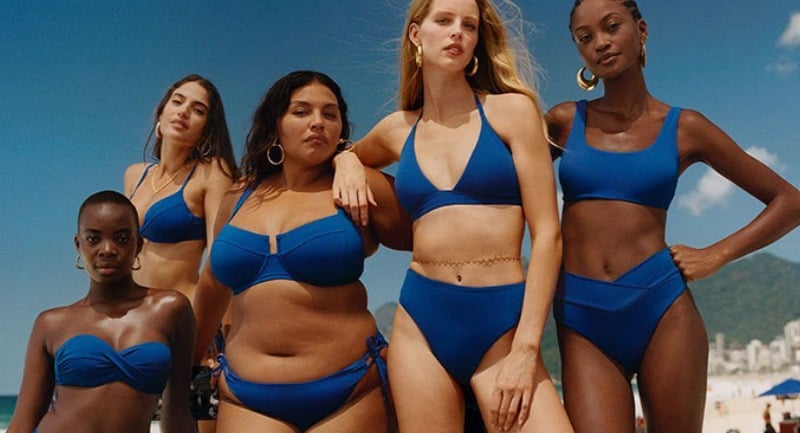
An advertisement from Victoria’s Secret woke period.
The focus group that cost a billion dollars
Dave Mooney, Creative Strategy Lead at BCM, watched it unfold with a familiar sense of dread.
“They made a big pivot off the back of what felt like a research thread, and the recommendation was to completely throw everything away because someone in a focus group said to,” he told Mediaweek.
The strategy was sweeping.
The brand retired its famous “Angels” supermodels and cancelled its iconic annual fashion show. In their place came the “VS Collective” – a partnership with activists and diverse figures, including transgender and plus-size models, all positioned to advocate for female empowerment.
But in trying to become everything to a new audience, Victoria’s Secret became nothing to the one it already had.
“In doing so, they kind of threw away everything that their brand stood for – love it or hate it,” said Mooney.
“And in doing so, you end up turning your back on everyone who was with you on the journey over the previous few decades. But anyone new you’re trying to attract can see right through the fact that you’re not being who you are and you’re not true to yourself.”
The numbers bore that out. The market delivered a billion-dollar blow to sales as traditional shoppers walked, and the new audience never arrived.
As Mooney put it, the brand’s real sin wasn’t what it stood for – it was the apology.
“At the end of the day, it’s not like they really lost customers for being too sexy. They lost customers for apologising for it.”
Sexy is back – and so is the stock price
Fast forward, and the brand is back. Unapologetically.
New chief executive officer Hillary Super took the reins in 2024 with a clear-eyed mission: strip away the hyper-feminist messaging and return Victoria’s Secret to what it had always done best.
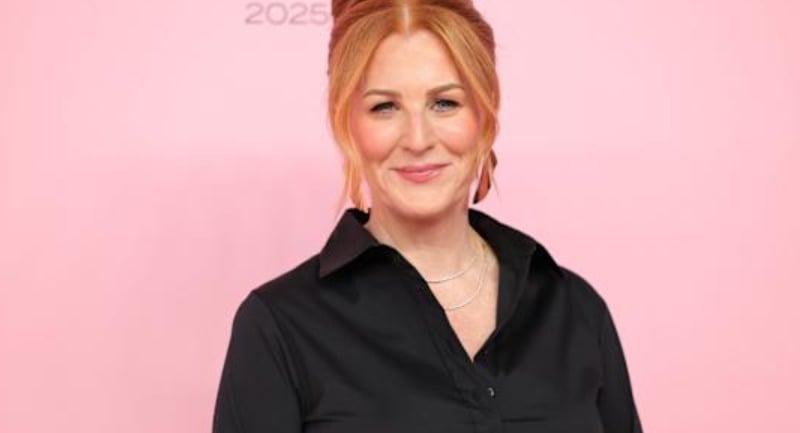
Hillary Super
The company revived its popular annual runway show after a six-year hiatus, and in May 2026 announced it would change its New York Stock Exchange ticker from “VSCO” to “VSXY” – a none-too-subtle signal of intent.
Picture it: “Gimmie $100,000 of some of that Very Sexy, boss”.
Wall Street is about to become an HR manager’s nightmare (or dream).
Clearly, though, it worked.
Victoria’s Secret shares surged 42% in early trading on 10 June after the lingerie retailer raised its annual sales and profit forecasts, driven by double-digit quarterly revenue growth across its brands, including Pink.
The company now expects full-year 2026 net sales of between $10.9 billion and $11.05 billion, up from a prior forecast of $10.62 billion to $10.77 billion. Annual adjusted operating income guidance was lifted to between $852.5 million and $899 million.
Mooney sees the comeback not just as a correction, but as an opportunity – if the brand is smart enough to take it.
“Now you’ve got a position where they’re kind of really owning it and getting back to it. And there’s nothing to say that if done in a really great way, it can’t be as inclusive as what they were trying to do,” he said.
“You know, there’s no reason to say they couldn’t do for sexy what Dove has done for beauty or something like that, where they just open up the platform for what it could be and should be, as opposed to this one-dimensional view of it.”

Dave Mooney
The pendulum and what comes next
For Mooney, the Victoria’s Secret story is ultimately a lesson in false binaries.
“It felt like a real pendulum swing. Like, it can’t be one or the other, as opposed to kind of sitting across the spectrum,” he said.
“The idea of sexy actually lives from one to the other and everything in between, which is probably actually a more interesting place for a brand to play, in a way.”
But as the brand basks in its revival, Mooney offers a word of caution to any brand tempted to chase the next social signal.
“I think probably one of the things to watch out for for any brand in that space is how fleeting those moments on social media are, particularly if you’re kind of looking for the social signals on the trend, because you’ve got to react very quickly and you’ve got to jump on them almost immediately,” he said.
“That then comes back to really understanding the brand and knowing who you are, so you can be true and authentic. When you know that, then you’ve got the freedom and the confidence to try ideas.
“Whereas if you’re kind of trying to jump on the trend and it’s got to go through 5,000 layers of approval, get signed off, and only then can you send it live… well, the moment’s probably already gone in many respects.”
The lesson, it seems, was a costly but clarifying one.
Victoria’s Secret didn’t fail because it was too sexy. It failed because it stopped believing it.
“And rather than trying to be everything to everyone, as Mooney puts it, the answer was always simpler: doubling down on what’s working for the people that are there.”
Whaddya know, sex really does sell.