


Forget the tech bro hype. There are companies out there proving that AI agents can scale support without killing the human touch.
For the last two years, Silicon Valley has promised that artificial intelligence will either double your revenue by Friday or steal your job by Monday. The reality on the ground is proving to be a lot less dramatic, and far more profitable.
At the recent HubSpot Grow conference in Sydney, the overarching message from the presentation stages was remarkably grounded.
Winning businesses are not firing their developers or customer support teams. Instead, they are building hybrid teams where AI handles the soul-crushing repetitive tasks.
And this allows human workers to focus on actual hospitality.
No one made this point clearer than Marcel Peifer, head of digital for Wilderness motorhome rentals. Peifer was one of the participants in a panel named, ‘Making the Call on AI Agents: Navigating Risk, ROI, and Customer Trust.’
The $15,000 AI hallucination
Wilderness is a premium B2C recreational vehicle rental company based in New Zealand. With a team of 60 staff and a fleet of 240 vehicles, Peifer faced a distinctly geographical problem. Around 70% of their customers live overseas.
Unfortunately, human staff require sleep. This biological flaw created a 12-hour overnight window where international inquiries simply sat ignored until morning.

Marcel Peifer is head of digital for Wilderness motorhome rentals in New Zealand, and a HubSpot AI advocate. Image: file
Rather than attempting to reinvent their entire tech stack or offshore a call centre, the company deployed a HubSpot customer agent named Ruru to cover the night shift. However, before turning the AI loose on premium customers, Peifer and the leadership team had to quantify the absolute worst-case scenario.
They calculated that if the AI hallucinates and gives a customer the wrong vehicle specifications, the cost of a ruined trip and a full refund would sit at around $15,000.
Placing a definitive dollar value on an AI mistake is a refreshing change from vague existential dread.
The business decided that $15,000 was a highly acceptable risk threshold compared to the upside of closing international bookings while the local team slept.
The gamble paid off. Ruru now boasts an 81% resolution rate on web chat and a 60% resolution rate on WhatsApp.
The agent successfully deflects roughly 150 conversations a month, all while operating in multiple languages.
The art of the close follower
Speaking to Mediaweek following his on-stage discussion, Peifer noted that adopting AI did not mean gutting his human workforce. And he was buoyed to learn that even major tech companies were walking back the hyperbole in sessions on the day.
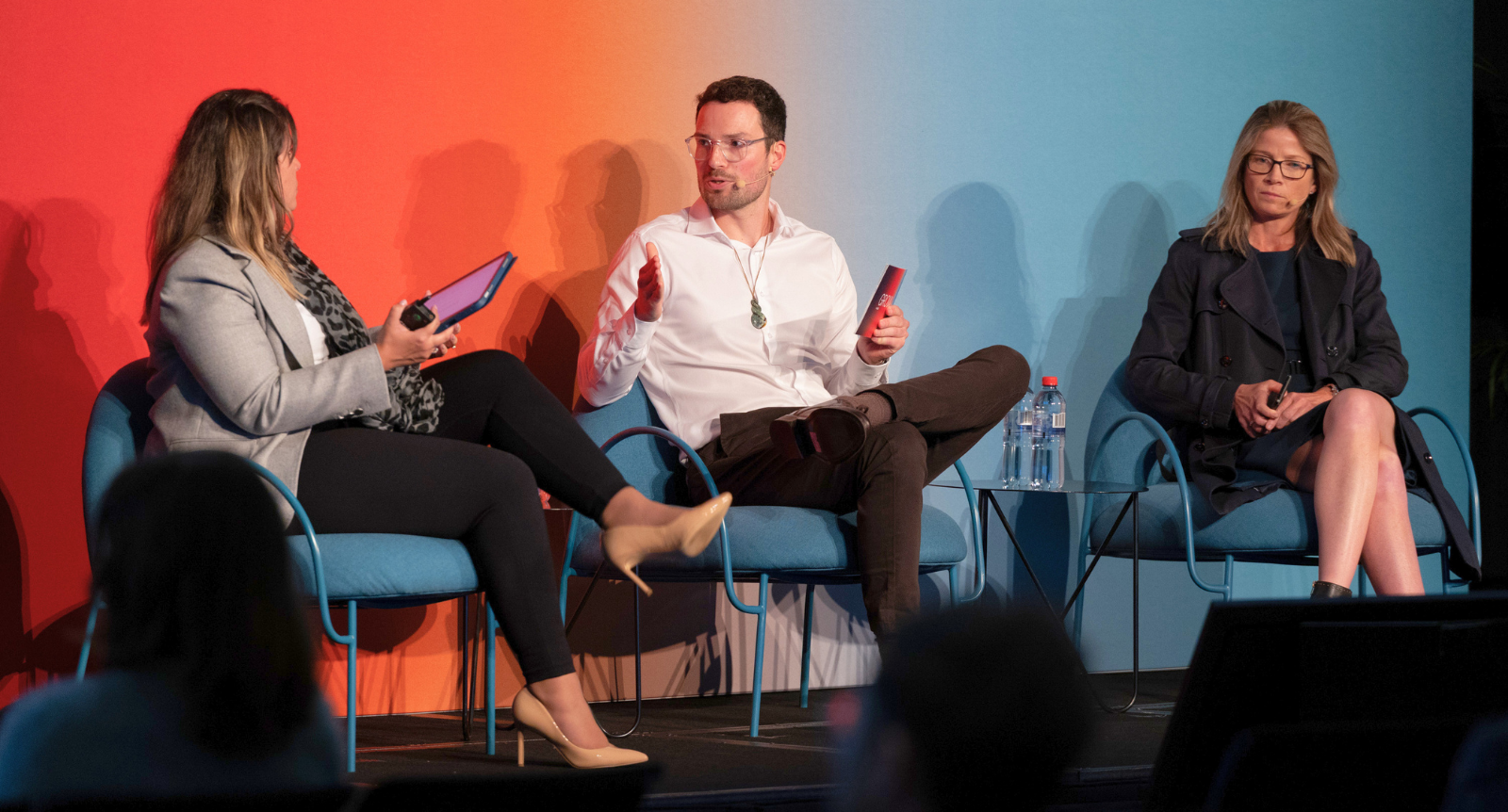
Marcel Peifer of Wilderness motorhome rentals speaking about their HubSpot AI experience. Image: supplied
“It was refreshing to hear, even big corporations not leading with, ‘we fired our entire dev team, it is all automated now’,” Peifer said. “You know, being an expert is still super important.”
On the ground in NZ and in terms of AI, his strategy is to be a close follower. Instead of spending up on every shiny new standalone tool, Wilderness motorhome rentals leans heavily on the built-in capabilities of their primary CRM.
“We do not want to burn all our cash trying everything out all the time,” he explained. “We want to use trusted systems. There is a price you pay for being a bit later, but it is definitely worthwhile paying because you have the confidence of their experience.”
AEO and the death of traditional search
That reliance on a central, trusted system is exactly what HubSpot is banking on. The company used the Grow conference to launch its new Answer Engine Optimisation (AEO) solution and roll out major updates to its AI agents.
The way buyers discover and evaluate businesses has fundamentally shifted. HubSpot data shows that ChatGPT traffic will likely overtake traditional organic search by 2028.
Despite this looming shift, Australian businesses are dragging their feet. While 63% of marketing leaders understand AEO, only one in five actively optimise for it.
Unlike traditional SEO, AEO considers a broader range of factors to decide what an AI search engine cites. These factors include brand presence, news media, and owned content. The new HubSpot AEO tool uses a customer’s own CRM data to suggest prompts that real buyers are likely to type into large language models.
It is all about context. Yamini Rangan, chief executive officer at HubSpot, noted that companies appearing in these new AI answers are already winning the discovery battle.
Meanwhile, the updated HubSpot Customer Agent now handles email traffic. This is typically a team’s highest volume support channel. By drawing on the full customer relationship history stored in the CRM, the Customer Agent now resolves 70% of conversations on average.
Peifer and Wilderness are stepping cautiously into full AI email automation, with a human doing the sense check before hitting send.
“We are still doing a bit of a hybrid there, where the customer agent writes the email for us, and then we just double-check it,” Peifer said. “People go on a chat for a quick question, but emails are usually a bit more complex. We just want to have that extra step in between for now before we roll that out further.”

Premium experience and hospitality is what Wilderness motorhome rentals is all about. Image: supplied
Efficiency meets empathy
Perhaps the most surprising takeaway from this story is the staunch defence of the human moment.
By offloading repetitive inquiries, Wilderness motorhome rentals freed up its staff to focus on premium hospitality.
Customers no longer have to wait in a queue for a human to tell them how many towels are included in a rental van. The AI handles that.
When a customer actually arrives to collect their vehicle, they receive a greeting on a handwritten welcome board. Peifer points out that an AI agent and a digital screen could easily do that job, but it would completely cheapen the premium experience.
Artificial intelligence is simply the engine running in the background. It cleans up the data, answers the repetitive questions at 3:00 AM, and frees up the humans to actually be human.