

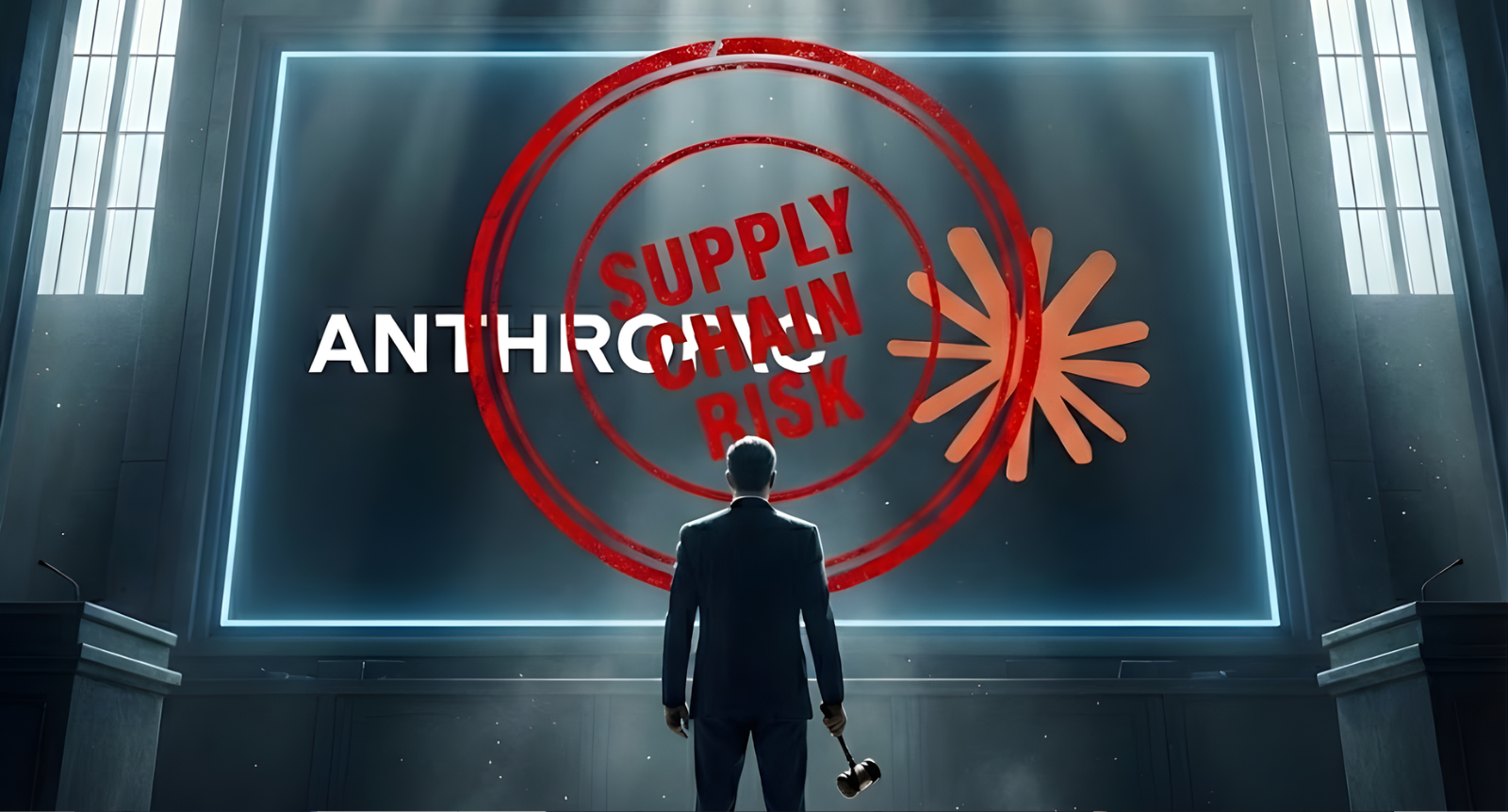
Before Donald Trump’s Department of War launched strikes on Iran over the weekend, it was dropping bombs on the AI giants. And it only took one Truth Social post to throw the global artificial intelligence market into chaos.
The US President ordered a government-wide ban on Anthropic, the creators of the Claude AI, and he didn’t just tear up a $200 million military contract. Defense Secretary Pete Hegseth immediately followed up on X (formerly Twitter), officially directing the Pentagon to designate the San Francisco tech darling a “supply chain risk to national security.”
Naturally, OpenAI swooped in before the ink even dried on the Anthropic eviction notice, happily signing deals to deploy ChatGPT across classified US military networks.
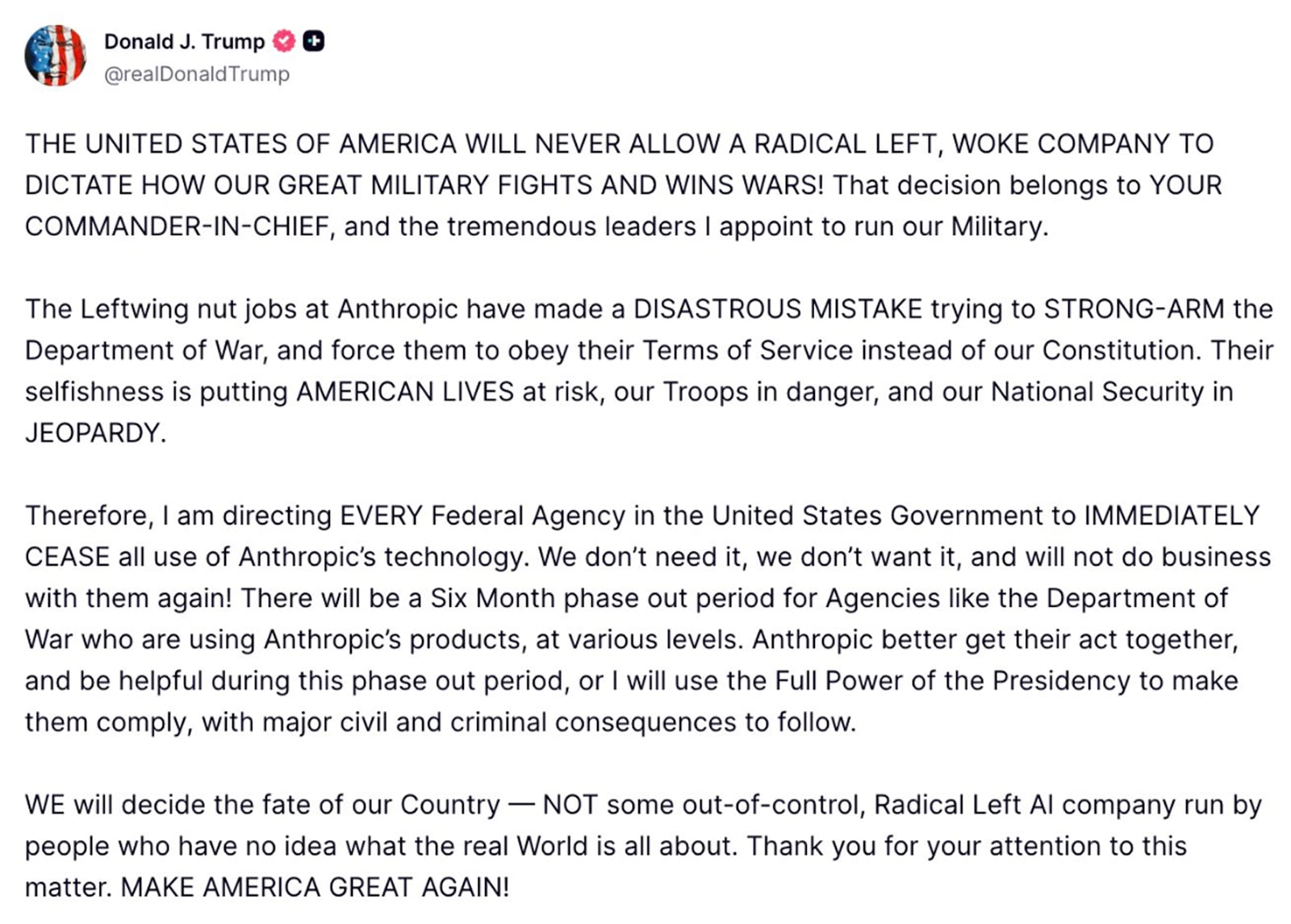
DJT’s The Truth Social post that kicked things off. Source: X
The ripples reaching Australian shores
As the theatrics play out in Washington, a very obvious question should echo around boardrooms in Australia: does a late-night tweet from a US defense secretary actually impact us?
The short answer is maybe. The long answer reveals that the Australian media, tech, and defence sectors stare down the barrel of a massive, legally ambiguous compliance timebomb. Here’s why the Pentagon pivot could make an AI vendor review particularly painful.
Governing by tweet versus statutory authority
Whether you run a mid-sized creative agency in Surry Hills or manage data analytics for an Australian tier-one bank, you’d think you’d be safely insulated from US military procurement drama. And historically, that’d be right.
The ‘supply chain risk’ designation remains a weapon almost exclusively reserved for hostile foreign powers like Huawei. Applying that same brush to an American company backed by Amazon breaks all precedent.
In his tweet, Hegseth declared: “Effective immediately, no contractor, supplier, or partner that does business with the United States military may conduct any commercial activity with Anthropic.” He graciously granted a six-month window to phase out existing integrations. (Of course, we don’t yet know whether this will stick.)
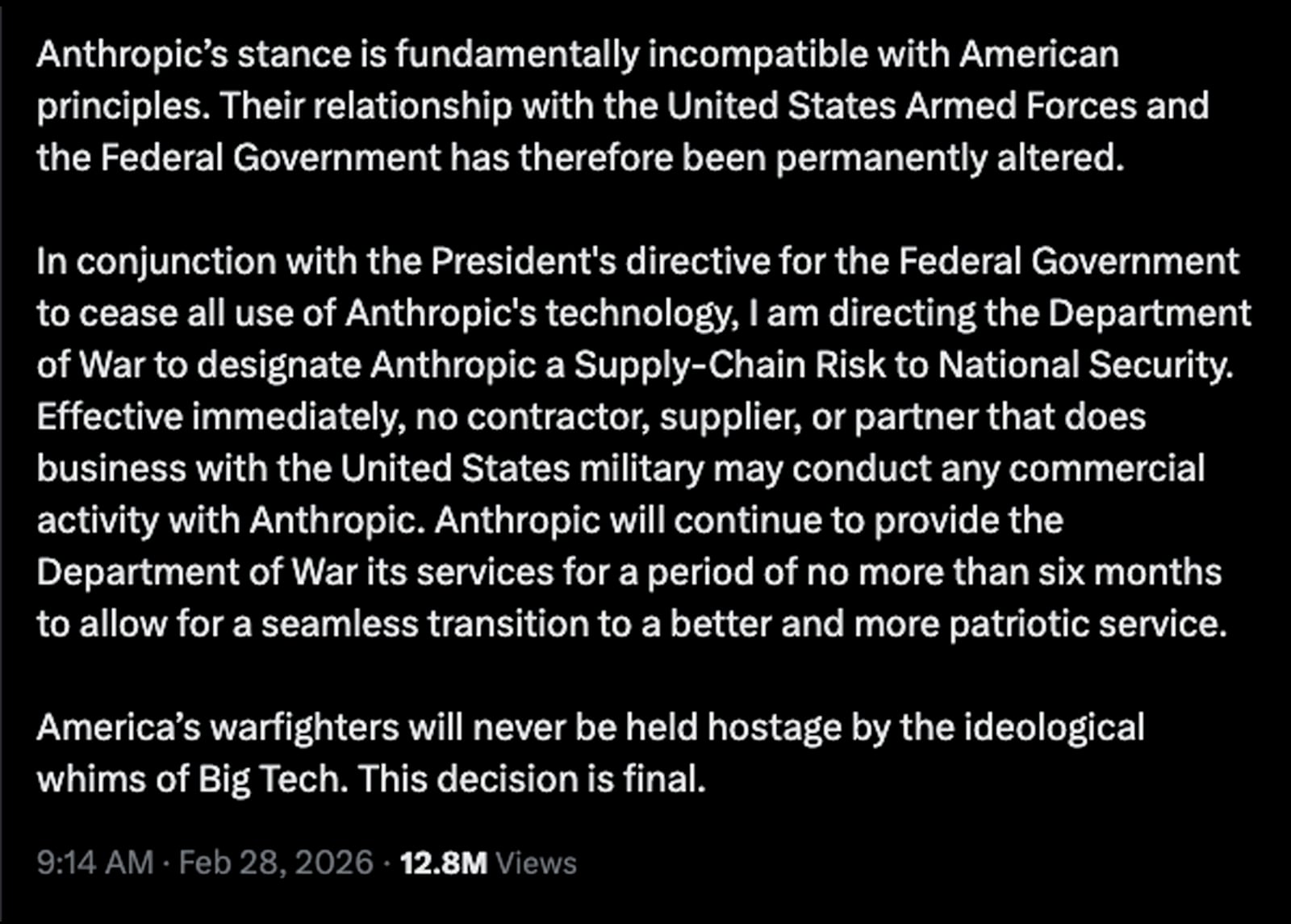
Hegseth declared, Anthropic to be a supply chain risk. Image: X
The six-month compliance clock
If you take this literally, the directive crosses borders immediately because the AUKUS pact inextricably links the Australian Defence Industrial Base with the US.
If your agency uses AWS, Palantir, or any platform servicing the US government, and you built your bespoke internal tools on the Anthropic API, you theoretically face the clock to rip Claude out of your tech stack.
But legal experts and Anthropic lawyers are already pushing back, arguing Hegseth lacks the statutory authority to ban contractors from using Claude for non-military clients.
This leaves Australian CTOs in a brutal state of limbo. Do you spend hundreds of thousands of dollars migrating your agency’s AI infrastructure to ChatGPT based on a US cabinet member’s tweet that might fail in court?
Or do you hold the line with Anthropic, and risk making your entire business toxic to anyone holding a government contract if the ban holds?
The OpenAI paradox in our backyard
The Pentagon banished Anthropic after the company refused to loosen its restrictions on mass domestic surveillance and autonomous weapons. By holding its ground, the company secured the moral high ground but lost the military contract.
OpenAI, conversely, just became the de facto AI partner of the US military-industrial complex.
This creates a fascinating and highly awkward paradox for Australia. Just a few months ago, the federal government publicly cheered the commitment OpenAI made to build a massive data centre in Sydney.
We roll out the red carpet for CEO Sam Altman’s infrastructure, embedding ChatGPT into our schools, banks, and government services.
Yet, any Australian CMO bound by strict corporate ESG guidelines now faces a massive red flag. How do you square your brand’s commitment to ‘ethical AI’ when classified US military operations under the Trump administration simultaneously deploy the foundational tech powering your customer service chatbots?
The activist pressure and consumer backlash practically write themselves.
The celebrity PR war begins
We already see the cultural battle lines taking shape. Over the weekend, pop star Katy Perry unexpectedly entered the geopolitical fray, posting a screenshot of her $214.99 annual Claude Pro subscription to her 85 million followers on X.
She captioned the purchase simply with ‘done’ and a hand-drawn heart.
The post rapidly amassed millions of views, serving as a highly visible show of solidarity for the Anthropic ethical stance. For Australian marketing teams watching from afar, the Perry endorsement serves as a stark warning. When upgrading a SaaS subscription becomes a viral act of celebrity political resistance, the PR stakes for your tech stack undeniably shift.
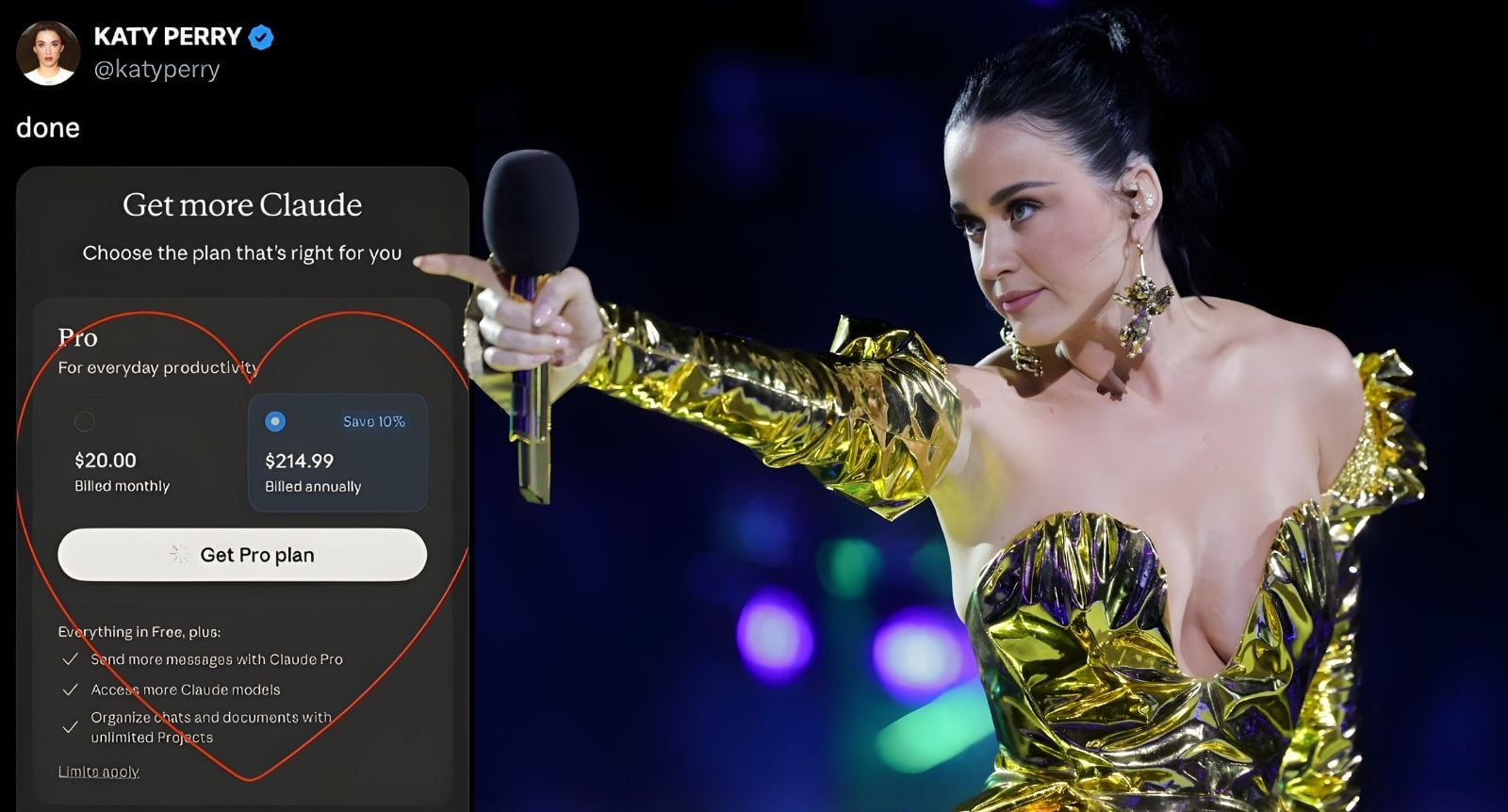
Katy Perry has spoken. She’s team Claude. Image: X
The agony of the wait-and-see
The events of the past week completely destroyed the illusion of ‘neutral’ enterprise tech.
Anthropic drew a line in the sand on human rights and received the threat of a federal blacklist as a reward. OpenAI stepped into the breach, effectively tying its corporate brand to the Pentagon.
For Australian marketing and tech leaders, the era of choosing an AI vendor based purely on coding benchmarks or subscription costs officially ended. Every platform integration now represents a geopolitical decision and a potential PR minefield.
Right now, the industry finds itself in a high-stakes game of wait-and-see. If the Hegseth tweet becomes enforceable law, half the agencies in this country must rebuild their tech stacks.
Until then, the clock ticks, and nobody knows if the bomb actually has wires attached.