

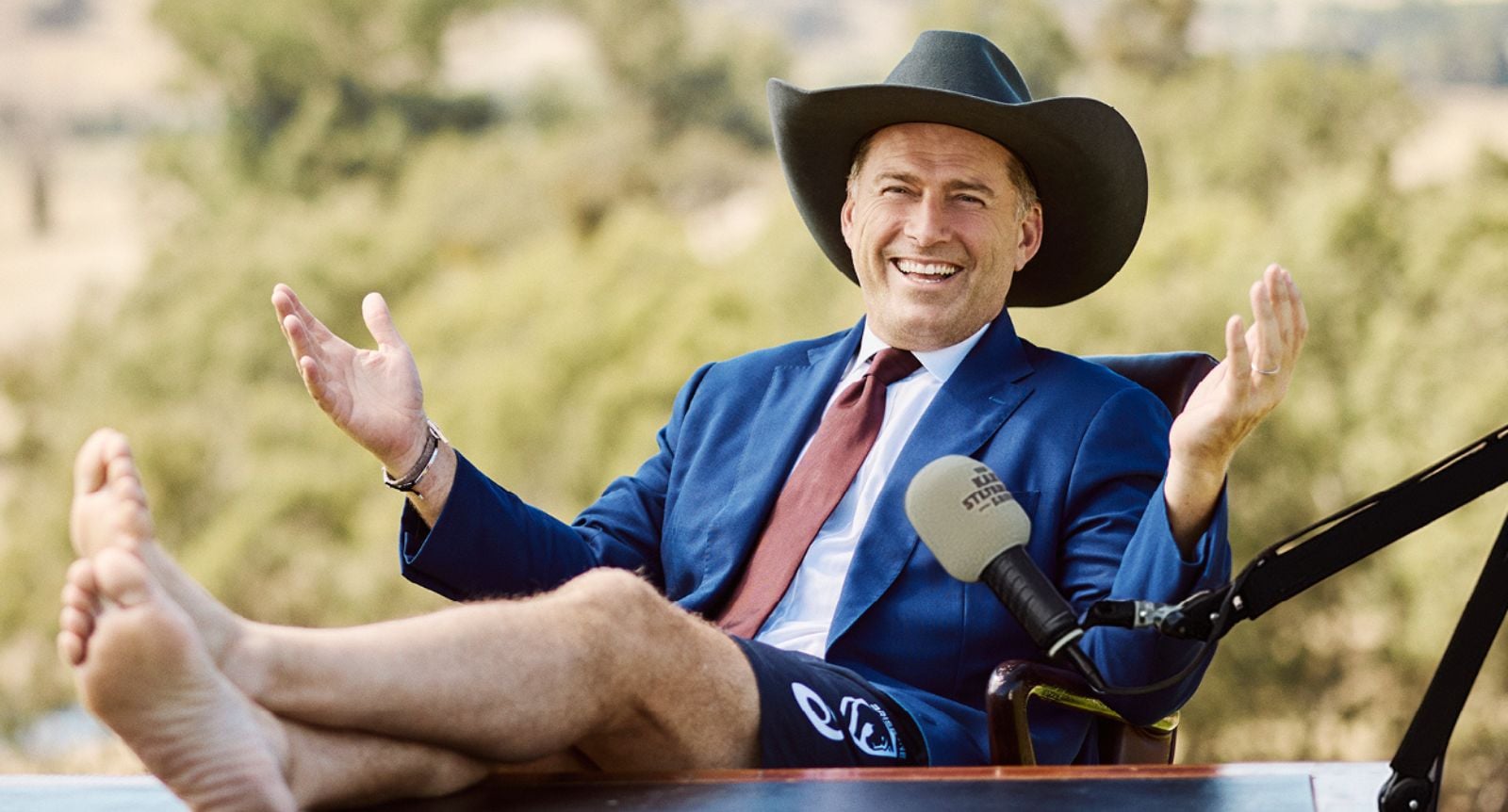
He said he was free. The numbers – and the man who crunched them – suggest he might be right.
New social media analytics from influencer marketing platform Fabulate reveal that The Karl Stefanovic Show is pulling an audience that is older, more male, more engaged, and more deliberately tuned in than anything his Today show years ever produced.
And according to Nathan Powell, Co-Founder and Chief Product and Strategy Officer at Fabulate, the shift is not slow.
“If you look at all of his social followings as a TV personality, and the difference in audience versus his New World venture, it’s significantly skewing male – and it’s significantly skewing male fast,” Powell told Mediaweek.
That trajectory has a familiar shape. The profile emerging from the data doesn’t look like a breakfast TV holdover. It looks, in several key dimensions, like Joe Rogan’s.
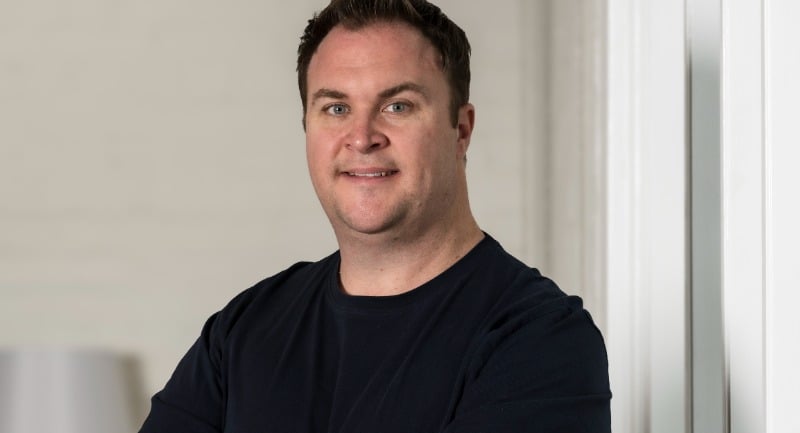
Nathan Powell, Co-Founder and Chief Product and Strategy Officer at Fabulate
From breakfast to beast mode
When Karl Stefanovic exited Nine Entertainment on 26 June 2026, the departure was brought forward from its originally scheduled end-of-year timeline after Nine determined that he could no longer host Today while simultaneously running an independent podcast.
The flashpoint was a Stefanovic interview with British far-right activist Tommy Robinson, which disappeared from YouTube within 24 hours and triggered crisis meetings at the network.
In a YouTube video posted the same day, Stefanovic declared himself “free, truly independent” and framed his exit as a stand for freedom of speech. “You have the right to hear from different voices,” he said. “You are smart enough to make up your own mind.”
The audience, it turns out, is male, over 35, almost exclusively Australian, and actively choosing to show up.
The numbers
The shift from Stefanovic’s Today show audience footprint to his podcast following is not subtle. It is a demographic transplant.
Across his traditional television-adjacent accounts – his personal Instagram (@karlstefanovic_) and the Today show’s own social channels – the audience skews heavily female: 64.4% and 75.5% respectively.
The Today show’s TikTok sits at 55.9% female. These are passive, broadcast-adjacent audiences, largely younger women who follow the show as a morning habit.
The Karl Stefanovic Show’s accounts tell a different story entirely. Its Instagram is 52.7% male. Its TikTok is 55.4% male. Its YouTube channel – 108,000 subscribers – is 77.3% male, with 36.9% of viewers aged 45 to 64. Across the podcast’s social following, the male audience has risen from 34.7% to 59.6% – nearly 25 percentage points, or roughly 72% more male in relative terms.
The age demographic has aged up sharply, too. Viewers aged 35 to 64 now represent 54.8% of The Karl Stefanovic Show’s following, up from 37.3% across his legacy Today accounts. The 18-to-24 cohort has dropped from 25% to 10.2% – a fall of nearly 60%.
Powell says the direction of travel, viewed through an Australian context, is striking.
“It’s surprising if you look at it through an Australian lens, I think. If you look at Australians generally, we’ve probably been a little bit more centre and then a few steps either side, left or right, depending on the type of content that you do,” he said.
“If you look at it through perhaps an American lens, no – it looks like it is 100% taking the blueprint and running with it.”
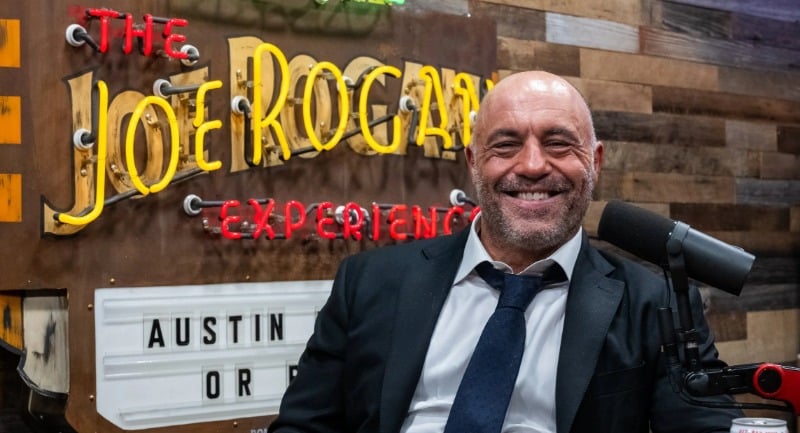
Karl, meet Joe
Here’s where it gets interesting for anyone watching the long-form podcast market.
Rogan’s Instagram account (@joeroganexperience) carries four million followers, 88.97% male.
His YouTube channel has 21 million subscribers, 85.6% male, with nearly 54% in the 25-to-34 bracket.
Australia ranks as the fourth-highest country by following on Instagram, suggesting there is a domestic appetite for exactly this type of content.
The Karl Stefanovic Show tracks along similar lines. Nearly 90% of its social following is aged 25 and above. Gen Z penetration is comparable – roughly one in 10 followers in the 18-to-24 bracket across both properties. The commercially valuable 25-to-44 cohort represents more than 62% of The Karl Stefanovic Show’s following.
Powell says what the show is doing is deliberate.
“If you look at it just objectively, what I think they do really well is they look into the data, they understand the topics, they understand the commenters that drive an audience, and they lean really, really heavily into that in order to build an engaged community.”
The key divergence – and arguably Stefanovic’s commercial advantage – is gender balance.
While Rogan’s audience is 86% male, Stefanovic’s is 60%. He has found the Rogan lane while retaining a meaningful female audience, the genre rarely keeps. For advertisers, that is a more balanced media buy.
Whether brands will follow is another matter.
“Every brand has its own definition of brand safety,” Powell said. “What is good for the one is not good for the other. And the value will be in the eye of the beholder of each one of those brands.”
Engagement rate on The Karl Stefanovic Show’s TikTok sits at 4.36%, above Today‘s 3.66%. The podcast’s YouTube channel posts an engagement rate of 4.84%. The audience is small by broadcast standards – 108,000 YouTube subscribers is not Rogan’s 21 million – but it is attentive in a way that passive breakfast TV viewing never really is.
What the numbers actually mean
The Fabulate data is a snapshot of social following, not a full ratings survey. What it measures is the audience that has actively sought Stefanovic out, found the show, and decided to follow.
That is a fundamentally different population from viewers who leave Channel 9 on while they make toast.
For Powell, the commercial opportunity hinges on what Stefanovic does with the momentum. “The key thing that he needs to do is find an audience that is engaged, build a community around that – if he ever wants to commercialise it.”
The foundation, at least, is there. Stefanovic’s production team built The Karl Stefanovic Show on the premise that there was an underserved male audience in Australia – men who want long-form conversation about geopolitics, sport, masculinity, and the occasional fringe theory, served without network guardrails.
The data suggest that the audience exists, that it has found the show, and that, in terms of age, gender, and engagement, it looks like the audience that made Rogan a global media phenomenon.
And, it looks like they’re listening.