






The agentic AI future: As disruptive as programmatic
DoubleVerify’s Dan Slivjanovski on why the agentic web breaks the traditional advertising model.

Mediaweek caught up with Dan Slivjanovski, the DoubleVerify CMO, ahead of his keynote at DV IMPACT: Melbourne. We chatted about his beginnings in the high-stakes marketing world of 90s Russia, why tech companies must cannibalise themselves to survive, and how the next phase of the internet requires a completely new playbook.
Forged in the wild west of 90s marketing
MW: Could you tell us a bit about yourself, Dan- and how you ended up where you are?
DS: I studied international relations and economics at university, and came out and had no idea what I wanted to do. And I ran a bike shop and raced mountain bikes for close to a year before intellectual starvation forced me into the workforce.
I was in my early 20s, wanted to experience an emerging market, and I found that in Russia. And what was originally a four-month hardship post turned into close to four years.
I decided I wanted to be a marketer. And there was this moment in the early nineties, after the Soviet Union fell apart, when marketing became the new face of what had previously been propaganda. And you had a massive populace that was hungry for brands, because they were buying things in stores labelled 'meat' and 'bread', and now they can buy Fendi and Ralph Lauren.
My clients were Pepsi, Procter and Gamble and IBM. We were helping them enter the market and navigate market entry. It was an environment in which market share swaths of 30 40% were being taken. It was unprecedented. So it was a fascinating spot at a fascinating time in history that will not repeat itself.
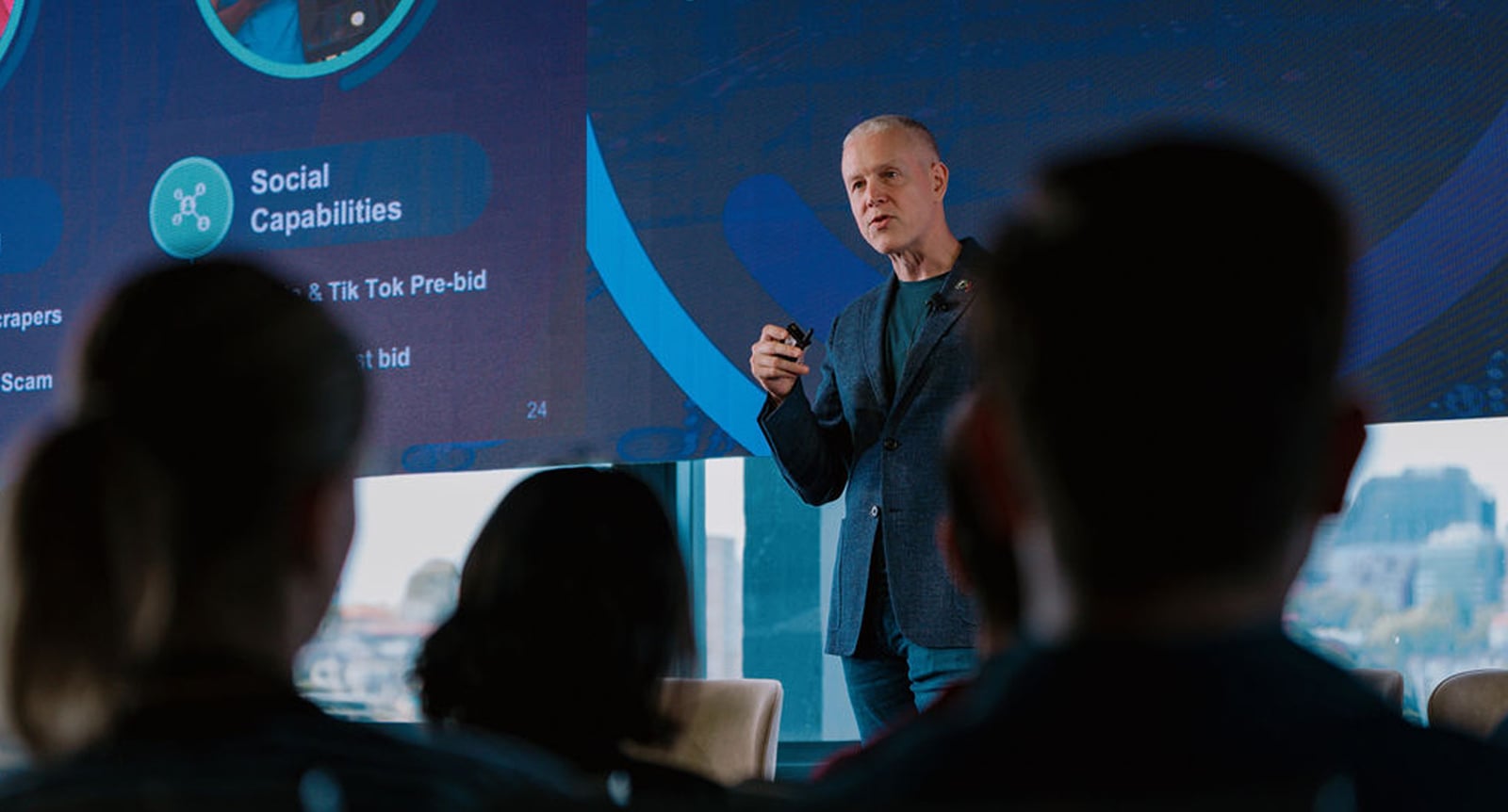 Dan Slivjanovski


The leading media trade publication in Australia.
Get our top stories straight to your inbox daily by signing up to our Newsletter
By providing your information, you agree to our Terms of Use and our Privacy Policy. We use vendors that may also process your information to help provide our services.
The necessity of self-cannibalisation
MW: Fast forward to today. It feels kind of necessary to reinvent rapidly now, doesn’t it?
DS: I think it's essential. If you're a technology company, reinvention and to some degree self-cannibalisation, you know, kind of continuing to move the category forward, that's the lifeblood of competitiveness.
The speed of obsolescence is just so extreme that if you're not doing that, it's very hard to stay competitive in this space.
MW: So with that in mind, what are you looking forward to this coming year?
DS: All right, well, I think I'd be dead in the world if I didn't say AI. It is so overused, yet so pertinent to our space.
MW: There are still some organisations and people who are sceptical and worried about the whole AI thing. What do you say to them?
DS: I think AI is just a category of technology. And people and businesses have used technology since time immemorial. You know, we used to do it with a wheel, then an abacus, then a calculator, and now AI is making things happen.
But the risky side of AI is that it is also fueling much of the mayhem we combat every day. You know, AI in the hands of fraudsters means that fraud schemes can be whipped up faster and smarter.
And then there is content. Everyone is a maker now. Tools are making content generation faster and more dynamic. And especially in video, you know, good luck discerning fake from real.
 Everyone is a maker now. Good luck discerning fake from real.
MW: I feel inundated with crazy amounts of content that I can tell is garbage. But what is that ‘AI Slop’ future going to look like?
DS: Yeah, and again, it's not just low-effort content that's easy to spot. Slop, it's caught up, and it's become sophisticated very quickly. The quality is improving rapidly. It's proliferating. A lot of the time, it's highly engaging. So it's driving monetisation.
The idea is to identify when it appears. We use AI verification to identify AI-generated content and other forms of synthetic content. If this is something that has the risk of hurting brand equity because it's not trustworthy or it's misleading, the brand needs to know that ahead of time.
From hygiene to nirvana
MW: What does that look like- when brands know if something is risky ahead of time?
DS: Let me back up for a minute. Our world has gone very quickly from the space of media hygiene and quality. Which is to say, can we look at media, regardless of its form, and provide a common yardstick for media quality? Is it a human being or is it a bot?
We've moved from that, which is basically an elimination of media waste, into a world of actually powering media performance. And when you power media performance, you're demonstrating how applying data sets is driving a KPI within the campaign.
MW: How does that actually work in the machine?
DS: I'll give you an example. If we're measuring media and can understand its viewability, fraud profile, and attention intelligence, we can put that into an algorithm. And that algorithm will say, “Okay, over time, I know that these attributes of media actually drive more site visits.”
I'm going to identify them out there in the bid stream. And I will try to buy that inventory profile at the lowest cost.
And that's Nirvana for the advertiser. You're not buying a proxy; you're actually using this machine to deliver an outcome at the lowest cost and highest impact.
 Lowest cost and highest impact equal Ads nirvana
A disruption without precedent: agentic AI
MW: Can you tell us a bit more about your take on Agentic AI?
DS: That is very buzzy right now. And there is this new paradigm on the horizon where users of the internet, you and me, can use agents to do things for us. To research, buy products, and work with agents, bots will work on the brand side.
So instead of a user searching, going to a website, reading, and making a decision, a user can either do a query and get a consolidated answer. That disintermediates the publisher and breaks the whole advertising model in that regard.
Or, and this is even further afield, the user can use an agent to do something for them when they're never even online, and the agent interacts with a bot. And all of a sudden, you know, you have a transaction. What happens to an advertising opportunity in a transaction like that?
MW: It is wild to think about, isn’t it?
DS: I feel like for the last 15 years, the evolution of the internet has been, I wouldn't say linear, but it's been predictable. It's largely been the proliferation of devices.
This next step, we don't have a precedent for. This is going to be very different and very disruptive because it's something that, to some degree, will disrupt the paradigm of what advertising does online. This is to subsidise the creation of content and provide a user with free access to it, because they're giving their attention to an ad.
This is new. And we're really keen to watch how this evolves.
The virtuous puzzle
MW: You’ll be unpacking all of this at DV IMPACT in Melbourne. What other sorts of things can attendees expect to take away?
DS: The value proposition is in understanding how you can employ tools that were previously disconnected or simply didn't exist to work together in an integrated fashion and provide real outcomes that you can measure.
An immediate connection to distribution, incrementality, and media mix. These three things can work together in pretty unexpected ways when they're integrated, and that's what we're going to talk about.
It's in the unification of things and moving way beyond media quality and protection into proven performance.
Because that is the point of advertising in the first place.
DV IMPACT: Melbourne is scheduled for March 5, 2026 at the Langham.
More from Mediaweek
The leading media trade publication in Australia.
Get our top stories straight to your inbox daily by signing up to our Newsletter
By providing your information, you agree to our Terms of Use and our Privacy Policy. We use vendors that may also process your information to help provide our services.


