


Why 'Reality Check: Inside ANTM' needs a major reality check itself
"When we know better, we do better - unless you don't really get what you did wrong the first time."

Tyra Banks apparently set out to expose the ridiculous standards and expectations of the modelling industry in the 2000s when she created America's Next Top Model.
So claims new Netflix doco Reality Check: Inside ANTM.
In 2026, this is news to me. I watched ANTM in real time as a woman in her early 20s, and don't remember one thing helpful about it.
The inclusion of three people of minority identities at the helm of the show was groundbreaking - especially for viewers like me, as I was a young woman of colour.
But the rest of the show? Simply soul-breaking. For both the cast and the audience.
Netflix's latest Reality Check documentary explores the premise of what became one of the 2000's most iconic reality programs - to tell the truth of the 'real' horror of what it takes to be a model.
But watching it in my early 20s, that's not what I learned about. Instead, I learned that I was never going to be considered beautiful - no matter how much my beloved dad said I was.


The leading media trade publication in Australia.
Get our top stories straight to your inbox daily by signing up to our Newsletter
By providing your information, you agree to our Terms of Use and our Privacy Policy. We use vendors that may also process your information to help provide our services.
My beautiful sister - who lost her life in part whilst battling disordered eating - and I learned nothing about how to handle mean bosses and girl bullies in real life - or the ones in our heads when we looked in the mirror.
Banks was our hero at the time, as she was internationally for millions; utterly inspirational - glamorous, beautiful, successful.
So why did she treat us so bad? Why did she reinforce negative thoughts and behaviours about self-image? Why didn't she help us with 'reality'?
And why has she been allowed to inflict the same messages on another generation by standing by them?
'Reality Check: Inside ANTM' needs a major reality check itself.
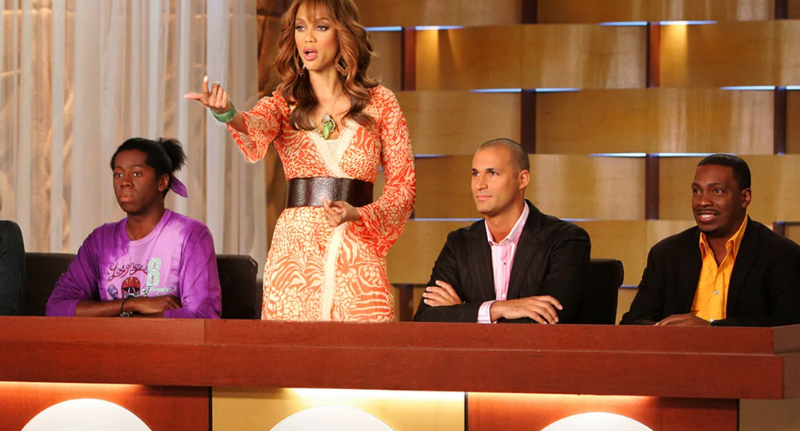 The extraordinary success and cultural impact of 'ANTM' is undeniable. Image: CBS
ANTM: Fake modelling and humiliation
A staunchly unapologetic Banks says matter-of-factly throughout the three hour documentary that her bullying and exploitation of the young female cast members was standard industry practice. She was just showing them the truth.
That may have barely passed as an excuse for her blatant disregard of anyone's mental health and dignity in the 2000s, and even less so, now.
One cast member recalls her experience so negatively that she says she thought desperately at the time, feeling the backlash against how she was portrayed: "It's a TV show, you guys, but this is my life.”
In their desperation for a chance at the American dream, applicants in the competition were exploited, belittled, lied to, misled about the career they would have, hounded, suffered from fake narratives, were encouraged to eat less/starve, dehydrate for fear of bloating, forced to make major changes to their bodies (hair and teeth especially) and forbidden from contacting family and friends for support.
That list is not exhaustive.
There was the woman who "cheated" on her boyfriend after producers made the decision to ply her with alcohol and film the consequences.
The model whose mother was fatally shot when she was a child, and then was forced to role-play a shooting victim in the name of an advertising campaign.
Model Giselle, like almost everyone else, was brutally fat-shamed to the point that she admits:
“Why does my ass have to be so wide? That's how I talk to myself to this day.”
The glaring problem with Netflix's Reality Check: Inside ANTM
So many of the women speaking in the documentary know now what they were just realising back then as vulnerable cast members.
Most memorable, Kenyan says, "There's some level of responsibility to the viewer knowing there are so many young women watching this show. There's an insensitivity towards what it would do for their self-confidence.”
It's a sentiment repeated all over social media about ANTM from a new generation of viewers, who simply can't believe what they're seeing and hearing.
So what happened, Netflix? Is Reality Check: Inside ANTM really an exposé that gives the show history and context, or is it merely a sensationalist retelling for ragebait?
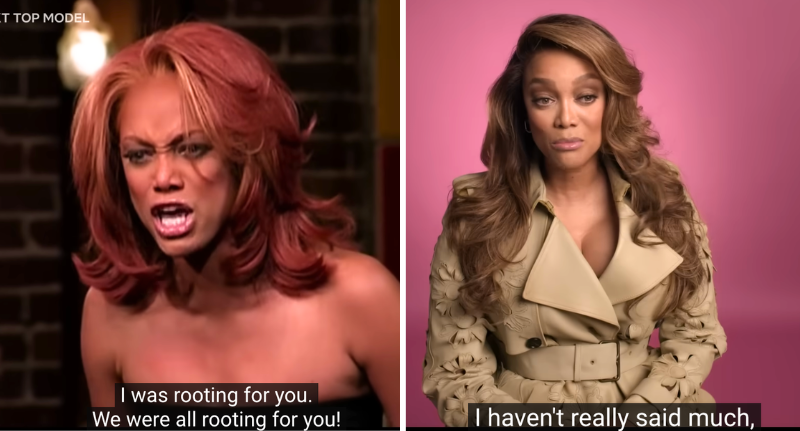 Tyra Banks on 'ANTM' in one of her most cruel scenes yelling at a contestant, and in the Reality Check documentary on the show. Image: Netflix
ANTM knew better and still didn't do better
When you put together a documentary with recent interviews, there's a chance for reflection. There was a chance for everyone in the documentary to apologise, or merely acknowledge that they might do things differently now.
Banks in particular refuses to do this, often blaming "production" for shonky practices and claiming she was giving viewers 'what they wanted to see' - drama, chaos and deeply questionable ethics.
Legally, of course, I can see why Banks is generally cautious of accepting any responsibility for how the show became a cesspool of outrageous storylines, lest she open the floodgates for complaints. She's 52, thinking of the retirement money, not the millions in payouts for destroying people.
But, a few other things could have been done in the documentary than just giving Banks an audience to gaslight.
Firstly, Netflix could have taken more responsibility for the viewer in telling the ANTM story.
Producers could have included stronger questioning of Banks and executive producer Ken Mok for how they feel about their decisions two decades later.
Netflix could have included at least one expert who contributed information and highlighted the dangers of ANTM's self-esteem and body-image narratives.
That person would have been able to say, "Well, that may have been acceptable at the time, but now we would frame any feedback constructively... such as by saying xyz."
Or not give that feedback at all.
It would have been so useful and interesting to have commentary from the head of a modelling agency on the revolution in media and advertising over the last decade, using more people who are relatable to the public.
I would have loved to hear from anyone in the body-positive advocacy space, such as 2023 Australian of the Year, Taryn Brumfitt.
Secondly, Netflix has included simpler but stronger support resources for Australian audiences, instead of a single line at the end of episode two pointing to a website that feels a bit confusing to navigate and contains just snippets of general information, with a bunch of links called www.wannatalkaboutit.com.
The site includes links to priority help lines in Australia, and, frankly, I don't understand why those links aren't included at the beginning or the end of every episode.
'Too often better simply isn't done'
I generally agree with the tenet that certain attitudes are set in a historical/social context - but then some accepted principles and behaviours were always wrong; like slavery, segregation, sexual harassment, domestic violence... just to name a few.
Body-shaming and bullying, exploiting and humiliating, are more.
But even in 2026, when we know better, the ANTM documentary hasn't acted like it.
Apart from the above omissions, Netflix describing the show in tiny lettering as containing "strong references to sexual violence and mental health themes" is direly insufficient.
It is clear from the documentary that many dreams were destroyed, people were gaslighted and exploited - and yet, it's still presented as though it couldn't harm current audiences. As though the gross messaging from decades ago can't still wreck lives.
In 2026, even when we are supposed to know better, too often, better still isn't done.
If you need help, please reach out to:
Lifeline: Lifeline's 13 11 14 crisis support service is available 24/7. Anyone in Australia can speak to a trained crisis supporter over the phone at any time. To chat or text for support, or for more information, visit Lifeline at lifelinedirect.org.au/
Butterfly.org: Butterfly offers free and confidential support on 1800 33 4673 and on their website butterfly.org.au. It says, "We are here for anyone in Australia concerned about eating disorders or body image issues, whether you need support for yourself or someone you care about. All our counsellors are qualified mental health professionals with backgrounds in psychology, social work, or counselling. They also have specialist training in eating disorders and body image."
More from Mediaweek
The leading media trade publication in Australia.
Get our top stories straight to your inbox daily by signing up to our Newsletter
By providing your information, you agree to our Terms of Use and our Privacy Policy. We use vendors that may also process your information to help provide our services.


