

By Brad Hampel, Founder & CEO, SE Group (Seeker Agency)
have stood in the mud at the Grand Prix and the footy, and in the heat at the Australian Open, watching thousands of fans walk straight past a brand that paid a fortune to be there. Walked past it like it was a wall. And I say this as someone whose whole business is bringing brands to life at these events.
So yes, I have skin in this.
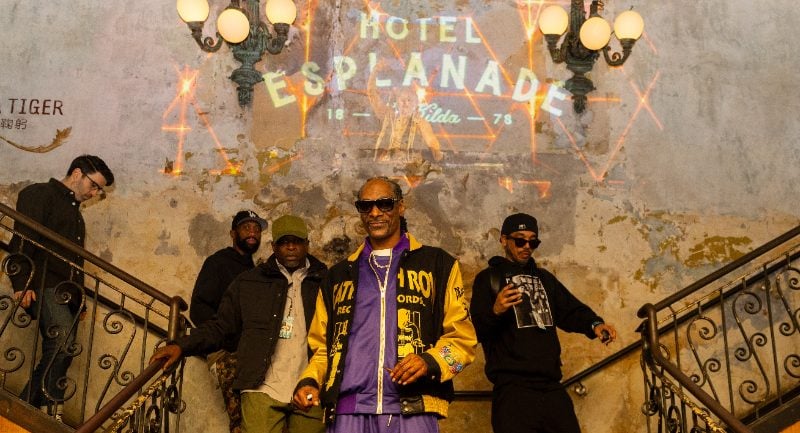
Last year my team booked Snoop Dogg to headline the Telstra Pre-Game Entertainment at the AFL Grand Final. A hundred thousand people at the ‘G, six million more at home, Snoop on a giant staircase as Drop It Like It’s Hot kicked in.
I love that stuff and I always will.
But I’ll let you in on something the talent invoice would rather you didn’t hear: the headline act isn’t what people took home. What they took home was the shaky phone footage they shot themselves, the mate losing it next to them when the beat dropped, the group chat firing before the first bounce. That footage was the best media Telstra bought all year, and nobody had to shoot a frame of it.
Snoop was ours. The moment was theirs.
Every few weeks a CMO tells me the same thing: sponsorship feels like the riskiest line on the plan. Big rights fee, fuzzy measurement, the first thing questioned when the spreadsheet gets nervous.
So the plan gets built the “safe” way. Lock the campaign, lock the media, then send someone hunting through what’s left for something on the ground. The signage goes up, the impressions get counted, and the brand becomes wallpaper.
Nobody has ever photographed the wallpaper.
Here’s the uncomfortable bit: that’s not the safe way. That’s the expensive way to be ignored. The plan is around the wrong way.
A tentpole moment, a Grand Final, a Grand Prix, Gather Round, is one of the last places in this country where culture happens live, at scale, in front of a crowd that already cares before you’ve said a word.
That crowd is the best media asset money can reach, and you can’t buy your way into their memory with a logo. You have to give them something to do. So flip the order.
Start with the moment people actually want to be in. Build that first, and build it properly. Then point your media at it. Media multiplies whatever you give it. Give it a logo, and you’ve multiplied a logo. Give it a moment, and it multiplies a story: the photos, the posts, the word-of-mouth, the content no production budget could script.
Here’s what it looks like when it works:
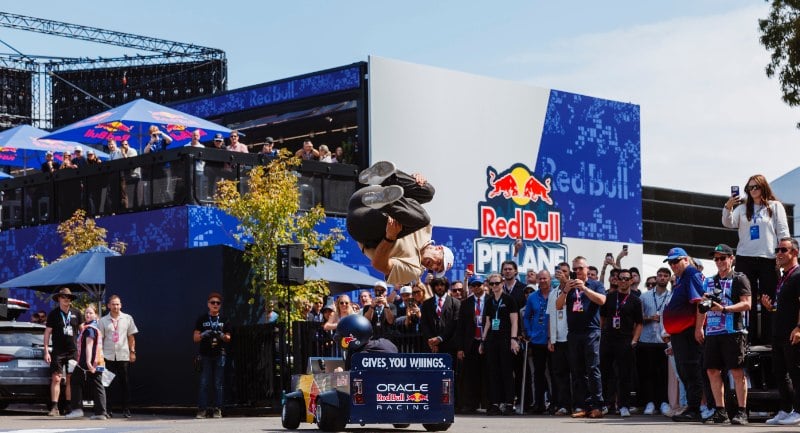
At the 2023 Australian Grand Prix, we built Red Bull’s first Energy Station in Australia, a space designed to bring the track’s noise into the room.
On the Sunday, Kylie Minogue turned up at the last minute so her nephew, a die-hard F1 fan, could watch the race. She sat quietly up at the railing, taking it in.
By mid-afternoon, The Inspired Unemployed had hold of the DJ decks, dropped a Kylie remix, and suddenly Kylie was in the middle of the dancefloor with the whole place going off around her.
You can’t brief that. You can’t buy it either. But you can build for it, and this is the hard insight the industry keeps stepping over: great isn’t a bigger screen or a louder act. Great is engineering the conditions for the thing you didn’t plan. It comes down to three decisions.
Give people something to do, not something to look at.
Leave the run of show loose enough that the unscripted thing has room to happen.
And guard the last ten or fifteen per cent of the budget, the part that makes the doing possible, because it’s always the first line the spreadsheet comes for, and it’s always, every single time, the bit people remember.
And if you think that only works as a fluke you can’t repeat, watch what repeat behaviour looks like.
At AFL Gather Round Next Door, Hosted by Hard Rated, we built a space right next to the ground in Adelaide, somewhere to land before the first game.
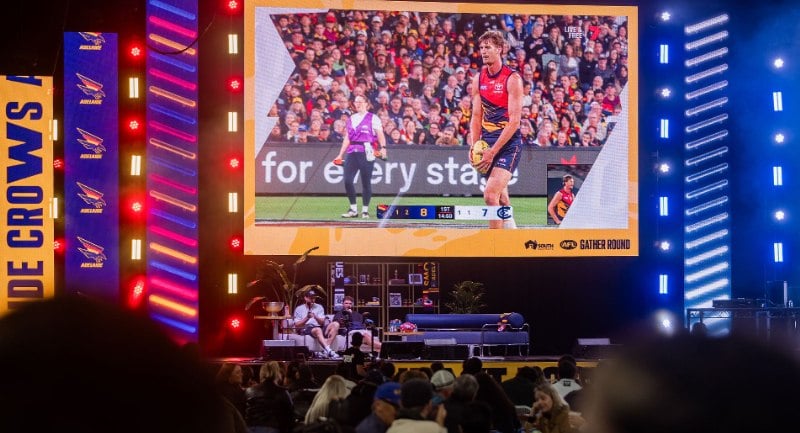
People came in for a pre-game drink. Then they came back, two or three times over the weekend, to watch the other games on the big screen, with live talent calling the action.
Nobody made them come back. They chose to. And you can measure choosing by return visits, time spent, and the earned content flying out of the room all weekend. Impressions aren’t a lie. They’re just the wrong ruler for memory.
Yes, a Grand Final perimeter board reaches six million and our space held a few thousand. But reach decays by the car park. Participation compounds. The person who spent an hour with you becomes the content, the recommendation, the reason someone else turns up next time. That’s not an activation line item. That’s the multiplier on everything else you bought.
Which is the real answer to the risk question. Done as wallpaper, sponsorship is exactly as risky as the spreadsheet fears. Done as the centre of the plan, the moment your media, content and PR springboard off, it’s the opposite of risky. It’s the only part of the plan the audience will actually thank you for.
Every strategy deck in the country now ends on a Brisbane 2032 slide, so I’ll keep mine short. Every brand in Australia will fight for a spot on the fence panel at those Games.
Some of them will buy the wallpaper. A few will build the room Kylie walks into.
Decide now which one you are.